[pageLogInLogOut]

#Sustainability

H&M Group driving further climate action in Bangladesh

© 2023 H&M
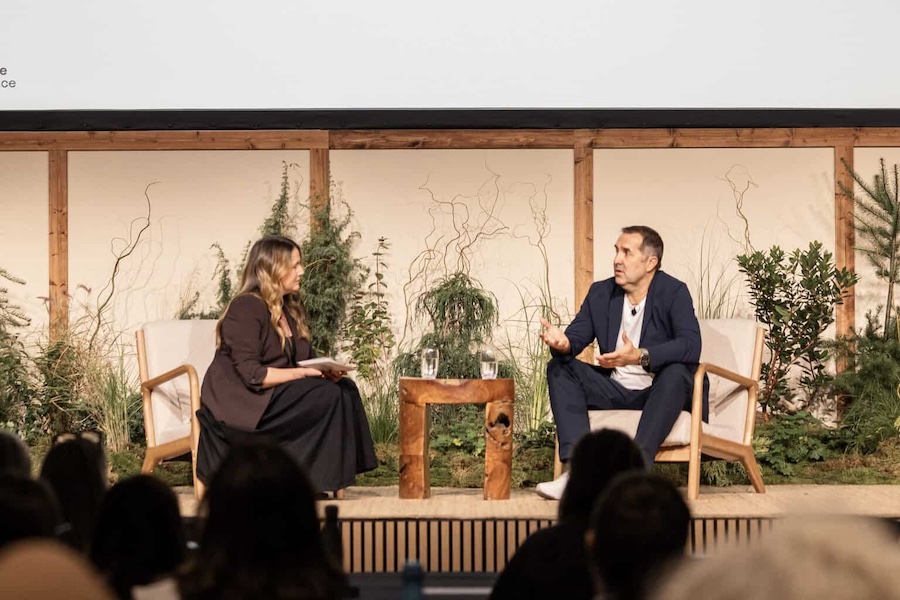
H&M Group joins the policy roundtable by the UNFCCC Fashion Industry Charter for Climate Action in Bangladesh to discuss key reforms needed for the transformation of the renewable energy market and advance policy in Power Purchase Agreements and similar solutions like green tariffs.

Today, the UNFCCC Fashion Industry Charter for Climate Action gathered fashion brands, policy makers, garment manufacturers, experts, renewable energy developers, and financial institutions to identify key actions needed to transition the industry towards renewable alternatives. How to unlock some of the challenges the Bangladeshi garment industry faces in this area, and what role each stakeholder plays to push the development forward were discussed. The main focus was the need to advance policies for Power Purchase Agreements and similar solutions, like green tariffs, to enable the industry to procure renewable energy.

“We are happy to take part in this important conversation about how to increase the access to renewable energy for the suppliers we work with and what kind of overall business and legal environment is needed to achieve this. Given the changing legislations in the world, we want to make sure that our suppliers in Bangladesh do not fall behind,” said Yosef El Natour, Head of Production H&M Group.

"H&M Group supports the development of the necessary frameworks enabling our suppliers to move towards more renewable energy. Power Purchase Agreements can play a key role in the green transformation of the industry in Bangladesh, helping suppliers to remain resilient while ensuring that the local communities also benefit from this development."

Ziaur Rahman, H&M Group Country Manager for Bangladesh.


“We are grateful to the government of Bangladesh for their kind support to hold this dialogue, for their presence here today as we seek for solutions, looking at how can make the transition quicker, what are available tools and mechanisms in the context of Bangladesh as a leader in RMG sector and how can we design policies that drive innovation, that provide incentives to invest, and create a level playing field as needed,” says Lindita Xhaferi-Salihu Fashion Industry Charter Lead, UNFCCC.

At the closing of the event, it was clear that while many challenges lay ahead, the transformation of the energy market in Bangladesh requires all parties to work together proactively in developing new frameworks in order to proceed faster and meet our climate ambitions. All eyes will be put on the next UN Climate Change Conference (COP28) in which public and private sectors from all industries will have to respond on the progress of their climate ambitions towards 2030.

H&M Group’s priority is to reduce its absolute emissions by 56% by 2030 – in line with its approved science-based target. In addition, the company has a goal to source 100% renewable electricity to run its operations and supply chain by 2030. H&M Group is committed to be part of the solution when fighting climate change and collaborating with others. The company also works to drive the agenda forward for new frameworks enabling additional renewable electricity into the grids.




More News from TEXDATA International

#Recycling / Circular Economy

textile.4U publishes special edition “Top 100 Textile Recycling Companies 2025”

With a comprehensive 176-page special edition, textile.4U is dedicating its latest issue entirely to one of the most dynamic and influential topics in today’s textile industry: textile recycling. The new issue, published exclusively in high-quality print, presents the Top 100 textile recycling companies researched and selected by TexData – organizations that already play a key role in the transition to circular textiles or are expected to have a significant impact in the near future.

#Recycling / Circular Economy

Responsible Textile Recovery Act of 2024 signed by Governor

Senator Josh Newman (D-Fullerton) is proud to announce that Senate Bill 707 (SB 707), the Responsible Textile Recovery Act of 2024, has been signed into law by the Governor of California, Gavin Newsom. This groundbreaking legislation establishes the country’s first Extended Producer Responsibility (EPR) textile recycling program, marking a significant step forward in the state’s efforts to combat waste and promote sustainability.

#Textiles & Apparel / Garment

Modtissimo promotes sustainability with 28 coordinates in the Green Circle

Modtissimo is proving more and more to be a textile and clothing show that delivers the latest innovations in the area of sustainability, with the iTechStyle Green Circle being the main showcase for companies' creations. In this 60+4 edition, taking place on 12 and 13 September, 28 coordinates will be exhibited in a section organised by CITEVE and curated by Paulo Gomes.

#Europe

The EU and Egypt team up to mobilise private sector investments at Investment Conference and sign a Memorandum of Understanding underpinning €1 billion in macro-financial assistance for Egypt

At the EU-Egypt Investment Conference, co-organised by the EU and the Government of Egypt on 29-30 June, the EU and Egypt are teaming up to intensify private sector investments in Egypt. They are also signing a Memorandum of Understanding (MoU) for the disbursement to Egypt of up to €1 billion in Macro-Financial Assistance.

More News on Sustainability

#Sustainability

GOTS version 8.0 released: advanced supply chain accountability, from fibre to finished product

Global Standard is pleased to announce the release of GOTS Version 8.0, the latest update to the world's leading processing standard for organic textiles. The updated Standard strengthens requirements for air emissions and waste management, as well as criteria for product safety. It introduces new provisions on circularity, microfibre management and updates in residue testing. Version 8.0 also elevates due diligence obligations and formalises governance requirements, including ESG disclosure, anti-corruption policies and conflict-of-interest safeguards, to support credible, responsible business conduct.

#Sustainability

The nova-Institute establishes new Renewable Feedstock Department to lay the groundwork for industrial defossilisation

The transition from fossil-based to renewable carbon – sourced from biomass, CO₂ utilisation and recycling – is the cornerstone of a climate-neutral chemical industry. The nova-Institute’s new department is dedicated to providing the essential data, analyses and strategic roadmaps required to secure a reliable future feedstock supply and make this transition a commercial and ecological reality.

#Sustainability

Textile Exchange unveils commitment-based pathway for members to accelerate responsible raw material production

Textile Exchange has unveiled further details about its new membership structure, designed to guide the fashion, textile, and apparel industry in a collective course of action toward preferred production systems for raw materials and fibers.

#Textile chemistry

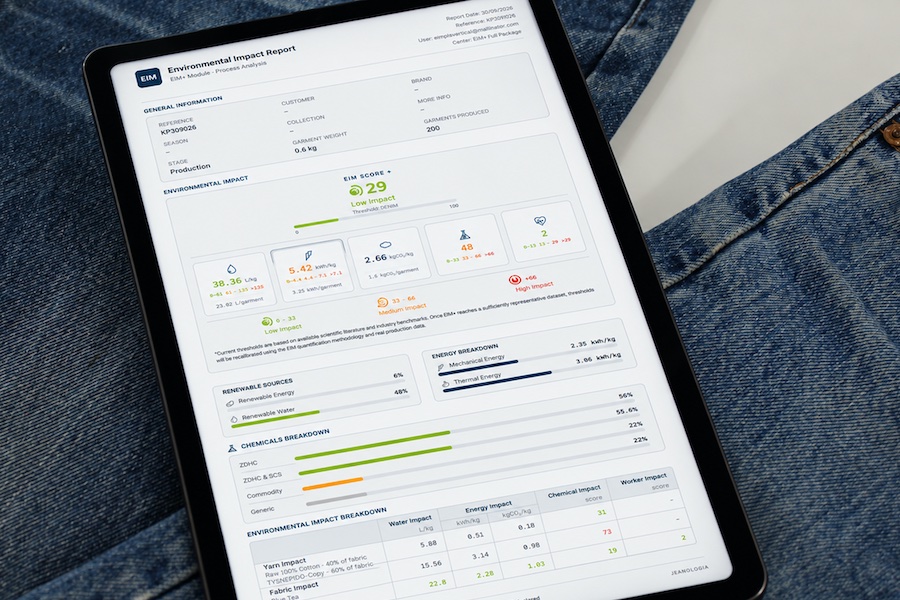
Jeanologia urges industry to accelerate PP Spray phase-out following ZDHC Watchlist update

Potassium permanganate has officially entered the Chemical Watchlist of the ZDHC Foundation, signaling increased scrutiny and potential phase-out of one of the most hazardous chemicals still used in denim finishing. The inclusion confirms an industry shift that Jeanologia anticipated more than a decade ago.

Latest News

#Techtextil 2026

Knowledge that drives progress: Techtextil and Texprocess forums strengthen the global textile industry with a future-oriented programme

From AI-supported production optimisation and digital manufacturing solutions to circular technologies and bio-based high-performance materials: the Techtextil and Texprocess forums provide answers to the key challenges of the global textile industry with a curated content programme. As hubs for innovation and knowledge, they enhance competitiveness and offer orientation in changing markets. From 21 to 24 April 2026, Frankfurt is once again the global meeting point for thought leaders from industry, research and business.

#Techtextil 2026

Enhanced protection without added weight: Innovative technology for flame-retardant textiles doubles reaction time and ensures high wearing comfort

Flame-retardant textiles have long faced the same dilemma: the higher the level of protection, the greater the compromise in comfort, weight and breathability. This is especially important for workwear and protective clothing worn for long hours, where comfort is crucial to wearer acceptance and satisfaction. At Techtextil 2026 in Frankfurt, Swiss company Textilcolor AG will unveil pyroshell™, an innovative flame-retardant technology designed to tackle this challenge. Protection is provided by a graphite-based functional layer integrated into the textile structure, which doubles the reaction time before burns occur while significantly enhancing comfort. The material does not release any toxic fumes and offers textile manufacturers entirely new opportunities to design and produce protective and functional garments. It is also durable enough to withstand up to 50 industrial washes.

#Composites

JEC WORLD 2026 opens: Paris becomes the World Capital of composites

JEC World 2026 opens tomorrow, March 10, at Paris Nord Villepinte, bringing together the entire composites ecosystem for three days of exhibitions, conferences, technical sessions, strategic industry gatherings, and business meetings. As the “festival of composites”, JEC World is also a destination for a broad spectrum of other professional visitors, eager to discover how these advanced materials can offer sustainable solutions to their industries.

#Spinning

Barmag presents the next generation of POY production – energy-efficient and partial-automated

With POY 2.0, Barmag is introducing a completely redesigned spinning concept that takes the production of partially oriented yarn (POY) to a new level in terms of technology and economy. The solution, which was presented to a selected audience of experts for the first time at ITMA Asia + CITME 2025, was met with great enthusiasm: several yarn producers worldwide immediately expressed their interest in a pilot plant.

TOP