[pageLogInLogOut]

#Man-Made Fibers

The updated poster on biodegradable Polymers in various environments has been released
© 2026 nova-Institute
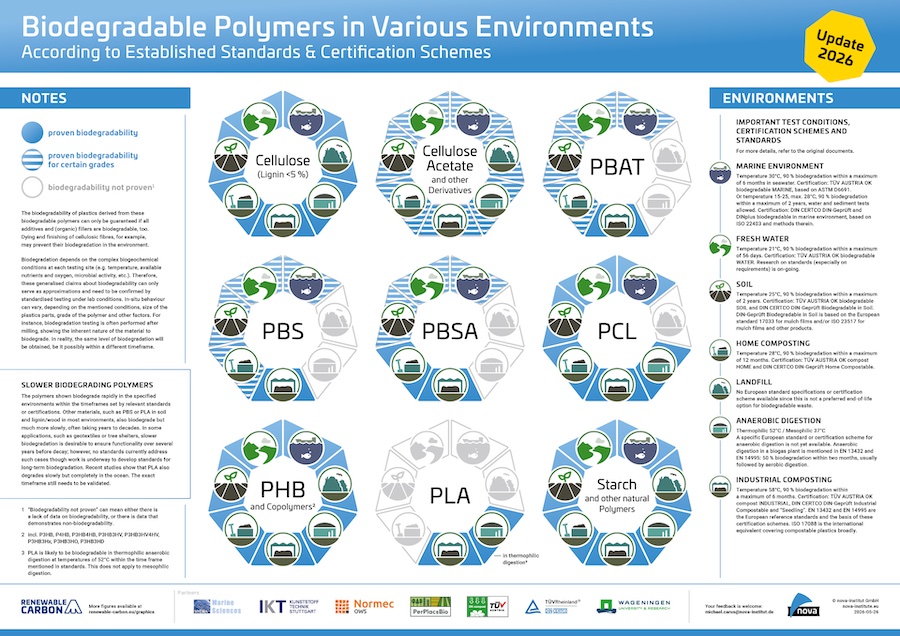
As part of the PerPlacsBio project, nova-Institute has updated its popular poster on the biodegradability of polymers in different environments. The updated version reflects current standards, certifications and the latest scientific findings. The poster can be used to assess biodegradable alternatives for use in agriculture and forestry, and it is now available in German for the first time.

    The nova-Institute has published an updated version of its popular poster, 'Biodegradable Polymers in Various Environments'. This updated version provides a more detailed and comprehensive overview of the biodegradability of polymers in different environments according to various standards. This practical reference tool remains invaluable for industry professionals, policymakers, and researchers working on sustainable plastics and end-of-life solutions in various environments

    The new version introduces several significant updates that reflect the latest scientific and regulatory developments. Notably, PBSA, PBS and PBAT are now classified as having 'proven biodegradability' in soil, marine and freshwater environments, and in home composting for PBS. This acknowledges advances in material-specific data and testing.

    The 2026 update also expands and clarifies the standards landscape. Additional references have been included, such as ISO 17088 (industrial compostability), ISO 23517 (soil biodegradability) and NF T 51-800 (home composting), alongside corrections to the descriptions of EN 17033, ISO 23517, and the available marine biodegradation standards and certifications. These updates improve alignment with current certification schemes and international testing frameworks.

    Further refinements have been made to enhance the scientific accuracy and usability of the poster:

    • A new explanatory footnote clarifies the meaning of 'biodegradability not proven'.
    • Revised content on slower-biodegrading polymers, including updated insights on PLA degradation in marine environments.
    • Integration of the PerPlacsBio project logo to reflect project continuity.
    • Availability of the poster in German, increasing accessibility for a broader audience.

    The poster summarises the biodegradation behaviour of materials in various environments, including marine, freshwater, soil and composting, based on established standards and certification schemes. It emphasises that biodegradability is highly dependent on environmental conditions and material-specific properties, and must be verified through standardised testing.

    With this update, nova-Institute and its partners continue their efforts to provide clear, science-based guidance on when biodegradability is a meaningful and appropriate end-of-life option. These partners include nova-Institute experts from Germany, as well as leading experts from Normec OWS (Belgium), Hydra Marine Science (Italy/Germany), IKT Stuttgart (Germany), Wageningen University & Research (the Netherlands), DIN CERTCO (Germany), and TÜV AUSTRIA (Austria/Belgium).

    The University of Münster, the University of Applied Forest Sciences Rottenburg, and nova-Institute launched the two-year PerPlacsBio project at the end of 2025. Funded by the Agency for Renewable Resources (FNR) under the Sustainable Renewable Resources programme, the project aims to explore the prospects for bio-based and biodegradable plastics in agriculture and forestry.

    The poster is available to download in English in both PNG and PDF formats here:

    https://renewable-carbon.eu/publications/product/biodegradable-polymers-in-various-environments-according-to-established-standards-and-certification-schemes-graphic-pdf-current-version/ (PDF)

    https://renewable-carbon.eu/publications/product/biodegradable-polymers-in-various-environments-according-to-established-standards-and-certification-schemes-graphic-png-current-version/ (PNG)

    The poster is available to download in German in both PNG and PDF formats here:

    https://renewable-carbon.eu/publications/product/biologisch-abbaubare-polymere-in-versch-umgebungen-gemas-anerkannten-normen-und-zertifizierungssystemen-graphik-pdf-aktuelle-version/ (PDF)

    https://renewable-carbon.eu/publications/product/biologisch-abbaubare-polymere-in-versch-umgebungen-gemas-anerkannten-normen-und-zertifizierungssystemen-graphik-png-aktuelle-version/ (PNG)
    More News from nova-Institut für politische und ökologische Innovation GmbH

    #Recycling / Circular Economy

    Advanced Recycling Conference 2026 to showcase innovations – Call for abstracts

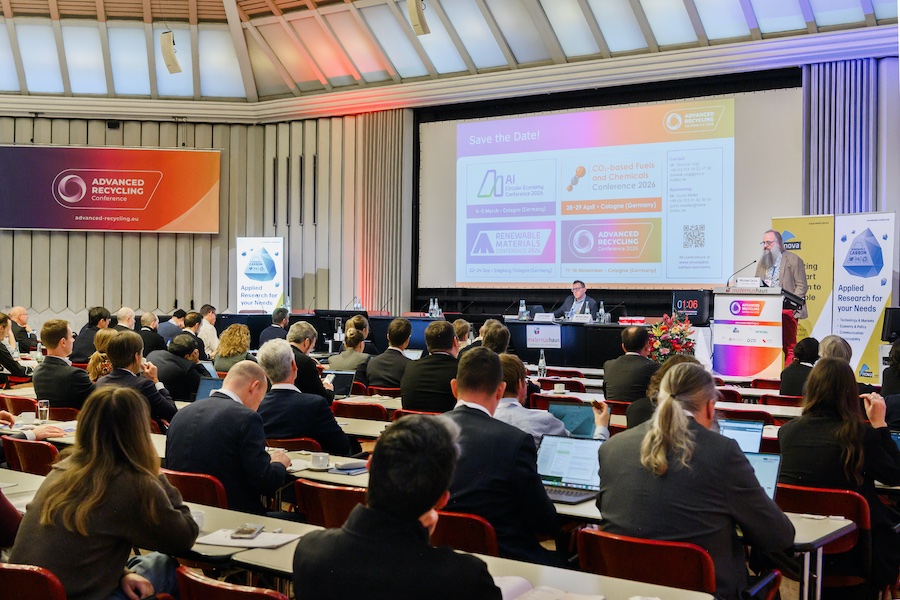
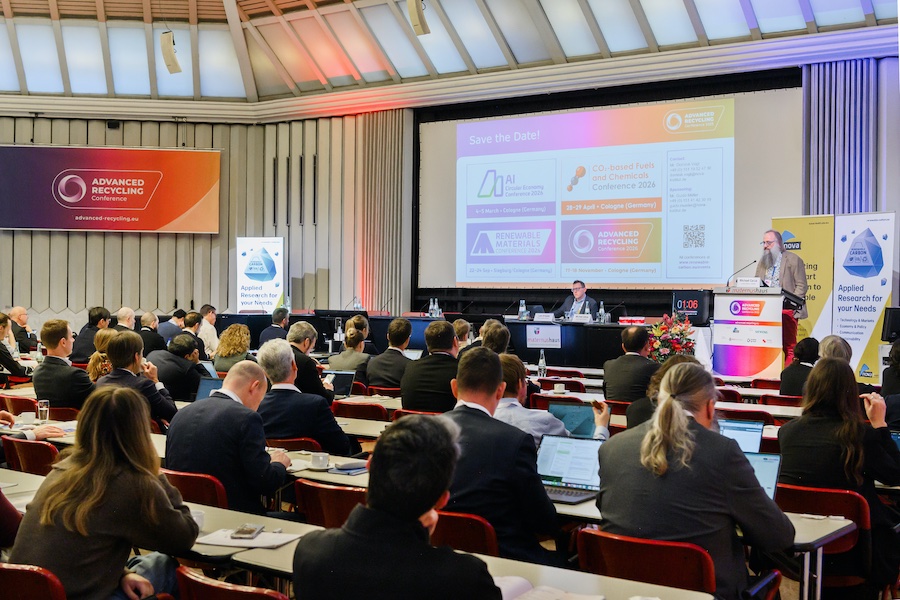
    The call for abstracts is now open for the Advanced Recycling Conference (ARC) 2026, taking place on 17–18 November 2026 in Cologne, Germany, and online. Europe’s leading platform for advanced recycling brings together hands-on solutions and cutting-edge research on recycling technologies for various waste streams like plastics, polymers, textiles or automotive, highlighting progress towards a circular renewable carbon economy.

    #Recycling / Circular Economy

    AI Circular Economy Conference 2026 fuels innovation at the intersection of AI and Circular Economy

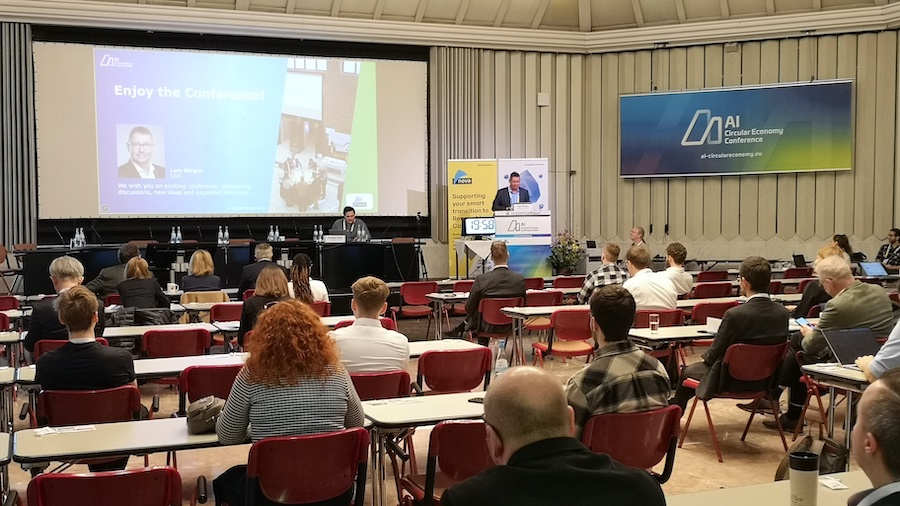
    The AI Circular Economy Conference 2026, organised by nova-Institute, brought together 116 participants from 15 countries in Cologne and online to explore the transformation of the chemical and materials industry supported and accelerated by artificial intelligence. During the two-day event, leading experts from industry, research, start-ups and the investment community discussed how AI can maximise the potential of renewable carbon creating efficient circular value chains. The conference featured 24 presentations and multiple panel discussions, highlighting the growing convergence of digital technologies and circular material systems. It demonstrated how artificial intelligence is progressing from the experimental stage to real industrial implementation within the circular economy.

    #Research & Development

    Pioneer of the first hour: Michael Carus steps down after more than 30 years from nova-Institute’s Management

    After more than three decades at the helm, founder and CEO Michael Carus is set to step down as head of the Renewable Carbon division on 1 March 2026. Lars Börger as the new CEO, will take over this key position of the nova-Institute together with COO Linda Engel, while Carus will remain with the research and consulting company as a senior advisor and shareholder. This change takes place after a one-year transition phase, as planned.

    #Sustainability

    The nova-Institute establishes new Renewable Feedstock Department to lay the groundwork for industrial defossilisation

    The transition from fossil-based to renewable carbon – sourced from biomass, CO₂ utilisation and recycling – is the cornerstone of a climate-neutral chemical industry. The nova-Institute’s new department is dedicated to providing the essential data, analyses and strategic roadmaps required to secure a reliable future feedstock supply and make this transition a commercial and ecological reality.

    More News on Man-Made Fibers

    #Man-Made Fibers

    IMG Group, parent of Evertis and Selenis, launches Everbio Innovation Hub backed by €15 million in financing from C2 Capital Partners

    IMG Group launched the Everbio Innovation Hub, backed by €15 million in financing from C2 Capital Partners. Located at the Group’s industrial site in Portalegre, Portugal, the Everbio Innovation Hub brings together the capabilities of Evertis (PET-based packaging films), Selenis (specialty copolyester resins), Renascis (advanced multilayer recycling) and Renewis (renewable energy) to develop, test and mature the next generation of recycled and bio-based polymer materials and technologies.

    #Spinning

    Object Carpet tests production of rPET BCF yarn on Neumag BCF line

    In a joint project with Object Carpet GmbH, Denkendorf; the Institute for Textile Technology (ITA), Augsburg; and Next Generation Recyclingmaschinen GmbH (NGR), Feldkirchen, Austria, Barmag investigated the processing of recycled polyester for BCF yarn. The goal was to evaluate the fundamental suitability of 100% recycled carpet material for reuse in carpet yarn production to create a closed-loop system in carpet manufacturing. To date, commercial rPET BCF processes have been based solely on rPET from bottle pellets.

    #Man-Made Fibers

    Bemberg™ makes its debut with a dedicated space at Milano Unica

    For the first time, Bemberg™ will exhibit with its own dedicated space at Milano Unica, the leading international trade show for premium textiles and accessories, taking place from 7th to 9th July at Rho Fiera Milano.

    #Carpets

    DOMOTEX Hannover 2028 off to a strong start with expanded portfolio

    Preparations for DOMOTEX 2028 are already gaining strong momentum. Following its successful repositioning as the Home of Flooring & Interior Finishing, around 100 international manufacturers have already secured their place during the initial registration phase.

    Latest News

    #Nonwoven machines

    A Penteadora starts up ANDRITZ textile recycling and needlepunch nonwoven lines in Portugal

    A Penteadora SA has successfully started up a complete mechanical textile recycling line and a needlepunch nonwoven line supplied by ANDRITZ at its production site in Unhais da Serra, Portugal. This investment enables A Penteadora to expand its industrial capabilities and develop a new generation of solutions based on pre- and post-consumer recycled textiles. The input materials originate from its own production waste and other textile waste streams. Both lines are fully operational, and the first products are expected to reach the market in July.

    #Recycling / Circular Economy

    ReHubs elects new Board of Directors to lead the next phase of ReHubs’ strategy to recycle 2.7 million tonnes of textile waste annually by 2035

    ReHubs has elected its new Board of Directors, marking an important milestone as the industry alliance continues to accelerate the industrial scale-up of textile-to-textile recycling across Europe. The election took place during the ReHubs Annual Event in Brussels on June 23rd, held alongside the Textile Recycling Expo and Future Fabrics Expo. The newly elected Board combines expertise from across the textile value chain, reflecting ReHubs' collaborative approach to solving the industry’s textile waste crises.

    #Dyeing, Drying, Finishing

    Ferraro S.p.A. acquires the “Finishing” business unit of Cibitex S.r.l.

    Ferraro S.p.A. and Cibitex S.r.l. are pleased to announce the completion of the agreement pursuant to which Ferraro S.p.A. has acquired the “Finishing” business unit of Cibitex S.r.l., specialized in the development and manufacturing of technological solutions for textile finishing.

    #Recycling / Circular Economy

    Reju opens its first R&D Center in the U.S. in Conshohocken, Pennsylvania

    Reju, the company specializing in textile regeneration, today announced the opening of a Research and Development (R&D) Center in Conshohocken, Pennsylvania, the company's first proprietary research center in North America. Located within Technip Energies' existing Advanced Materials and Catalysts research center, the lab will allow Reju to accelerate the rollout of its recycling technologies and develop its next-generation circular solutions.

    TOP