[pageLogInLogOut]

#Knitting & Hosiery

“We need to move away from the price trap and return to a value-driven mindset.”

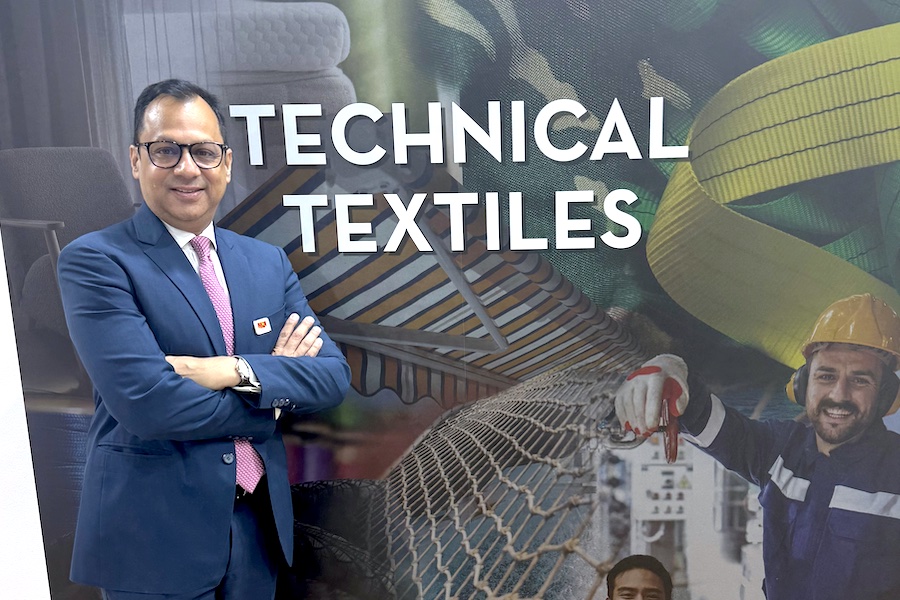
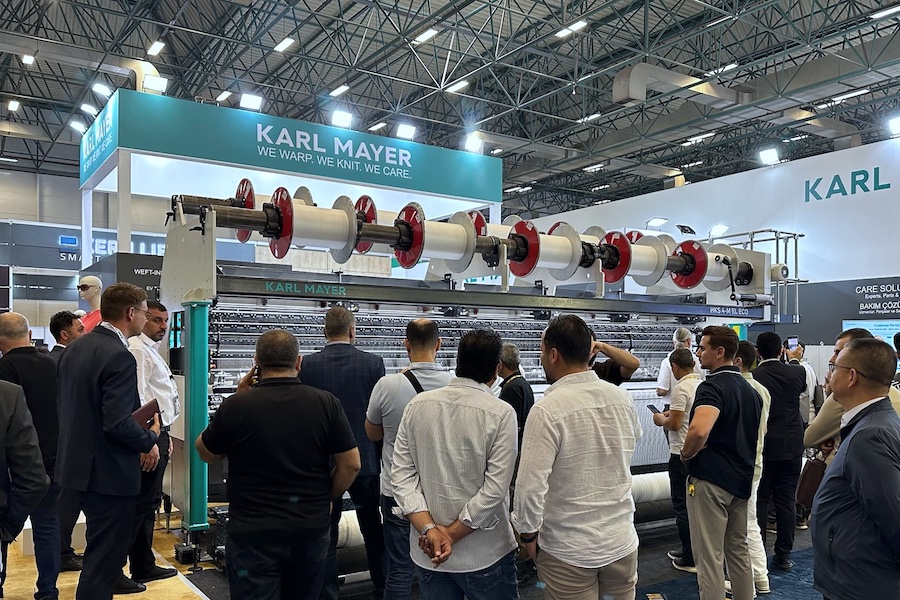
With its new Textile Innovation Center, KARL MAYER is sending a strong signal for innovation, collaboration, and the future of textile applications. In this interview, Karl Josef Mayer discusses new opportunities in warp knitting, the processing of staple fibres, recycling, the changing role of machinery manufacturers, and why the textile industry must once again focus more strongly on the value of textiles. by Oliver Schmidt

Interview

Karl Josef Mayer

Representative of the Mayer family and Member of the Supervisory Board

KARL MAYER TEXTILMASCHINEN


1. The Textile Innovation Center as a strategic platform

Mr. Mayer, the Textile Innovation Center was created on your initiative and is intended to foster creativity and new textile applications. How satisfied are you after the opening – and where do you already see concrete potential?

Overall, I am extremely satisfied. The Textile Innovation Center has essentially become exactly what I had envisioned. One particularly important moment for me was the employee day at the beginning. We first introduced all employees to the building and the opportunities it offers because it was important to demonstrate that we are investing in this location and creating long-term prospects here. The feedback was overwhelmingly positive, especially from colleagues who had already been involved in textile development before.

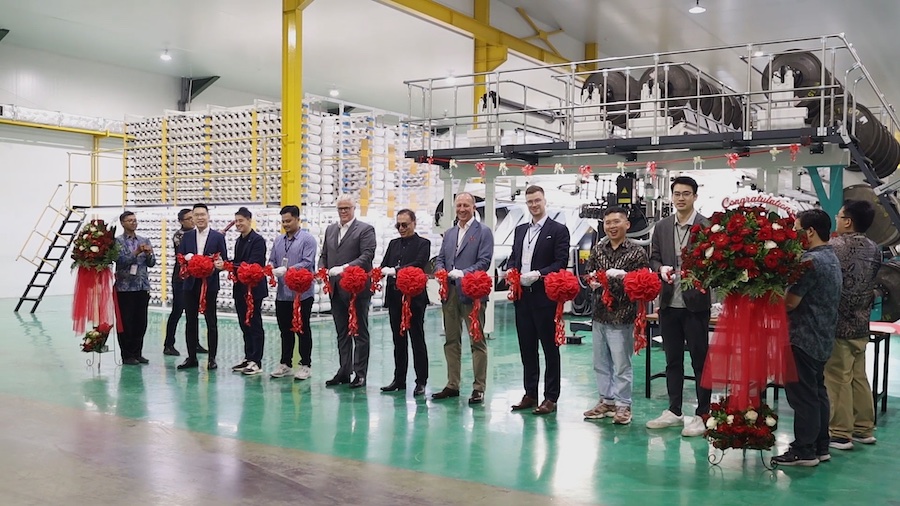
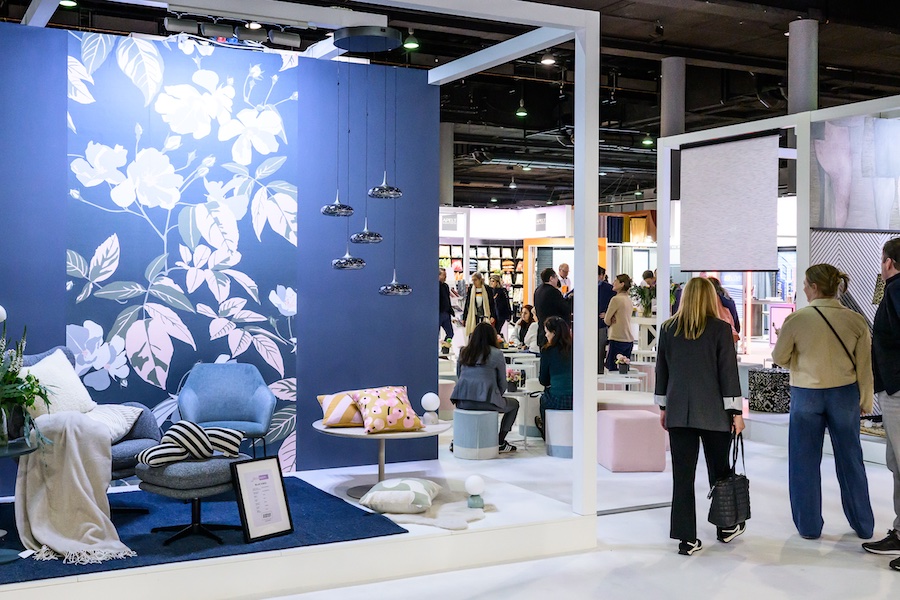
We have also received very positive responses from customers and visitors. Everyone who enters the building immediately recognises the potential and opportunities. The Inspiration Hub, the showroom and the machinery area have all turned out exactly as we planned. For me, however, the real work only begins now – after the grand opening. The next step is to integrate additional technologies and machine types, such as double needle bar machines or the weft insertion technology for fashion and other applications. Together with our customers, we want to develop concrete projects and create new products and markets.

I strongly believe in collaborative innovation. My motto has always been: “R&D is 1-2-3.” Ideally, you bring three partners to the table – for example the fibre producer, KARL MAYER and the customer, or alternatively the machine manufacturer, the customer and the brand. If such a team works together on strategically important textile developments, real business potential can emerge. That is why I am convinced that the Textile Innovation Center will become far more than just a new building. For me, it is the starting point of a long-term innovation initiative designed to generate sustainable ideas, applications and business opportunities.


2. New applications, staple fibres and textile innovation

At the Textile Innovation Center, you are focusing strongly on new textile applications – from staple fibres to fashion and footwear. Where do you currently see the most exciting development areas for warp knitting technology?

One key topic for us is clearly the processing of staple fibres. We see this as one of the most important strategic development areas for the future. Today, only a limited number of warp knitters process cotton on warp knitting machines because the process is still technologically very demanding. In many cases, specially prepared, high-quality cotton fibres are required, which makes the process expensive.

Our goal is therefore to make this processing significantly easier and more economical. We need to reduce the technological barriers and further develop the machines so that staple fibres can also be processed efficiently in medium-price market segments. If we succeed, KARL MAYER will create an entirely new technological platform.

Particularly with regard to sustainability and recycling, we see considerable potential here. The ability to process a wide range of fibre types – including recycled materials– will become increasingly important for the textile industry.

Another exciting field is our weft insertion technology. Today, it is used primarily in technical textiles. At the same time, we see significant opportunities to transfer this technology into new application areas such as fashion & apparel, footwear and other functional textile products.

This is exactly where we see a major opportunity: transferring technologies originally developed for technical textiles into entirely new markets and enabling completely new textile solutions. Many of these opportunities have hardly been explored so far.


3. Transformation of the textile industry

The textile industry is currently under enormous pressure to transform – from sustainability and recycling to global competitive pressure. Where do you see the greatest challenges for the industry today?

One of the biggest challenges, in my view, is the enormous global volume of textiles and the question of how we can deal with it more responsibly in the future. Today, textiles are produced, consumed and discarded in huge quantities. As an industry, we urgently need to find ways to return textiles into circular systems – in other words, to take materials back, recycle them and reuse them.

At the same time, we must restore a stronger appreciation for the value of textiles. The vision of KARL MAYER is not “We believe in the value of textiles” by accident. When textiles increasingly become disposable products, quality, innovation and ultimately the entire value chain lose importance. I therefore believe that politics, industry and associations must work together to reduce this fast-fashion and throwaway mentality. Higher-quality textiles that are used longer not only reduce waste, but also create greater value throughout the industry.

The greatest opportunity, in my opinion, lies above all in technology. The key questions are how fibres can be recycled, how recycled materials can be processed efficiently on machinery, and how functioning textile circular systems can be organised logistically. This, for me, is the real transformation process for the textile industry: combining high-quality textile products with new technologies, recycling solutions and a stronger focus on value creation.

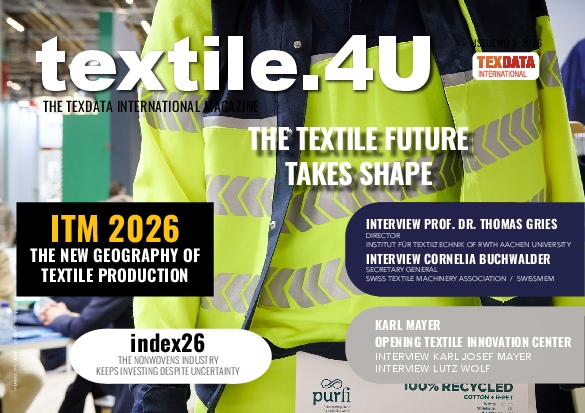
The full article can be read in the latest issue of textile.4U, available for free download here:



More News from TEXDATA International

#ITM 2026

ITM 2026: The new geography of textile production

New production hubs are emerging across North Africa and Central Asia, while Türkiye is accelerating its transformation toward higher-value, technology-driven and more sustainable textile manufacturing.

#Research & Development

“Production is a product”

From technical textiles and AI-driven robotics to the limitations of textile circularity: Professor Dr Thomas Gries looks back on more than two decades of development at ITA Aachen. In the interview, he explains why production technology remains a decisive success factor, discusses international collaborations and innovation ecosystems, and shares his views on the transformation of production landscapes and the challenges facing an increasingly regulated industry.

#Associations

“Innovation, resilience and international experience remain the great strengths of the Swiss textile machinery industry”

Geopolitical uncertainty, growing competitive pressure from China, new free trade agreements and the shift towards a circular economy are currently reshaping the global textile industry. In this interview, Cornelia Buchwalder discusses the current mood within the Swiss textile machinery sector, the industry’s distinctive innovative strength, new market opportunities in India and Asia, and the technological trends that could shape the upcoming trade fair cycle leading up to ITMA 2027.

#Technical Textiles

“ We have multiple companies and divisions operating in textiles, and we decided to integrate them into one platform. ”

At Techtextil 2026, the Aditya Birla Group presented its textile activities as a unified platform for the first time. In this interview, Kapil Agrawal, Business Head Textiles, Acrylic Fibres & Overseas Spinning, explains how the group is expanding from traditional textile products towards integrated technical textile solutions, circularity and higher-value applications – and outlines the role India could play in scaling fibre-to-fibre recycling in the years ahead.

More News on Knitting & Hosiery

#Knitting & Hosiery

Groz-Beckert at Igatex 2026

From October 15 to 18, 2026, Groz-Beckert will present its latest innovations and solutions across the product areas of Knitting, Weaving, Sewing and Spinning at Igatex in Pakistan (Hall 1, Booth A-1-08).

#Knitting & Hosiery

More Jacquard. More functionality. More fashion.

With the addition of another member to its successful RASCHELTRONIC® family, KARL MAYER is opening up new possibilities for creative product development for warp knitting mills and brands. The RJ 4/2 EL offers with two stitch-forming Jacquard bars entirely new design options for functional sportswear and bi-elastic lingerie. Available in gauges E 28 and E 32, this new model helps manufacturers set their collections apart from the competition. The fine E-32 gauges, in particular, impress with their clean surface, a pleasantly soft feel, and an exceptionally elegant look.

#Knitting & Hosiery

KARL MAYER's HKS 2-SE Expands Possibilities for Premium Stretch WARP KNITS

Warp knitted fabrics with a woven look are more in demand than ever in the fashion and apparel industries. Stretch WARP KNITS, in particular, impress with their freedom of movement, breathability, and virtually wrinkle-free wear – thereby opening up new style worlds such as smart casual or business casual. When it comes to the highly efficient production of premium-quality stretch WARP KNITS, the HKS 2-SE has long been the machine of choice. KARL MAYER’s best-selling tricot machine produces standard elastic fabrics characterized by high gauges, smooth, delicate surfaces, and a soft hand feel.

#Knitting & Hosiery

Footwear innovation enabled by warp knitting technology– insights from New Balance

The future of the athletic shoe is increasingly being shaped on warp knitting machines. For KARL MAYER, the footwear industry is one of the most important growth markets – and one of the sectors where innovative textiles can realize their full potential. In his keynote address at the opening of KARL MAYER’s TEXTILE INNOVATION CENTER in Obertshausen in April, Vishnu Prakash Muthusamy, Senior Textile and Materials Engineer at New Balance, explained the opportunities that warp knitting technology opens up for performance, sustainability, and faster development processes, and why textile manufacturers are transitioning from suppliers to development partners.

Latest News

#Spinning

Rieter sees Barmag integration on track as orders and sales rise

The first half of 2026 was shaped by the successful completion of the largest acquisition in Rieter’s history. The Man-Made Fiber Division enables entry into the growth segment of man-made fibers and sustainably strengthens Rieter’s market position in the Asia region. The expanded Group is now the world’s leading system supplier for the processing of natural and man-made fibers. In the first half of the year, initial cost savings in material costs and operating expenses have already been realized. The targeted synergies are expected to amount to at least CHF 20 million by the end of the 2028 financial year. Due to the completion of the acquisition on February 2, 2026, the first half of the year for the Man-Made Fiber Division only amounts to five months.

#Natural Fibers

Better Cotton Initiative multistakeholder event in US unpacks regenerative agriculture potential

The Better Cotton Initiative (BCI), in collaboration with Texas-based partner, Quarterway Cotton Growers, will expand upon its annual US field event to relay the vast potential of regenerative agriculture through an immersive experience of tours and demonstrations.

#Sustainability

bluesign appoints Hanane Taidi as CEO to lead next phase of global impact

bluesign, which partners with the textile industry to reduce adverse impact across the value chain, appoints Hanane Taidi as Chief Executive Officer, marking a pivotal moment as the company builds on its leadership amid rapid industry change.

#Textiles & Apparel / Garment

C&S strengthens its governance to support its evolution

C&S announces the appointment of Marco Lucietti to its Board of Directors. With extensive international experience across the textile and denim industries, Lucietti will work alongside CEO Federico Corneli, contributing to the company’s managerial development, organizational structure and long-term strategic direction.

TOP