[pageLogInLogOut]

#Sustainability

Eastman partnership will help with Brazilian forest restoration

© 2022 Eastman
Eastman has signed a partnership agreement with the environmental nongovernmental organization SOS Mata Atlântica and Bracell, a soluble cellulose producer, to donate 15,000 seedlings in support of a program designed to help restore the Brazilian Atlantic Forest.

Work with SOS Mata Atlântica and Bracell will support Future Forests program.

This environmental initiative will support Future Forests (Florestas do Futuro in Brazilian Portuguese), a program created to catalyze forest restoration in permanent protection areas, such as riparian forests and legal reserves in the Atlantic Forest biome. The project by Eastman, SOS Mata Atlântica and Bracell focuses on forest restoration in Brazil’s Jequitibá region within an environmental protection area on the north coast of Bahia.

Mata Atlântica in Parati/RJ ©Andrea Herrera


An investment by the Eastman Foundation is supporting restoration in the selected area, which is part of Bracell’s Forest Partnership Program. The area, in the municipality of Entre Ríos, is home to two springs. The initiative will contribute to improving the ecosystem service of water regulation, adding benefits to the entire region.
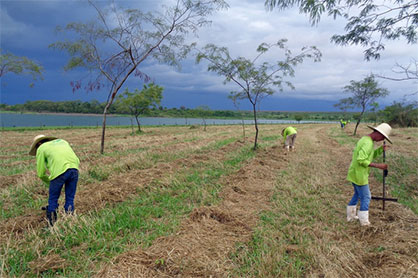
Restoration area of Mata Atlântica ©Loan Barbosa


Details of the restoration project

The restoration will follow a methodology for high density and diversity; there are 2,500 native trees per hectare with 60 to 100 different species. Planting reports will be made after the conclusion of each project phase, along with distribution of periodical reports with planting images during area maintenance and annual reports during the monitoring period.

The Atlantic Forest is a tropical forest biome with more than 90% of its extension in Brazil. It occupies 15% of the Brazilian territory, covering the east coast, northeast, southeast, and southern areas of the country. It is among the priority global ecosystems for restoration, considering biodiversity, climate and cost. The forest is part of a group of ecosystems that — if optimally recovered — could save 71% of species from extinction and absorb almost half of the carbon accumulated in the atmosphere since the Industrial Revolution, according to research conducted by the Brazilian government.

SOS Mata Atlântica was formed in 1986 with the intent to promote public policies that support conservation of the Atlantic Forest. Bracell is a global leader in soluble cellulose and a supplier of cellulose used in the production of Eastman Naia™ Renew cellulosic fiber.


Sustainability drives Eastman objectives

Good stewardship of the world’s forests is a core element of Eastman’s sustainability strategy. Eastman’s partnership in the Atlantic Forest initiative came within a few weeks of the release of the 2022 Canopy Hot Button Report, which ranks Eastman among the top five fiber producers to earn a dark green t-shirt, signaling Eastman’s commitment to sustainable forestry management and fiber innovation.

With Naia™, Eastman wants to make sustainable textiles accessible to everyone. Naia™ Renew is made with 40% certified* recycled material and 60% sustainably sourced wood pulp, sourced from certified forests. The manufacturing process is optimized with a low water and carbon ecological footprint.

"We are excited to partner on an initiative to help restore such a precious natural resource in the Atlantic Forest," said Ruth Farrell, Eastman textiles general manager. "We see major brands committed to using sustainable raw materials that help mitigate the environmental impact, and they are looking for solutions to reduce their carbon footprint and leave a better world for generations to come. And Naia™ will be part of this story."

Eastman has established significant Naia™ sustainability objectives to achieve by 2025. To learn more about the impact Eastman is making through its Naia™ sustainability goals, visit naia.eastman.com/sustainability-goals.

*Allocated via a mass balance approach.


More News from TEXDATA International

#Techtextil 2026

Textile Chemicals & Dyes: Innovation in Textile Chemistry moves into focus at Techtextil 2026

From PFAS-free finishes and water-saving dyeing technologies to advanced coatings and recycling-compatible formulations, innovation in textile chemistry is accelerating across the industry. Reflecting this development, Techtextil 2026 introduces Textile Chemicals & Dyes as a dedicated product segment, highlighting the growing role of chemical solutions in shaping the next generation of technical textiles.

#Recycling / Circular Economy

textile.4U publishes special edition “Top 100 Textile Recycling Companies 2025”

With a comprehensive 176-page special edition, textile.4U is dedicating its latest issue entirely to one of the most dynamic and influential topics in today’s textile industry: textile recycling. The new issue, published exclusively in high-quality print, presents the Top 100 textile recycling companies researched and selected by TexData – organizations that already play a key role in the transition to circular textiles or are expected to have a significant impact in the near future.

#Recycling / Circular Economy

Responsible Textile Recovery Act of 2024 signed by Governor

Senator Josh Newman (D-Fullerton) is proud to announce that Senate Bill 707 (SB 707), the Responsible Textile Recovery Act of 2024, has been signed into law by the Governor of California, Gavin Newsom. This groundbreaking legislation establishes the country’s first Extended Producer Responsibility (EPR) textile recycling program, marking a significant step forward in the state’s efforts to combat waste and promote sustainability.

#Textiles & Apparel / Garment

Modtissimo promotes sustainability with 28 coordinates in the Green Circle

Modtissimo is proving more and more to be a textile and clothing show that delivers the latest innovations in the area of sustainability, with the iTechStyle Green Circle being the main showcase for companies' creations. In this 60+4 edition, taking place on 12 and 13 September, 28 coordinates will be exhibited in a section organised by CITEVE and curated by Paulo Gomes.

More News on Sustainability

#Sustainability

GOTS version 8.0 released: advanced supply chain accountability, from fibre to finished product

Global Standard is pleased to announce the release of GOTS Version 8.0, the latest update to the world's leading processing standard for organic textiles. The updated Standard strengthens requirements for air emissions and waste management, as well as criteria for product safety. It introduces new provisions on circularity, microfibre management and updates in residue testing. Version 8.0 also elevates due diligence obligations and formalises governance requirements, including ESG disclosure, anti-corruption policies and conflict-of-interest safeguards, to support credible, responsible business conduct.

#Sustainability

The nova-Institute establishes new Renewable Feedstock Department to lay the groundwork for industrial defossilisation

The transition from fossil-based to renewable carbon – sourced from biomass, CO₂ utilisation and recycling – is the cornerstone of a climate-neutral chemical industry. The nova-Institute’s new department is dedicated to providing the essential data, analyses and strategic roadmaps required to secure a reliable future feedstock supply and make this transition a commercial and ecological reality.

#Sustainability

Textile Exchange unveils commitment-based pathway for members to accelerate responsible raw material production

Textile Exchange has unveiled further details about its new membership structure, designed to guide the fashion, textile, and apparel industry in a collective course of action toward preferred production systems for raw materials and fibers.

#Textile chemistry

Jeanologia urges industry to accelerate PP Spray phase-out following ZDHC Watchlist update

Potassium permanganate has officially entered the Chemical Watchlist of the ZDHC Foundation, signaling increased scrutiny and potential phase-out of one of the most hazardous chemicals still used in denim finishing. The inclusion confirms an industry shift that Jeanologia anticipated more than a decade ago.

Latest News

#Techtextil 2026

DIENES at Techtextil 2026: Flexible pilot lines for bio-based fiber development

The growing relevance of bio-based materials in technical textiles is accompanied by increasing demands for reproducibility, high-quality data, and scalable process routes. Especially when working with cellulose and its derivatives, chitosan, lignin-based approaches, or bio-based PAN as a carbon-fiber precursor, R&D teams face variable feedstock quality, tighter process windows, and the need for reliable comparability across trials. This calls for flexible, data-driven experimental setups that can be reconfigured efficiently when recipes, solvents, and raw-material batches change.

#Texprocess 2026

Gunold showcases embroidery product range and services at Texprocess

At Texprocess 2026, GUNOLD will present numerous hands-on examples related to embroidery in Hall 8, Booth E20. The focus is on creative embroidery designs as well as the extensive product range of threads, nonwovens, and accessories for embroidery and embellishment. “Trade visitors can once again look forward to many new and creative embroidery designs. Of course, we will also showcase the matching products required to bring these ideas to life,” announces Marketing Manager Stephan Gunold.

#Nonwovens

EDANA and more than 70 industry organisations call for consistent exemptions in EU packaging regulation

EDANA, together with more than 70 industry associations and organisations, has issued a joint statement commenting on the European Commission’s Delegated Act under Article 29 of the Packaging and Packaging Waste Regulation (PPWR).

#Raw Materials

A Powerful Opening: Global thought leaders launch the International Cotton Conference Bremen

The International Cotton Conference Bremen will open on 25 March 2026 in the Parliament building of the Free Hanseatic City of Bremen with a keynote session of exceptional calibre. Distinguished international experts will set the stage for the conference by offering incisive perspectives on the most pressing challenges and the defining trends shaping the future of the global cotton trade. Their insights will span a broad spectrum — from geopolitically driven disruptions affecting global supply chains to the opportunities emerging from innovation-led agriculture capable of supporting a growing world population. Together, these opening keynotes will frame the dialogue of the conference, highlighting both the complexity of today’s market environment and the pathways toward a resilient and forward-looking cotton sector.

TOP