[pageLogInLogOut]

#Sustainability

Guidelines to strengthen current certification schemes for bio-based feedstock

22-09-14 BIORECER kick-off meeting participants screenshot / Source: nova-Institut GmbH
Starting in September 2022, the new HORIZON Europe research project BIORECER aims to ensure the best possible environmental performance and traceability of biological feedstock used by bio-based industries. BIORECER will also assess the impact of current and adapted certification schemes on consumers and bio-based industry stakeholders along with their acceptance of new bio-value chains from biological feedstocks, including residual feedstock and waste.

Biomasses and biowastes present valuable secondary raw materials that require proper evaluation and certification as well as suitable and increasing traceability and transparency to increase their value and use in the bio-based value chains. The evaluation and certification approaches should consider key aspects including environmental performance and trade. The current landscape of certification schemes shows various inhomogeneous approaches and hereby causes a lack of traceability with regard to relevant information on the origin of bio-based products. Therefore, it hinders the availability, effective use and profitability of bio-based industries.

The BIORECER project aims to tackle these issues by developing guidelines for the advancement of current certification schemes, encouraging the establishment of new bio-based value chains and promoting the use of biological feedstocks to replace fossil-based raw materials. It hereby actively supports the goals of achieving a climate-neutral Europe by 2050. Based on these guidelines and within the framework of the project, 10 certification schemes are expected to be adapted in Europe and two non-European countries.

Three main technological pillars

The BIORECER research consortium thrives to realise three main technological pillars:

Development of a multidimensional assessment framework for an aggregated analysis of biological feedstocks and their associated supply chains.

Creation of a BIORECER Innovation Ecosystem living lab (BRIE) with a multi-agent approach in order to test the framework in four case studies with different biological feedstock origins and regional value chains in Spain, Italy, Greece and Sweden.

Making use of all generated knowledge to complement current certification schemes including new criteria for certifying sustainability, origin, and traceability of biological resources, and ensure applicability at EU and global scale.


Two levels of interaction: BioResources Stakeholders Platform and BIORECER Information Communication Technology tool

In order to amplify the reach and scope of BIORECER, the research team will establish two levels of interaction: The BioResources Stakeholders Platform (BRSP) and the BIORECER Information Communication Technology tool “BIT”. While the BioResources Stakeholders Platform will serve as a mobilisation, networking and feedback tool involving a group of representative stakeholders in each case study, the digital BIORECER Information Communication Technology tool “BIT” will analyse incorporated data via machine learning to provide stakeholders with additional insight on biomass key indicators and to enable analytic exploitation of feedstock data. The project consortium anticipates that 10% of the regional bioindustry in Spain, Italy, Greece and Sweden, through the clusters involved, and two more that will be afterwards selected for replication will use the BIORECER platform, which would mean a total of more than 1,000 customers.


International expertise in innovative certification schemes

The BIORECER project combines international expertise from all over Europe. Under the lead of Cetaqua Galicia from Spain, a consortium including Easy Global Market SAS from France, Meo Carbon Solutions GmbH, and nova-Institut für politische und ökologische Innovation GmbH from Germany, Ethniko Kentro Erevnas Kai Technologikis Anaptyxis from Greece, Associazione Cittadinanzattiva Onlus, Cap Holding, UNI – Ente Italiano di Normazione, Universita Politecnica delle Marche, Spring Sustainable Processes and Resources for Innovation and National Growth and Universita degli Studi di Roma Unitelma Sapienza from Italy, Asociacion Nacional de Fabricantes de Conservas de Pescados y Mariscos – Centro Tecnico Nacional de Conservacion de Productos de la Pesca, Betania Legio SL and Universidad de Santiago de Compostela from Spain, Rise Processum AB from Sweden and the Brunel University London from UK will develop innovative certification schemes for bio-based feedstock.

The BIORECER Project receives funding from the Horizon Europe Framework Programme under Grant Agreement Number 101060684.

More information about the project will soon be available at:

http://www.biorecer.eu



More News from TEXDATA International

#Texprocess 2026

Texprocess 2026: Automation, digitalisation and AI reshape textile processing

Investment decisions in textile processing have become increasingly complex. Rising energy prices, labour shortages and geopolitical uncertainties are forcing companies to prioritise technologies that deliver measurable improvements in efficiency and process stability. This applies not only to apparel production, but also to the processing of technical textiles and high-performance materials. Modernisation projects are therefore being evaluated more selectively – but the pressure to upgrade production systems continues to grow. Texprocess 2026 reflects this tension between cautious investment behaviour and increasing technological demand.

#Techtextil 2026

Textile Chemicals & Dyes: Innovation in Textile Chemistry moves into focus at Techtextil 2026

From PFAS-free finishes and water-saving dyeing technologies to advanced coatings and recycling-compatible formulations, innovation in textile chemistry is accelerating across the industry. Reflecting this development, Techtextil 2026 introduces Textile Chemicals & Dyes as a dedicated product segment, highlighting the growing role of chemical solutions in shaping the next generation of technical textiles.

#Recycling / Circular Economy

textile.4U publishes special edition “Top 100 Textile Recycling Companies 2025”

With a comprehensive 176-page special edition, textile.4U is dedicating its latest issue entirely to one of the most dynamic and influential topics in today’s textile industry: textile recycling. The new issue, published exclusively in high-quality print, presents the Top 100 textile recycling companies researched and selected by TexData – organizations that already play a key role in the transition to circular textiles or are expected to have a significant impact in the near future.

#Recycling / Circular Economy

Responsible Textile Recovery Act of 2024 signed by Governor

Senator Josh Newman (D-Fullerton) is proud to announce that Senate Bill 707 (SB 707), the Responsible Textile Recovery Act of 2024, has been signed into law by the Governor of California, Gavin Newsom. This groundbreaking legislation establishes the country’s first Extended Producer Responsibility (EPR) textile recycling program, marking a significant step forward in the state’s efforts to combat waste and promote sustainability.

More News on Sustainability

#Sustainability

GOTS version 8.0 released: advanced supply chain accountability, from fibre to finished product

Global Standard is pleased to announce the release of GOTS Version 8.0, the latest update to the world's leading processing standard for organic textiles. The updated Standard strengthens requirements for air emissions and waste management, as well as criteria for product safety. It introduces new provisions on circularity, microfibre management and updates in residue testing. Version 8.0 also elevates due diligence obligations and formalises governance requirements, including ESG disclosure, anti-corruption policies and conflict-of-interest safeguards, to support credible, responsible business conduct.

#Sustainability

The nova-Institute establishes new Renewable Feedstock Department to lay the groundwork for industrial defossilisation

The transition from fossil-based to renewable carbon – sourced from biomass, CO₂ utilisation and recycling – is the cornerstone of a climate-neutral chemical industry. The nova-Institute’s new department is dedicated to providing the essential data, analyses and strategic roadmaps required to secure a reliable future feedstock supply and make this transition a commercial and ecological reality.

#Sustainability

Textile Exchange unveils commitment-based pathway for members to accelerate responsible raw material production

Textile Exchange has unveiled further details about its new membership structure, designed to guide the fashion, textile, and apparel industry in a collective course of action toward preferred production systems for raw materials and fibers.

#Textile chemistry

Jeanologia urges industry to accelerate PP Spray phase-out following ZDHC Watchlist update

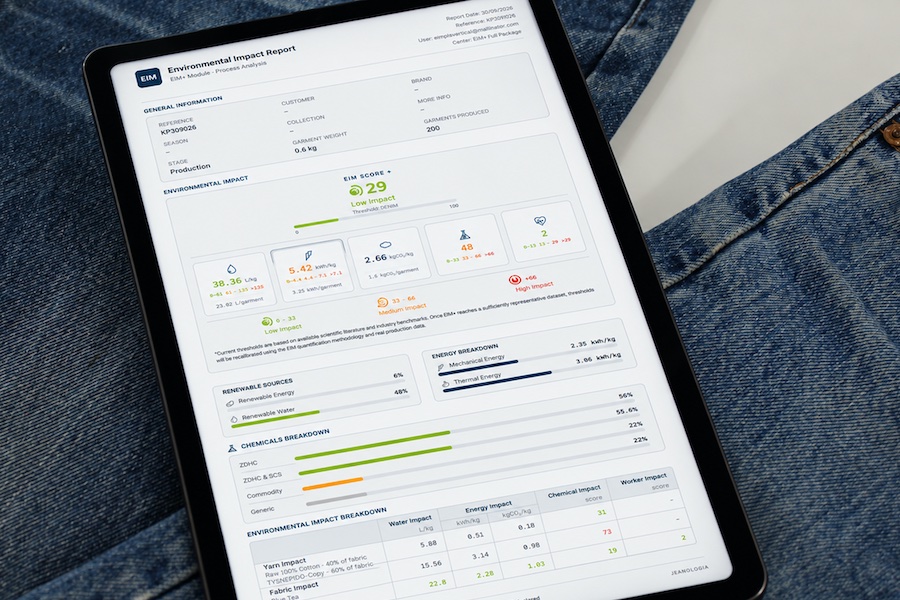
Potassium permanganate has officially entered the Chemical Watchlist of the ZDHC Foundation, signaling increased scrutiny and potential phase-out of one of the most hazardous chemicals still used in denim finishing. The inclusion confirms an industry shift that Jeanologia anticipated more than a decade ago.

Latest News

#Techtextil 2026

Precision, performance and progress: British textile machinery at Techtextil and Texprocess 2026

As global demand accelerates for lighter, stronger and more sustainable technical textiles, the machinery and testing technologies behind their manufacture are evolving at pace. At the Techtextil and Texprocess exhibitions in Frankfurt this April, eight members of the British Textile Machinery Association (BTMA) will demonstrate how advanced engineering continues to shape the performance, precision and resource efficiency of advanced fibre and fabric production.

#Techtextil 2026

STFI presents concepts for the textile circular economy and solutions for a healthy and safe life at Techtextil

Sächsisches Textilforschungsinstitut e.V. (STFI) has been supporting companies in developing marketable innovations for over 30 years. With a clear focus on sustainability, the environment, health and protection, the STFI offers future-oriented research, textile testing for tailor-made solutions and certification of per- sonal protective equipment. At Techtextil 2026, the institute will present ideas for the textile circular econ- omy and showcase solutions for healthy and safe living.

#Techtextil 2026

Cetex: Textile innovations “Made in Saxony” at Techtextil

This year, the Cetex Institut gGmbH is once again not only exhibiting but also organising a joint booth at Techtextil. Together with co-operation partners, textile innovations “Made in Saxony” will be presented on almost 85 m². The spectrum covers everything from textile machine construction and the manufacture of technical textiles to measuring and testing technology, with research and development also having its place.

#Composites

Kordsa showcases its global expertise in material technologies at JEC World 2026

Kordsa, a subsidiary of Sabancı Holding, shared its global expertise in material technologies with participants at JEC World 2026, held in Paris. The company’s solutions developed for a wide range of industries—particularly aviation, energy, and automotive—stood out among its key innovations at the exhibition. Throughout the event, Kordsa also presented its vision for sustainable growth and its strategic transformation in composite technologies to international stakeholders.

TOP