[pageLogInLogOut]

#Sustainability

The LYCRA Company to join panel discussion at the United Nations Conscious Fashion and Lifestyle Network annual meeting

The LYCRA Company, a global leader in developing innovative fiber and technology solutions for the textile and apparel industry, will join a panel discussion at the inaugural United Nations Conscious Fashion and Lifestyle Network Annual Meeting taking place at the United Nations Headquarters in New York City on June 2.

With its recent commercialization of COOLMAX® and THERMOLITE® fibers made from 100% textile waste, The LYCRA Company is uniquely positioned to participate in the discussion titled Responsible Consumption and Production: Designing for Our Times. Jean Hegedus, sustainability director, The LYCRA Company, will share her perspective on how the company is scaling recycling solutions to help address the challenge of textile waste.

The meeting will welcome United Nations Conscious Fashion and Lifestyle Network advisory committee members and registered partnerships by industry stakeholders, media, Governments and United Nations system entities to highlight actions, solutions, and progress from the fashion and lifestyle sectors to advance sector engagement in the implementation of the Sustainable Development Goals adopted by the United Nations Member States in 2015. Discussions will focus on confronting the climate crisis, achieving gender equality throughout the value chain, and ensuring a resilient post-pandemic recovery.

“The LYCRA Company recognizes that the journey towards a more sustainable future is a collective effort across the industry,” said Kerry Bannigan, executive director, Fashion Impact Fund. “We are thrilled to have them join our first annual meeting to discuss solutions that will accelerate the fashion and lifestyle sector’s implementation of the Sustainable Development Goals.”

As the apparel industry looks to rapidly develop solutions for a circular economy, The LYCRA Company is focused on a variety of fiber and fabric innovations that reduce or divert waste, keeping materials in use and out of landfills. The company’s EcoMade family of recycled offerings includes LYCRA®, COOLMAX® and THERMOLITE® fibers made from both pre- and post-consumer waste. The LYCRA Company invites the industry to Keep in the Loop with LYCRA to learn about its latest sustainable innovations and circularity advancements, while also promoting collaboration.

The United Nations Conscious Fashion and Lifestyle Network’s inaugural annual meeting is co-convened by the United Nations Office for Partnerships and the Fashion Impact Fund.


Spokesperson Biography:

Jean Hegedus is the sustainability director for The LYCRA Company. Ms. Hegedus has over 35 years of experience in the textile industry, working first with The DuPont Company, and then INVISTA, before moving to The LYCRA Company in 2019. Over the course of her career, she has held a variety of positions in public affairs, marketing, licensing and branding. She began working in the denim segment in 2007, bringing several important innovations to market, including LYCRA® XFIT, LYCRA® dualFX®, LYCRA® BEAUTY, and LYCRA® EcoMade technologies. It was also her work within the denim segment that heightened her awareness of the need for more sustainable solutions, and in July of 2019, she was appointed sustainability director for The LYCRA Company. Ms. Hegedus has a master’s degree in communications from the University of Delaware.

The LYCRA Company will join a panel discussion at this year’s United Nations Conscious Fashion & Lifestyle Network Annual Meeting at the United Nations Headquarters in New York City on June 2. (Graphic: Business Wire)


More News from TEXDATA International

#ITM 2026

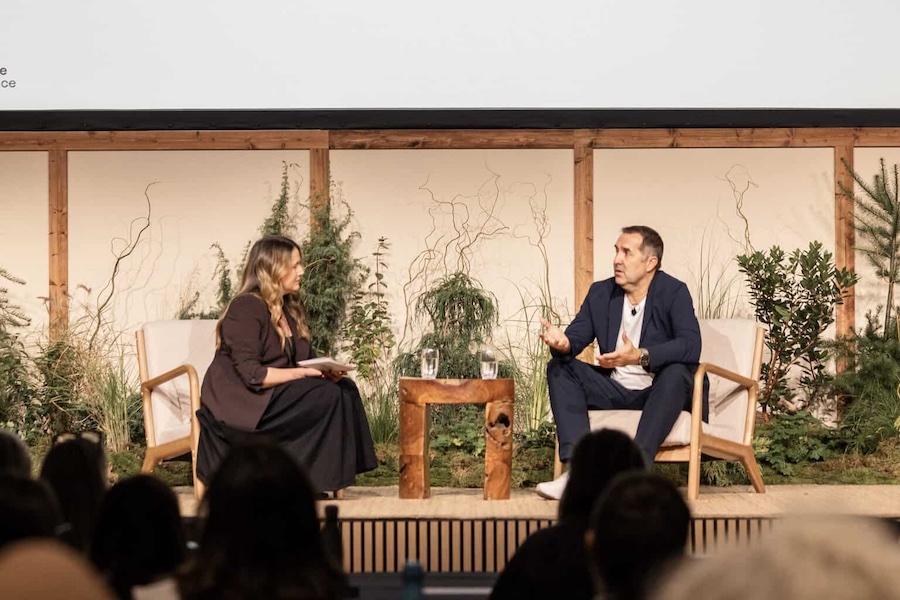
ITM 2026: The new geography of textile production

New production hubs are emerging across North Africa and Central Asia, while Türkiye is accelerating its transformation toward higher-value, technology-driven and more sustainable textile manufacturing.

#Research & Development

“Production is a product”

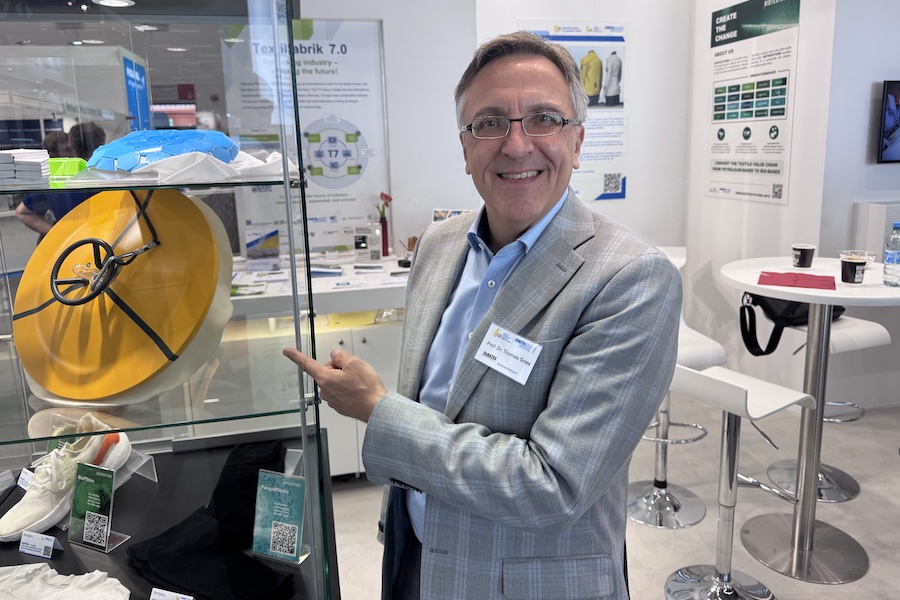
From technical textiles and AI-driven robotics to the limitations of textile circularity: Professor Dr Thomas Gries looks back on more than two decades of development at ITA Aachen. In the interview, he explains why production technology remains a decisive success factor, discusses international collaborations and innovation ecosystems, and shares his views on the transformation of production landscapes and the challenges facing an increasingly regulated industry.

#Knitting & Hosiery

“We need to move away from the price trap and return to a value-driven mindset.”

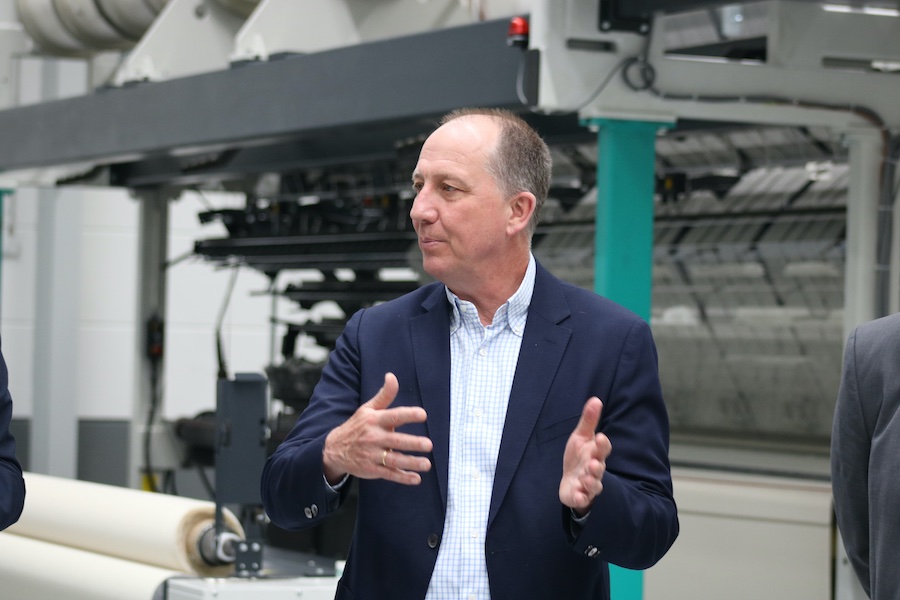
With its new Textile Innovation Center, KARL MAYER is sending a strong signal for innovation, collaboration, and the future of textile applications. In this interview, Karl Josef Mayer discusses new opportunities in warp knitting, the processing of staple fibres, recycling, the changing role of machinery manufacturers, and why the textile industry must once again focus more strongly on the value of textiles. by Oliver Schmidt

#Associations

“Innovation, resilience and international experience remain the great strengths of the Swiss textile machinery industry”

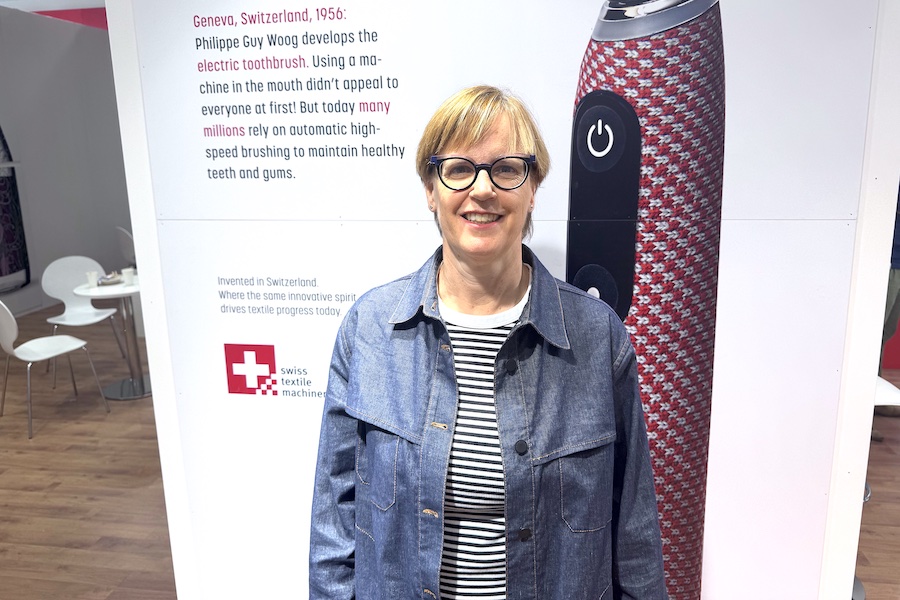
Geopolitical uncertainty, growing competitive pressure from China, new free trade agreements and the shift towards a circular economy are currently reshaping the global textile industry. In this interview, Cornelia Buchwalder discusses the current mood within the Swiss textile machinery sector, the industry’s distinctive innovative strength, new market opportunities in India and Asia, and the technological trends that could shape the upcoming trade fair cycle leading up to ITMA 2027.

More News on Sustainability

#Recycling / Circular Economy

H&M Foundation highlights economic barriers to scaling circular textile systems

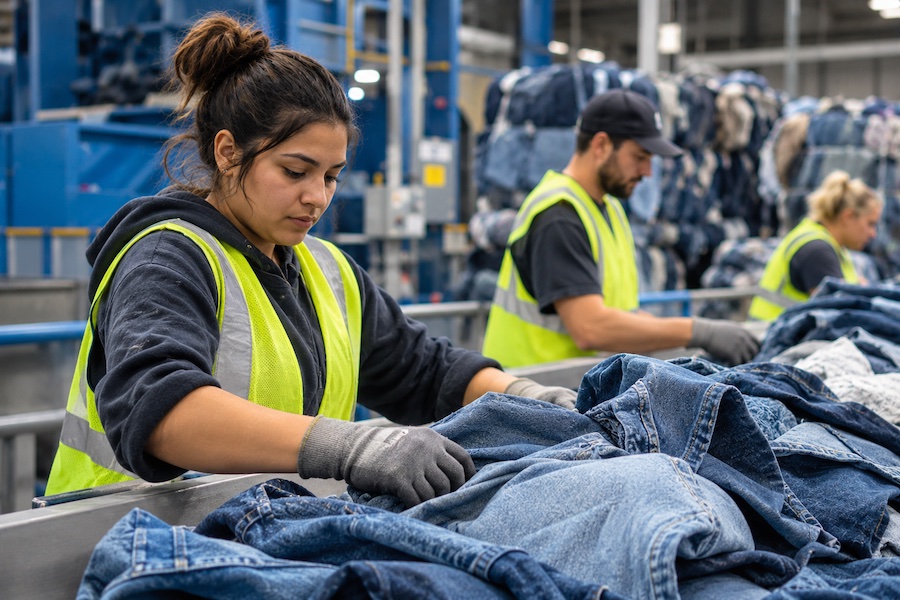
Discussions at Textile Exchange 2026 underline the need for coordinated investment, reliable material flows and a fair distribution of costs and risks across the textile recycling value chain.

#Recycled Fibers

C&A and Zalando join Altag® Fiber Club to accelerate adoption of agricultural waste-based fibres

Fashion for Good and AltMat announced today that C&A and Zalando have joined the Altag® Fiber Club as its first brand signatories, marking a critical commercial milestone in the journey to mainstream adoption of next-generation fibres derived from agricultural waste.

#Industry 4.0 / Digitalization

Jeanologia and BCome connect factory data with Life Cycle Assessment and Digital Product Passports

A new white paper by EIM by Jeanologia and BCome demonstrates how primary environmental data from denim finishing processes can be integrated into a garment's Life Cycle Assessment (LCA) and prepared for use in a Digital Product Passport (DPP). A comparative case study highlights significant improvements at the production stage while also showing how these translate into the environmental performance of the finished garment.

#Sustainability

Textile Exchange 2026: From sustainability commitments to industry-wide action

More than 1,300 participants and over 90 speakers gathered in Vancouver to discuss how the textile and apparel industry can move from planning to implementation, with a focus on resilient supply chains, circularity, regenerative agriculture and collaboration.

Latest News

#India ITME 2026

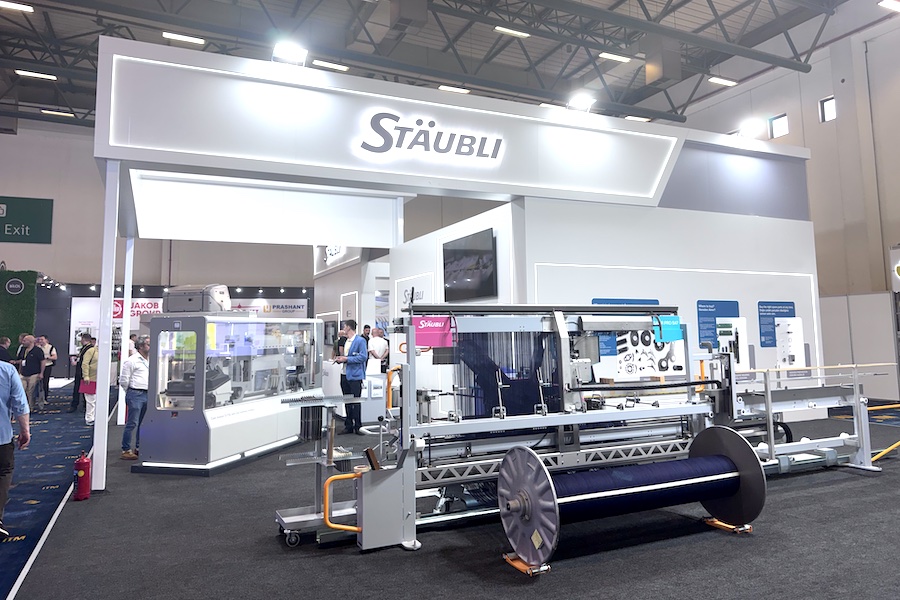
Stäubli to introduce new S3292 dobby for high-speed weaving at ITME India 2026

Stäubli will introduce its new S3292 dobby at ITME India 2026, taking place from December 4 to 9 at the India Expo Centre & Mart in Greater Noida, Uttar Pradesh. Designed for high-speed air-jet weaving, the new machine will be among the highlights of the company's presentation, which also includes warp preparation systems, cam motions, Jacquard technologies and digital services.

#Research & Development

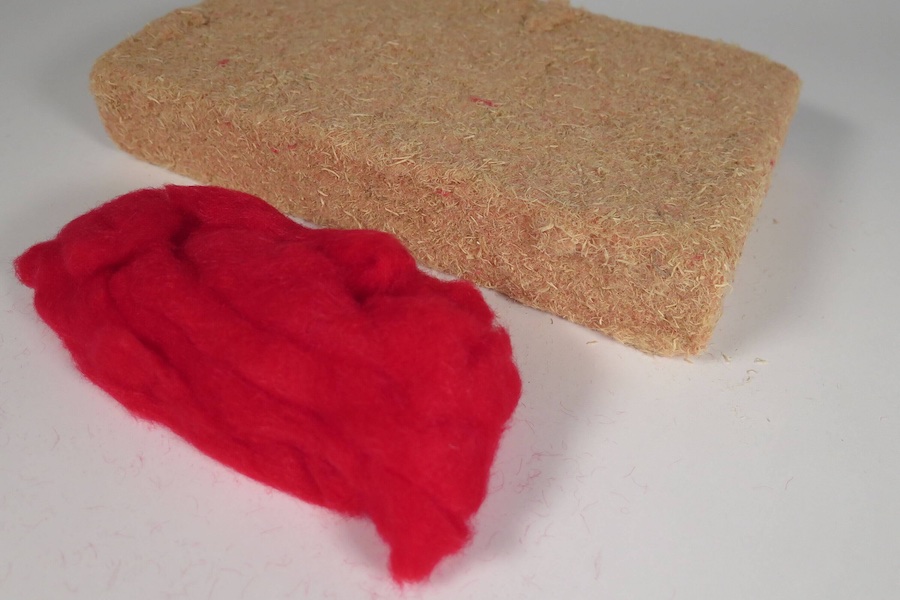
DITF develops bio-based binding fibers for wood-fiber insulation materials

As part of the CelluWoodFlex project, the German Institutes of Textile- and Fiber-Research in Denkendorf (DITF) are developing bio-based cellulose ester fibers as alternative binding fibers for flexible wood fiber insulation materials. In addition to the spinning process and the production of suitable staple fibers, the institute is also investigating how wood and cellulose fibers can be separated and recycled at the end of their useful life.

#Recycled Fibers

Reju expands textile-to-textile recycling network with six international fabric manufacturers

Reju, a textile-to-textile regeneration company, is expanding its industrial network through collaborations with six fabric manufacturers in Europe and the Americas. The initiative aims to accelerate the integration of regenerated polyester into textile manufacturing and support the development of finished fabrics for commercial applications.

#Nonwovens

Magnera highlights HighPleat™ filtration media technology at FiltXPO 2026

At FiltXPO 2026, held on October 28–29 at the Minneapolis Convention Center in Minneapolis, Minnesota, Magnera highlighted advances in air filtration media architecture, with a particular focus on its HighPleat™ platform for MERV 8–10 applications. The technology combines a lofted fiber structure with optimized pore architecture to address the challenge of balancing filtration efficiency, airflow resistance and contaminant-holding capacity.

TOP