[pageLogInLogOut]

#Sustainability

Borealis producing certified renewable Polypropylene at own facilities in Belgium

Borealis has started to produce polypropylene (PP) based on Neste-produced renewable feedstock in its production facilities in Kallo and Beringen, Belgium. This marks the first time that Borealis has replaced fossil fuel-based feedstock in its large-scale commercial production of PP.
  • EverMinds™ in practice: Another milestone reached in Borealis’ efforts to advance the circular economy
  • Kallo and Beringen production sites receive ISCC Plus certification
  • Collaboration with upstream and downstream value chain partners such as Neste and Henkel

The Belgian plants were recently awarded by the International Sustainability and Carbon Certification (ISCC) organization with ISCC Plus certification for its renewable PP. Taking its commitment to the next level for advancing the circular economy, Borealis once again furthers its EverMinds™ ambitions. This path breaking venture in sustainable production is being driven in close collaboration with upstream and downstream value chain partners such as Neste and Henkel. It also aligns with the Borealis aim to ensure that 100% of its consumer products are recyclable, reusable, or produced from renewable sources by 2025.

Value chain collaboration under the flag of greater circularity

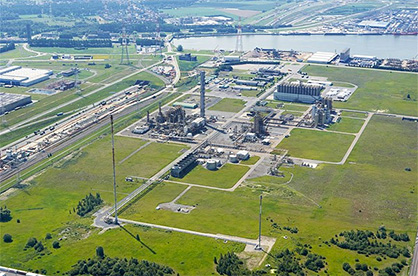
Borealis and its upstream partner Neste are moving the industry closer to a circular economy of plastics thanks to the production start in December 2019 of renewable PP.

After producing renewable propane using its proprietary NEXBTL™ technology, Neste sells the renewable propane to the Borealis propane dehydrogenation plant in Kallo. Here it is converted to renewable propylene, then subsequently to renewable PP at Kallo and Beringen plants.

The recently finalised audits carried out by an independent third party have resulted in an ISCC Plus certification for the renewable PP produced at both Kallo and Beringen plants. This certification encompasses the entire value chain scope and verifies that the renewable feedstock used is certified as being 100% renewable and sustainably produced, including traceability to point of origin.

(c) 2020 Borealis
(c) 2020 Borealis


Downstream partners from a variety of industries such as consumer packaging, automotive, healthcare, and appliance industries can now commercialize their end-use products with a lower carbon footprint based on renewable propylene and PP produced at Borealis’ Belgian plants. In response to increasing demand, Borealis is working with value chain partners to expand availability.

Henkel, a global market leader in the adhesives sector and known for its strong brands in Laundry & Home Care and Beauty Care, has already embraced the values of the circular economy. Having made the use of sustainable materials a key pillar in its packaging strategy, Henkel is committed to work with its value chain partners to drive sustainable packaging solutions. Including renewable PP content in the packaging of a major Henkel brand over the course of the year marks another step in its efforts to reduce its use of fossil fuel-based virgin plastics by 50 percent by 2025.

“Producing renewable PP based on renewable feedstock for the first time in history is another concrete step towards a more sustainable carbon future,” says Lucrèce Foufopoulos, Borealis Executive Vice President Polyolefins, Innovation and Circular Economy Solutions. “Working closely with partners like Neste and Henkel, who share our EverMinds™ mind-set, is key to shaping a better tomorrow. Thinking circular means capitalising on growth opportunities that accelerate the transformation to a circular economy.”

“It is great to see, for the first time in history, a propane dehydrogenation facility using renewable propane to replace fossil feedstock, enabling Borealis to produce mass balance certified renewable polypropylene for sustainability-focused brands like Henkel. This is an exceptional example of collaboration across the value chain making a positive sustainability impact in the polymers sector,'' says Mercedes Alonso, Executive Vice President, Renewable Polymers and Chemicals, Neste.

(c) 2020 Borealis
(c) 2020 Borealis


More News from TEXDATA International

#Recycling / Circular Economy

textile.4U publishes special edition “Top 100 Textile Recycling Companies 2025”

With a comprehensive 176-page special edition, textile.4U is dedicating its latest issue entirely to one of the most dynamic and influential topics in today’s textile industry: textile recycling. The new issue, published exclusively in high-quality print, presents the Top 100 textile recycling companies researched and selected by TexData – organizations that already play a key role in the transition to circular textiles or are expected to have a significant impact in the near future.

#Recycling / Circular Economy

Responsible Textile Recovery Act of 2024 signed by Governor

Senator Josh Newman (D-Fullerton) is proud to announce that Senate Bill 707 (SB 707), the Responsible Textile Recovery Act of 2024, has been signed into law by the Governor of California, Gavin Newsom. This groundbreaking legislation establishes the country’s first Extended Producer Responsibility (EPR) textile recycling program, marking a significant step forward in the state’s efforts to combat waste and promote sustainability.

#Textiles & Apparel / Garment

Modtissimo promotes sustainability with 28 coordinates in the Green Circle

Modtissimo is proving more and more to be a textile and clothing show that delivers the latest innovations in the area of sustainability, with the iTechStyle Green Circle being the main showcase for companies' creations. In this 60+4 edition, taking place on 12 and 13 September, 28 coordinates will be exhibited in a section organised by CITEVE and curated by Paulo Gomes.

#Europe

The EU and Egypt team up to mobilise private sector investments at Investment Conference and sign a Memorandum of Understanding underpinning €1 billion in macro-financial assistance for Egypt

At the EU-Egypt Investment Conference, co-organised by the EU and the Government of Egypt on 29-30 June, the EU and Egypt are teaming up to intensify private sector investments in Egypt. They are also signing a Memorandum of Understanding (MoU) for the disbursement to Egypt of up to €1 billion in Macro-Financial Assistance.

More News on Sustainability

#Textile chemistry

Jeanologia urges industry to accelerate PP Spray phase-out following ZDHC Watchlist update

Potassium permanganate has officially entered the Chemical Watchlist of the ZDHC Foundation, signaling increased scrutiny and potential phase-out of one of the most hazardous chemicals still used in denim finishing. The inclusion confirms an industry shift that Jeanologia anticipated more than a decade ago.

#Textiles & Apparel / Garment

Global Standard strengthens presence in Southeast Asia at VIATT 2026

Global Standard will participate in the Vietnam International Trade Fair for Apparel, Textiles and Textile Technologies (VIATT) 2026, organized by Messe Frankfurt, the first textile trade show in the APAC region this year. Global Standard will host a booth and Felica Shi will lead a seminar on Global Organic Textile Standard (GOTS). The trade fair will take place from February 26 to 28, 2026, in Ho Chi Minh City, Vietnam.

#Sustainability

Ying McGuire becomes new CEO of Cascale

Cascale today announced the appointment of Ying McGuire as Chief Executive Officer, effective June 1, 2026.

#Sustainability

VAUDE eliminates PFAS from all products

PFAS (per- and polyfluoroalkyl substances) are now detectable worldwide – in drinking water, soil and the human body. These so-called “forever chemicals” are considered hazardous to health and potentially carcinogenic, as they do not break down and remain in the environment permanently. Despite these risks, PFAS are still used in a wide range of products. More than 15 years ago, VAUDE made a strategic decision to gradually eliminate PFAS from all product categories.

Latest News

#Raw Materials

Esquel Group adds two new extra-long staple cotton varieties approved

Esquel Group’s Xinjiang Research & Development Center has successfully developed two new Sea Island cotton (Extra-Long-Staple cotton, ELS cotton) varieties named “Yuan Loong 37” and “Yuan Loong 42,” which have been officially approved and granted registration numbers. Both varieties have also obtained Plant Variety Rights certificates, marking another significant breakthrough for the Group in cotton breeding and commercial application.

#Weaving

Itema America acquires Palmetto Loom Reed, strengthening local manufacturing and service in the U.S.

Itema America, the U.S. subsidiary of Italy-based Itema Group, has acquired – through an Assets Purchase Agreement – Palmetto Loom Reed, a Greenville, South Carolina-based manufacturer of weaving reeds and one of the last remaining domestic producers of these precision components in the United States.

#Recycled_Fibers

Reju announces site selection for French Regeneration Hub in Lacq advancing Europe’s circular textile infrastructure

Reju, the textile-to-textile regeneration company based in France, announces the site selection for an industrial sized Regeneration Hub, in Lacq, in the Pyrénées-Atlantiques, on the Induslacq platform. Reju, a Technip Energies owned company, is deepening its roots in France through the development of this new Regeneration Hub.

#Functional Fabrics

lululemon introduces Unrestricted Power™ — A new sensation for strength training

lululemon (NASDAQ: LULU) has unveiled Unrestricted Power™, a new innovation platform engineered for heavy lifts and demanding gym sessions. The assortment, which launches in North America, is backed by thousands of hours of research and development, providing secure support without compromising comfort and mobility, enabling a distraction-free fit built to match every move.

TOP