[pageLogInLogOut]

#Yarn & Fiber

Insempra and Fibers365 announce successful testing of second-generation feedstock to manufacture fermentation-based products

Insempra, a biology-powered company enabling businesses to make superior products with nature, and Fibers365, a company offering chemical-free processed fibers and substrates from annual plants, today announce that they are working together to develop and scale sustainable second-generation (2G) feedstock for the commercial production of fermentation-based ingredients.

2G feedstocks, also known as lignocellulosic feedstocks, are a key area of research and development in biotechnology as the industry is facing a growing need in the application of these in fermentation processes. Fast moving consumer good companies, for example, are demanding sustainably procured raw materials. By utilizing agricultural residues, 2G feedstock has the potential to reduce greenhouse gas emissions by replacing fossil-based and de-forestation-based ingredients and consumer products. Insempra has built a broad toolbox to use feedstocks derived from agricultural wastes and also upcoming intermediates originating from carbon capture methods.

The Fibers365 patented, modular, farm level Steam Fiber Plants allow the competitive extraction of functional cellulosic fibers, lignin and sugars from multi feedstock non-wood biomass. The sugars, currently used for the generation of biogas, can be further valorized by producing high-value products via fermentation for various industrial applications.

“By working together with Insempra, we are combining our unique 2G feedstock derived from agricultural side streams with the highly advanced fermentation technology platform needed to scale and make this sustainable feedstock accessible to broader applications.” said Stefan Radlmayr, Founder and Managing Partner of Fibers365.

One of the primary challenges with 2G feedstocks is the intrinsic material stability of lignocellulosic materials. Unlike first-generation feedstocks (e.g., those derived from beets, corn, sugarcane), which contain easily accessible sugars, lignocellulosic biomass is composed of complex structures that require pre-treatment and enzymatic hydrolysis to release the sugars. Developing efficient and cost-effective pre-treatment methods and robust enzymatic cocktails for biomass deconstruction is a key challenge in the adoption of 2G feedstocks at scale.


Insempra has successfully tested Fibers365’s 2G feedstock derived from agricultural waste streams (e.g., wheat straw) with its proprietary fermentation technology platform. Insempra is using this technology for the development of speciality lipids for application in the beauty and personal care as well as nutraceuticals and food industries. In addition to speciality lipids, Insempra is also working on the production of protein fibers and high-value functional ingredients with 2G feedstocks from agricultural waste.

“Using second-generation feedstocks in our manufacturing processes has always been one of our priorities as a biology-powered business. We are tremendously excited about the potential this technology not only has for our businesses, but for the whole industry.” said Jens Klein, CEO & Founder of Insempra.

By working together, Insempra and Fibers365 tackle the challenge of scaling and aim to maximize the potential of 2G feedstocks to support their mission to manufacture at scale in collaboration with nature, thereby contributing to a more sustainable and circular future.




More News from TEXDATA International

#ITM 2026

ITM 2026: The new geography of textile production

New production hubs are emerging across North Africa and Central Asia, while Türkiye is accelerating its transformation toward higher-value, technology-driven and more sustainable textile manufacturing.

#Research & Development

“Production is a product”

From technical textiles and AI-driven robotics to the limitations of textile circularity: Professor Dr Thomas Gries looks back on more than two decades of development at ITA Aachen. In the interview, he explains why production technology remains a decisive success factor, discusses international collaborations and innovation ecosystems, and shares his views on the transformation of production landscapes and the challenges facing an increasingly regulated industry.

#Knitting & Hosiery

“We need to move away from the price trap and return to a value-driven mindset.”

With its new Textile Innovation Center, KARL MAYER is sending a strong signal for innovation, collaboration, and the future of textile applications. In this interview, Karl Josef Mayer discusses new opportunities in warp knitting, the processing of staple fibres, recycling, the changing role of machinery manufacturers, and why the textile industry must once again focus more strongly on the value of textiles. by Oliver Schmidt

#Associations

“Innovation, resilience and international experience remain the great strengths of the Swiss textile machinery industry”

Geopolitical uncertainty, growing competitive pressure from China, new free trade agreements and the shift towards a circular economy are currently reshaping the global textile industry. In this interview, Cornelia Buchwalder discusses the current mood within the Swiss textile machinery sector, the industry’s distinctive innovative strength, new market opportunities in India and Asia, and the technological trends that could shape the upcoming trade fair cycle leading up to ITMA 2027.

More News on Yarn & Fiber

#Man-Made Fibers

Lenzing reports improved half-year results and advances strategic transformation

Despite a persistently challenging market environment in the first half of 2026, characterized by volatile energy and raw material prices, subdued global consumer demand and intensified competition from Asia, the Lenzing Group significantly improved its financial performance. Net result after tax more than doubled to EUR 35.6 million, compared with EUR 15.2 million in the first half of 2025. Free cash flow increased to EUR 45.8 million, while EBITDA amounted to EUR 239.2 million. Revenue totaled EUR 1.27 billion, compared with EUR 1.34 billion in the previous year.

#Spinning

BICO BCF yarn delivers impressive performance in field testing

In a joint development project with other partners, Barmag and Object Carpet have successfully tested BICO BCF yarn in the carpet manufacturing process. The results show that this innovative yarn technology offers significant performance advantages and opens up new possibilities for recycling-oriented carpet constructions.

#Man-Made Fibers

Ministry of Industry Delegation visits NatureWorks’ second global manufacturing site at Nakhon Sawan Biocomplex

NatureWorks Asia Pacific Limited welcomed a high-level delegation led by Mr. Varawut Silpa-archa, Minister of Industry, to its manufacturing site at the Nakhon Sawan Biocomplex (NBC). The visit follows the successful inauguration of the site on April 29, 2026, and highlights the role of public-private collaboration in advancing Thailand’s sustainable industrial development and bioeconomy ambitions.

#Man-Made Fibers

Sorona® and WGSN announce top bio-based material trends of 2027

Sorona®, the partially bio-based polymer from Covation Biomaterials (CovationBio™), and global trend forecasting authority WGSN today release the material trends shaping the textile industry through 2027 and beyond following a comprehensive examination of bio-based functional fiber applications and global data.

Latest News

#Knitting & Hosiery

SHIMA SEIKI brings new flat knitting technologies to FEBRATEX 2026

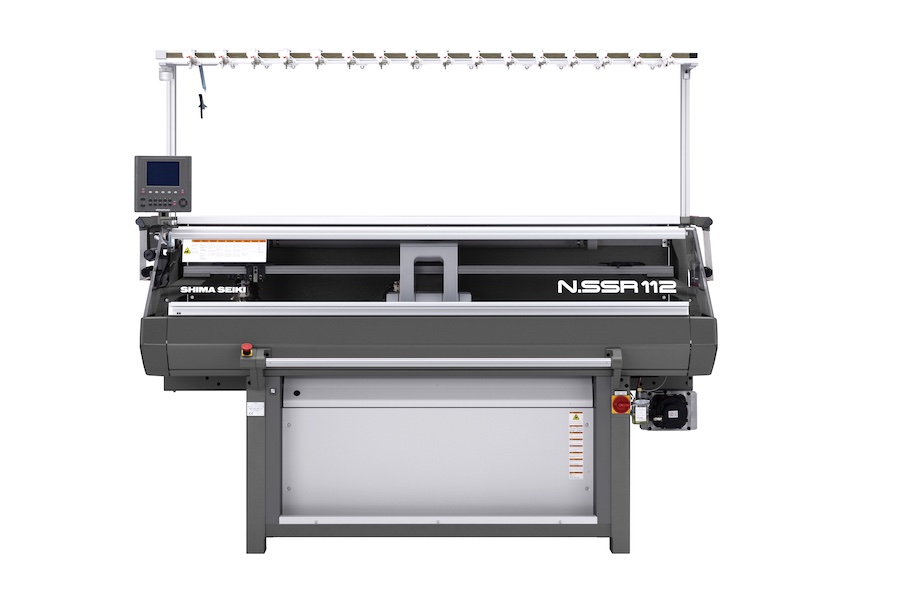
Leading flat knitting solutions provider SHIMA SEIKI MFG., LTD. of Wakayama, Japan, together with its Brazilian representative BRASTEMA TECNOLOGIA TEXTIL LTDA., will exhibit at the Brazilian Textile Industry Fair (FEBRATEX 2026) this month. On display will be a roundup of SHIMA SEIKI computerized flat knitting technology, represented by WHOLEGARMENT® knitting machines, computerized flat knitting machines featuring a brand-new model with high productivity and excellent cost performance, a glove knitting machine and the latest digital solutions.

#Recycling / Circular Economy

German 'ZOLL' turns end-of-life uniforms into valuable raw materials

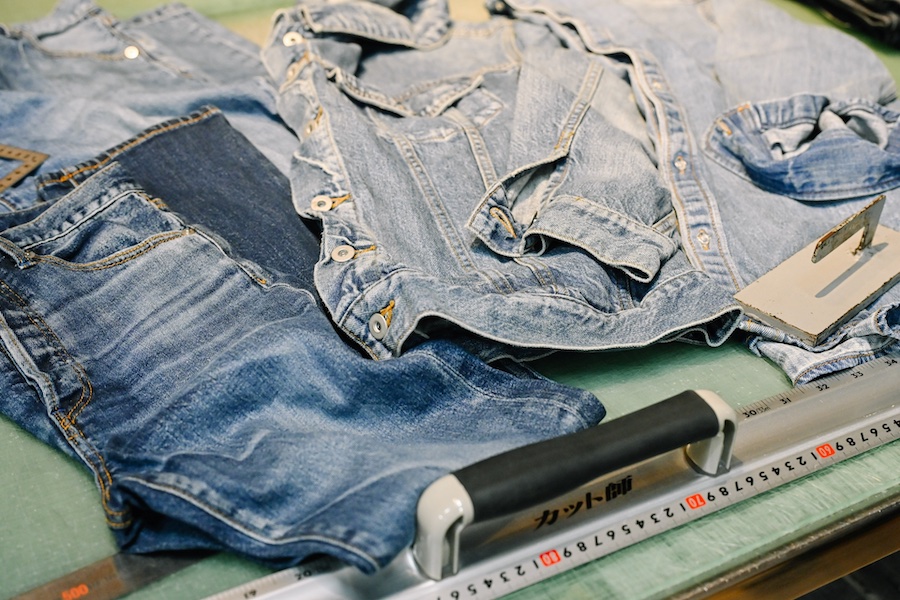
Together with CWS Workwear, the German Customs Administration is extending the life cycle of service uniforms through reuse, recycling and material recovery, demonstrating how circular economy principles can be successfully implemented in the public sector while delivering significant savings.

#Spinning

Trützschler’s latest spinning and card clothing innovations at CAITME 2026

From September 8 to 10, 2026, Trützschler will present its latest innovations in spinning and card clothing for state-of-the-art fiber processing at CAITME in Tashkent, Uzbekistan. Visitors are invited to meet the experts at Pavilion 2, Booth D50 and explore solutions designed to increase productivity, streamline processes, and ensure consistently high yarn quality. Key topics include the next-generation card TC 30i, the integrated draw frame IDF 3, the high-performance comber TCO 21XL as well as Trützschler Card Clothing’s new flat top series STEELTOP®.

#Textile chemistry

Fashion for Good launches DW(O)R-X to navigate the emerging landscape of PFAS-free finishes

Fashion for Good announced the launch of Project DW(O)R-X, a collaborative initiative designed to benchmark PFAS alternative durable water- and oil-repellent (DW(O)R) chemistries. Responding to growing market demand for alternatives to PFAS‑based finishes, the project aims to generate reliable, comparable data that can support informed sourcing decisions and the assessment of emerging chemistries.

TOP