#Man-Made Fibers
Lenzing and Kaihara to debut REMOD denim collection at Kingpins Amsterdam
The new collection explores different fiber combinations and denim textures, while Lenzing's global HV100 mill partner network grows to nearly 50 mills across 13 countries
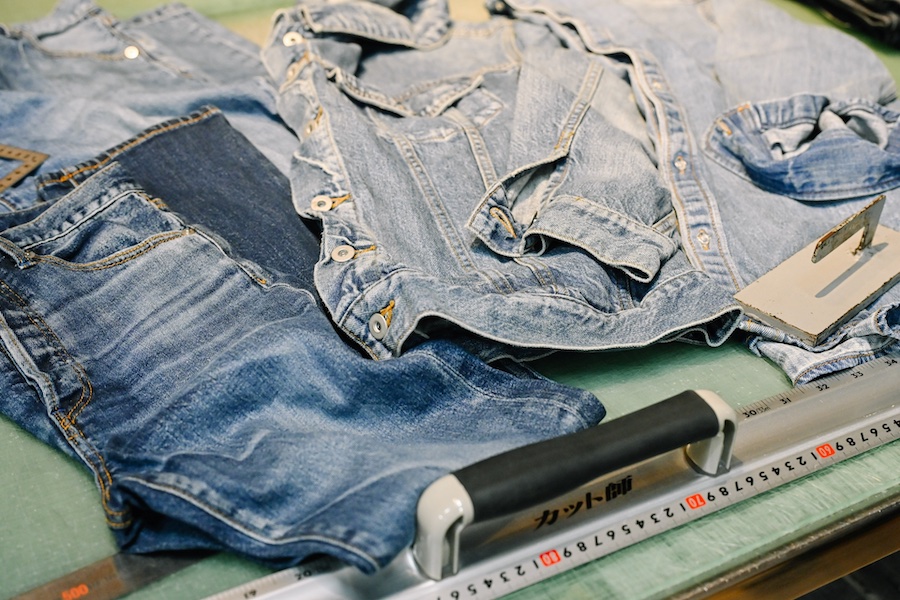
Developed at Kaihara's vertically integrated mill in Hiroshima, Japan, the collection explores different fiber ratios to create distinctive hand feels and surface textures while preserving denim's authentic character. It will be presented at Kingpins Amsterdam on October 14–15, 2026, at Lenzing's booth 19 in the yellow zone.
Dennis Hui, Global Business Development Manager, Denim at Lenzing, highlights the different characteristics and applications of the three fiber types: “We are delighted to work with Kaihara Corporation again. TENCEL™ fibers have been part of Kaihara’s collections since the 1990s and every chapter has asked something different about the material. What makes this latest ‘REMOD Collection’ especially exciting is how each fiber is celebrated in various applications as a discovery of what is possible with each TENCEL™ fiber type. From our cotton-inspired TENCEL™ Lyocell – HV100 showcased across a variety of pieces within the collection, alongside TENCEL™ Lyocell Standard used in others. Meanwhile, our linen-inspired TENCEL™ Lyocell dtex 2.2 features in its own distinct articles. Each brings authentic denim character with elevated comfort and hand feel. We can’t wait to see mills, brands and designers gain fresh inspiration to play with the many application possibilities within the TENCEL™ Lyocell fiber portfolio.”
Reinterpreting denim's texture, depth and character
Featuring a selection of denim garments, the REMOD Collection combines the traditional appearance of cotton denim and Japanese denim craftsmanship with different material characteristics. The range includes heavyweight men's jackets, mid-weight wide-leg and stretch jeans, as well as cotton-free casual shirting. The collection demonstrates different fiber-blending possibilities, including constructions with and without cotton.
TENCEL™ Lyocell – HV100 contributes a cotton-inspired aesthetic. The fiber has a linear density of 1.7 dtex and a semi-dull appearance. Lenzing's Variocut technology produces deliberate variations in staple length, creating subtle irregularities and a matte, more opaque appearance commonly associated with cotton. The fiber can be blended in different ratios with TENCEL™ Lyocell Standard, cotton or linen.
TENCEL™ Lyocell dtex 2.2, with a linear density of 2.2 dtex and staple lengths of 51 mm or 38 mm, is coarser than standard TENCEL™ Lyocell. It produces a drier, stiffer touch and a natural slub pattern reminiscent of linen, adding body and structure to fabrics without additional weight. These properties are particularly relevant for garments that need to retain their shape during wear and washing.
TENCEL™ Lyocell Standard, meanwhile, contributes softness, fluid drape and color depth. By combining the different fiber types, the collection demonstrates how textile manufacturers can adjust surface appearance, fabric structure and comfort within the same fiber family.
Akihiro Maehara, Director, Market Planning Division at Kaihara Corporation, emphasizes the importance of texture in premium denim: “Texture is one of the most defining elements of premium denim, shaping both its character and visual appeal. For this collection, we harnessed the unique attributes of each TENCEL™ Lyocell fiber type to add value to the denim in distinct ways, creating fabrics that balance authentic denim aesthetics with softness, drape and comfort. We are proud to bring our longstanding manufacturing expertise together with the new material possibilities offered by Lenzing to explore new expressions of texture and visual depth.”

A growing international mill network
Alongside the launch of the REMOD Collection, Lenzing is marking the first anniversary of TENCEL™ Lyocell – HV100 with the announcement of its third cohort of mill partners.
The fiber was introduced at Kingpins Amsterdam in October 2025 with 17 mills across five countries. By April 2026, the network had expanded to 37 mills in nine countries. With the addition of 11 mills in the third cohort, the network now comprises nearly 50 mills across 13 countries.
India joins the network for the first time, represented by LNJ, Signet, Anubha and Bhaskar. Other new partners include mills in Taiwan, China, Brazil and Pakistan. The expansion strengthens the international manufacturing and sourcing network for TENCEL™ Lyocell – HV100.
According to Lenzing, one of the fiber's advantages is its compatibility with existing textile manufacturing processes. Mills can process TENCEL™ Lyocell – HV100 using established machinery, process steps and chemicals, allowing them to broaden their material offerings without additional capital investment in equipment.
Tuncay Kılıçkan, Head of Global Business Development, Denim at Lenzing, points to the importance of predictable processing characteristics and reliable sourcing for denim manufacturers and brands: “Brands want more choices in how they create denim, but they also want confidence in the materials and partners they work with. Planning a denim programme means committing months ahead, so a material that behaves predictably – in supply, in processing, in how it wears – is worth a great deal. TENCEL™ Lyocell – HV100 gives brands that, while preserving the authenticity, timelessness and comfort that make denim a wardrobe staple. A year on, close to 50 mills have already brought the fiber into their products, which means a brand can explore a broader material palette for future collections and know where to source it.”
Environmental characteristics and production technology
In addition to their different textile properties, the TENCEL™ Lyocell fibers used in the collection share several environmental characteristics associated with Lenzing's lyocell production process.
According to the company, LENZING™ Lyocell fibers are manufactured with at least 50% lower carbon emissions and water consumption compared with generic, unbranded lyocell fibers. These figures are based on life cycle assessment calculations in accordance with ISO 14040/44 and are available through the Higg Materials Sustainability Index (MSI), version 3.12, published in May 2026.
The fibers are produced from wood sourced from FSC®- or PEFC-certified or controlled sources. Lenzing uses a closed-loop production process in which more than 99.8% of the solvent is recovered and returned to the production cycle.
Lenzing also states that its standard lyocell fibers have been certified by TÜV AUSTRIA as biodegradable in soil, freshwater and marine environments, and compostable under home and industrial conditions. TENCEL™ Lyocell – HV100 is based on LENZING™ Lyocell Standard fibers with a specific variation in cut length.
These characteristics provide additional material options for manufacturers seeking to combine specific textile properties with documented environmental performance.
Presentation at Kingpins Amsterdam
Lenzing will present the REMOD Collection together with other fiber products and developments at Kingpins Amsterdam on October 14–15, 2026. Visitors can explore the different fiber combinations and denim constructions at booth 19 in the yellow zone.
The presentation brings together Lenzing's fiber developments, Kaihara's denim manufacturing expertise and the expanding international network of mills processing TENCEL™ Lyocell – HV100.