[pageLogInLogOut]

#Research & Development

DITF develops bio-based binding fibers for wood-fiber insulation materials
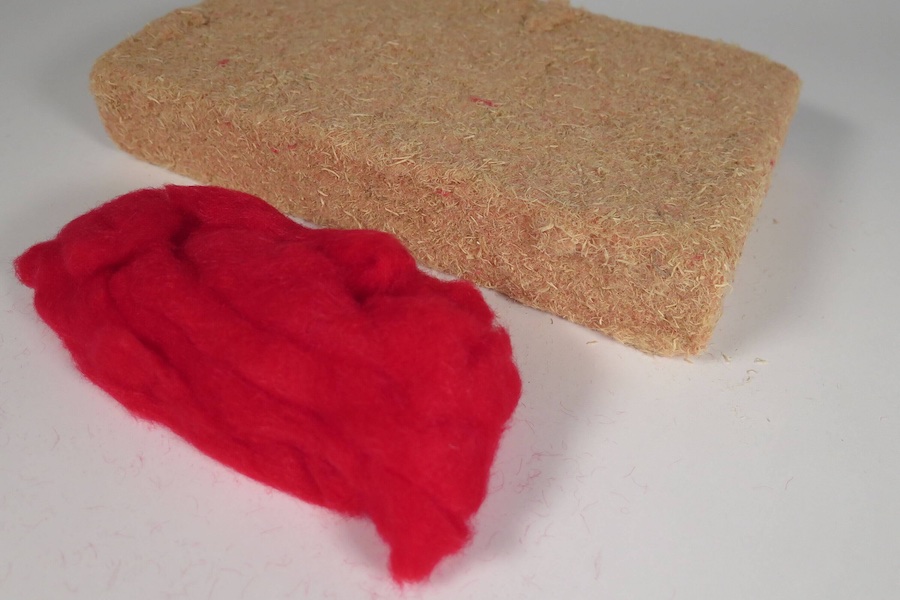
Red-dyed cellulose acetate propionate (CAP) staple fibers alongside a wood-fiber insulation board, illustrating the use of bio-based binding fibers in sustainable insulation materials. (Photo: DITF) © 2026
As part of the CelluWoodFlex project, the German Institutes of Textile- and Fiber-Research in Denkendorf (DITF) are developing bio-based cellulose ester fibers as alternative binding fibers for flexible wood fiber insulation materials. In addition to the spinning process and the production of suitable staple fibers, the institute is also investigating how wood and cellulose fibers can be separated and recycled at the end of their useful life.

How can flexible wood fiber insulation materials be produced sustainably and recycled at the end of their useful life? The “CelluWoodFlex” research project is addressing this question. In this collaborative project, DITF are taking on key roles related to the production and processing of cellulose ester fibers. Initial work has already been successfully completed.

The project focuses on thermoplastic binding fibers based on cellulose esters. In the future, these are intended to replace fossil-based plastic fibers, which are currently often used to bind wood fibers in flexible insulation mats. This bio-based approach opens up new possibilities for reducing the use of fossil raw materials and improving the material recycling of these products after their use.

From the Spinning Process to the Finished Staple Fiber

DITF are working to establish the spinning process for thermoplastic cellulose ester fibers. In this process, the raw materials are processed into fine fibers intended for use as binding fibers. Another step in the process is cutting the fibers to specific lengths. This produces staple fibers, which are then blended with wood fibers at the project partner IHD (Institut für Holzfasern Dresden gGmbH). The goal is to achieve the most uniform distribution possible of the binding fibers so that they can reliably fulfill their function in the resulting insulation material.

The first project steps at DITF have already been completed. The research team at the Competence Center for Biopolymer Materials has developed and successfully implemented the spinning process for fibers made from the cellulose ester “cellulose acetate propionate” (CAP). The fibers were processed into staple fibers and dyed. The work carried out so far thus lays an important foundation for the further development and processing of these bio-based binding fibers.

Making Recycling a Priority from the Start

In addition to fiber production, the focus is also on the end of the product life cycle. The DITF research team is investigating ways to separate wood and cellulose fibers from one another after they have been used together. The goal is to enable the separated components to be recycled as raw materials. This means that, even during the development of the binding fibers, consideration is given to how the materials can later be recovered and reused.

As the project progresses, the findings will be incorporated into the processing of the fibers and the assessment of their recyclability. Together with the other project partners, the goal is to lay the foundation for flexible wood fiber insulation materials that use bio-based binding fibers and open up new prospects for improved circularity.

The IGF research project “CelluWoodFlex” is funded by the Federal Ministry for Economic Affairs and Energy pursuant to a resolution of the “German Bundestag”. Funding ID: 01IF25128N

More News from Deutsche Institute für Textil- und Faserforschung Denkendorf

#Recycling / Circular Economy

DITF establishes CYCLOTEXUM recycling center to advance mechanical and solvent-based textile recycling

As part of the CYCLOTEXUM research project, the German Institutes of Textile and Fiber Research Denkendorf (DITF) established the CYCLOTEXUM recycling center. There, in collaboration with industry partners, the center develops application-oriented solutions for mechanical and solvent-based recycling processes. The technologies developed make a significant contribution along the textile value chain toward the efficient use of textile resources in the future and the transition of production in the German textile sector to a circular economy. The project was funded by the Ministry for the Environment, Climate and Energy Sector of the State of Baden-Württemberg.

#Research & Development

25 years of medical devices: ITVP combines experience with innovation

ITV Denkendorf Produktservice GmbH (ITVP) is celebrating its 25th anniversary. On October 1, 2001, ITVP was founded as a subsidiary of the German Institutes of Textile and Fiber Research Denkendorf (DITF), Europe’s largest textile research center. This spin-off company made it possible to consolidate expertise in medical technology and significantly expand production, which had previously been initiated mostly in the DITF’s cleanrooms.

#Research & Development

Reducing development times for technical textiles by accelerated thermo-oxidative aging in a high-pressure autoclave

Synthetic polymers used in technical textiles can be effectively protected against degradation caused by heat, oxygen, and water through the use of stabilizer systems. This enables service lives of several decades, extending to more than 50 years. As the use of durable technical textiles continues to grow, so does the demand for reliable methods to predict their service life within economically feasible testing periods. For the first time the German Institutes of Textile and Fiber Research Denkendorf (DITF) developed methods for robust service life prediction for textiles in an IGF research project.

#Research & Development

Europe is committed to recycling end-of-life wind turbine blades

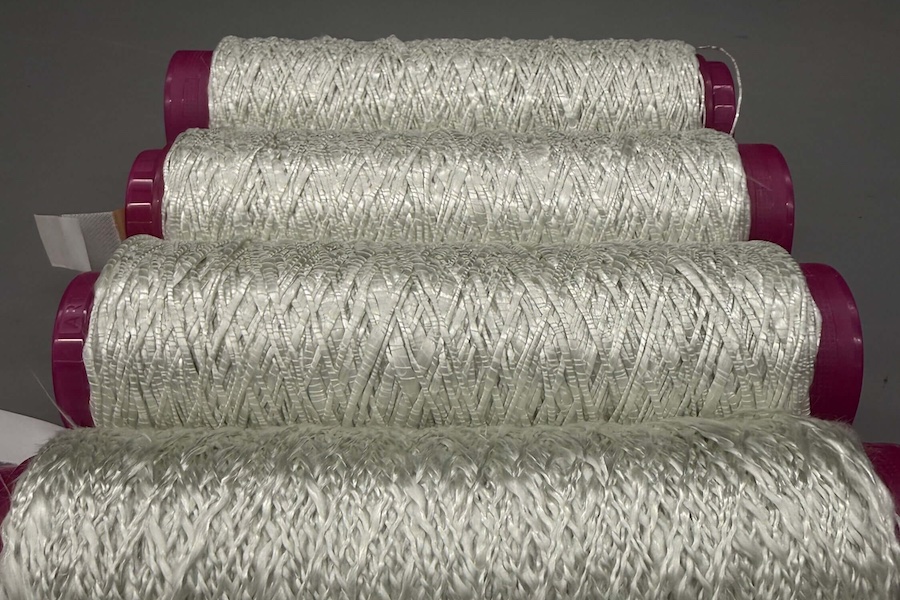
Starting in 2026, Europe’s wind energy industry has committed itself to ensuring that wind turbine blades do not end up in landfills once they reach the end of their service life. The EU-funded research project REWIND is exploring ways to reuse this composite waste. The German Institutes of Textile and Fiber Research Denkendorf (DITF) are one of 13 project partners from seven countries.

More News on Research & Development

#Research & Development

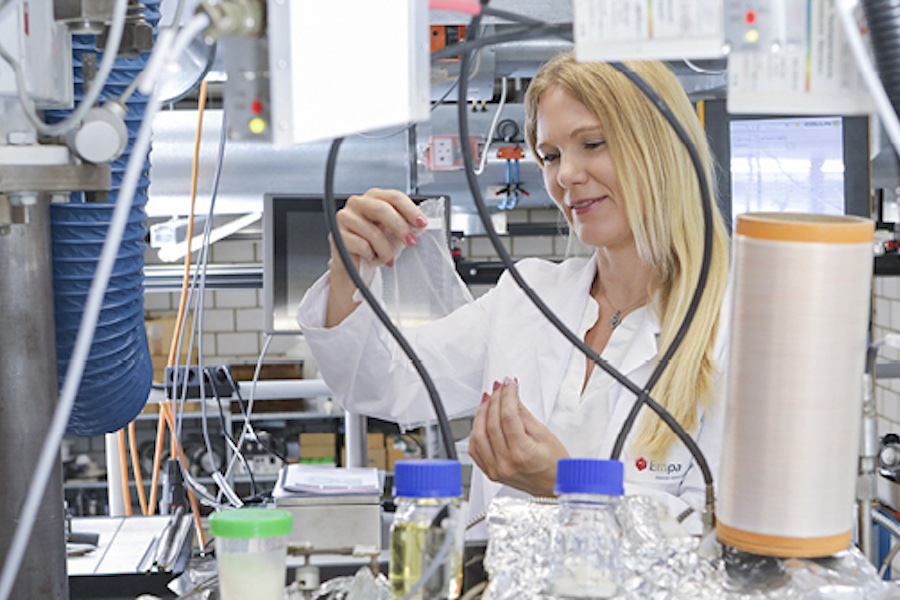
Empa develops liquid-core fibre for insecticide-treated mosquito nets

Empa researchers have developed a liquid-core fibre for mosquito nets that can incorporate insecticides unsuitable for conventional melt spinning. The fibre gradually releases the active ingredient through a polymer sheath. The team developed and tested the yarn over three years in the Innosuisse project MalCoFil with Swiss industry partners Vestergaard and Monosuisse.

#Weaving

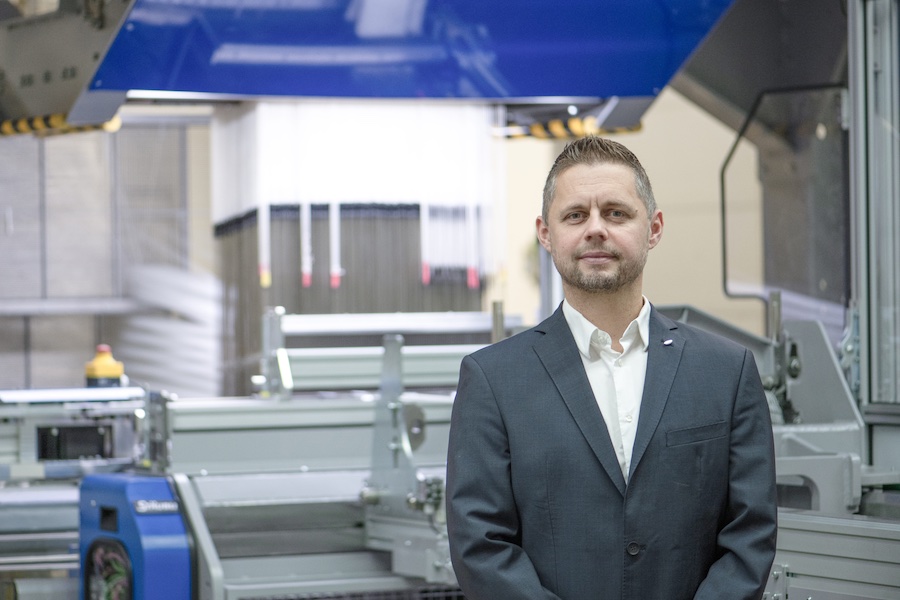
“A complex design is only useful if the machine can reproduce it consistently”

Andreas Schnabel, Head of R&D for Technical Weaving Systems at Stäubli, discusses how 3D weaving can create textile reinforcements tailored to the loads within a composite component, where near-net-shape weaving can reduce processing steps and material waste, and what it takes to produce complex structures reliably and economically. He also explains how manufacturers can adapt Stäubli’s modular TF weaving platforms to new applications and how the company’s centre of excellence in Bayreuth supports the transition from research to industrial production.

#Research & Development

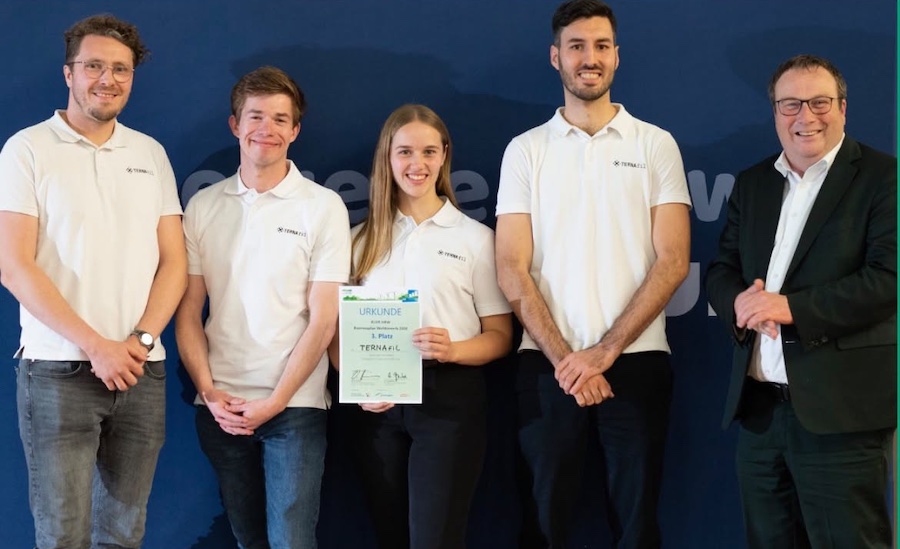
ITA spin-off TERNAfil wins third place at KUER.NRW 2026 with MAXCarbon technology

The Aachen-based ITA spin-off TERNAfil GmbH has secured third place in the KUER.NRW Business Plan Competition 2026 with MAXCarbon, an innovative carbon-ceramic hybrid fibre developed for applications in the hydrogen economy. The technology combines the mechanical properties of carbon fibres with the thermal and corrosion resistance of ceramic materials.

Latest News

#ITMA Asia + CITME 2026

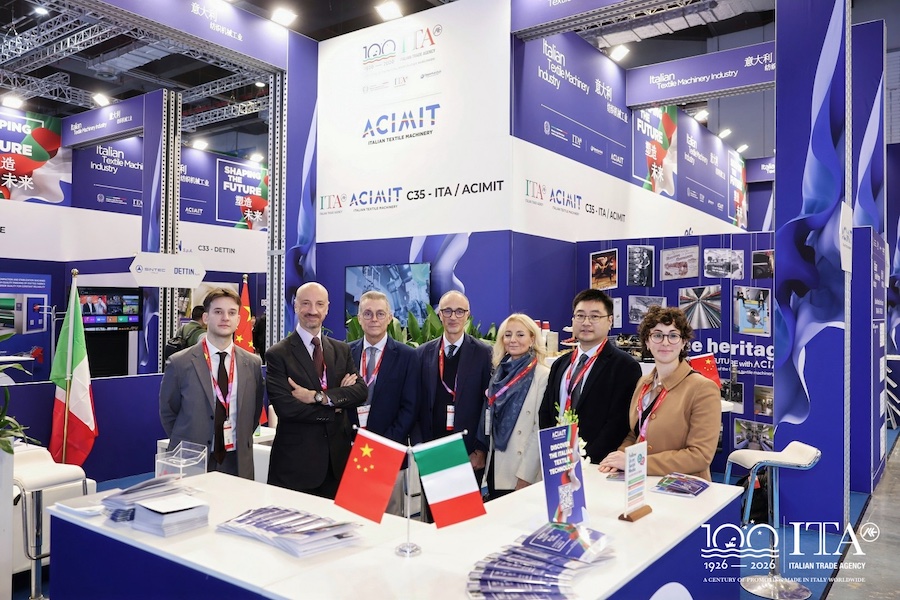
ACIMIT highlights strong Italian presence in Shanghai and looks ahead to ITMA 2027 and ITMA ASIA 2029

Following the conclusion of ITMA ASIA + CITME 2026, held in Shanghai from 20 to 24 November, ACIMIT, the Association of Italian Textile Machinery Manufacturers, highlights the strong participation of the Italian textile machinery industry at the exhibition.

#CINTE Techtextil China 2027

Cinte Techtextil China confirms 2027 dates with focus on high-value technical textiles and nonwovens

Cinte Techtextil China will return to Shanghai from 31 August to 2 September 2027, reaffirming its role as a major platform for the technical textiles and nonwovens industry in Asia. In 2026, the exhibition welcomed over 300 exhibitors from 15 countries and regions and recorded nearly 19,000 visits from 86 represented markets. The upcoming edition will focus on high-growth application areas, technological innovation, sustainability and targeted business networking.

#India ITME 2026

BRÜCKNER combines premium technology with cost efficiency at India ITME 2026

At India ITME 2026 in Greater Noida, BRÜCKNER will showcase its advanced technologies for textile finishing and coating in Hall 16, Booth A29, with a particular focus on its POWER-FRAME SFP-2 product line. The German machinery manufacturer is specifically addressing customers who demand high standards of quality and efficiency while also placing great importance on cost-effective investment and long-term economic competitiveness.

#ITMA Asia + CITME 2026

KARL MAYER reports strong customer response at ITMA ASIA 2026 and Product Show in Changzhou

KARL MAYER has reported strong customer interest during the first days of ITMA ASIA + CITME 2026 in Shanghai and its accompanying Product Show in Changzhou. With two exhibition booths (Hall 4.1, Booth C18 and Hall 3, Booth A24) and a total of eleven machines demonstrated live across its presentations, the company has received positive feedback on its strategy of combining local market proximity, advanced machine technology and textile innovation.

TOP