#Nonwovens
Magnera highlights HighPleat™ filtration media technology at FiltXPO 2026
At FiltXPO 2026 in Minneapolis, Magnera highlighted how optimized fiber structures and media architecture can improve airflow, increase dirt-holding capacity and extend filter service life.
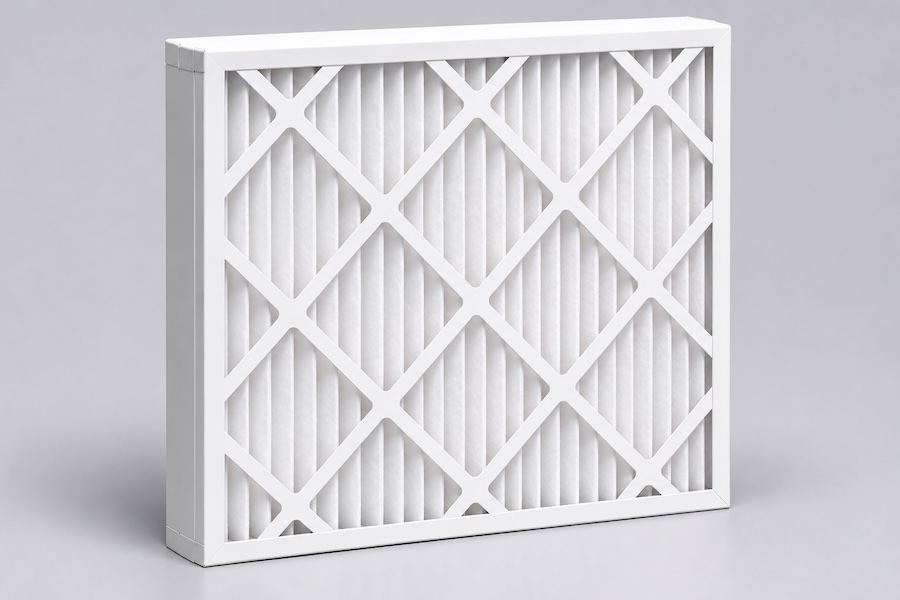
Magnera is highlighting the role of engineered media architecture in improving air filtration performance with its HighPleat™ platform, developed for MERV 8–10 filtration applications. The technology uses a lofted fiber structure and optimized pore architecture to address the challenges of balancing filtration efficiency, airflow resistance and contaminant-holding capacity.
As filtration requirements become more demanding, manufacturers are increasingly focusing on the structural design of filter media alongside fiber selection. Factors such as pore size distribution, material thickness, loft and fiber orientation influence pressure drop, airflow characteristics and the amount of contaminants a filter can retain before replacement becomes necessary.
Lofted structures improve airflow characteristics
HighPleat™ features an open, resilient media construction designed to provide larger pathways for airflow while maintaining effective particle capture.
According to Magnera, internal testing has demonstrated a mean pore size approximately 15 to 20 percent larger than that of conventional alternatives. The optimized structure is intended to provide additional space for contaminant accumulation without compromising the filtration performance required for MERV 8–10 applications.
The increased loft also contributes to the available volume within the filter medium, allowing particles to accumulate throughout the structure rather than concentrating primarily at the surface.
This approach is designed to delay filter loading and reduce the rate at which pressure drop increases during operation.
Increasing dirt-holding capacity and filter service life
Dirt-holding capacity is a key performance parameter in air filtration, particularly in HVAC systems where increasing pressure drop can affect energy consumption and airflow.
As particles accumulate within a filter medium, airflow resistance typically increases. Media capable of retaining more contaminants before reaching their terminal pressure drop can help extend service intervals and reduce maintenance requirements.
According to Magnera, customer evaluations of HighPleat™ have demonstrated increased dirt-holding capacity compared with conventional pleated filter media.
The company states that this can support longer operating periods between filter replacements and more consistent filtration performance.
However, the performance characteristics are based on internal testing under controlled conditions, and actual results may vary depending on system configuration and operating environment.
Media architecture as a key development factor
The HighPleat™ platform illustrates a broader approach to filtration media development in which fiber arrangement and structural design play an increasingly important role.
Traditionally, improvements in filtration efficiency or contaminant-holding capacity have often been associated with higher pressure drop and reduced airflow. Optimizing pore architecture and media loft offers opportunities to address these competing requirements.
By combining engineered fiber structures with increased contaminant storage capacity, Magnera aims to provide filter manufacturers with greater flexibility in designing filtration products for residential, commercial and industrial HVAC applications.
The development demonstrates how structural engineering of nonwoven filter media can contribute to improved filtration performance, operational efficiency and longer service intervals.
Magnera's presentation at FiltXPO 2026 underlined the growing importance of media architecture in the development of high-performance filtration materials. With HighPleat™, the company demonstrated how engineered nonwoven structures can help filter manufacturers address increasing requirements for airflow efficiency, contaminant storage capacity and service life.