[pageLogInLogOut]

#Smart Textiles

Smart surfaces create smarter HMIs, finds strategy analytics
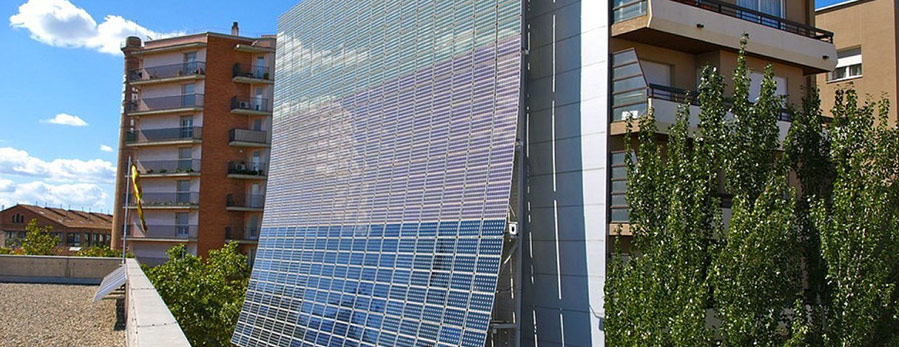
Figure 1. BAPV Smart Wall (Image Source: Wikipedia)
Strategy Analytics - Smart surfaces and materials are the building blocks to smart buildings, smart transportation and smart cities. By integrating technology directly into the fabric of everyday objects such as walls, clothing and vehicles, the environment in which consumers operate will become inherently intelligent. While applications of smart technology can be far reaching, most focus is currently found within transportation, construction and healthcare industries.

Employing Smart Surfaces Maximizes Efficiencies of Operation in Construction, Transportation and Healthcare Industries

A new report from the Strategy Analytics’ User Experience Strategies (UXS) service, “Can smart surfaces create smarter HMIs? Advances & use cases”, highlights broad and specific advancements in smart surfaces and materials which have the most impact on future use cases for personal devices, smart home devices, the automotive industry, and as the technology continues to evolve.

Commented Diane O’Neill, Director UXIP and report author, "Smart surfaces and materials have the ability to collect information from embedded sensors that can be used to feed into AI, support big data and facilitate machine learning. All this working towards the goal of automating life and making the world a more efficient, safer and sustainable place to live. So, in almost every application, the purpose of a smart surface or textile is to save space, save cost, or simplify a process. Employing smart surfaces to replace cumbersome additions has opened new opportunities and many more use cases such as enabling advanced HMI, generating energy, and enabling infrastructure for ‘new’ technologies such as 5G, AI, cloud and edge computing. 


Continued O’Neill, “Moreover, the application of smart surfaces in all industries works to enhance UX. This includes improving aesthetics, maximizing efficiencies of operation, self-cleaning, and privacy/sound reduction. Smart surfaces may also alleviate fears around usability, safety, and manufacturability through touch sensors with haptic feedback.

Added Lisa Cooper, Director UXS, “All new technologies take time to proliferate. But the forerunners of smart technology are wearables and touchscreens and specifically, the way in which users interact with these devices. Innovations around these concepts have resulted in the popularity of devices with specific HMI, and this lends itself perfectly to the acceptance and proliferation of future more innovative technologies that may be inherently ‘smart’.”




More News from TEXDATA International

#Techtextil 2026

Performance Apparels: Functional textiles drive innovation at Techtextil 2026

From high-performance fibres and advanced membranes to smart textiles and sustainable material concepts – functional apparel is becoming one of the most dynamic innovation fields in technical textiles. At Techtextil 2026, exhibitors demonstrate how new materials, finishing technologies and digital functions are shaping the next generation of protective, workwear and outdoor systems.

#Texprocess 2026

Texprocess 2026: Automation, digitalisation and AI reshape textile processing

Investment decisions in textile processing have become increasingly complex. Rising energy prices, labour shortages and geopolitical uncertainties are forcing companies to prioritise technologies that deliver measurable improvements in efficiency and process stability. This applies not only to apparel production, but also to the processing of technical textiles and high-performance materials. Modernisation projects are therefore being evaluated more selectively – but the pressure to upgrade production systems continues to grow. Texprocess 2026 reflects this tension between cautious investment behaviour and increasing technological demand.

#Techtextil 2026

Textile Chemicals & Dyes: Innovation in Textile Chemistry moves into focus at Techtextil 2026

From PFAS-free finishes and water-saving dyeing technologies to advanced coatings and recycling-compatible formulations, innovation in textile chemistry is accelerating across the industry. Reflecting this development, Techtextil 2026 introduces Textile Chemicals & Dyes as a dedicated product segment, highlighting the growing role of chemical solutions in shaping the next generation of technical textiles.

#Recycling / Circular Economy

textile.4U publishes special edition “Top 100 Textile Recycling Companies 2025”

With a comprehensive 176-page special edition, textile.4U is dedicating its latest issue entirely to one of the most dynamic and influential topics in today’s textile industry: textile recycling. The new issue, published exclusively in high-quality print, presents the Top 100 textile recycling companies researched and selected by TexData – organizations that already play a key role in the transition to circular textiles or are expected to have a significant impact in the near future.

More News on Smart Textiles

#Research & Development

Catching heart disease early with AI-based sensor system

It slips on like a normal vest: Fraunhofer IZM has created a smart sensor system in cooperation with the Charité and the Technical University of Berlin. The vest records a vast array of cardiovascular parameters, which an AI-based system uses to support medical diagnostics and spot potentially dangerous developments.

#Research & Development

Soft interfaces: Textile-integrated light switches, made possible by printable Liquid Metal Ink

A gentle tap on the knitted lampshade is enough to switch on the light. The lamp developed by Fraunhofer IZM in cooperation with WINT Design Lab works with a revolutionary conductive ink. Visitors can find out more and try the lamp themselves at the Berlin Science Week on November 1st and 2nd.

#Smart Textiles

Intelligent textiles for construction, architecture and mobility: Smart Textiles User Forum in Stuttgart

When textiles are equipped with electronic components, conductive yarns and textile sensors, the application possibilities are almost unlimited. These high-tech textiles are a global growth market. In Stuttgart, manufacturers, users and researchers presented amazing examples of applications in construction, architecture and mobility. The appropriate standards ensure quality and safety.

#Smart Textiles

Innovations with smart textiles

The second free online masterclass of the AddTex project will take place on March 5 from 15:30 to approx. 17:00. Industry partners and textile researchers will present the latest innovations in the field of functional and smart textiles.

Latest News

#Textile chemistry

A flagship for chemical production: BASF inaugurates world-scale Verbund site in China

BASF today (March 26, 2026) celebrated the official inauguration of its newly built, world-scale Verbund site in Zhanjiang, Guangdong Province in southern China. Covering an area of around four square kilometers, it is more than a major BASF project in the chemical growth market of China. “Zhanjiang shows what the future of chemistry looks like: efficient, digital and sustainable by design. The site showcases a smart integrated Verbund structure on an industrial scale,” said Dr. Markus Kamieth, CEO of BASF, at the ceremony attended by representatives from government, customers, business partners and employees.

#Nonwovens

VEOCEL™ Lyocell production expands to Asia – Launching a new chapter for nonwovens in the region

VEOCEL™, Lenzing's flagship specialty nonwovens brand, expands production at its Thai plant in Prachinburi. This is the first-ever production of its nonwoven-grade lyocell fibers in Asia. Built in 2022 with a 100,000-ton annual production capacity, the facility - previously focused on fibers for textile applications - now can directly meet the demand for VEOCEL™’s biodegradable¹, wood-based lyocell fibers for nonwovens products. These fibers are an essential ingredient for high-quality nonwovens products, ranging from baby wipes to facial sheet masks and everyday personal hygiene items.

#Research & Development

Hof University develops sustainable textile coating for the fashion of tomorrow from mushrooms

Clothing is often treated as disposable: T-shirts for events, general merchandise, or short-term campaigns frequently end up in the trash after only a few uses. This is particularly problematic given that their production still largely relies on fossil-based materials. This is precisely where a new research project at Hof University of Applied Sciences comes in.

#Raw Materials

Fashion for Good mobilises industry to adopt mass balance attribution and accelerate decarbonisation

Fashion for Good launches today the Mass Balance Demonstrator project, a collaborative industry initiative to implement and scale the mass balance attribution (MBA) chain-of-custody model for biomass-attributed PET in textile applications. The project represents a concrete step toward accelerating brand-driven decarbonisation across the apparel value chain.

TOP