[pageLogInLogOut]

#Smart Textiles

Liquid Wire closes $10 Million Series A to bring stretchable electronics technologies to the medical wearables industry

Liquid Wire Inc. (http://liquidwire.com) announced today that it has successfully closed a $10 million Series A financing round to expand its stretchable electronics technologies into the medical wearables market. The financing was led by Deerfield Management Company.

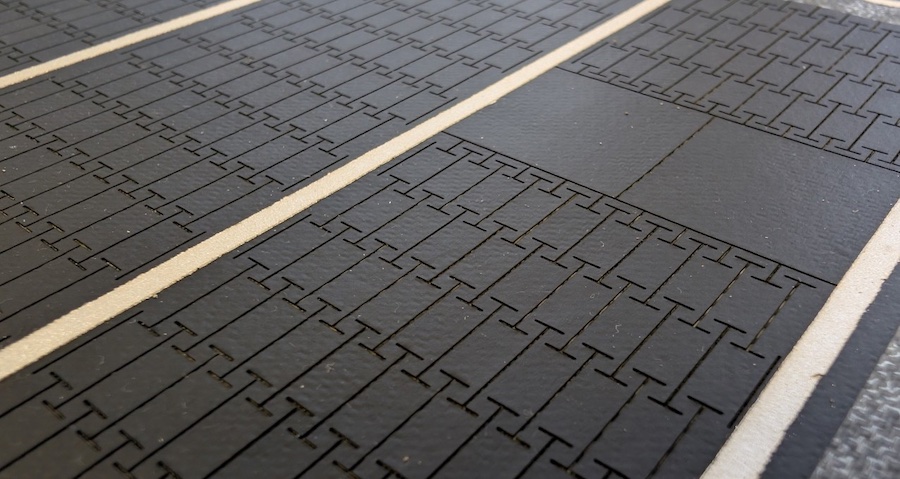
Liquid Wire was founded in 2016 in Portland, Oregon, and has established itself as the global leader in the emerging field of liquid metal circuitry. The Company produces conformal and pliable electronic circuits using a patented class of non-toxic printable liquid metals printed on plastic and textile substrates.

By more closely matching the material properties of human skin, Liquid Wire circuitry allows comfortable, long-term contact of sophisticated sensors and data transmission electronics for on-body, remote monitoring. Liquid Wire's mission to produce electronics that can coexist naturally while embedded directly in functional materials also addresses safety wear performance sports apparel, automotive, and aerospace markets.

Liquid Wire plans to expand its Portland-based pilot manufacturing line and make key hires to address the medical patch market with the proceeds of the Series A round.


Mark Ronay, Founder and Chief Executive Officer of Liquid Wire stated, "We are excited to have such a highly regarded organization invest in our future and appreciate the continued support of our existing investors and customers. With this funding, we are well-positioned to continue to provide our global customers with new leading-edge stretchable circuits that enable electronics everywhere, especially new opportunities in the medical wearables market."

"We are pleased to support the funding of Liquid Wire and their innovative enabling technology that can overcome the current design limitations of wearable devices. Their platform has broad potential to expand the form and function of new digital solutions that are key to advancing remote clinical monitoring and management," said Deerfield Partner Steven Hochberg.

More News from TEXDATA International

#Techtextil 2026

Performance Apparels: Functional textiles drive innovation at Techtextil 2026

From high-performance fibres and advanced membranes to smart textiles and sustainable material concepts – functional apparel is becoming one of the most dynamic innovation fields in technical textiles. At Techtextil 2026, exhibitors demonstrate how new materials, finishing technologies and digital functions are shaping the next generation of protective, workwear and outdoor systems.

#Texprocess 2026

Texprocess 2026: Automation, digitalisation and AI reshape textile processing

Investment decisions in textile processing have become increasingly complex. Rising energy prices, labour shortages and geopolitical uncertainties are forcing companies to prioritise technologies that deliver measurable improvements in efficiency and process stability. This applies not only to apparel production, but also to the processing of technical textiles and high-performance materials. Modernisation projects are therefore being evaluated more selectively – but the pressure to upgrade production systems continues to grow. Texprocess 2026 reflects this tension between cautious investment behaviour and increasing technological demand.

#Techtextil 2026

Textile Chemicals & Dyes: Innovation in Textile Chemistry moves into focus at Techtextil 2026

From PFAS-free finishes and water-saving dyeing technologies to advanced coatings and recycling-compatible formulations, innovation in textile chemistry is accelerating across the industry. Reflecting this development, Techtextil 2026 introduces Textile Chemicals & Dyes as a dedicated product segment, highlighting the growing role of chemical solutions in shaping the next generation of technical textiles.

#Recycling / Circular Economy

textile.4U publishes special edition “Top 100 Textile Recycling Companies 2025”

With a comprehensive 176-page special edition, textile.4U is dedicating its latest issue entirely to one of the most dynamic and influential topics in today’s textile industry: textile recycling. The new issue, published exclusively in high-quality print, presents the Top 100 textile recycling companies researched and selected by TexData – organizations that already play a key role in the transition to circular textiles or are expected to have a significant impact in the near future.

More News on Smart Textiles

#Research & Development

Catching heart disease early with AI-based sensor system

It slips on like a normal vest: Fraunhofer IZM has created a smart sensor system in cooperation with the Charité and the Technical University of Berlin. The vest records a vast array of cardiovascular parameters, which an AI-based system uses to support medical diagnostics and spot potentially dangerous developments.

#Research & Development

Soft interfaces: Textile-integrated light switches, made possible by printable Liquid Metal Ink

A gentle tap on the knitted lampshade is enough to switch on the light. The lamp developed by Fraunhofer IZM in cooperation with WINT Design Lab works with a revolutionary conductive ink. Visitors can find out more and try the lamp themselves at the Berlin Science Week on November 1st and 2nd.

#Smart Textiles

Intelligent textiles for construction, architecture and mobility: Smart Textiles User Forum in Stuttgart

When textiles are equipped with electronic components, conductive yarns and textile sensors, the application possibilities are almost unlimited. These high-tech textiles are a global growth market. In Stuttgart, manufacturers, users and researchers presented amazing examples of applications in construction, architecture and mobility. The appropriate standards ensure quality and safety.

#Smart Textiles

Innovations with smart textiles

The second free online masterclass of the AddTex project will take place on March 5 from 15:30 to approx. 17:00. Industry partners and textile researchers will present the latest innovations in the field of functional and smart textiles.

Latest News

#Techtextil 2026

AI, Start-ups, Research: Techtextil and Texprocess bring together players in the textile industry

From start-ups to universities and research institutes: at Techtextil and Texprocess, the world’s leading innovation trade fairs in Frankfurt am Main, exhibitors present future-oriented concepts for the global textile industry. With the international Campus & Research area, a strong participation from start-ups and the latest AI applications for textile processing, both trade fairs showcase current developments in the textile industry. By bringing together innovation, research and application, they enable new partnerships across the textile value chain.

#Techtextil 2026

IVGT joint stand brings innovation and networking to Techtextil 2026

At Techtextil 2026 and the parallel Texprocess 2026, key transformation topics such as artificial intelligence, digitalisation, sustainability, recycling and the circular economy will be reflected across the show. Against this backdrop, the IVGT, together with 16 member companies, will present its joint stand in Hall 12.1 (Stand D62) as a platform for exchange and networking.

#Man-Made Fibers

Indorama Ventures supports Southeast Asia’s textile customers with reliable regional supply and global innovative portfolio

Indorama Ventures, one of the leading global polyester fiber and filament yarn suppliers globally, will participate in Indo Intertex 2026 in Jakarta this April, making its diverse global portfolio available to apparel, home textile, and hygiene customers across Southeast Asia.

#Raw Materials

New study shows low environmental impact by Cotton made in Africa Organic Cotton from Tanzania

Today, the Aid by Trade Foundation (AbTF) is announcing the results of a comprehensive life-cycle analysis (LCA) for cotton produced in Tanzania under the Cotton made in Africa Organic (CmiA Organic) standard. The study emphasises the small ecological footprint of CmiA Organic verified cotton. This can largely be traced back to the absence of synthetic pesticides, artificial fertilisers, and artificial irrigation. Consequently, CmiA Organic cotton can help the textile industry meet regulatory requirements as well as science-based targets. The results also show that the consequences of climate change threaten the livelihoods of these cotton farmers, even though the type of agriculture they practise barely contributes to climate change.

TOP