[pageLogInLogOut]

#Raw Materials

Better Cotton welcomed record number of new members in 2022
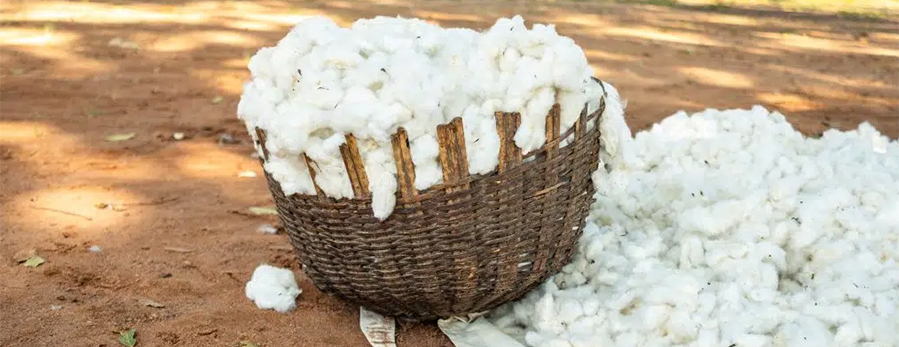
Photo Credit: BCI/Seun Adatsi. Location: Kolondieba, Mali. 2019. Description: Freshly-picked cotton.
Despite a challenging economic environment, Better Cotton saw a significant increase in support in 2022 as it welcomed 410 new members, a record for Better Cotton. Today, Better Cotton is proud to count more than 2,500 members representing the entire cotton sector as part of our community.

74 of the 410 new members are Retailer and Brand Members, who play a vital role in creating demand for more sustainable cotton. The new Retailer and Brand Members come from 22 countries – such as Poland, Greece, South Korea, Thailand, the United Arab Emirates and more – highlighting the organisation’s global reach and the demand for change across the cotton sector. In 2022, the Better Cotton sourced by 307 Retailer and Brand Members represented 10.5% of world cotton, demonstrating the relevance of the Better Cotton approach to systemic change.

"We are delighted to have 410 new members joining Better Cotton during 2022, showing recognition of the importance of Better Cotton’s approach to achieving transformation in the sector. These new members demonstrate their support for our efforts and commitment to our mission."

Paula Lum Young Bautil, Director of Membership and Supply Chain, Better Cotton

Members fall within five key categories: civil society, producer organisations, suppliers and manufacturers, retailers and brands and associate members. No matter the category, members are aligned on the benefits of sustainable farming and are committed to the Better Cotton vision of a world where more sustainable cotton is the norm and farming communities thrive.


Below, read what a few of these new members think about joining Better Cotton:

"Through our social purpose platform, Mission Every One, Macy’s, Inc. is committed to creating a more equitable and sustainable future for all. Better Cotton’s mission of promoting better standards and practices within the cotton industry is integral to our goal of achieving 100% preferred materials in our private brands by 2030."

Macy’s US

"JCPenney is firmly committed to providing high-quality, affordable and responsibly sourced products for our customers. As a proud member of Better Cotton, we hope to drive industry-wide sustainable practices that improve lives and livelihoods around the world and further our mission of serving America’s diverse, working families. Our partnership with Better Cotton will better enable us to meet our customers’ expectations and deliver on our sustainable fiber goals."

JCPenney, US

"Joining Better Cotton was important to Officeworks to promote responsible sourcing and help transform the global cotton industry, both from a human rights and an environmental perspective. As part of our People and Planet Positive 2025 commitments, we are committed to sourcing goods and services in more sustainable and responsible ways, including sourcing 100% of our cotton as Better Cotton, organic cotton, Australian cotton or recycled cotton for our Officeworks private label products by 2025."

Officeworks, Australia


"As part of our All Blue sustainability strategy, we aim to expand our sustainable product collection and reduce our greenhouse gas emissions. At Mavi, we prioritise not harming nature during production and ensuring that all of our All Blue design choices are sustainable. Our Better Cotton membership will help to raise awareness among our customers and within our own ecosystem. Better Cotton, with its social and environmental benefits, is included in Mavi’s definition of sustainable cotton and supports Mavi’s sustainability goals."

Mavi, Turkey



More News from TEXDATA International

#ITM 2026

ITM 2026: The new geography of textile production

New production hubs are emerging across North Africa and Central Asia, while Türkiye is accelerating its transformation toward higher-value, technology-driven and more sustainable textile manufacturing.

#Research & Development

“Production is a product”

From technical textiles and AI-driven robotics to the limitations of textile circularity: Professor Dr Thomas Gries looks back on more than two decades of development at ITA Aachen. In the interview, he explains why production technology remains a decisive success factor, discusses international collaborations and innovation ecosystems, and shares his views on the transformation of production landscapes and the challenges facing an increasingly regulated industry.

#Knitting & Hosiery

“We need to move away from the price trap and return to a value-driven mindset.”

With its new Textile Innovation Center, KARL MAYER is sending a strong signal for innovation, collaboration, and the future of textile applications. In this interview, Karl Josef Mayer discusses new opportunities in warp knitting, the processing of staple fibres, recycling, the changing role of machinery manufacturers, and why the textile industry must once again focus more strongly on the value of textiles. by Oliver Schmidt

#Associations

“Innovation, resilience and international experience remain the great strengths of the Swiss textile machinery industry”

Geopolitical uncertainty, growing competitive pressure from China, new free trade agreements and the shift towards a circular economy are currently reshaping the global textile industry. In this interview, Cornelia Buchwalder discusses the current mood within the Swiss textile machinery sector, the industry’s distinctive innovative strength, new market opportunities in India and Asia, and the technological trends that could shape the upcoming trade fair cycle leading up to ITMA 2027.

More News on Raw Materials

#Natural Fibers

Global cotton trade poised for recovery as India and China drive import demand

The July 2026 issue of Cotton This Month highlights a changing global cotton market, with consumption and trade expected to strengthen despite a modest decline in production during the 2026/27 season. The next issue of Cotton This Month will be released on August 1, 2026.

#Natural Fibers

Cotton made in Africa partners receive top marks in independent verifications

Cotton made in Africa® (CmiA) and CmiA Organic are two internationally recognised standards that aim to promote sustainable development in the African cotton sector south of the Sahara. To ensure the standards’ credibility among brands, retailers, and consumers, independent verifiers evaluate compliance on the ground. The verification results for 2025, now published in the Aggregated Verification & Implementation Report, were very strong: The verifiers awarded consistently very good remarks regarding management, people, prosperity, and the environment.

#Natural Fibers

Cotton ConneXions Insight to Impact brings supply chain leaders together around cotton innovation

Cotton Incorporated’s Cotton ConneXions Insight to Impact brought together more than 300 industry leaders from 140 companies across 10 countries, including more than 45 top global brands and sourcing organizations, underscoring strong global interest in cotton-rich product development, sourcing and supply chain collaboration.

#Natural Fibers

Bremen Cotton Exchange: Fritz A. Grobien re-elected as President

The members of the Bremen Cotton Exchange have re-elected Fritz A. Grobien as President during the association’s 152nd General Assembly on June 18, 2026. The election confirms the organization’s commitment to maintaining its role as a leading international platform for the cotton and fiber industry amid a period of geopolitical and economic uncertainty.

Latest News

#Digital Printing

USColorworks expands digital platform with Kornit Atlas MATRIX and Atlas MAX PLUS solutions

Kornit Digital Ltd. (NASDAQ: KRNT), a global pioneer in sustainable, on-demand digital fashion and textile production, today announced that USColorworks, a North Carolina-based apparel decoration and fulfillment company specializing in custom and on-demand printing for retail and promotional markets, has expanded its Kornit digital production platform with the addition of Atlas MATRIX and Atlas MAX PLUS systems to deliver high-quality, on-demand apparel across cotton, blended fabrics and polyester.

#Research & Development

Geotextiles made from recycled materials: GREEN leads the way into the industry

For the industry, recycled materials are creating new opportunities in geotextile production. In the GREEN project, the Fraunhofer Cluster of Excellence Circular Plastics Economy CCPE demonstrates that recycled polypro-pylene (PP), polyethylene terephthalate (PET), and high-density polyeth-ylene (HDPE) can be processed into nonwovens, fibers, and membranes that meet industrial requirements. This creates opportunities for use in existing production lines and new value chains in the geotextile market.

#Nonwoven machines

A Penteadora starts up ANDRITZ textile recycling and needlepunch nonwoven lines in Portugal

A Penteadora SA has successfully started up a complete mechanical textile recycling line and a needlepunch nonwoven line supplied by ANDRITZ at its production site in Unhais da Serra, Portugal. This investment enables A Penteadora to expand its industrial capabilities and develop a new generation of solutions based on pre- and post-consumer recycled textiles. The input materials originate from its own production waste and other textile waste streams. Both lines are fully operational, and the first products are expected to reach the market in July.

#Recycling / Circular Economy

ReHubs elects new Board of Directors to lead the next phase of ReHubs’ strategy to recycle 2.7 million tonnes of textile waste annually by 2035

ReHubs has elected its new Board of Directors, marking an important milestone as the industry alliance continues to accelerate the industrial scale-up of textile-to-textile recycling across Europe. The election took place during the ReHubs Annual Event in Brussels on June 23rd, held alongside the Textile Recycling Expo and Future Fabrics Expo. The newly elected Board combines expertise from across the textile value chain, reflecting ReHubs' collaborative approach to solving the industry’s textile waste crises.

TOP