[pageLogInLogOut]

#Raw Materials

Aid by Trade Foundation and Better Cotton form a new strategic collaboration for 2023

© 2022 Cotton made in Africa
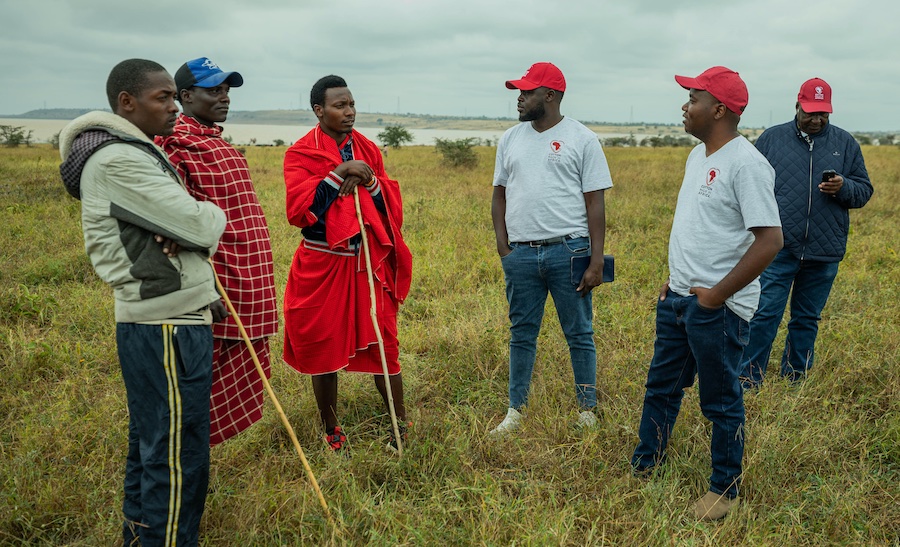
After 10 years of fruitful partnership, Aid by Trade Foundation (AbTF) and Better Cotton are establishing a new form of collaboration for greater impact. The new set-up between the two organisations will be focused on creating joint projects for smallholder farmers in Africa. These projects will likely address areas of common interest such as climate change adaptation and mitigation, soil fertility, biodiversity, women’s empowerment, and child labour. They will seek funding from both public and private donors to support the work.

In 2012, Cotton made in Africa (CmiA), an initiative of the AbTF, and Better Cotton entered into a strategic partnership agreement based on the successful benchmarking of the two standards which enabled CmiA verified cotton companies to sell their CmiA verified cotton as Better Cotton and allowed textile companies and traders to demand the sustainably produced Cotton made in Africa cotton as Better Cotton. Since the initial agreement, both organisations have grown and evolved significantly. Therefore, AbTF and Better Cotton have decided to end their current agreement and enter into a new form of cooperation that allows for more flexibility and innovation. Together, they recognise that they can make the biggest impact through concrete projects that create lasting benefits for people and the environment. In line with this, the sale of CmiA-verified cotton as Better Cotton will be discontinued at the end of 2022.

AbTF and Better Cotton remain united in their shared goal of making cotton cultivation more sustainable for farming communities and the environment, while providing the global textile sector opportunities to integrate an ecologically, economically and socially sound raw material into their sourcing practices.

Tina Stridde, managing director of AbTF, draws a positive conclusion: “The partnership was a joint effort that brought greater sustainability to the cotton and textile industry whilst helping to protect nature and create economic and social benefits for smallholder farmers and ginnery workers. We appreciate the open exchange of views, ideas and issues of special interest with Better Cotton; it is obvious that both organisations have common goals. CmiA has grown strong over the last years. We are looking forward to continuing to pursue our endeavors for sustainable cotton production in a new form.”


Lena Staafgard, chief operating officer at Better Cotton, adds: “The initial partnership between Better Cotton and AbTF represented a groundbreaking collaboration between standards organisations at the time. Together, we have supported more than a million smallholder farmers across Sub-Saharan Africa and connected them to the ever-increasing demand for more sustainable cotton. Now is the time to re-imagine how we can use our individual strengths to create even more impact together. We look forward to this new form of collaboration moving forward.”

More News from TEXDATA International

#Techtextil 2026

Textile Chemicals & Dyes: Innovation in Textile Chemistry moves into focus at Techtextil 2026

From PFAS-free finishes and water-saving dyeing technologies to advanced coatings and recycling-compatible formulations, innovation in textile chemistry is accelerating across the industry. Reflecting this development, Techtextil 2026 introduces Textile Chemicals & Dyes as a dedicated product segment, highlighting the growing role of chemical solutions in shaping the next generation of technical textiles.

#Recycling / Circular Economy

textile.4U publishes special edition “Top 100 Textile Recycling Companies 2025”

With a comprehensive 176-page special edition, textile.4U is dedicating its latest issue entirely to one of the most dynamic and influential topics in today’s textile industry: textile recycling. The new issue, published exclusively in high-quality print, presents the Top 100 textile recycling companies researched and selected by TexData – organizations that already play a key role in the transition to circular textiles or are expected to have a significant impact in the near future.

#Recycling / Circular Economy

Responsible Textile Recovery Act of 2024 signed by Governor

Senator Josh Newman (D-Fullerton) is proud to announce that Senate Bill 707 (SB 707), the Responsible Textile Recovery Act of 2024, has been signed into law by the Governor of California, Gavin Newsom. This groundbreaking legislation establishes the country’s first Extended Producer Responsibility (EPR) textile recycling program, marking a significant step forward in the state’s efforts to combat waste and promote sustainability.

#Textiles & Apparel / Garment

Modtissimo promotes sustainability with 28 coordinates in the Green Circle

Modtissimo is proving more and more to be a textile and clothing show that delivers the latest innovations in the area of sustainability, with the iTechStyle Green Circle being the main showcase for companies' creations. In this 60+4 edition, taking place on 12 and 13 September, 28 coordinates will be exhibited in a section organised by CITEVE and curated by Paulo Gomes.

More News on Raw Materials

#Raw Materials

A Powerful Opening: Global thought leaders launch the International Cotton Conference Bremen

The International Cotton Conference Bremen will open on 25 March 2026 in the Parliament building of the Free Hanseatic City of Bremen with a keynote session of exceptional calibre. Distinguished international experts will set the stage for the conference by offering incisive perspectives on the most pressing challenges and the defining trends shaping the future of the global cotton trade. Their insights will span a broad spectrum — from geopolitically driven disruptions affecting global supply chains to the opportunities emerging from innovation-led agriculture capable of supporting a growing world population. Together, these opening keynotes will frame the dialogue of the conference, highlighting both the complexity of today’s market environment and the pathways toward a resilient and forward-looking cotton sector.

#Raw Materials

Lenzing Group positions bio‑based materials as a strategic asset for Europe’s economic security

The Lenzing Group, a leading supplier of regenerated cellulose fibers for the textile and nonwovens industries, hosted a high‑level roundtable in Brussels to discuss how bio‑based materials can strengthen Europe’s economic security and support the shift toward a fossil‑free future. Organized in cooperation with Euractiv, the event brought together representatives of the European Commission, the UK Mission to the EU, academia, civil society, and industry.

#Natural Fibers

Beyond Cotton: Natural Fibres in the Spotlight at the Bremen Cotton Conference - Branded by DNFI

Climate targets, fragile supply chains, and rising regulatory requirements are fundamentally changing the perspective of the textile industry - the focus is increasingly shifting toward the base material. Not only cotton, but natural fibres are gaining significant importance: they stand out not only because of their outstanding functional properties, but also because they make a valuable contribution to the bioeconomy and responsible product development.

#Raw Materials

International Women’s Day: Cotton made in Africa strengthens equality for women through targeted investments

On the occasion of International Women’s Day—which will be observed on 8 March under the motto “Rights. Justice. Action. For ALL Women and Girls”—the Aid by Trade Foundation (AbTF), which is responsible for Cotton made in Africa® (CmiA), underlines its long-standing and ongoing commitment to the equality of women in African cotton production areas.

Latest News

#Techtextil 2026

Smart sensors, smart savings - Reducing energy and cost in textile finishing

As energy prices, sustainability requirements and quality expectations continue to rise, manufacturers of technical textiles face increasing pressure to optimize efficiency while ensuring process reliability. At the same time, skilled labor shortages require production systems that are intuitive, automated and easy to manage. PLEVA addresses these challenges with robust, maintenance-friendly sensor technologies combined with intelligent process control.

#Techtextil 2026

DIENES at Techtextil 2026: Flexible pilot lines for bio-based fiber development

The growing relevance of bio-based materials in technical textiles is accompanied by increasing demands for reproducibility, high-quality data, and scalable process routes. Especially when working with cellulose and its derivatives, chitosan, lignin-based approaches, or bio-based PAN as a carbon-fiber precursor, R&D teams face variable feedstock quality, tighter process windows, and the need for reliable comparability across trials. This calls for flexible, data-driven experimental setups that can be reconfigured efficiently when recipes, solvents, and raw-material batches change.

#Texprocess 2026

Gunold showcases embroidery product range and services at Texprocess

At Texprocess 2026, GUNOLD will present numerous hands-on examples related to embroidery in Hall 8, Booth E20. The focus is on creative embroidery designs as well as the extensive product range of threads, nonwovens, and accessories for embroidery and embellishment. “Trade visitors can once again look forward to many new and creative embroidery designs. Of course, we will also showcase the matching products required to bring these ideas to life,” announces Marketing Manager Stephan Gunold.

#Nonwovens

EDANA and more than 70 industry organisations call for consistent exemptions in EU packaging regulation

EDANA, together with more than 70 industry associations and organisations, has issued a joint statement commenting on the European Commission’s Delegated Act under Article 29 of the Packaging and Packaging Waste Regulation (PPWR).

TOP