[pageLogInLogOut]

#Raw Materials

LPP Partners with Cotton made in Africa – Cotton Initiative wins first polish partner
© 2022 Cotton made in Africa
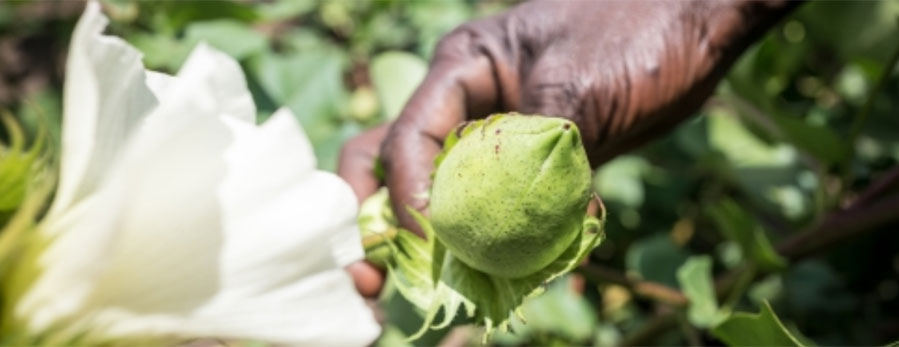
LPP, a Polish fashion company, has partnered with Cotton made in Africa (CmiA), launching yet another year of growth for the internationally respected standard for sustainable cotton. By joining CmiA, LPP – whose brands include Reserved, Cropp. House, Mohito and Sinsay – is making a clear commitment to sustainable cotton cultivation and people in cotton-growing countries. Its first CmiA-labelled products will come to market before the end of 2022.

With this new partnership, the Polish fashion company LPP is making a valuable contribution to environmental protection and is supporting African small-scale farmers and their families. The globally active fashion company’s contractually agreed purchase volume of up to 60 million items per year supports its strategic sustainability goals, which include significantly increasing the percentage of more environmentally friendly products and implementing good production standards for a sustainable textile industry.

“We are thrilled to have won our first Polish partner in LPP and to be working with them to create a sustainable basis for their product portfolio through CmiA,” says Tina Stridde, the Managing Director of the Aid by Trade Foundation, commenting on the new partnership.

“Cotton is one of the key raw materials for our textiles. The chance to go through Cotton made in Africa to procure a valuable raw material that has significantly lower greenhouse gas emissions, conserves natural resources, and observes social criteria is a key step towards implementing our sustainability strategy of ‘For People For Our Planet,’” says Dorota Jankowska-Tomków, Environmental Social and Governance (ESG) Director at LPP.

For each CmiA-labelled textile item, LPP pays a licensing fee to the Aid by Trade Foundation, Cotton made in Africa’s parent organisation.


Licensing revenue is then reinvested in CmiA’s activities in Africa, which focus on providing small-scale farmers with training in sustainable cultivation methods and in business fundamentals, ultimately enabling them to maintain soil fertility and to protect their plants with natural materials. In addition, the CmiA standard prohibits the use of genetically modified seeds as well as the logging of primary forests. Only rainwater is used for irrigation. According to the latest study results, CmiA cotton has a significantly smaller ecological footprint while also helping to improve living conditions for small-scale farming families through training provided by CmiA [1]. There are currently around one million small-scale farmers growing CmiA-verified cotton in ten countries in Sub-Saharan Africa, making up around 30 percent of African cotton production. Consumers can identify these products by means of a Cotton made in Africa label. The products will come to market this summer.


[1] The data on CmiA’s environmental footprint is drawn from the 2021 CmiA Life Cycle Assessment (LCA), conducted by Sphera. Published under: https://cottonmadeinafrica.org/wp-content/uploads/CmiA_LCA-Study_2021.pdf [online resource]. Global averages are drawn from The life cycle inventory & life cycle assessment of cotton fiber & fabric (Cotton Inc, 2017).

The data on improving living conditions for small-scale farming families is drawn from the Syspons impact study (2021). Published under: https://cottonmadeinafrica.org/wp-content/uploads/CmiA-Impact-Study-2021.pdf (CmiA, 2021)




More News from TEXDATA International

#People

Happy Holidays!

Dear reader, the year 2025 is drawing to a close. We are entering what we hope will be a peaceful holiday season, spending time with our families and taking a moment to pause and reflect. We hope we have been able to support you once again this year with relevant news and articles, and we look forward to surprising you with many innovations in the coming year. Enjoy the festive season, stay healthy, and we wish you a happy and joyful holiday season.

#Recycling / Circular Economy

textile.4U publishes special edition “Top 100 Textile Recycling Companies 2025”

With a comprehensive 176-page special edition, textile.4U is dedicating its latest issue entirely to one of the most dynamic and influential topics in today’s textile industry: textile recycling. The new issue, published exclusively in high-quality print, presents the Top 100 textile recycling companies researched and selected by TexData – organizations that already play a key role in the transition to circular textiles or are expected to have a significant impact in the near future.

#Recycling / Circular Economy

Responsible Textile Recovery Act of 2024 signed by Governor

Senator Josh Newman (D-Fullerton) is proud to announce that Senate Bill 707 (SB 707), the Responsible Textile Recovery Act of 2024, has been signed into law by the Governor of California, Gavin Newsom. This groundbreaking legislation establishes the country’s first Extended Producer Responsibility (EPR) textile recycling program, marking a significant step forward in the state’s efforts to combat waste and promote sustainability.

#Textiles & Apparel / Garment

Modtissimo promotes sustainability with 28 coordinates in the Green Circle

Modtissimo is proving more and more to be a textile and clothing show that delivers the latest innovations in the area of sustainability, with the iTechStyle Green Circle being the main showcase for companies' creations. In this 60+4 edition, taking place on 12 and 13 September, 28 coordinates will be exhibited in a section organised by CITEVE and curated by Paulo Gomes.

More News on Raw Materials

#Natural Fibers

38th International Cotton Conference Bremen: Let´s Talk about Cotton!

The 38th International Cotton Conference Bremen, to be held on 25-27 March 2026 in Bremen’s parliament building on market square, once again sends a powerful signal for professional excellence and international dialogue. The focus is on the latest market trends and technical innovations throughout the entire value chain – from agriculture and quality assurance to processing and the circular economy. With its high-calibre speakers, the conference remains an indispensable forum for anyone involved in shaping the cotton industry scientifically, technically, or economically.

#Natural Fibers

Human Rights Day: Cotton made in Africa reinforces its commitment to ensuring respect for human rights in cotton production

The sustainable cotton standard Cotton made in Africa (CmiA) has always focussed on respect for human rights, including by prohibiting child labour and discrimination. With the new version of the CmiA standard coming into force, AbTF raises requirements for due diligence in the areas of human rights and risk management.

#Research & Development

How innovations drive BASF’s success

“Innovation has always been part of BASF’s DNA. Especially in these volatile times, it is crucial to leverage our innovative strength to develop competitive solutions that differentiate us as a company in our markets and give us a competitive edge,” said Dr. Stephan Kothrade, Member of the Board of Executive Directors of BASF and Chief Technology Officer, at the company’s Research Press Briefing held today. To achieve this, BASF implemented its “Winning Ways” strategy about a year ago with the clear goal of becoming the preferred chemical company to enable its customers’ green transformation.

#Natural Fibers

38th International Cotton Conference Bremen launches registration and unveils key topics

Participants can now register online for the 38th International Cotton Conference Bremen, which will be held on 25-27 March 2026 at the Haus der Bürgerschaft parliament building on market square. All visitors can look forward to a high-calibre conference programme, numerous additional meetings and a valuable exchange of knowledge and information. The comprehensive range of topics covering the entire value chain will provide practical expertise, address current developments, answer key industry questions, and provide new impetus for the future.

Latest News

#Weaving

Lindauer Dornier announces leadership transition in weaving machine business

After more than ten successful years at Lindauer DORNIER GmbH, Mr Wolfgang Schöffl will leave the family-owned company at the end of the year to enter well-deserved retirement.

#Heimtextil 2026

Texpertise Focus AI: Messe Frankfurt puts Artificial Intelligence centre stage at its international textile and apparel trade fairs

Under the banner 'Texpertise Focus AI, Messe Frankfurt will place a strong emphasis on Artificial Intelligence (AI) across its international textile and apparel trade fairs from 2026 onwards, setting a future-shaping signal for the industry. The initiative highlights the responsible use of AI along the entire textile value chain, from fibre production to the point of sale. The programme will launch at Heimtextil in Frankfurt in January 2026.

#Technical Textiles

Autoneum and Polestar set new benchmarks for passenger experience and sustainability

As the global market leader in sustainable acoustic and thermal management, Autoneum is a key supplier of interior and exterior components for the highly anticipated Polestar 5 model. The successful collaboration between Autoneum and Polestar marks a significant milestone in sustainable automotive engineering: the electric grand tourer sports car features several innovations in lightweight, fully recyclable polyester-based components that ensure a superior driving experience. Polestar 5 was revealed at the IAA Mobility 2025 in Munich and is available in 24 markets.

#Natural Fibers

Cashmere producers stress the importance of The Good Cashmere Standard®

At the invitation of the Aid by Trade Foundation (AbTF), over 70 experts from the cashmere production and supply chain, as well as other specialists, met at the GCS Unit Meeting in Shanghai, China to discuss the progress and new objectives of The Good Cashmere Standard (GCS). The meeting focused on implementation and verification of the standard, important aspects of animal welfare and the importance of the standard in the global textile market.

TOP