[pageLogInLogOut]

#Raw Materials

U.S. Cotton Trust Protocol recognized and published in ITC Standards Map

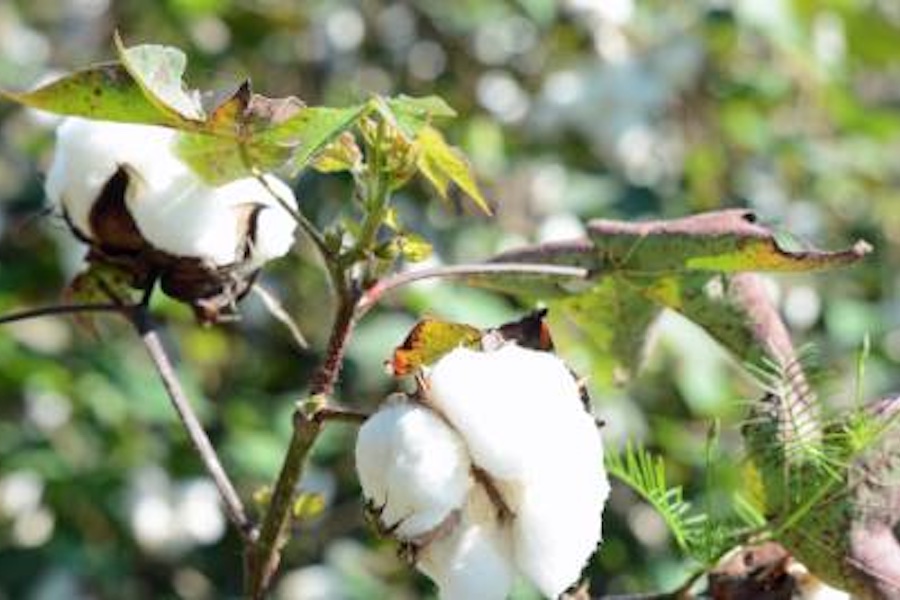
The U.S. Cotton Trust Protocol has been recognized and published in the standard mapping process by the International Trade Centre, giving brands and retailers around the world greater choice when it comes to sourcing sustainably grown cotton.

To be included in the Standards Map, an organization must address at least one pillar of sustainable development (economics, environment, social), and/or focus on ethics or quality management. As part of its core program, the Trust Protocol is focused on continuous improvement of six key sustainability metrics including land use, soil carbon, water management, soil loss, greenhouse gas emissions and energy efficiency.

By joining the U.S. Cotton Trust Protocol, members can be sure they are sourcing responsibly produced, quality fiber, and reducing environmental and social risk in their field-to-mill supply chain.

“The Trust Protocol aims to set a new standard for more sustainably grown cotton that provides brands and retailers the critical assurances that the cotton fiber used in their supply chain is more sustainably grown with lower environmental and social risk,” said Dr. Gary Adams, president of the U.S. Cotton Trust Protocol. “Inclusion in the ITC Standards Map signals to businesses and consumers that a trusted independent organization has verified this information.”

“During a time of increased supply chain scrutiny, brands and retailers face challenges in keeping track of sustainability initiatives and meeting requirements,” said Mathieu Lamolle, Senior Advisor at ITC. “We appreciate that organizations such as the Trust Protocol voluntarily submit their sustainability metrics for verification and mapping in our Standards Map database, so that companies can make better-informed decisions about certification and involvement in sustainable production of their raw materials.”


The U.S. Cotton Trust Protocol is aligned with the UN Sustainable Development Goals, recognized by Textile Exchange and Forum for the Future, and part of the Sustainable Apparel Coalition, Cotton 2025 Sustainable Cotton Challenge, Cotton 2040 and Cotton Up initiatives. To learn more about the U.S. Cotton Trust Protocol visit TrustUSCotton.org.

To learn more about ITC Standards Map visit:

https://www.standardsmap.org



More News from TEXDATA International

#Techtextil 2026

Performance Apparels: Functional textiles drive innovation at Techtextil 2026

From high-performance fibres and advanced membranes to smart textiles and sustainable material concepts – functional apparel is becoming one of the most dynamic innovation fields in technical textiles. At Techtextil 2026, exhibitors demonstrate how new materials, finishing technologies and digital functions are shaping the next generation of protective, workwear and outdoor systems.

#Texprocess 2026

Texprocess 2026: Automation, digitalisation and AI reshape textile processing

Investment decisions in textile processing have become increasingly complex. Rising energy prices, labour shortages and geopolitical uncertainties are forcing companies to prioritise technologies that deliver measurable improvements in efficiency and process stability. This applies not only to apparel production, but also to the processing of technical textiles and high-performance materials. Modernisation projects are therefore being evaluated more selectively – but the pressure to upgrade production systems continues to grow. Texprocess 2026 reflects this tension between cautious investment behaviour and increasing technological demand.

#Techtextil 2026

Textile Chemicals & Dyes: Innovation in Textile Chemistry moves into focus at Techtextil 2026

From PFAS-free finishes and water-saving dyeing technologies to advanced coatings and recycling-compatible formulations, innovation in textile chemistry is accelerating across the industry. Reflecting this development, Techtextil 2026 introduces Textile Chemicals & Dyes as a dedicated product segment, highlighting the growing role of chemical solutions in shaping the next generation of technical textiles.

#Recycling / Circular Economy

textile.4U publishes special edition “Top 100 Textile Recycling Companies 2025”

With a comprehensive 176-page special edition, textile.4U is dedicating its latest issue entirely to one of the most dynamic and influential topics in today’s textile industry: textile recycling. The new issue, published exclusively in high-quality print, presents the Top 100 textile recycling companies researched and selected by TexData – organizations that already play a key role in the transition to circular textiles or are expected to have a significant impact in the near future.

More News on Raw Materials

#Raw Materials

New study shows low environmental impact by Cotton made in Africa Organic Cotton from Tanzania

Today, the Aid by Trade Foundation (AbTF) is announcing the results of a comprehensive life-cycle analysis (LCA) for cotton produced in Tanzania under the Cotton made in Africa Organic (CmiA Organic) standard. The study emphasises the small ecological footprint of CmiA Organic verified cotton. This can largely be traced back to the absence of synthetic pesticides, artificial fertilisers, and artificial irrigation. Consequently, CmiA Organic cotton can help the textile industry meet regulatory requirements as well as science-based targets. The results also show that the consequences of climate change threaten the livelihoods of these cotton farmers, even though the type of agriculture they practise barely contributes to climate change.

#Raw Materials

Better Cotton Initiative strengthens regenerative focus in standard update

The Better Cotton Initiative (BCI) has strengthened the regenerative focus of its field-level standard with the launch of a new version of its Principles & Criteria (P&C), which marks the next step in the organisation’s journey to becoming a regenerative standards system.

#Raw Materials

Global production expected to decline in 2026/27 as policy shifts and weak demand reshape trade

Early projections for the 2026/27 season indicate that global cotton lint production will decline by 4% to 24.9 million tonnes, while world consumption is expected to remain stable at approximately 25 million tonnes, according to the April 2026 issue of Cotton This Month.

#Raw Materials

Textile Exchange publishes cotton Life Cycle Assessment study to strengthen impact data

Textile Exchange has published the first in a series of seven Life Cycle Assessment (LCA) studies designed to improve the quality and robustness of environmental impact data for raw material production across the fashion, textile, and apparel industry. The first LCA study focuses on cotton and addresses critical data gaps and methodology variability through new high-quality data across key producing countries. The study includes organic, regenerative, recycled, and country averages for conventional cotton production systems, providing a clearer picture of the associated environmental impact.

Latest News

#Recycled Fibers

RE&UP partners with Madewell and ISKO on textile-to-textile denim capsule

RE&UP Recycling Technologies is accelerating the shift toward a closed-loop textile economy through a collaboration with American denim brand Madewell and global fabric manufacturer ISKO. By transforming approximately 20,000 pairs of post-consumer jeans into recycled feedstock for a textile-to-textile denim capsule, RE&UP demonstrates the commercial viability of circular systems in the denim sector.

#Techtextil 2026

Sedo Treepoint will exhibit smart technologies for technical textile production

As technical textile production becomes increasingly complex and sustainability requirements intensify, digital integration is evolving from an efficiency tool into a strategic task. At Techtextil 2026 (April 21–24, Frankfurt am Main), Sedo Treepoint will present smart digital systems designed to address the demanding production environments of technical textile manufacturing. The company’s focus will be on practical technologies that enhance process transparency, reproducibility, and efficient resource use. Visitors will meet Sedo Treepoint in Hall 12, Booth D05.

#Techtextil 2026

ITM presents cutting-edge textile research at Techtextil

From April 21 to 24, 2026, the Chair of Textile Machinery and High Performance Material Technology (ITM) at TUD Dresden University of Technology will be presenting its current research at Techtextil, the leading international trade fair for technical textiles and nonwovens. In Hall 12.0, Stand D41, the team will be demonstrating how it combines high-performance fibers, AI-supported digital development tools and innovative machine technologies to develop textile solutions for lightweight construction, construction, medical technology and sustainable production from atom to product.

#Techtextil 2026

CHT Group to showcase intelligent specialty chemical solutions at Techtextil 2026

At this year's Techtextil 2026 in Frankfurt am Main, the CHT Group will be presenting its comprehensive portfolio of tailor-made specialty chemicals and process solutions for technical textiles. As a reliable partner to the global textile industry, the company offers innovative products and in-depth technical expertise across all areas of the textile value chain – from pretreatment, dyeing, and printing to finishing, coating, and fiber auxiliaries.

TOP