[pageLogInLogOut]

#Raw Materials

World Cotton Day 2026 to bring global cotton and textile community to Tashkent on October 7

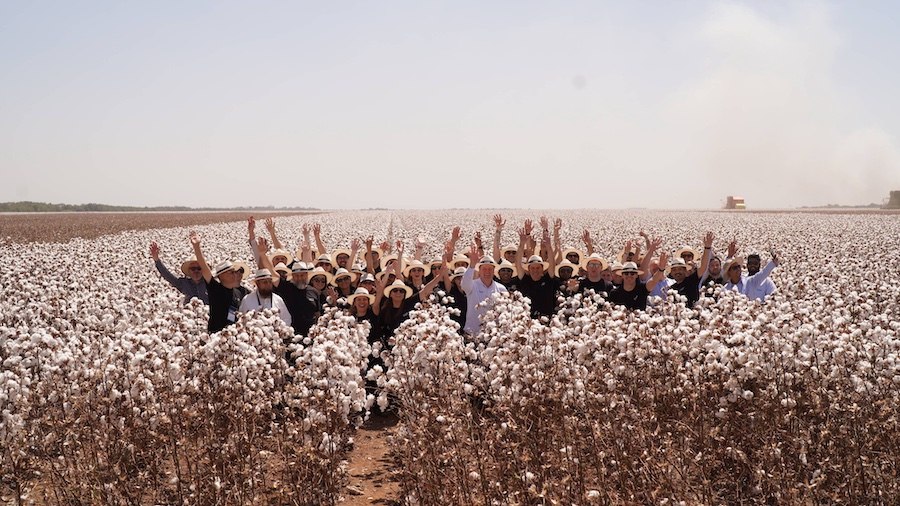
The Government of Uzbekistan and the International Cotton Advisory Committee (ICAC) will host the official World Cotton Day 2026 Partners Conference at the Hyatt Regency in Tashkent, Uzbekistan, on October 7.


The event will be open to the public, with registration information and additional program details available on the World Cotton Day Partners Conference website (view the draft agenda here). The partner organizations, which have participated in annual World Cotton Day celebrations since the event was launched in 2019, are the ICAC, Food and Agriculture Organization of the United Nations (FAO), the International Atomic Energy Agency (IAEA), the International Trade Centre (ITC), United Nations Conference on Trade and Development (UNCTAD), United Nations Industrial Development Organization (UNIDO), and the World Trade Organization (WTO).

Held under the theme “Cotton for Good: Building Prosperity Through Trade, Transformation and Partnership,” the full-day event will bring together government officials, international organizations, cotton and textile industry representatives, development institutions, researchers, and other stakeholders from across the global value chain.

“Uzbekistan is proud to host World Cotton Day 2026 and welcome the international cotton and textile community to Tashkent,” said Ibrokhim Y. Abdurakhmonov, Uzbekistan’s Minister of Agriculture. “This celebration will provide an important platform for sharing experience, building partnerships and exploring how cotton can contribute to employment, trade, investment, and sustainable economic development.”

The program will examine how cotton-producing and cotton-consuming countries can become more competitive, diversify their economies and build stronger connections among agriculture, industry, trade, and innovation.

Planned sessions include:

  • Trade, Transformation, and Partnership: How Cotton Builds Prosperity
  • Building Prosperity Across the Cotton Value Chain
  • Trust, Quality, and Responsible Cotton Supply Chains
  • Investment, Innovation, and Competitiveness in Cotton Economies
  • Carbon Markets and Climate Finance: New Opportunities for Cotton Farmers

The discussions will explore practical approaches to increasing cotton productivity, expanding domestic processing and textile manufacturing, attracting investment, strengthening relationships with global buyers, improving quality and traceability, and ensuring that farmers benefit from emerging opportunities such as carbon markets and climate finance.

“World Cotton Day gives the global community an opportunity to recognize cotton’s extraordinary economic and social importance while confronting the challenges facing the sector,” said ICAC Executive Director Eric B. Trachtenberg. “By opening the official celebration to the public, Uzbekistan is enabling more people to participate in this critical international conversation about cotton’s future.”

The program is expected to feature contributions from senior government representatives, international organizations, cotton and textile associations, development finance institutions, technology providers, private-sector companies, and producer organizations.

The event will conclude on October 8 with a Technical Tour hosted by the Government of Uzbekistan highlighting the country’s cotton and textile heritage, culture, and craftsmanship. All registered participants will have the opportunity to attend.

The confirmed agenda, speaker announcements, and other updates will be published soon.


More News from International Cotton Advisory Committee (ICAC)

#Raw Materials

Global cotton production projected to outpace consumption, but risks remain

Global cotton production is projected to reach 26.2 million tonnes in the 2026/27 season, marginally outpacing estimated consumption of 25.9 million tonnes. However, early-season production risks — including weather volatility and pest pressures — could narrow that buffer as the crop progresses, according to the September 2026 issue of Cotton This Month, published by the International Cotton Advisory Committee (ICAC).

#Natural Fibers

Global garment trade nears $550 billion as competition intensifies

The global garment industry has undergone a dramatic transformation over the past two decades, with knit and woven garments together accounting for nearly 60% of world textile exports in 2025, according to the August 2026 issue of The Textiles Observer, a free publication from the International Cotton Advisory Committee (ICAC).

#Raw Materials

ICAC International Seminar in Taipei to explore strategic synergies across the textile supply chain

The International Cotton Advisory Committee (ICAC) — together with the Taiwan Textile Federation (TTF), under the guidance of the Ministry of Economic Affairs and the Ministry of Foreign Affairs of Taiwan — will bring international cotton and textile leaders together in Taipei on September 10 for the ICAC International Seminar 2026.

#Natural Fibers

2026 ICAC report projects World cotton trade to reach 10.3 million tonnes by 2028/29

The International Cotton Advisory Committee has released the 2026 World Cotton Trade Report, which provides analysis of global cotton trade patterns, key trading relationships, import and export trends, and the geopolitical and policy developments shaping cotton trade flows.

More News on Raw Materials

#Raw Materials

Brazil sets new cotton export record and consolidates global leadership

Brazil ended the 2025/26 commercial year with a new record, consolidating its position as the world’s largest cotton exporter. Between August 2025 and July 2026, the country shipped 3,373,941 tonnes of the fiber, 19% more than in the previous cycle, and reached record revenue of US$5.3 billion. The result represents a milestone in Brazil’s expansion in the international market and reinforces the country’s role as a strategic supplier to the global textile industry.

#Raw Materials

Better Cotton Initiative partners with Avalo in AI plant breeding for climate-resilient cotton

The Better Cotton Initiative (BCI) has partnered with agriculture solutions company Avalo, whose platform accelerates the speed at which plants with key resiliency traits may be developed.

#Raw Materials

Aid by Trade Foundation presents annual report for 2025: Market position and impact of sustainably verified natural fibres strengthened

Despite global supply chain challenges, the Aid by Trade Foundation (AbTF) was able to further expand its international role in promoting sustainably verified natural fibres in 2025. In doing so, the foundation remains true to its fundamental approach of leveraging market forces. Last year, it generated total revenues of EUR 7.8 million; this included EUR 6.7 million collected through the successful marketing of four standards: Cotton made in Africa (CmiA), CmiA Organic, The Good Cashmere Standard (GCS), and the Regenerative Cotton Standard (RCS). AbTF invested the resulting income in projects aiming to protect biodiversity, support women, increase transparency in the textile supply chain, and implement its verification system.

#Raw Materials

Cotton Brazil Dialogues field trip brings international stakeholders closer to Brazil’s cotton production chain

How do you build trust across the global textile value chain? By opening the farm gates. This is the principle behind the Cotton Brazil Dialogues. At the end of July, the programme welcomed its first group of international participants for a five-day immersion into Brazilian cotton production, combining field visits with technical workshops to showcase the quality, sustainability, innovation and traceability behind one of the world’s leading cotton origins.

Latest News

#Europe

European textile industry calls for €10 handling fee on ultra-fast-fashion imports

The introduction of the €3 customs duty on low-value imports marks an important milestone in Europe’s efforts to address the challenges created by the rapid growth of ultra-fast-fashion imports. Together with the abolition of the €150 customs duty exemption, it demonstrates that policymakers are willing to act when market distortions become impossible to ignore. However, the European textile and clothing industry considers this a first step rather than the final destination.

#Research & Development

From smart jackets to laser technology: Mona Neubaur explores Textile Factory 7.0

As part of her summer tour, North Rhine-Westphalia’s Minister for Economic Affairs and Climate Action, Mona Neubaur, visited Textilfabrik 7.0 in Mönchengladbach to experience the project’s innovations first-hand. Under the motto “smart and clean”, the visit focused on innovative technologies and sustainable alternatives for textile production - from smart jackets to the decolourisation of textiles using fungal cultures.

#CINTE Techtextil China 2026

Cinte Techtextil China 2026 has opened today, bringing global innovations and resources to Shanghai

As Asia’s premier platform catering to the evolving needs in technical textiles and nonwovens, Cinte Techtextil China has opened today at the Shanghai New International Expo Centre, gathering over 300 exhibitors from 15 countries and regions. Across Halls W3 to W5, this edition will create chances for fast-growing sectors and emerging trends – such as Mobiltech, Medtech & Protech, Indutech and more. The curated zones, pavilions, and fringe programme are designed to better connect exhibitors with targeted buyers from across China, Asia-Pacific, and further afield. Meanwhile, the Association Village will gather international industry associations to foster even more global collaboration.

#Textiles & Apparel / Garment

Texworld Apparel Sourcing Paris opens with focus on AI, circularity and new sourcing regions

More than 1,000 exhibitors from around the world are gathering at Paris-Le Bourget as Texworld Apparel Sourcing Paris opens its doors from August 31 to September 2. With around 500 textile manufacturers and a similar number of apparel and accessories suppliers, the trade fair reflects the ongoing transformation of global sourcing and the growing diversification of supply regions.

TOP