[pageLogInLogOut]

#Raw Materials

Record level of Better Cotton uptake sends clear signal to the market

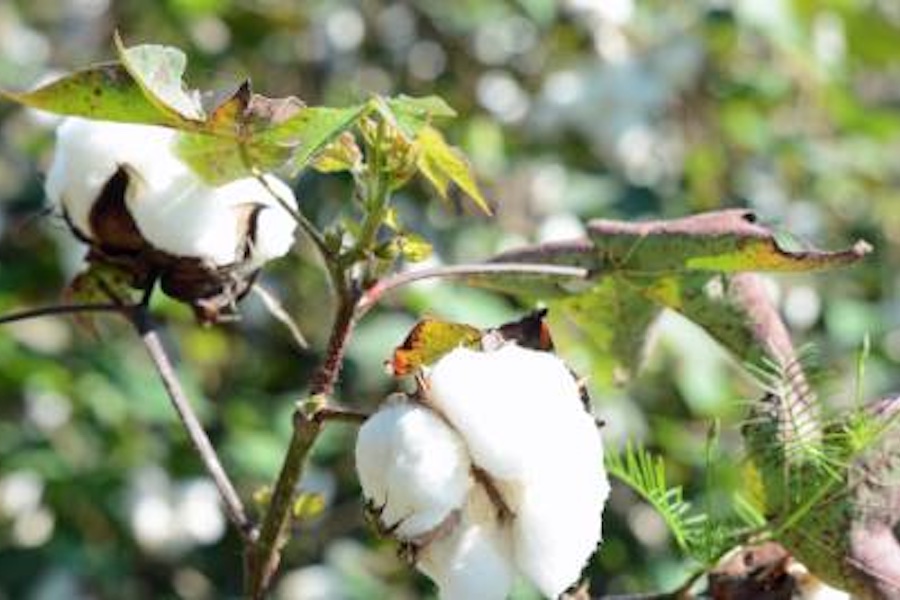
(c) 2019 BCI
In 2018, the Better Cotton Initiative (BCI) experienced a historic level of uptake1 as 93 Retailer and Brand Members sourced more than one million metric tonnes of Better Cotton – that’s enough cotton to make approximately 1.5 billion pairs of jeans.

Better Cotton uptake increased 45% on the previous year, and at the end of 2018, retailer and brand member sourcing of Better Cotton accounted for 4% of global cotton consumption2. By integrating Better Cotton into their sustainable sourcing strategies and increasing sourcing commitments year-on-year, BCI’s Retailer and Brand Members are driving demand for more sustainable cotton production worldwide.

Now, to continue to accelerate the mainstreaming of Better Cotton and hit BCI’s 2020 targets – to reach and train 5 million cotton farmers and have Better Cotton account for 30% of global cotton production – BCI needs the next wave of sustainability leaders to come on board and close the gap between supply and demand. (In the 2017-18 cotton season, Better Cotton is forecast to account for 19% of global cotton production.)

Founding BCI Member, H&M group, has played an integral role in the growth of Better Cotton; in 2018 the retailer sourced the largest volume of Better Cotton (for the third year running). “Cotton is one of H&M group’s most important materials – BCI plays a key role in our goal towards using only sustainably sourced cotton by 2020,” says Mattias Bodin, Sustainability Business Expert, Materials and Innovation at H&M group.

adidas is another founding member with ambitious sustainable sourcing targets. In 2018, adidas sourced 100% of its cotton as more sustainable cotton. Ebru Gencoglu, Senior Manager, Merchandising and Sustainability at adidas commented, “BCI and adidas have worked closely from the beginning to reach this ambitious goal. BCI has engaged actors throughout the supply chain to enable the right amount of supply in the right locations. This has helped our suppliers to source cotton as Better Cotton, which allowed us to ramp up sourcing in a short period of time.”

BCI’s demand-driven funding model means that retailer and brand sourcing of Better Cotton directly translates into increased investment in training for cotton farmers on more sustainable practices. For example, in the 2017-18 cotton season, BCI Retailer and Brand Members, public donors and IDH (the Sustainable Trade Initiative) contributed more than €6.4 million, enabling more than 1 million farmers across China, India, Mozambique, Pakistan, Tajikistan, Turkey and Senegal to receive support and training*.

ALDI South Group are among a group of new BCI Members who will help to increase uptake of Better Cotton in 2019 and beyond. Katharina Wortman, Director CRI at ALDI South Group said, “ALDI supports sustainable cotton standards in their aim to ensure improved farming conditions and reduced environmental impacts. ALDI joined BCI at the end of 2017, and we foresee that BCI will play a significant role in our approach to responsibly sourced cotton. The mass-balance chain of custody system used by BCI enables our supply chain partners to more easily source Better Cotton.”


A member that has illustrated how to scale uptake of Better Cotton rapidly is Gap Inc. The retailer joined BCI in 2016 and is now among the top five BCI Retailer and Brand Members based on total Better Cotton sourcing volumes. “Better Cotton sourcing is an important part of Gap Inc.’s sustainability strategy. We have been able to leverage our scale across our portfolio of brands to accelerate sourcing of Better Cotton in a relatively short time,” said Agata Smeets, Director, Sustainability Sourcing Strategy at Gap Inc.

As well as increased investment in farmer training and capacity building, uptake of Better Cotton sends a clear signal to the market and has an impact throughout the supply chain. Cotton traders are seeing the increased demand for more sustainably produced cotton but believe there is much more to be done. Marco Baenninger, Head Trader Hand Picked Cotton at Paul Reinhart AG said, “Better Cotton has become an integral part of the international cotton trade. It’s very pleasing to see that uptake from retailers has increased strongly over the last few years. However, there is still a lot to do. Some organisations are still skeptical, but in the long-term they risk losing market share if they overlook more sustainable options. That says a lot about the success of BCI and other sustainable cotton initiatives and standards in promoting sustainably produced cotton.”

Transforming cotton production worldwide requires commitment and collaboration from the entire cotton supply chain. As we celebrate BCI’s 2018 sourcing milestone, we thank all of our members and partners for supporting BCI. The retailers and brands, cotton traders and spinners who sourced the highest volumes of Better Cotton in 2018 will be revealed in the Better Cotton Leaderboard, launching at the 2019 Global Cotton Sustainability Conference in Shanghai in June.


1 Uptake refers to the sourcing and purchasing of more sustainable cotton in a supply chain. By ‘sourcing cotton as Better Cotton,’ BCI is referring to the action taken by members when they place orders for cotton-containing products. It does not refer to the cotton present in the finished product. BCI uses a chain of custody model called Mass Balance whereby volumes of Better Cotton are tracked on an online sourcing platform. Better Cotton may be mixed with or replaced by conventional cotton in its journey from field to product, however, the volumes of Better Cotton claimed by members on the online platform never exceeds the volumes physically procured by spinners and traders.
2 Global cotton consumption figures as reported by ICAC. More information is available here.
3 While the investment from BCI Retailer and Brand Members, public donors and IDH (the Sustainable Trade Initiative), mobilised through the Better Cotton Growth and Innovation Fund, reached over one million farmers in the 2017-2018 season, the Better Cotton Initiative is forecast to reach and train a total of 2.1 million cotton farmers in the season. The final figures will be released in BCI’s 2018 Annual Report.




More News from TEXDATA International

#Texprocess 2026

Texprocess 2026: Automation, digitalisation and AI redefine textile processing

Making investment decisions in textile processing has become significantly more demanding. Increasing energy costs, a shortage of skilled labour and ongoing geopolitical uncertainties are compelling companies to focus on technologies that deliver clear gains in efficiency and process reliability. This applies equally to apparel manufacturing and to the processing of technical textiles and high-performance materials. As a result, modernisation initiatives are assessed more carefully – even as the need to upgrade production systems continues to intensify.

#Techtextil 2026

Techtextil 2026: Between innovation pressure & market reality

From 21 to 24 April 2026, Techtextil in Frankfurt am Main will once again become the central meeting point for the international technical textiles and nonwovens industry. Running in parallel, Texprocess will focus on the industrial implementation of textile processing technologies as the leading platform in this field. Together, the two trade fairs form a closely integrated presentation and working platform along the entire textile value chain – from material development to finished applications.

#Techtextil 2026

Between geopolitical pressure and industrial resilience

In this interview, Dr. Janpeter Horn (VDMA) discusses the current challenges facing textile machinery manufacturers, shaped by geopolitical tensions, regulatory developments and subdued investment. He also outlines why innovation strength, integrated solutions and strategic positioning remain key to global competitiveness.

#Texprocess 2026

Between investment restraint and modernization pressure

Texprocess 2026 takes place in a complex market environment shaped by uncertainty and innovation pressure. In this interview, Elgar Straub (VDMA) explains why the trade fair is particularly relevant this year and which technologies are driving efficiency and competitiveness.

More News on Raw Materials

#Raw Materials

New U.S. cotton study uses real-world grower data to reveal where fiber impacts occur

Cotton Incorporated has released a critically reviewed life cycle assessment (LCA) of U.S. cotton fiber production that examines how cotton’s environmental impacts are measured and where meaningful improvements can be made across the value chain. The new data, grounded in real‑world grower inputs, measures what drives U.S. cotton’s environmental footprint from field to gin.

#Raw Materials

China projected to increase cotton production, yields, and imports in 2026/27

World cotton production in the 2026/27 season is projected at 25.9 million tonnes, exceeding global consumption of 25.2 million tonnes, according to the May 2026 issue of Cotton This Month. That means both production and consumption are expected to remain close to current season levels, while global cotton trade is projected to decline by 2.7% to approximately 9.6-9.7 million tonnes.

#Raw Materials

ICAC launches Carbon Credits Initiative to deliver new income streams to cotton farmers

The International Cotton Advisory Committee (ICAC) has announced a new initiative designed to unlock additional income streams for cotton farmers through participation in carbon credit markets, linking sustainable production practices directly to financial returns.

#Raw Materials

ECCO introduces first shoe featuring innovative protein-based fibre

ECCO, in partnership with Spinnova, announces the launch of the limited edition ECCO BIOM® 720, a first-of-its-kind shoe utilising an often overlooked leather by-product, transformed into a protein-based fibre. The fibres are produced using patented technology that advances material innovation while reducing waste and supporting full resource use across the leather and textile industry.

Latest News

#ITM 2026

Groz-Beckert brings new knitting, weaving and nonwovens technologies to ITM 2026

From June 9 to 13, 2026, Groz-Beckert will present its latest innovations and solutions across the product areas of Knitting, Weaving and Nonwovens at ITM in Istanbul (Hall 3, Booth 304B).

#ITM 2026

Itema to showcase weaving excellence at ITM 2026

From June 9 to 13, Itema will exhibit at ITM 2026 in Istanbul (Hall 8 – Stand 806D), unveiling a distinctive exhibition concept designed to highlight the Company’s expertise across the entire weaving value chain. For this year’s edition, Itema will introduce an innovative stand experience built around two core areas: advanced weaving and spare parts solutions and an immersive textile gallery featuring fabrics produced by Itema Customers worldwide.

#Textiles & Apparel / Garment

Global size study for brands and retailers to optimize fit and market coverage

Hohenstein Apparel Fit Solutions, a global leader in apparel fit, sizing, and product development, today announces the launch of its Global Size Study, a new initiative designed to equip brands to better understand and serve their target consumers through more accurate, market-relevant sizing.

#ITMA 2027

Last chance to apply: ITMA 2027 Start-Up Valley closes tomorrow

Applications for the Start-Up Valley at ITMA 2027 close tomorrow, offering young technology companies the opportunity to follow in the footsteps of several successful participants from the 2023 edition. The initiative, organised under the CEMATEX Start-Up Grant programme, has already helped a number of textile start-ups accelerate their transition from early-stage concepts to industrial partnerships, funding rounds and commercial deployment.

TOP