#Natural Fibers
The Good Cashmere Standard expands Animal Welfare Assessment on audited farms
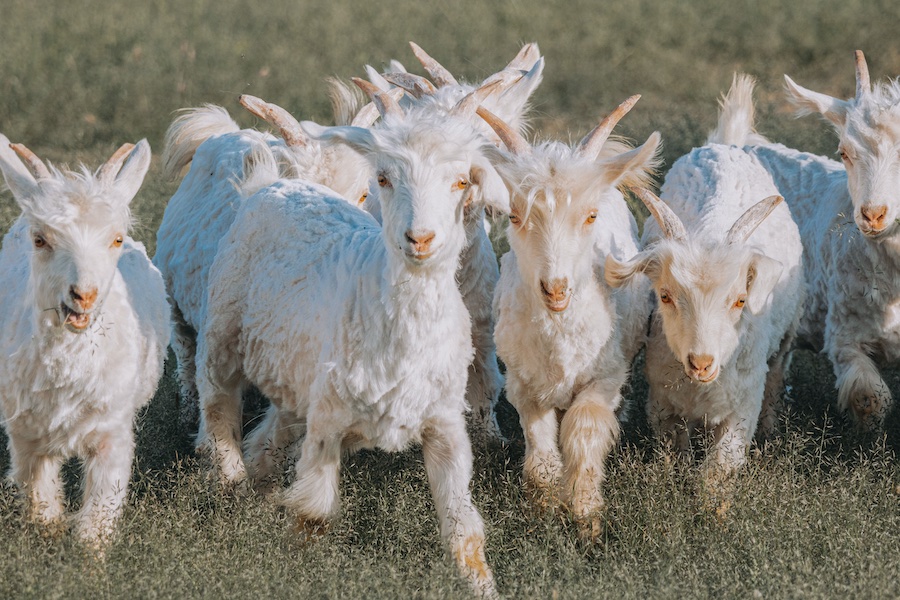
While criteria such as the availability of feed, good health, and suitable habitats for goats remain fundamental to the standard, The Good Cashmere Standard places great importance on animals also having positive subjective experiences. ARAWA assessments investigate whether the resources provided actually lead to improved animal welfare outcomes. The indicators used by GCS are directly linked to the Five Domains of animal welfare. The number of audited farms was expanded in 2025. The increase was 39 percent compared to the previous year: Since the start of the pilot project in 2024, the scope has been extended from 72 farms in 2024 to 100 assessed farms, from 3 to 9 regions in Inner Mongolia, and from 2,024 to 2,298 cashmere goats. There are also plans to gradually increase the number of farms surveyed by 2027.
"By deciding to fundamentally integrate ARAWA into our processes, GCS goes beyond the usual standard criteria for assessing animal welfare," says Marvin Heuduck, Head of The Good Cashmere Standard at the Aid by Trade Foundation, adding: "We are pleased that the current results confirm the good work on the GCS verified farms. From these results, we can gain new valuable information with which we will further develop animal welfare aspects according to regional and seasonal particularities and in close cooperation with herders and cashmere producers."
Eight specific parameters currently provide insight into the living conditions of cashmere goats regarding nutrition, environment, health, and land management. The review is conducted independently. Based on the data obtained, the general health status of the animals was classified as "good." There are no signs of underlying health problems.