[pageLogInLogOut]

#Research & Development

Europe is committed to recycling end-of-life wind turbine blades
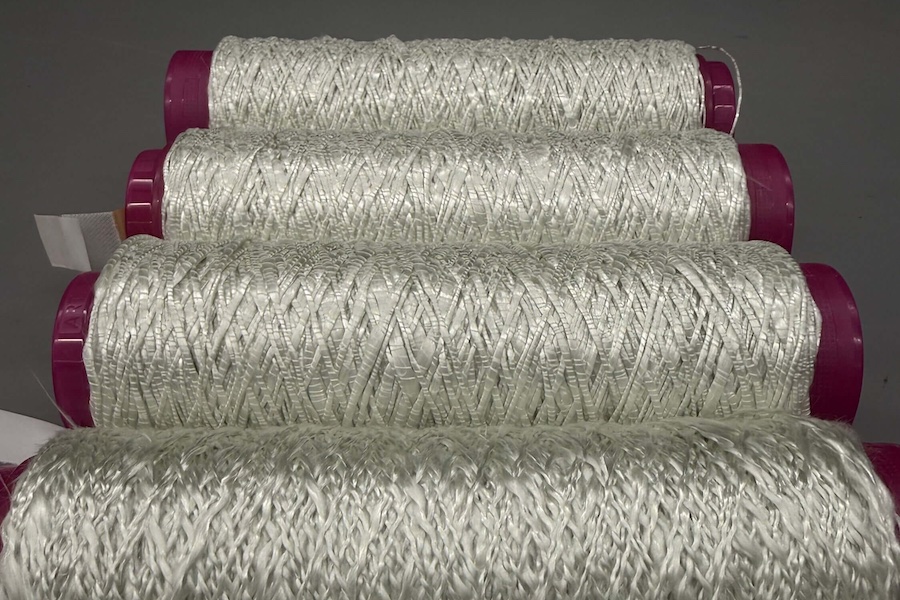
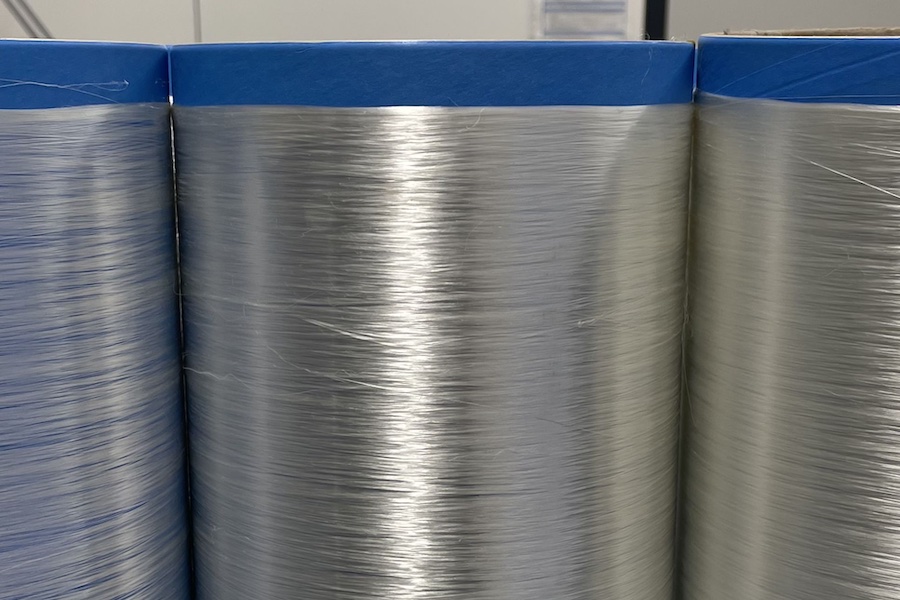
Yarns manufactured from recycled glass fibers. Photo: DITF
Starting in 2026, Europe’s wind energy industry has committed itself to ensuring that wind turbine blades do not end up in landfills once they reach the end of their service life. The EU-funded research project REWIND is exploring ways to reuse this composite waste. The German Institutes of Textile and Fiber Research Denkendorf (DITF) are one of 13 project partners from seven countries.


REWIND stands for Efficient Decommissioning, Repurposing and Recycling to increase the Circularity of End-of-Life Wind Energy Systems. The project partners are developing basic technologies and processes for the dismantling, recycling, and reuse of composite materials. The goal is to make wind turbine blades recyclable instead of sending them to landfills or incinerating them.

The consortium has validated a model that can predict the mechanical behavior of recovered materials with an accuracy of over 90%. This makes them suitable for demanding applications, such as in electric vehicles or as insulation material.

At the DITF, yarns and fabrics are developed from both glass and carbon fibers recycled by the project partners for use in new components or repair kits for wind turbines. In an initial step, the recycled fibers were examined, primarily to determine which processing methods they are suitable for.

The research team is pursuing two different approaches. In the first process route, the recycled glass fibers are processed into high-value textile reinforcements. To do this, the fibers are pre-opened, carded, spun into yarns, and then processed into fabrics that are reinforced in both one or two directions. A first milestone has been the development of a recycled glass fiber yarn (rGF/polyamide-6 yarn) with a fiber volume content of around 40%, which is suitable for thermoplastic composite applications, such as structural components in automotive engineering.

Furthermore, the researchers succeeded in producing a yarn consisting of as much as 98% recycled glass fibers (rGF). The yarn was then used to manufacture a woven fabric with parallel fiber orientation (UD fabric). This demonstrated for the first time that specifically oriented textile reinforcement structures made from recycled glass fibers can be produced, which are optimally adapted to mechanical loads.

The second process route investigates the processing of long-fiber delamination (LFD) tapes - which are planed directly from wind turbine blades - into UD fabrics. These LFD tapes represent a novel class of semi-finished textile products manufactured from fully cured recycled glass-fiber-reinforced plastic (GFRP). Currently, research is conducted to determine the extent to which these intermediate products are suitable as high-performance reinforcement structures for fiber-reinforced composites.

Partners:

AIMPLAS

TECKNIKER

IPC – Centre Technique Industriel de la Plasturgie et des Composites

Miljøskærm

Hochschule Pforzheim – Gestaltung, Technik, Wirtschaft und Recht

Deutsche Institute für Textil – und Faserforschung Denkendorf (DITF)

Alke Electric Vehicles

Suez Group

Bcircular

Composite Patch

R-Nanolab

CiaoTech-Gruppo PNO

AEMAC.


More News from Deutsche Institute für Textil- und Faserforschung Denkendorf

#Research & Development

25 years of medical devices: ITVP combines experience with innovation

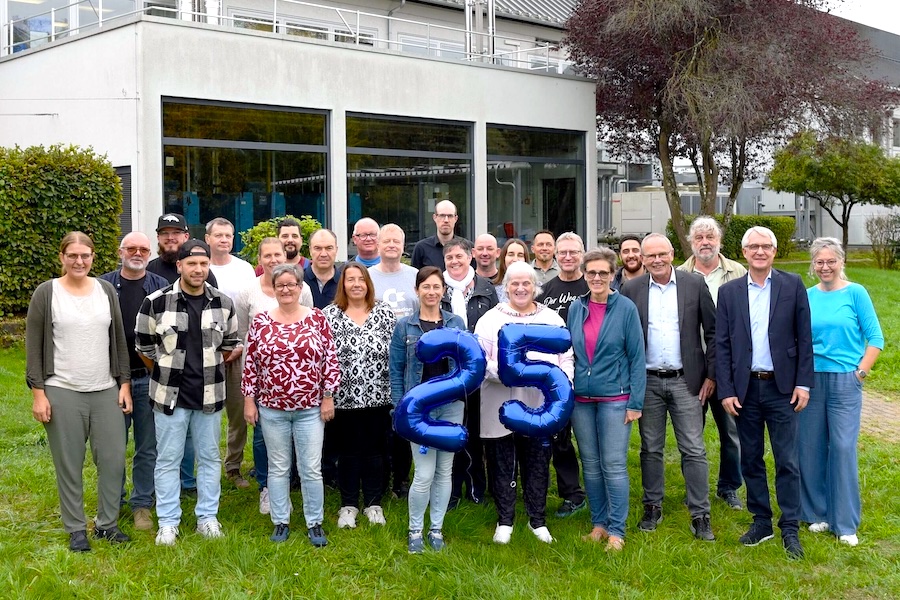
ITV Denkendorf Produktservice GmbH (ITVP) is celebrating its 25th anniversary. On October 1, 2001, ITVP was founded as a subsidiary of the German Institutes of Textile and Fiber Research Denkendorf (DITF), Europe’s largest textile research center. This spin-off company made it possible to consolidate expertise in medical technology and significantly expand production, which had previously been initiated mostly in the DITF’s cleanrooms.

#Research & Development

Reducing development times for technical textiles by accelerated thermo-oxidative aging in a high-pressure autoclave

Synthetic polymers used in technical textiles can be effectively protected against degradation caused by heat, oxygen, and water through the use of stabilizer systems. This enables service lives of several decades, extending to more than 50 years. As the use of durable technical textiles continues to grow, so does the demand for reliable methods to predict their service life within economically feasible testing periods. For the first time the German Institutes of Textile and Fiber Research Denkendorf (DITF) developed methods for robust service life prediction for textiles in an IGF research project.

#Research & Development

Smart textiles reversibly change shape in an energy-efficient manner in response to ambient temperature

Self-actuating textile structures are used in a wide range of applications, such as medical technology, automation, architecture, agriculture, and the apparel industry. An example is the use of shading nets in greenhouses, which can be deployed and retracted depending on the sunlight intensity. The German Institutes of Textile and Fiber Research Denkendorf (DITF) are developing textiles based on shape-memory polymers with reversibly controllable geometry.

#Research & Development

ALADIN paves the way for circular and demand-driven textile production in Europe

Textile production can be organized sustainably by utilizing short supply chains and preventing overproduction. This can already be achieved today by intelligently connecting and efficiently utilizing existing infrastructure. At the same time, production becomes circular when innovative technologies and materials are used that enable high-quality recycling. The ALADIN research project, launched in May 2026 and co-funded with five million euros under the EU Horizon Europe program, is creating the conditions for this.

More News on Research & Development

#Research & Development

An eco-friendly alternative to fluorocarbon treatments

Protective and outdoor clothing derives its durable water-, dirt- and oil- repellent properties from the application of fluorinated polymers or per- and polyfluorinated low-molecular- weight chemicals (PFCs). The beneficial properties thus achieved on textiles are offset by environmental and human health risks. For manufacturers of sports, medical, protective and automotive textiles, researchers at the Sächsisches Textilforschungsinstitut e.V. and the Leibniz Institute for Polymer Research have developed liquid-applied dispersions and solutions to functionalise textiles without the use of fluorine.

#Research & Development

180 years of TESTEX: From Zurich silk testing to global certification

For 180 years, TESTEX has developed alongside the textile industry while maintaining the same underlying purpose: creating trust through independent and reliable measurement. Founded in Zurich in 1846 as the Zurich Silk Conditioning Institute, TESTEX has grown from a local institution serving the silk trade into an international Swiss testing and certification institute for textiles and leather.

#Recycling / Circular Economy

Moving Advanced Recycling from Innovation to Implementation

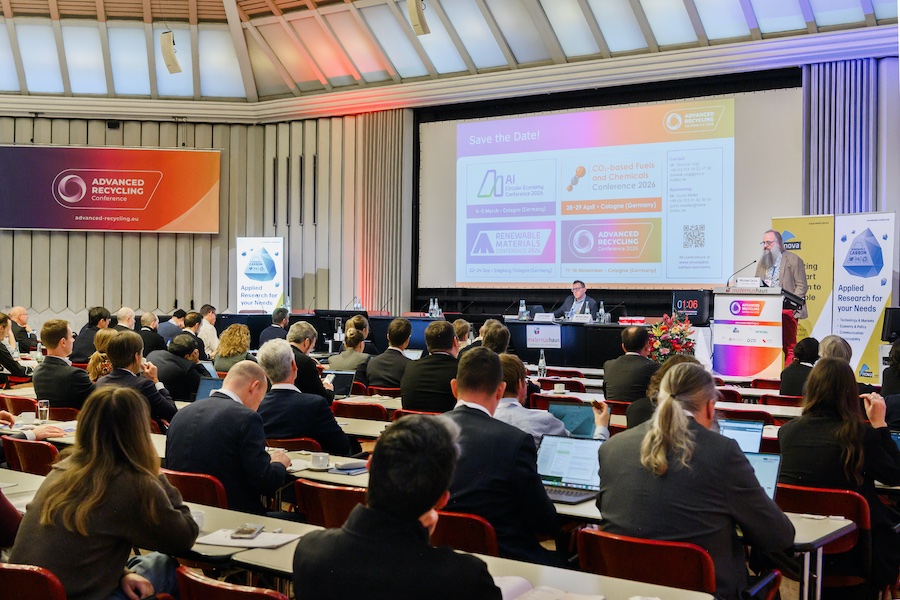
The Advanced Recycling Conference 2026 explores technologies, markets, financing and scale-up of innovative recycling solutions for waste streams including mixed plastic waste, textiles and PVC. Europe’s chemical and materials sector faces growing pressure to close carbon loops, strengthen raw-material safety and resilience and meet increasingly ambitious EU recycling targets. Against this backdrop, the Advanced Recycling Conference (ARC) will bring together industry leaders, technology providers, researchers, innovators and policy-makers on 17–18 November 2026 in Cologne, Germany.

Latest News

#ITMA Asia + CITME 2026

Mayer & Cie. Global gears up tor ITMA Asia 2026

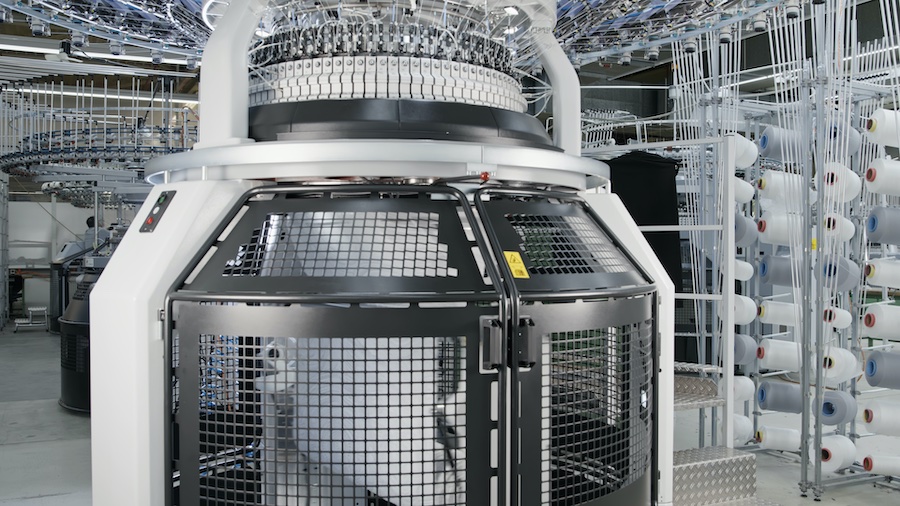
Mayer & Cie. Global will focus on mattress fabric production at ITMA Asia, taking place in Shanghai from 20 to 24 November 2026. The company will showcase one of its flagship models for this application: the OVJA 2.4 EM. Joining the mattress fabric specialist will be an OV 3.2 QCe, presented at ITMA Asia in a configuration for knitting double-face fabrics in E40. This gives the OV 3.2 QCe a combination of capabilities rarely found in the market. The German textile machinery manufacturer will also introduce its new portfolio strategy and share updates from its development team at its Albstadt headquarters.

#Associations

EU and Mercosur textile industries launch new Textile and Apparel Dialogue

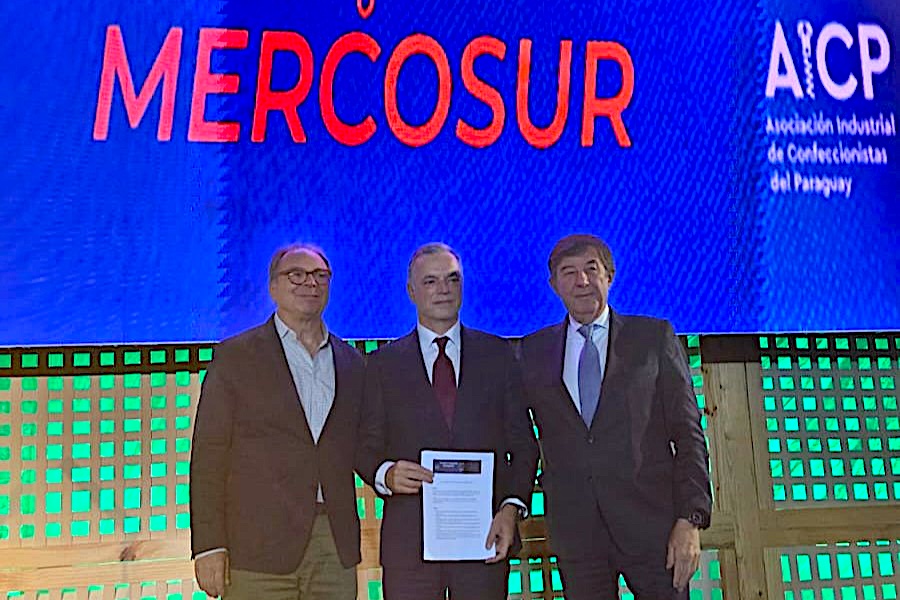
EURATEX, ABIT and FITA have launched the EU–Mercosur Textile and Apparel Dialogue (TAD), a new industry platform aimed at strengthening cooperation between the European and Mercosur textile and apparel sectors.

#Spinning

FET highlights advances in fibre spinning technology at Dornbirn Global Fiber Congress

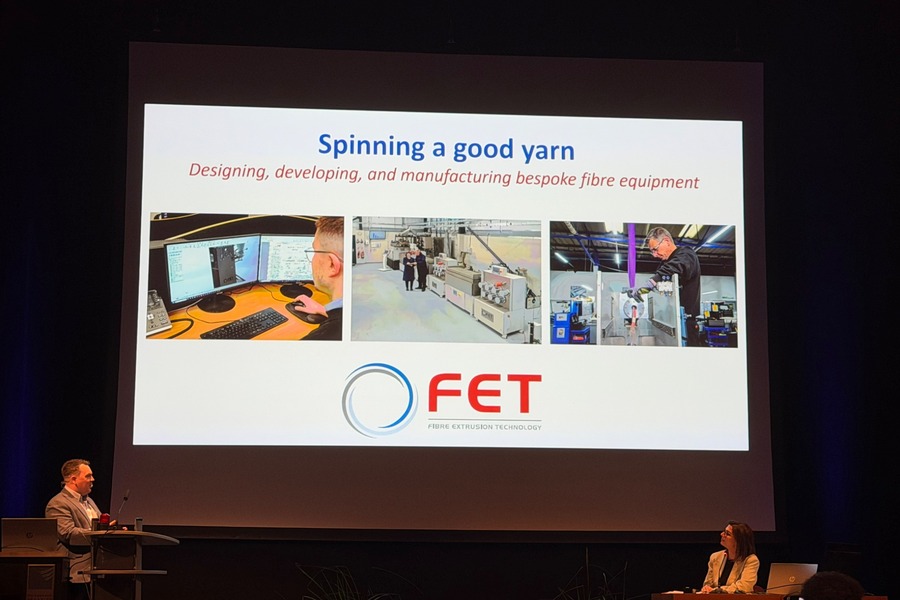
Fibre Extrusion Technology Limited (FET) presented its latest developments in fibre spinning technology at the Dornbirn Global Fiber Congress in Austria in September 2026. In a presentation entitled “Spinning a good yarn”, Dr Jonny Hunter examined recent technological developments and challenges facing the fibre industry, highlighting the company's expanding range of specialised fibre extrusion and spinning systems.

#Textiles & Apparel / Garment

Vietnam’s market evolution creates new sourcing opportunities at VIATT 2027

As Vietnam’s textile industry continues to upgrade and scale, new opportunities are emerging for suppliers of advanced raw materials, design-led fabrics, production technologies, and sustainability solutions. The Vietnam International Trade Fair for Apparel, Textiles and Textile Technologies (VIATT) will return 24 – 26 February 2027, presenting a cross-sector platform – spanning apparel, home and technical categories – for overseas companies to connect with manufacturers, brands, sourcing offices, retailers, and industry buyers from Vietnam, ASEAN, and beyond.

TOP