[pageLogInLogOut]

#Natural Fibers

Cashmere specialist joins AbTF Board of Trustees
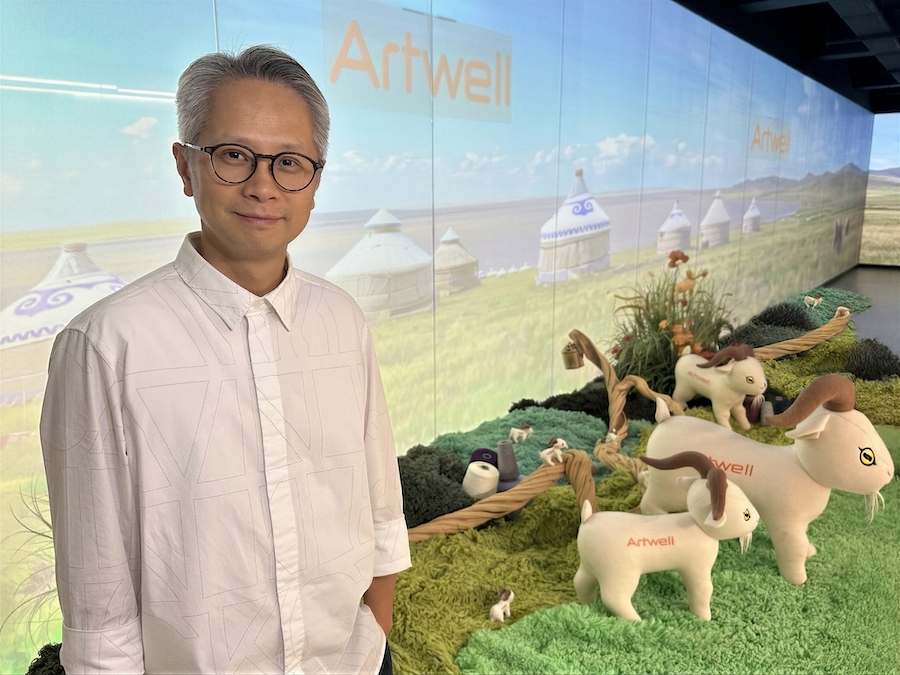
Brian Yu, CEO of Artwell Group © 2026 Aid by Trade Foundation
The Aid by Trade Foundation (AbTF) is pleased to welcome Brian Yu, the chief executive officer of the Artwell Group, to its board of trustees. As CEO, Brian Yu developed Artwell into the world’s largest supplier of responsibly produced cashmere knitwear.

Brian Yu, the CEO of the Artwell Group, has an excellent international reputation as a promoter of sustainability, innovation, and transparency in the textile industry. As an advocate of animal welfare, Brian Yu co-authored a cashmere goat welfare standard—the Farm Animal Welfare Requirements Cashmere Goat standard of the International Cooperation Committee of Animal Welfare (ICCAW) in China—and worked to promote the testing of a number of traceability tools in cashmere production. For The Good Cashmere Standard® (GCS), the complete traceability of its responsibly produced cashmere fibres has always been central. This traceability is guaranteed by TextileGenesis’s well established and technologically innovative platform.

“In Brian Yu, we welcome a distinguished advocate of sustainability and innovation in the textile industry to the ranks of the AbTF Board of Trustees. We look forward to working together to further expand the role of AbTF and its standards in sustainable cotton and cashmere production,” says Tina Stridde, the managing director of the Aid by Trade Foundation.

“My motivation in joining the Board of Trustees is rooted in a strong commitment to advancing sustainability and responsibility within the textile industry,” says Brian Yu, adding, “I believe that, through collective effort, we can enhance transparency, empower communities, and promote ethically produced textiles worldwide.”

With more than 20 years of experience in leadership positions in the textile sector, Brian Yu has led a globally active team of over 2,500 employees in Inner Mongolia, Eastern China, Hong Kong, Cambodia, and Vietnam since 2018 as the CEO of Artwell. He was previously a member of the advisory board of AbTF’s The Good Cashmere Standard.
More News from Aid by Trade Foundation (AbTF)

#Raw Materials

Aid by Trade Foundation presents annual report for 2025: Market position and impact of sustainably verified natural fibres strengthened

Despite global supply chain challenges, the Aid by Trade Foundation (AbTF) was able to further expand its international role in promoting sustainably verified natural fibres in 2025. In doing so, the foundation remains true to its fundamental approach of leveraging market forces. Last year, it generated total revenues of EUR 7.8 million; this included EUR 6.7 million collected through the successful marketing of four standards: Cotton made in Africa (CmiA), CmiA Organic, The Good Cashmere Standard (GCS), and the Regenerative Cotton Standard (RCS). AbTF invested the resulting income in projects aiming to protect biodiversity, support women, increase transparency in the textile supply chain, and implement its verification system.

#Natural Fibers

The Good Cashmere Standard expands Animal Welfare Assessment on audited farms

With the Animal-related Animal Welfare Assessment (ARAWA), the Aid by Trade Foundation (AbTF) conducts a pioneering project for the second consecutive year in 2025, parallel to the independent verifications of The Good Cashmere Standard® (GCS). ARAWA assessments provide a comprehensive overview of the health status of a herd on an audited farm, going beyond standard verification procedures. They are inherently complex, which still makes them a rarity in the standard sector, but offer support in identifying non-conformities and provide a holistic overview of the herd's well-being. Therefore, the Aid by Trade Foundation will continue this crucial project and even further expand it by 2027.

#Raw Materials

Aid by Trade Foundation reaches new milestones in supply chain transparency

The Aid by Trade Foundation (AbTF) is reaching new milestones as it leads the way towards greater physical traceability for Cotton made in Africa® (CmiA) cotton. With around 700 suppliers and producers in a total of 25 countries, the Aid by Trade Foundation has reached a new record number of partners who can trace CmiA cotton from the product back to its origin. This is more than double the previous year’s figure.

#Natural Fibers

Cashmere producers stress the importance of The Good Cashmere Standard®

At the invitation of the Aid by Trade Foundation (AbTF), over 70 experts from the cashmere production and supply chain, as well as other specialists, met at the GCS Unit Meeting in Shanghai, China to discuss the progress and new objectives of The Good Cashmere Standard (GCS). The meeting focused on implementation and verification of the standard, important aspects of animal welfare and the importance of the standard in the global textile market.

More News on Natural Fibers

#Raw Materials

Redesigned World Cotton Day website offers tools, ideas and inspiration

With World Cotton Day just one month away, the International Cotton Advisory Committee (ICAC) has launched a completely redesigned www.WorldCottonDay.com, creating a new global home for everyone who wants to learn about, celebrate, and support cotton.

#Raw Materials

ICAC’s 84th Plenary Meeting to be held March 24-26, 2027, in Alexandria, Egypt

Registration will soon be open for the International Cotton Advisory Committee’s 84th Plenary Meeting, to be held March 24-26, 2027, in Alexandria, Egypt. The local Organizing Committee in Egypt has chosen “Building a Resilient and Competitive Future for Cotton and Textiles” as the theme for the event, which will be held at the Rixos Montaza Alexandria Resort.

#Raw Materials

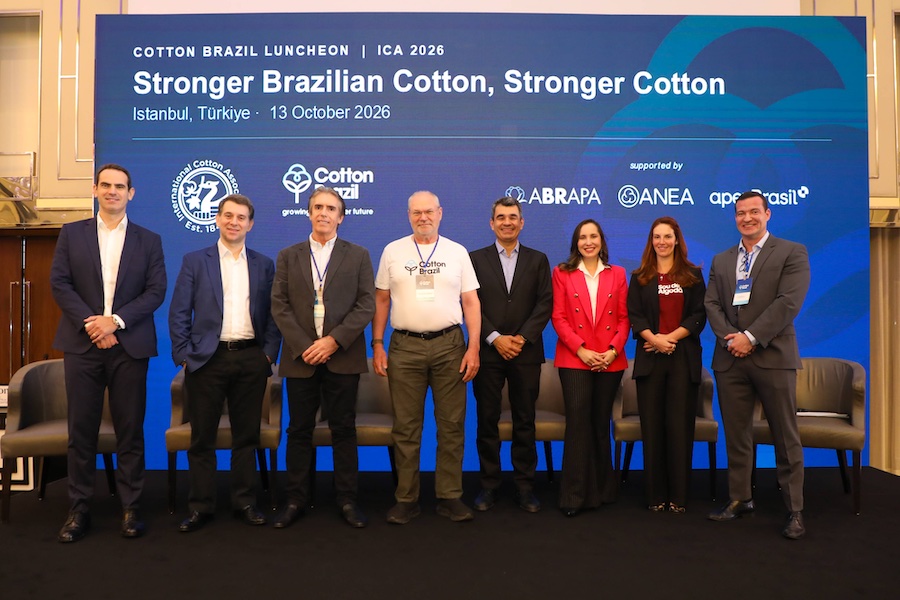
Cotton Brazil Dialogues 2026 concludes with 50 international participants immersed in Brazilian cotton production

The Cotton Brazil Dialogues concludes its 2026 edition after a series of technical visits to farms, cotton gins and reference centers, as well as workshops focused on Brazilian cotton production. A total of 50 participants from 14 countries took part in the field trips. The initiative is led by the Brazilian Association of Cotton Growers (Abrapa) and the National Association of Cotton Exporters (Anea), with support from the Brazilian Trade and Investment Promotion Agency (ApexBrasil).

#Raw Materials

Global cotton production projected to outpace consumption, but risks remain

Global cotton production is projected to reach 26.2 million tonnes in the 2026/27 season, marginally outpacing estimated consumption of 25.9 million tonnes. However, early-season production risks — including weather volatility and pest pressures — could narrow that buffer as the crop progresses, according to the September 2026 issue of Cotton This Month, published by the International Cotton Advisory Committee (ICAC).

Latest News

#Industry 4.0 / Digitalization

Coats Digital launches AI-powered GSD RealMotion for motion analysis

Coats Digital has launched GSD RealMotion, an AI-powered solution designed to provide apparel manufacturers with greater visibility into factory-floor operations. By analysing shop-floor video and applying Coats Digital’s GSD methodology, the solution turns video recordings into structured, motion-by-motion method studies.

#Textile chemistry

Archroma and Lameirinho partner in pioneering deployment of InOneGO single-step dyeing

Archroma, a global leader in specialty chemicals, and Lameirinho, a leading home textiles manufacturer based in Portugal, are collaborating to bring InOneGO by Archroma, a new single-step dyeing process, into commercial production. Lameirinho’s first InOneGo bedlinens collection is now available worldwide.

#Knitting & Hosiery

KARL MAYER launches extra-wide HKS 3-M EL for increased productivity

KARL MAYER has launched a new extra-wide version of its HKS 3-M EL tricot machine, designed to increase productivity particularly in the manufacture of textiles for sports, activewear and athleisure applications.

#Research & Development

Reducing development times for technical textiles by accelerated thermo-oxidative aging in a high-pressure autoclave

Synthetic polymers used in technical textiles can be effectively protected against degradation caused by heat, oxygen, and water through the use of stabilizer systems. This enables service lives of several decades, extending to more than 50 years. As the use of durable technical textiles continues to grow, so does the demand for reliable methods to predict their service life within economically feasible testing periods. For the first time the German Institutes of Textile and Fiber Research Denkendorf (DITF) developed methods for robust service life prediction for textiles in an IGF research project.

TOP