#Raw Materials
Aid by Trade Foundation reaches new milestones in supply chain transparency
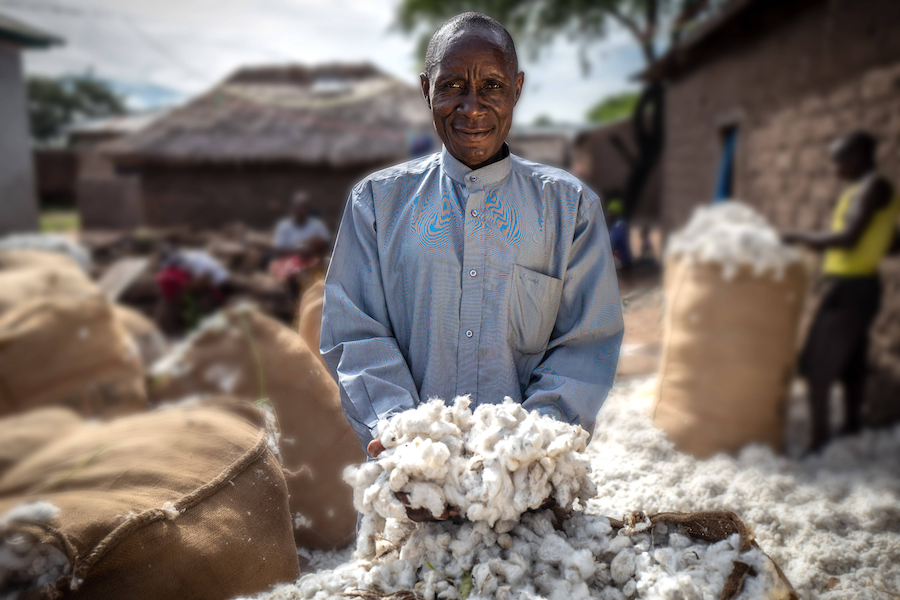
“As a standards organisation, our mission is to ensure transparency throughout global supply chains,” says Tina Stridde, the managing director of the Aid by Trade Foundation, explaining, “The physical traceability of Cotton made in Africa cotton, one of the world’s leadings standards for verified cotton that respects human rights and biodiversity, is very important for textile companies and fashion brands. It ensures that social and environmental criteria are adhered to during cotton production and that their customers can make informed purchasing decisions. It also prevents greenwashing because audits create full transparency that the verified cotton is used.”
Partners—such as Bestseller, the Otto Group, OVS, Primark, and the Rewe Group—are already using the system today.
By working with the Aid by Trade Foundation, textile companies of all sizes—from fashion brands to retailers—can bring products to market with the assurance that only cotton verified under Cotton made in Africa or Cotton made in Africa Organic was used from field to shelf; the cotton can be traced from bale to yarn to fabric to textile product. This is also a way for them to meet increasing regulatory and due diligence requirements without taking legal risks.
A long-term partner, the REWE Group, sets a milestone in this respect. “We have reached our goal and were able to fully trace the Cotton made in Africa cotton used in our private label products back to its origin by the end of 2025," says Torsten Stau, Executive Buying Director Non Food / Indirect Spend REWE Group. "The transparency system of the Aid by Trade Foundation enables us to clearly prove the origin and ensure that the cotton comes from African small-scale farmers who produce under recognized social and environmental standards. In this way, we are further increasing transparency along the entire supply chain, strengthen customer trust, and at the same time make a direct contribution to supporting the people in cultivation.”
Working closely with supply chain partners is key to credibility.
To ensure physical traceability, the Aid by Trade Foundation works closely with suppliers and producers worldwide. This collaboration is built on a solid foundation: the Hard Identity Preserved (HIP) chain of custody model, which has proved its worth since its introduction in 2008. The HIP system allows cotton to be consistently and reliably traced back from the finished textile to its origin. Because it applies in all cotton-producing countries in which AbTF is active, rather than just in a limited selection of regions, the system achieves attractive figures. To date, around 33,000 tonnes of physically traceable CmiA cotton have been processed worldwide into some 190 million textile items. Around 700 spinning mills as well as fabric and textile producers from a total of 25 countries are currently operating in accordance with its requirements—and these numbers continue to grow. These companies can reliably ensure traceability for Cotton made in Africa and Cotton made in Africa Organic verified cotton.
As of March 2026, the Transparency Standard is mandatory.
For all partners who want to prove that their products contain CmiA cotton, the Transparency Standard will be mandatory starting in March 2026. Introduced in the spring of last year, it offers an extended security portfolio that encompasses digital transaction documents (DTDs) as well as risk-based desktop audits, which are carried out by independent and ISO-accredited audit companies. Thanks to the Transparency Standard’s successful introduction, the Aid by Trade Foundation plans to make it available for cashmere fibres verified under The Good Cashmere Standard® starting in 2027.