[pageLogInLogOut]

#Texprocess 2026

Texprocess 2026: Automation, digitalisation and AI redefine textile processing
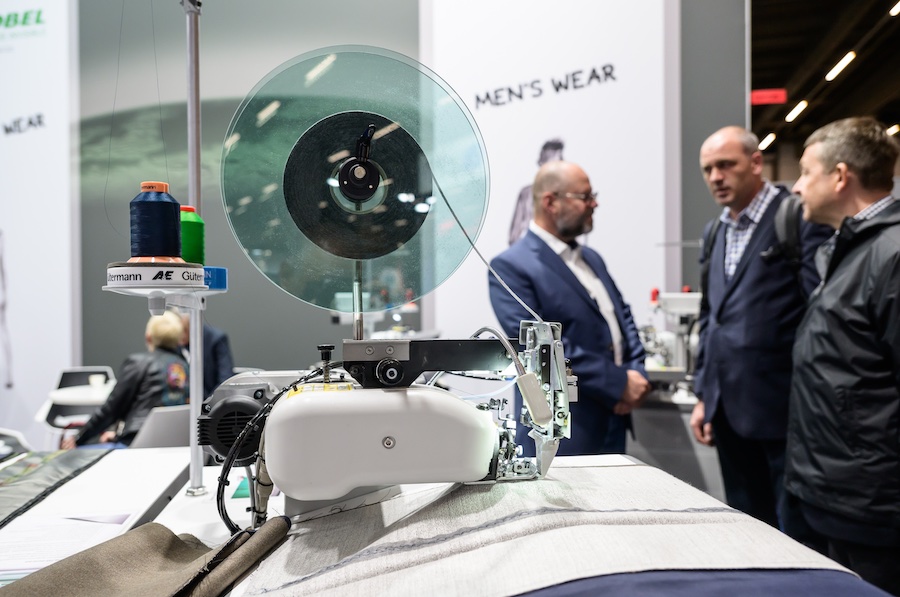
© 2026 Messe Frankfurt GmbH / Pietro Sutera
Making investment decisions in textile processing has become significantly more demanding. Increasing energy costs, a shortage of skilled labour and ongoing geopolitical uncertainties are compelling companies to focus on technologies that deliver clear gains in efficiency and process reliability. This applies equally to apparel manufacturing and to the processing of technical textiles and high-performance materials. As a result, modernisation initiatives are assessed more carefully – even as the need to upgrade production systems continues to intensify.

Within this context, Texprocess 2026 offers a structured overview of available technologies for future-oriented investment decisions. Taking place from 21 to 24 April 2026 in Frankfurt, the leading international trade fair for the processing of textile and flexible materials will host around 200 exhibitors from 28 countries. The event reflects current developments across the sector, particularly in the fields of automation, digital integration and artificial intelligence.

Spanning 15 product groups, the exhibition covers the entire processing chain – from CAD/CAM and digital product development through to cutting, sewing, embroidery and finishing. Alongside established industry players, new exhibitors and international start-ups are contributing fresh perspectives. In dedicated areas, companies such as Prodactive Solutions, Qsee.ai and White Pattern present emerging solutions while engaging with partners from industry and research.

Held in parallel, the co-located Techtextil broadens the scope to include materials, nonwovens and application-oriented developments. Together, both exhibitions represent the full textile value chain and bring more than 1,700 exhibitors to the Frankfurt exhibition grounds. An optimised hall layout, including a closer alignment of apparel-related segments, further strengthens the connection between material innovation and processing technologies.

Texprocess thus mirrors a market situation defined by both restraint and necessity: while companies are becoming more selective in their investments, the demand for efficient, interconnected and scalable production technologies continues to rise.

Investment strategies between caution and transformation

Beyond technological developments, Texprocess also reflects a shift in how companies approach investment decisions. Rather than large-scale modernisation projects, many manufacturers are increasingly prioritising targeted upgrades that deliver measurable improvements within existing production environments.

This includes modular automation solutions, scalable software platforms and technologies that can be integrated step by step without disrupting ongoing operations. Flexibility and interoperability are becoming key criteria, particularly in view of uncertain market conditions and fluctuating demand.

At the same time, delaying investment is becoming increasingly difficult. Rising labour costs, energy prices and quality requirements are placing pressure on manufacturers to improve productivity and resource efficiency. As a result, companies are navigating a narrow corridor between cautious spending and the need to remain competitive.

Texprocess provides a framework for these decisions by enabling direct comparison of technologies and offering insights into practical implementation strategies across different segments of the industry.

Automation stabilising production processes

Automation continues to be one of the most prominent drivers of change in textile processing.

Technologies designed to automate material handling, cutting or sewing operations aim to minimise manual intervention while improving consistency and output. Companies such as bullmer demonstrate how cutting room solutions are evolving into integrated systems that combine spreading, cutting and sorting within a single workflow, capable of handling a wide variety of textiles and technical materials. Automation is also making significant progress in material handling – traditionally one of the most labour-intensive areas. Robotextile, for example, develops systems that automatically separate and position individual fabric layers for subsequent steps such as sewing, printing or laminating.

The sewing stage is likewise becoming increasingly automated. Dürkopp Adler focuses on CNC-controlled and automated sewing technologies for diverse applications, while specialised providers such as RSG Automation Technics develop tailored solutions for narrow fabrics like belts and tapes, combining machinery with integrated monitoring systems.

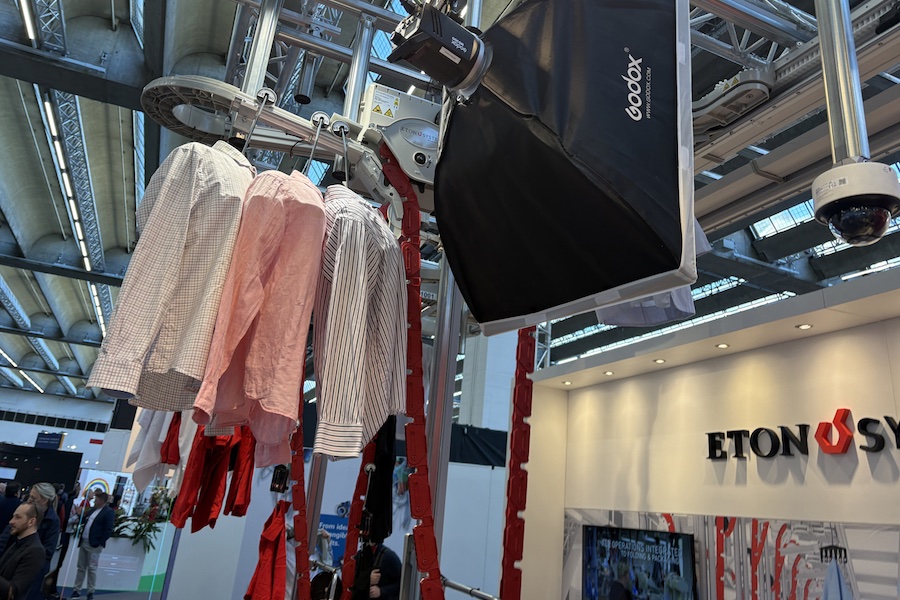
Efficient transport between production stages represents another key component of automated manufacturing. Eton Systems offers unit production systems in which individually controlled carriers move materials through the production process, reducing manual handling and increasing machine utilisation.

The full article can be read in the latest issue of textile.4U, available for free download here:



More News from TEXDATA International

#ITM 2026

ITM 2026: The new geography of textile production

New production hubs are emerging across North Africa and Central Asia, while Türkiye is accelerating its transformation toward higher-value, technology-driven and more sustainable textile manufacturing.

#Research & Development

“Production is a product”

From technical textiles and AI-driven robotics to the limitations of textile circularity: Professor Dr Thomas Gries looks back on more than two decades of development at ITA Aachen. In the interview, he explains why production technology remains a decisive success factor, discusses international collaborations and innovation ecosystems, and shares his views on the transformation of production landscapes and the challenges facing an increasingly regulated industry.

#Knitting & Hosiery

“We need to move away from the price trap and return to a value-driven mindset.”

With its new Textile Innovation Center, KARL MAYER is sending a strong signal for innovation, collaboration, and the future of textile applications. In this interview, Karl Josef Mayer discusses new opportunities in warp knitting, the processing of staple fibres, recycling, the changing role of machinery manufacturers, and why the textile industry must once again focus more strongly on the value of textiles. by Oliver Schmidt

#Associations

“Innovation, resilience and international experience remain the great strengths of the Swiss textile machinery industry”

Geopolitical uncertainty, growing competitive pressure from China, new free trade agreements and the shift towards a circular economy are currently reshaping the global textile industry. In this interview, Cornelia Buchwalder discusses the current mood within the Swiss textile machinery sector, the industry’s distinctive innovative strength, new market opportunities in India and Asia, and the technological trends that could shape the upcoming trade fair cycle leading up to ITMA 2027.

More News on Texprocess 2026

#Texprocess 2026

Eton’s AI-driven sorting system targets growing resale market

At the recent Texprocess exhibition in Frankfurt, Eton Systems – a member of TMAS, the Swedish textile machinery association – demonstrated its new aUPS module for the rapid sorting of used garments.

#Texprocess 2026

Sustainable embroidery materials and digital finishing attract attention at GUNOLD booth

More exhibition space, more visitors, and a high level of international participation: GUNOLD’s concept for this year’s Texprocess 2026, which took place in Frankfurt am Main from April 21 to 24, 2026, was a complete success. “Our decision to showcase our entire product range alongside application examples and expert tips was very well received,” says Marketing Director Stephan Gunold, delighted with the positive outcome of the trade show. The focus was particularly on the Stockstadt-based company’s sustainable products as well as its laser, engraving, and sublimation services.

#Texprocess 2026

AMANN reviews successful Texprocess 2026 and highlights innovations for circularity and performance

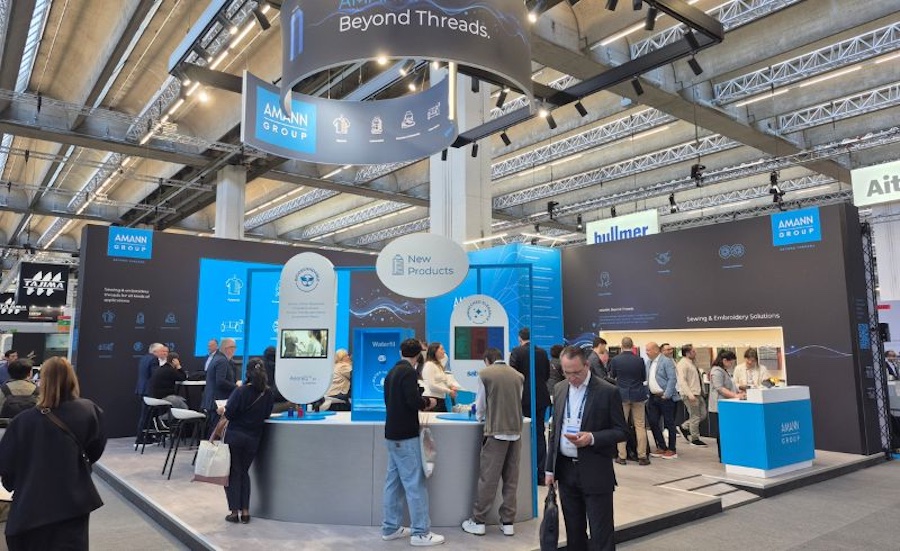
AMANN Group has drawn a positive conclusion following four successful days at Texprocess 2026 in Frankfurt. The company highlighted the many inspiring discussions, valuable exchanges, and new connections established with partners, customers, and industry experts during the event.

#Texprocess 2026

Texprocess 2026: Style3D | ASSYST showcases AI, 3D, 2D and automation and meets strong industry response

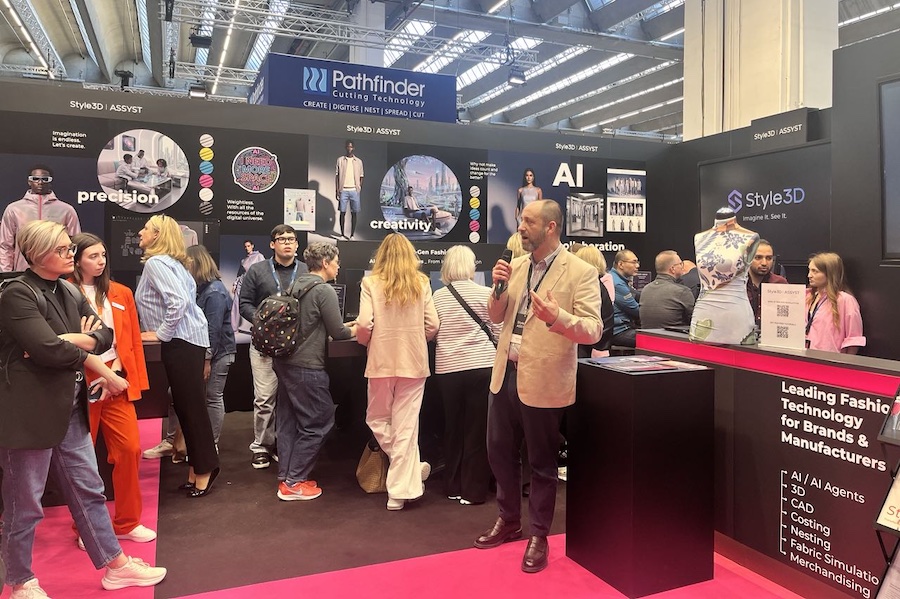
Four days, countless discussions and a clear signal from the industry: the future of fashion is digital and AI-driven. At Texprocess 2026, Style3D | ASSYST demonstrated how AI, 3D and automation are already fundamentally transforming processes from design to production.

Latest News

#Natural Fibers

The Woolmark Company showcases Australia's commitment to India's textile industry at Bharat Tex 2026

Reinforcing more than five decades of commitment to India's wool textile and apparel industry, The Woolmark Company, alongside Austrade and the Australian High Commission, marked a strong presence at Bharat Tex 2026, one of the world's largest textile and apparel trade platforms. Through industry engagement, strategic collaborations, technical innovation and knowledge exchange, the participation underscored Australia's continued commitment to supporting the growth and transformation of India's textile ecosystem while highlighting the versatility and value of Australian Merino wool.

#Dyeing, Drying, Finishing

Dyeing, finishing and singeing expertise now closer than ever to Brazilian customers

Benninger AG from Switzerland and Grupo NS from Brazil announce joined forces to support textile customers across Brazil with a strong portfolio of textile wet processing technologies, practical application know-how, and reliable local service. The cooperation combines Benninger's long-standing engineering expertise in textile finishing and dyeing with Grupo NS's deep understanding of the Brazilian textile market, customer needs, and service requirements.

#Recycling / Circular Economy

Rieter and partners launch Recycling Powerhouse for industrial-scale textile recycling

Recycling Powerhouse Ltd. was established in July 2026 to industrialize, standardize and scale textile recycling. Based in Switzerland, the venture will operate a franchise-driven business model that enables the production of high-quality, certified recycled yarns. The project is supported by the following partners: Rieter Group, the world’s leading system supplier for natural and man-made fibers, Säntis Textiles, a Swiss textile engineering company, and Valvan, a Belgian sorting technology company. The first blueprint franchise operation is scheduled to launch early 2027 in partnership with Suhail Industrial Holding Group in Qatar.

#Heimtextil 2027

Global carpet industry smartly connected: Heimtextil 2027 sharpens Carpets & Rugs with new structure and premium segment

Even more efficient, more targeted and closer to the market: Heimtextil 2027 strengthens its position as the leading meeting place for the global carpet industry and further expands Carpets & Rugs in line with market needs. With a stronger focus on distribution channels, the segment integrates into Heimtextil’s product worlds.

TOP