#Techtextil 2026
Interview Dr. Janpeter Horn (VDMA)
Between geopolitical pressure and industrial resilience
Dr. Janpeter Horn (VDMA) on market conditions, competitiveness and strategic positioning in the global textile machinery industry
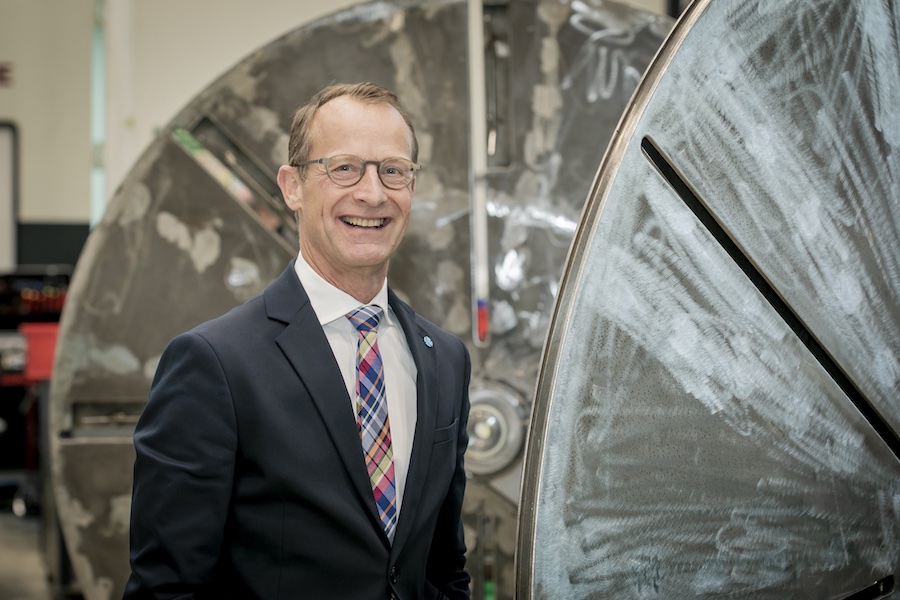
Interview
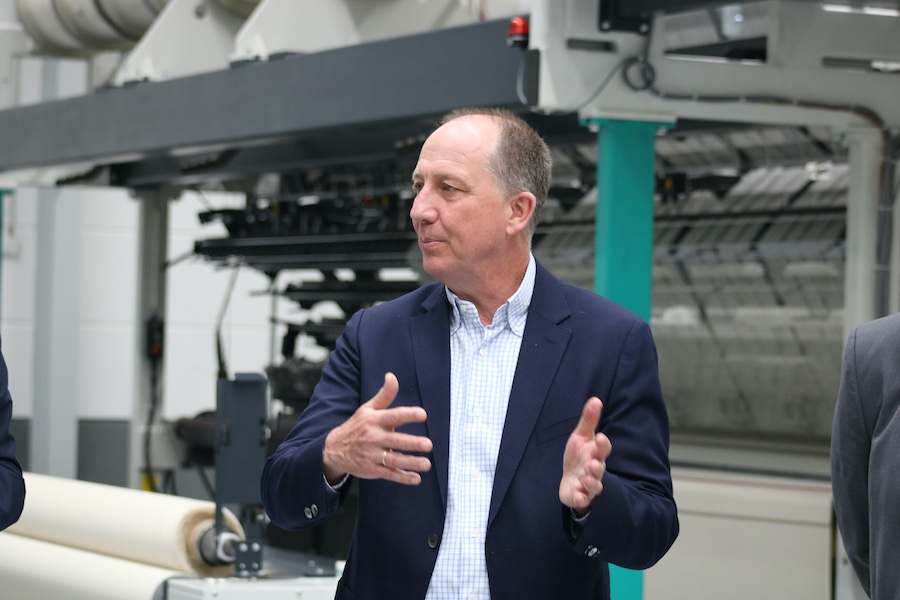
Dr. Janpeter Horn
Chairman, VDMA Textile Machinery Division
by Oliver Schmidt
Dr. Horn, when we last spoke three years ago, you had just taken over the chairmanship of the Textile Machinery Division within the VDMA. Looking back on your first term, which developments have most strongly shaped the work of the association during this period?
Three developments have shaped our work most strongly. First, geopolitics has become a defining framework condition: sanctions, export controls and growing fragmentation of markets have made political advocacy and reliable trade rules more important than ever for a highly export-oriented sector. Second, Europe’s sustainability agenda has moved from aspiration to regulation. With the EU textile strategy and circular-economy requirements, our role has increasingly been to translate policy into practical, technology-driven pathways that strengthen competitiveness instead of adding bureaucracy. Third, the domestic location question has sharpened: energy costs, permitting procedures, skills shortages and investment uncertainty are now central topics in every member discussion. Against this backdrop, the VDMA has intensified dialogue with Berlin and Brussels, coordinated positions across the value chain and strengthened international visibility at key platforms. In short, our association work has become more political, more European and more focused on safeguarding industrial strength.
The global textile industry – and with it the textile machinery sector – has been facing a difficult environment for quite some time: geopolitical tensions, shifting trade relations, weak demand and restrained investment in many markets. How would you describe the current situation for German textile machinery manufacturers?
The situation remains challenging, and it is shaped less by technology than by framework conditions. Our member companies are operating in an environment of subdued global investment, while geopolitical tensions, currency volatility and more restrictive trade policies increase planning risk and transaction costs. At the same time, competition is intensifying—especially from suppliers that benefit from strong industrial policy and, in some cases, non-market conditions.
But nevertheless, German manufacturers continue to be highly competitive in innovation, quality and reliability. Our ability to innovate is still strong, and with their comparatively high R&D investment, our member companies are laying the foundations to ensure that this remains the case in the future.
At the ITMA ASIA, there were also discussions about whether German textile machinery might be “too good” in some segments. While many markets demand simple and low-cost solutions, German manufacturers often offer highly sophisticated machines delivering the highest quality – and therefore at a corresponding price level. How do you view this debate? Do German manufacturers need to adapt more strongly to such market segments, or is the focus on high technology still the right strategy?
I understand the concern, but I would be careful with the conclusion. “Too good” often means highly efficient, resource-saving, reliable and compliant with demanding standards. That is exactly what many markets will need as energy prices, carbon constraints and due-diligence requirements tighten globally. At the same time, we must acknowledge that parts of the market are extremely price-sensitive and that competitors are increasingly supported by industrial policy. The right response is therefore not to abandon high technology, but to broaden the portfolio intelligently: modular platforms, scalable automation and service concepts that allow customers to start with a robust basic configuration and upgrade as their business grows.
This enables German manufacturers to address more segments without diluting their brand promise. Also, we must not forget that especially the bigger German companies are increasingly producing “local for local”. That means producing locally for the markets their customers are being found. It is also the declining competitiveness of Germany as a business location which supports this. From a policy perspective, the key is ensuring fair competition and open markets—so that quality, total cost of ownership and sustainability performance are rewarded, rather than short-term price alone.
If we take this discussion a step further: what does the German textile machinery industry stand for today in the global market? What do you see as its particular strengths compared with other suppliers?
German textile machinery stands for “superior technology with responsibility”: engineering excellence that delivers measurable productivity gains while meeting rising expectations on energy efficiency, traceability and compliance. Our particular strength is not only the machine itself, but the ability to provide integrated solutions—process know-how, automation, digital services and lifecycle support—that reduce total cost of ownership and operational risk for investors. Our companies listen to their customers and take up market demands.
A strength compared with other suppliers is also the unique German education and research landscape. Renowned institutions like ITA Aachen, DITF Denkendorf, ITM Dresden and Hochschule Niederrhein among others have always produced qualified engineers who have the know-how that it takes to convert the results of scientific research into marketable machinery for the textile industry.
The ITMA ASIA + CITME in Singapore last October aimed to strengthen connections between the Asian textile industry and the international textile machinery sector and to generate new growth impulses. From your perspective, did the event achieve this goal? Were there concrete project discussions or even new orders – and what signals did the exhibition send for the Asian market overall?
ITMA ASIA + CITME 2025 was a truly international show while the last few editions of the fair in Shanghai became increasingly a Chinese exhibition. Visitors came with clear project ideas, leading to many inspiring and fruitful discussions. Numerous VDMA members reported closed orders and deals – a positive sign for the machinery sector. “Better than expected”: this was a frequent statement from exhibiting companies. Visitors and exhibitors alike request another ITMA ASIA outside China.
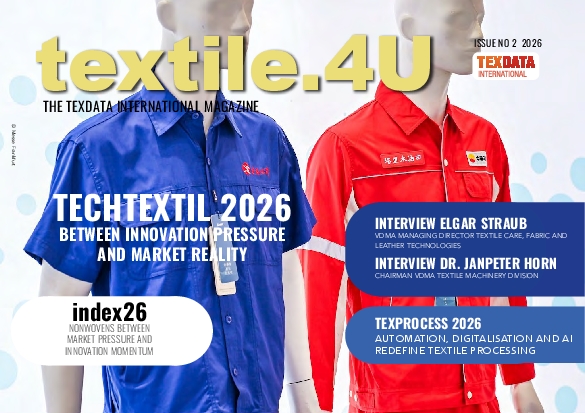
The full interview can be read in the latest issue of textile.4U, available for free download here: