[pageLogInLogOut]

#Texprocess 2026

Interview Elgar Straub (VDMA)

Between investment restraint and modernization pressure

Elgar Straub (VDMA) on market dynamics and key technology drivers ahead of Texprocess 2026

Texprocess 2026 takes place in a complex market environment shaped by uncertainty and innovation pressure. In this interview, Elgar Straub (VDMA) explains why the trade fair is particularly relevant this year and which technologies are driving efficiency and competitiveness.

Interview

Elgar Straub

VDMA, Managing Director Bavaria, Managing Director Textile Care, Fabric and Leather Technologies


by Oliver Schmidt


In just a few weeks, from April 21 to 24, the trade fair duo Techtextil and Texprocess will once again take place. The last edition was held in 2024 – a year you once described as the most challenging you had experienced in your 25-year career. Where do we stand today? Is the textile industry still under pressure from recession, high energy costs and restrained investment? And how would you currently assess the situation in your specific segment, Textile Care, Fabric and Leather Technologies?

Yes, the pressure is still clearly noticeable – however, compared to 2024 the starting position in our Textile Care, Fabric and Leather Technologies sector has changed. Investments continue to be made cautiously and very selectively, driven by cost pressures, uncertainty and longer decision‑making processes. At the same time, the need for modernization among our global customers is increasing significantly: companies are investing where technologies demonstrably improve efficiency, flexibility and process stability, as well as sustainability. This very tension currently characterizes our industry – and it lies at the heart of Texprocess.


Further challenges for the industry have emerged with the return of U.S. President Trump and the introduction of new tariffs, which are making business with the U.S. more difficult – in some cases even grinding it to a halt. How strongly are your member companies affected by these measures, and what disadvantages do they create not only for European suppliers but also for the U.S. market and consumers?


For companies in the Textile Care, Fabric and Leather Technologies (TFL) sector, US tariffs have a twofold effect: they increase the cost of machines and components in the US target market while simultaneously raising uncertainty regarding investment decisions among global customers whose products are in turn delivered to the US. Particularly in a technology‑driven segment such as TFL, this leads to modernization projects being postponed or subjected to very careful scrutiny.

For the US market itself, this has long‑term consequences: if investments in efficient and productive technologies fail to materialize, productivity and competitiveness come under pressure – an effect that becomes noticeable along the entire value chain and is also clearly addressed in the context of Texprocess.


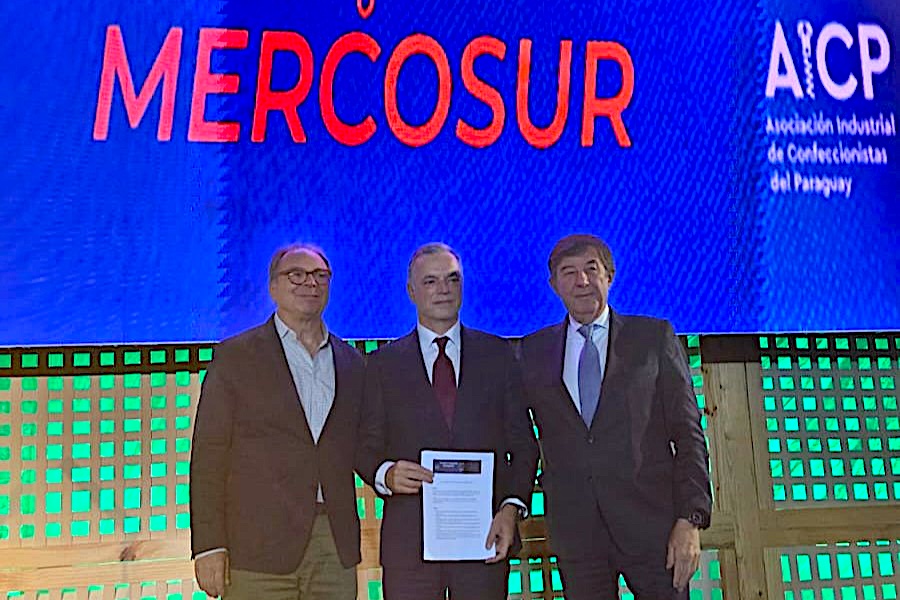
At the same time, the European Union has concluded two free trade agreements with Mercosur and India, both intended to have a positive economic impact. How are these agreements viewed by your members, and what expectations are associated with them?

For our member companies, reliable and openly structured trade relations represent an important opportunity – especially in an internationally interlinked market environment. Improved market access can facilitate investments, strengthen cooperation and accelerate technological innovation. What is crucial is a practical implementation: if tariff reductions take effect effectively, procedures are efficient and technical as well as regulatory requirements are well aligned, tangible planning security emerges. This creates stable framework conditions for our members, promotes competitiveness and supports sustainable growth. Both regions are important trading partners and we expect a lasting investment boost. Accordingly, we also call on the EU Commission to bring the free trade agreement with Mercosur into provisional force as quickly as possible.


Turning to the trade fair itself: as early as August 2025, Messe Frankfurt reported a very strong booking situation for Texprocess. How do you assess the current state of preparations? What are your expectations for this year’s edition of Texprocess?

The signs are very positive. A strong booking status was communicated at an early stage: more than 200 exhibitors from 24 countries, including many new exhibitors as well as established brands. In terms of content, Texprocess 2026 is clearly positioned as a platform where the industry provides answers to the major challenges: automation, digitalization and AI, as well as sustainability, are at the center, because these are precisely the drivers of efficiency and flexibility gains.

I therefore expect a trade fair of very high relevance for decision‑makers: concrete solutions that can be translated into investment decisions – ranging from intelligent material flow systems and robot‑assisted units to AI‑based real‑time quality control.


Texprocess is regarded as the world’s leading trade fair for your industry – making it worthwhile to visit almost every time. Why might this particular edition be even more relevant than usual?

Texprocess is fundamentally always worth attending, because it is the only global platform that brings together all technologies and services of textile processing – from design and cutting to sewing, finishing and digital printing.

In 2026, from my perspective, an additional factor comes into play: the combination of economic pressure (budget constraints, volatile demand, tariffs/geopolitics) and, at the same time, a strong surge in innovation makes visiting the trade fair particularly valuable. Visitors will find exactly the technological answers that are currently needed to stabilize processes, use resources more efficiently and reduce dependencies in order to remain competitive.


Technologies aimed at increasing efficiency are expected to play a key role at Texprocess 2026. What exactly does this mean in practical terms? Which developments or approaches should visitors pay particular attention to?

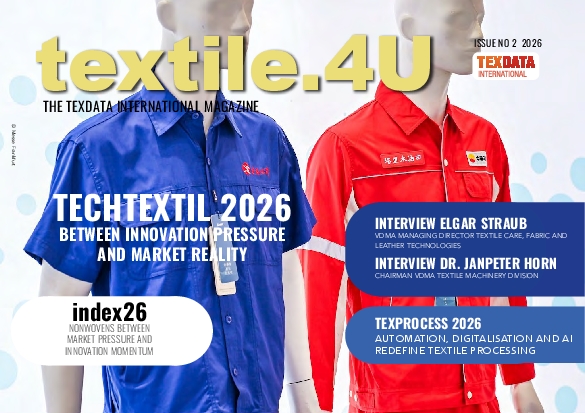
The full interview can be read in the latest issue of textile.4U, available for free download here:


More News from TEXDATA International

#Texprocess 2026

Texprocess 2026: Automation, digitalisation and AI redefine textile processing

Making investment decisions in textile processing has become significantly more demanding. Increasing energy costs, a shortage of skilled labour and ongoing geopolitical uncertainties are compelling companies to focus on technologies that deliver clear gains in efficiency and process reliability. This applies equally to apparel manufacturing and to the processing of technical textiles and high-performance materials. As a result, modernisation initiatives are assessed more carefully – even as the need to upgrade production systems continues to intensify.

#Techtextil 2026

Techtextil 2026: Between innovation pressure & market reality

From 21 to 24 April 2026, Techtextil in Frankfurt am Main will once again become the central meeting point for the international technical textiles and nonwovens industry. Running in parallel, Texprocess will focus on the industrial implementation of textile processing technologies as the leading platform in this field. Together, the two trade fairs form a closely integrated presentation and working platform along the entire textile value chain – from material development to finished applications.

#Techtextil 2026

Between geopolitical pressure and industrial resilience

In this interview, Dr. Janpeter Horn (VDMA) discusses the current challenges facing textile machinery manufacturers, shaped by geopolitical tensions, regulatory developments and subdued investment. He also outlines why innovation strength, integrated solutions and strategic positioning remain key to global competitiveness.

#Techtextil 2026

Performance Apparels: Functional textiles drive innovation at Techtextil 2026

From high-performance fibres and advanced membranes to smart textiles and sustainable material concepts – functional apparel is becoming one of the most dynamic innovation fields in technical textiles. At Techtextil 2026, exhibitors demonstrate how new materials, finishing technologies and digital functions are shaping the next generation of protective, workwear and outdoor systems.

More News on Texprocess 2026

#Texprocess 2026

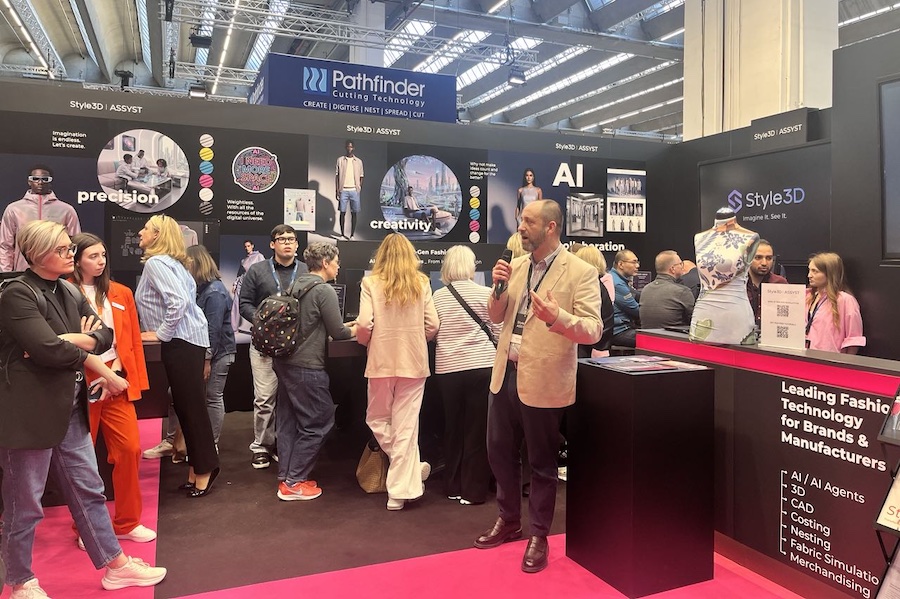
Texprocess 2026: Style3D | ASSYST showcases AI, 3D, 2D and automation and meets strong industry response

Four days, countless discussions and a clear signal from the industry: the future of fashion is digital and AI-driven. At Texprocess 2026, Style3D | ASSYST demonstrated how AI, 3D and automation are already fundamentally transforming processes from design to production.

#Techtextil 2026

Speed and connectivity: Techtextil and Texprocess provided market-ready solutions for industries under pressure

With more than 36,000 visitors and 1,700 exhibitors from a total of 112 countries, Techtextil and Texprocess 2026 demonstrated how innovation comes into industrial use. The convergence of research, industry and application proved to be a breeding ground for new material solutions, manufacturing and processing technologies. Natural fibres, performance apparel, connected systems and AI-driven processing technologies emerged as key growth and future markets.

#Techtextil 2026

Techtextil & Texprocess 2026: Global benchmark for textile innovation – Performance Apparel Textiles takes centre stage at the opening

With 1,700 exhibitors from 54 countries, Techtextil and Texprocess 2026 showcase the full range of innovation within the international textile industry – from new materials and recycling technologies to finishing solutions and high-performance textile manufacturing and processing technologies. The opening press conference centred on a key theme where innovation is especially strong: Performance Apparel Textiles.

#Texprocess 2026

Kornit Digital expands digital production into footwear and technical textiles with Presto MAX PLUS

Kornit Digital (NASDAQ: KRNT) (“Kornit” or the “Company”), a global pioneer in sustainable, on-demand digital fashion and textile production, today unveiled the Kornit Presto MAX PLUS, a new roll-to-roll system expanding digital manufacturing into footwear, automotive interiors, military camouflage, high-performance sportswear, and high-end furnishings. Debuting at Texprocess 2026 in Frankfurt, Presto MAX PLUS enables entirely new applications for on-demand textile production.

Latest News

#Recycling / Circular Economy

Europe’s textile future at a turning point: New 2030 Circularity Blueprint aims to scale recycling and unlock investment opportunities

The EU textile system is at a critical crossroads. Today, less than 1% of discarded garments are recycled into new garments, despite EU-wide obligations for separate collection. In response, Global Fashion Agenda (GFA) is launching the 2030 Circularity Blueprint, in partnership with ReHubs. This ambitious initiative is designed to support the transformation of the EU textile ecosystem to advance textile-to-textile recycling and drive the transition to a circular economy.

#Research & Development

Regional hemp bast for lightweight construction profiles

The cultivation of fibre hemp for the production of ropes and clothing has a long tradition in Saxony. Due to its excellent fibre properties, it is also suitable as a renewable raw material for reinforcement in fibre composites. At the STFI and IWU in Chemnitz, the CannaPul project is cur- rently investigating how a regional value chain for hemp-based lightweight construction profiles can be established. To this end, the technical processing of hemp fibres into continuous fibre strands and their embedding in a suitable bio-based matrix are being investigated.

#Digital Printing

Kornit Digital launches Konnections 365

Kornit Digital (NASDAQ: KRNT) (“Kornit” or the “Company”), a global pioneer in sustainable, on-demand digital fashion and textile production today announced the launch of Konnections 365 - a year-round movement designed for the people moving the apparel, print, and retail industries forward. The strategy is built on the overwhelming success of Konnections 2026 held in Hollywood, Florida, featuring more than 500 customers, partners, and collaborators who together are driving the future of apparel and textiles.

#Techtextil 2026

Techtextil 2026: KARL MAYER impresses as an innovative sector partner

KARL MAYER looks back with satisfaction on its participation in Techtextil 2026. From April 21 to 24, the international industry leader used the trade show in Frankfurt to meet with numerous key customers at its booth and, at the same time, establish many new contacts. Most visitors came from Germany, followed by major markets such as Poland, the United Kingdom, Turkey, France, and Portugal.

TOP