[pageLogInLogOut]

#Sustainability

OEKO-TEX® Annual Report 2023/2024 mentions 50,000+ valid certifications

The international OEKO-TEX® association has continued to demonstrate positive business growth, highlighting the critical role of close collaboration and shared commitment in accelerating sustainable change. More than 35,000 textile and leather companies depend on the certificates and product labels issued by OEKO-TEX®’s independent testing institutes. OEKO-TEX® issued more than 50,000 certificates and labels between July 1, 2023, and June 30, 2024 – an increase of 22% over the previous financial year.
in 2023/2024 +48,000 tests and checks were performed on the samples © 2024 OEKO-TEX®


For the first time, there are over 40,000 chemical products certified with OEKO-TEX® ECO PASSPORT. This reflects the industry's increasing commitment to cleaner, safer textile and leather production. ECO PASSPORT certified chemicals comply with global regulations, including REACH Directive Annexes XVII and XIV, the ECHA Candidate List and the US CPSIA. The certification is also recognized by the ZDHC as proof of MRSL conformity for levels 1 to 3.

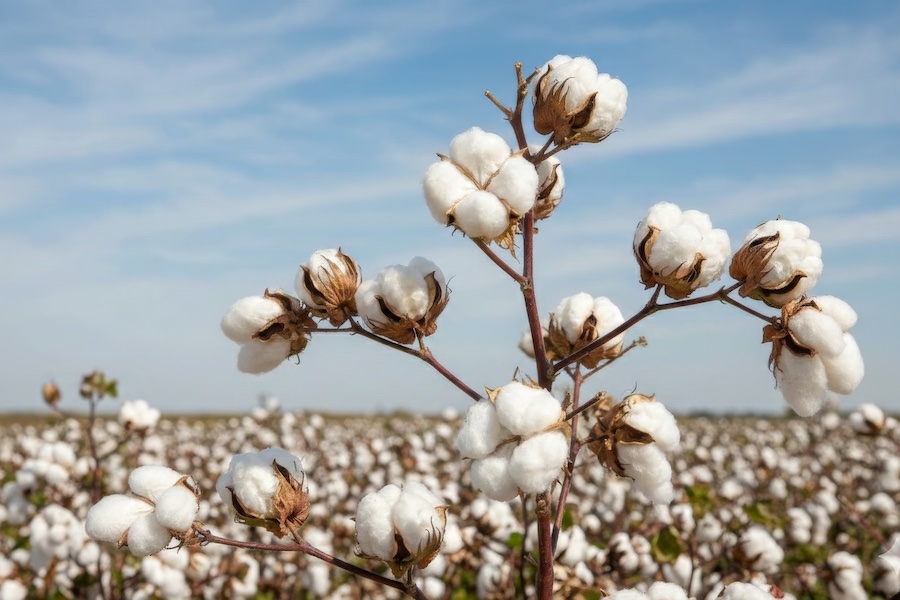
The OEKO-TEX® ORGANIC COTTON certification, introduced in 2023 with strict supply chain traceability requirements, saw the first finished products on the market in January 2024. In addition, the limit value for genetically modified organisms (GMOs) was reduced from 10% to 5%, a significant tightening of the requirements for purity and quality.

As regulatory challenges intensify, OEKO-TEX® has continuously adapted its certifications to ensure they remain compliant with evolving requirements. To address the US CERCLA's ban on per- and polyfluorinated alkyl substances (PFAS/PFC), OEKO-TEX® took proactive measures to generally ban the intentional use of these substances. As a solution for the European Due Diligence Directive (CSDDD) and other supply chain requirements, OEKO-TEX® introduced the OEKO-TEX® RESPONSIBLE BUSINESS certification, which supports companies in fulfilling due diligence obligations throughout textile and leather supply chains.

The report:

https://www.oeko-tex.com/fileadmin/user_upload/Annual_Report/OEKO-TEX-Annual-Report-2023-24.pdf

More News from Oeko-Tex® Association

More News on Sustainability

#Sustainability

GOTS version 8.0 released: advanced supply chain accountability, from fibre to finished product

Global Standard is pleased to announce the release of GOTS Version 8.0, the latest update to the world's leading processing standard for organic textiles. The updated Standard strengthens requirements for air emissions and waste management, as well as criteria for product safety. It introduces new provisions on circularity, microfibre management and updates in residue testing. Version 8.0 also elevates due diligence obligations and formalises governance requirements, including ESG disclosure, anti-corruption policies and conflict-of-interest safeguards, to support credible, responsible business conduct.

#Sustainability

The nova-Institute establishes new Renewable Feedstock Department to lay the groundwork for industrial defossilisation

The transition from fossil-based to renewable carbon – sourced from biomass, CO₂ utilisation and recycling – is the cornerstone of a climate-neutral chemical industry. The nova-Institute’s new department is dedicated to providing the essential data, analyses and strategic roadmaps required to secure a reliable future feedstock supply and make this transition a commercial and ecological reality.

#Sustainability

Textile Exchange unveils commitment-based pathway for members to accelerate responsible raw material production

Textile Exchange has unveiled further details about its new membership structure, designed to guide the fashion, textile, and apparel industry in a collective course of action toward preferred production systems for raw materials and fibers.

#Textile chemistry

Jeanologia urges industry to accelerate PP Spray phase-out following ZDHC Watchlist update

Potassium permanganate has officially entered the Chemical Watchlist of the ZDHC Foundation, signaling increased scrutiny and potential phase-out of one of the most hazardous chemicals still used in denim finishing. The inclusion confirms an industry shift that Jeanologia anticipated more than a decade ago.

Latest News

#Spinning

Barmag presents the next generation of POY production – energy-efficient and partial-automated

With POY 2.0, Barmag is introducing a completely redesigned spinning concept that takes the production of partially oriented yarn (POY) to a new level in terms of technology and economy. The solution, which was presented to a selected audience of experts for the first time at ITMA Asia + CITME 2025, was met with great enthusiasm: several yarn producers worldwide immediately expressed their interest in a pilot plant.

#Composites

More affordable, environmentally friendly hydrogen pressure tanks at ITA-JEC booth

As a highlight of the JEC, the Institut für Textiltechnik (ITA) of RWTH Aachen University will be presenting hydrogen pressure tanks manufactured using multifilament winding processes at the NRW joint booth in Hall 5, Stand G65.

#Textile chemistry

DyStar Group Announces Board Transition to Drive Innovation

DyStar, a leading specialty chemical company with a heritage of more than a century in product development and innovation, announced today the appointment of Ruan Cunfan to its Board of Directors, effective 20 February 2026.

#Recycling / Circular Economy

Textile‑to‑textile recycling leader Circulose joins Spinnova’s ecosystem to accelerate technology scale‑up

Textile‑to‑textile recycling leader Circulose joins Spinnova’s ecosystem (consortium) to help advance the scale‑up of Spinnova’s technology. Spinnova has actively sought partners to accelerate commercial scale‑up, and Circulose, as a key player in textile recycling, strengthens the ecosystem by providing a raw material that is in high demand across the industry.

TOP