[pageLogInLogOut]

#Sustainability

Borealis and Axpo sign two new long-term wind PPAs
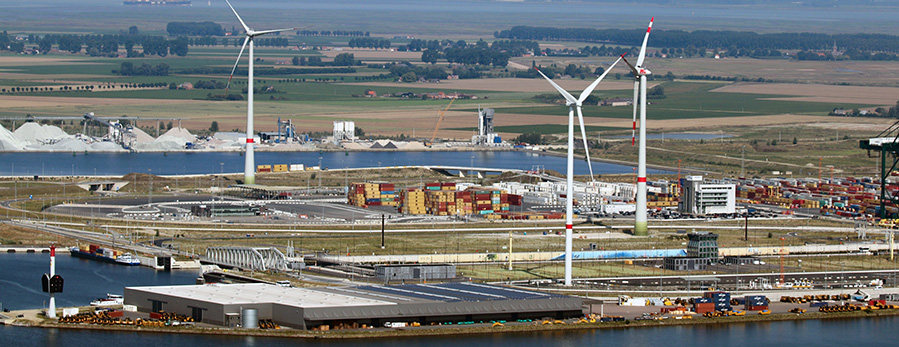
Wind turbines located on the left bank of the Port of Antwerp / Belgium (c) 2024 Wind aan de Strom
Borealis, one of the world’s leading providers of advanced and sustainable polyolefin solutions and a European market leader in base chemicals, and , Switzerland’s largest producer of renewable energy and an international leader in the trading and marketing of solar and wind power, have again joined forces and signed their fourth and fifth power purchase agreements (PPA).
  • Two new power purchase agreements (PPA) procure renewable energy from onshore wind farms to Borealis sites in Sweden and Belgium
  • Borealis continues to make strides towards powering 100% of its Polyolefins and Base Chemicals operations with renewable electricity by 2030
  • Amidst the challenges of a turbulent energy market, Borealis remains steadfast in its pledge to achieve ambitious energy and climate targets

The ten-year deals in Sweden and Belgium were signed in 2023 and follow three earlier long-term agreements with Axpo which were concluded in 2023, 2022 and 2021.

As of January 2024, Axpo has begun the supply of 125 GWh per year of wind energy to Borealis facilities in Stenungsund, Sweden. Under the ten-year agreement, renewable electricity will be provided by the onshore wind farm Lake Wind AB, in Habo, Sweden, owned by an infrastructure fund managed by Vauban Infrastructure Partners. At the same time, Axpo has started delivering 70 GWh per year of wind power to Borealis’ sites in Belgium for the next ten years. This renewable energy is sourced from wind turbines located on the left bank of the Port of Antwerp, surrounding the Borealis Kallo site, and owned by Wind aan de Stroom.

Furthermore, Borealis is making significant strides towards its objective of sourcing 100% of electricity for its Polyolefins and Base Chemicals business units from renewable sources by 2030. The recently established PPAs with Axpo are expected to lead to a substantial reduction of approximately 14,955 metric tons of annual Scope 2 emissions (indirect greenhouse gas emissions resulting from the purchase or acquisition of electricity, steam, heat, and cooling).1 Over the ten-year PPA period at Borealis' operations in Sweden and Belgium, this equates to a noteworthy decrease of 149,550 metric tons in Scope 2 emissions, showcasing the company's commitment to environmental sustainability.

"We are thrilled to announce these additional two major Power Purchase Agreements with Axpo, reinforcing our commitment to driving the energy transition despite market challenges. Our long-term partnership signifies our dedication to re-inventing essentials for sustainable living, accelerating our journey towards ensuring all electricity for our operations comes from renewable sources by the end of this decade," states Wolfram Krenn, Borealis Executive Vice President Base Chemicals & Operations.

Axpo Head of Trading and Sales, Domenico De Luca, says: “We’re delighted to continue to partner with Borealis. Thanks to Axpo’s decade-long experience managing a sizable renewable energy portfolio, we can offer tailored energy solutions for large pan-EU organizations across multiple countries in what has become a new trend across energy markets. Power Purchase Agreements are proving key to advancing the energy transition and we’re pleased to work with companies like Borealis who are committed to securing a sustainable future.”
More News from TEXDATA International

#ITM 2026

ITM 2026: The new geography of textile production

New production hubs are emerging across North Africa and Central Asia, while Türkiye is accelerating its transformation toward higher-value, technology-driven and more sustainable textile manufacturing.

#Research & Development

“Production is a product”

From technical textiles and AI-driven robotics to the limitations of textile circularity: Professor Dr Thomas Gries looks back on more than two decades of development at ITA Aachen. In the interview, he explains why production technology remains a decisive success factor, discusses international collaborations and innovation ecosystems, and shares his views on the transformation of production landscapes and the challenges facing an increasingly regulated industry.

#Knitting & Hosiery

“We need to move away from the price trap and return to a value-driven mindset.”

With its new Textile Innovation Center, KARL MAYER is sending a strong signal for innovation, collaboration, and the future of textile applications. In this interview, Karl Josef Mayer discusses new opportunities in warp knitting, the processing of staple fibres, recycling, the changing role of machinery manufacturers, and why the textile industry must once again focus more strongly on the value of textiles. by Oliver Schmidt

#Associations

“Innovation, resilience and international experience remain the great strengths of the Swiss textile machinery industry”

Geopolitical uncertainty, growing competitive pressure from China, new free trade agreements and the shift towards a circular economy are currently reshaping the global textile industry. In this interview, Cornelia Buchwalder discusses the current mood within the Swiss textile machinery sector, the industry’s distinctive innovative strength, new market opportunities in India and Asia, and the technological trends that could shape the upcoming trade fair cycle leading up to ITMA 2027.

More News on Sustainability

#Sustainability

Closing the Footwear Loop reveals challenges and opportunities for circular footwear

The footwear industry faces one of the most complex circularity challenges in the fashion sector. A new Phase 1 report from the Fashion for Good initiative Closing the Footwear Loop, developed together with Circle Economy, provides new insights into the composition, condition and recycling potential of post-consumer footwear waste.

#Man-Made Fibers

The updated poster on biodegradable Polymers in various environments has been released

As part of the PerPlacsBio project, nova-Institute has updated its popular poster on the biodegradability of polymers in different environments. The updated version reflects current standards, certifications and the latest scientific findings. The poster can be used to assess biodegradable alternatives for use in agriculture and forestry, and it is now available in German for the first time.

#Sustainability

A new standard to combat plastic waste in forests

With DIN SPEC 35808 “Tree Shelter for Forestry Applications,” the testing and research service provider Hohenstein, in collaboration with Rottenburg University of Forestry, as well as forestry authorities and industry partners, has established a clear framework for bio-based and fully biodegradable tree shelters. The pre-standard defines requirements and practical testing methods designed to reduce plastic waste in forests and strengthen the long-term protection of soil and the environment.

#Denim

Denim moves towards sustainability

EIM (Environmental Impact Measurement), the global reference platform for measuring the environmental impact of garment finishing, presents the second edition of its annual report Denim Industry Progress & Insights 2025. The study analyses over 100,000 real denim finishing processes, providing an accurate and up-to-date view of the industry’s evolution towards more sustainable models.

Latest News

#ITM 2026

The future of textiles, the power of trade, and the summit of technology come together at ITM 2026

ITM 2026 International Textile Machinery Exhibition, one of the most prestigious organizations in the textile technologies sector, opens its doors to visitors between June 9-13. Expected to break records in terms of both exhibitor and visitor numbers, as well as the technological vision it presents, ITM 2026 will transform into a global trade hub with machine sales, and new business collaborations.

#Nonwoven machines

ATCO Hygienics, Uzbekistan, orders baby diaper production line from ANDRITZ

International technology group ANDRITZ has received an order from ATCO Hygienics to supply a new baby diaper production line for its plant in Tashkent, Uzbekistan. The order is included in ANDRITZ’s order intake for the first quarter of 2026. Commissioning of the production line is scheduled for the end of 2026.

#Weaving

Itema manufactures the first Projectile Weaving Machines “Made in Italy” at its Colzate Headquarters.

Itema proudly announces an important industrial milestone: in early May, the first Itema projectile weaving machines manufactured in Italy were successfully produced at the Group’s headquarters in Colzate.

#Spinning

Nico Pedretti appointed as Managing Director Graf Group

As of June 1, 2026, Nico Pedretti has assumed the role of Managing Director Graf Group. With more than 20 years of international industrial experience and extensive expertise in Operations, Supply Chain Management, Finance and Controlling, he brings a broad range of leadership and business experience to support Graf’s continued success.

TOP