[pageLogInLogOut]

#Sustainability

Kimberly-Clark reports progress toward 2030 sustainability goals

Kimberly-Clark Corporation published its annual report on sustainability, including an update on the company's progress toward its 2030 sustainability strategy and goals, aimed at addressing the social and environmental challenges of the next decade with goals to improve the lives and well-being of 1 billion people in underserved communities around the world and reducing its environmental footprint.

"As Kimberly-Clark continues to grow our business, caring for our people, consumers, customers, partners and communities remains front and center," said Mike Hsu, Chairman and CEO, Kimberly-Clark. "From our commitment to climate stewardship and our efforts to develop more sustainable solutions for our product portfolio to our focus on inclusion and diversity and our ambition to advance the well-being of 1 billion people around the world, we'll continue to drive positive impact as we create long-term value for our shareholders. That's how we deliver Better Care for a Better World."

Key highlights of the company's 2021 results include:

  • Social Impact – Kimberly-Clark and its brands continued to deliver toward the goal to improve the well-being of 1 billion people in underserved communities by 2030 through programs like Toilets Change Lives, No Baby Unhugged and the Kotex® She Can initiative, as well as through partnerships with the Kimberly-Clark Foundation, and NGOs including Water For People, WaterAid and Plan International. In 2021, Kimberly-Clark advanced the well-being of 15.7 million people in vulnerable and underserved communities, raising our total to 41.4 million people since 2015.
  • Climate – Consistent with the world's enhanced climate action commitments coming out of COP26, the company made progress against ambitious targets approved by the Science Based Targets initiative (SBTi) for reducing our Scope 1 and 2 greenhouse gas emissions by 50% and our Scope 3 emissions by 20% – all by 2030. As of the end of 2021, Kimberly-Clark achieved nearly a 41% reduction in operational emissions (Scope 1 and 2) versus our 2015 base year. For Scope 3 GHG emissions, we achieved a 6.3% GHG emissions reduction from a 2015 base year, with a focus on purchased goods and services and end-of-life treatment of sold products.
  • Forests – The company made continued progress toward its goal of sourcing 90% of our tissue fiber from environmentally preferred fiber sources. In 2021, Kimberly-Clark achieved 87% environmentally preferred fiber use globally, primarily by increasing our procurement of virgin wood fiber certified by the Forest Stewardship Council (FSC®) (63%) as well as recycled fiber (24%) for our tissue products.
  • Plastics – Kimberly-Clark continued its work to explore more sustainable, commercially viable and scalable alternatives to fossil fuel-based plastics. In 2021, the company doubled the percentage of recycled content in our plastics packaging, and it further increased the amount of packaging globally that is reusable, recyclable, or compostable to nearly 84%, as it strives for 100% by 2025.
  • Water – In 2021, Kimberly-Clark achieved a 34% reduction of water consumption in water-stressed regions against our 2015 baseline, of which 1.4% occurred in the last year, driven by our strategic approach to water management, which centers around technological innovation for circular solutions and best-in-class management systems.
  • Inclusion and Diversity – Kimberly-Clark continued to foster a culture of inclusion that recognizes, values and celebrates the diverse perspectives of our team. Among other pillars of our strategy, the past year focused on leveraging leadership to drive inclusion and diversity with initiatives including educating team leaders through our Activating Inclusive Leadership Lab to build high-performing, inclusive and diverse teams.
  • Health and Safety – As the world continued to navigate through the global COVID-19 pandemic, the company prioritized the health and safety of our people with global protocols that often exceeded local requirements. A number of sites provided preventive programs, including free on-site testing, vaccination clinics for employees and family members as well as training and education.


"Our purpose of Better Care for a Better World is our call to action, challenging us to help billions of people through greater access to life's daily essentials while building on our past successes, scaling our use of efficient new technologies, and delivering solutions that address the challenges facing our planet in the decade ahead," said Lisa Morden, Vice President of Safety, Sustainability and Occupational Health, Kimberly-Clark. "We will remain steadfast in our efforts to reach our goals because we believe it's the best way to care for the people we serve, it's the right thing to do for our planet, and it helps us deliver on our purpose."

In addition to the report, the company has provided enhanced ESG-related content on its website in order to provide more primary information about its overall strategy, progress and achievements, and make it easier for stakeholders to find the information that is most relevant to them.

Kimberly-Clark's annual report on sustainability provides an update on the company's progress toward its 2030 sustainability strategy and goals, aimed at addressing the social and environmental challenges of the next decade with goals to improve the lives and well-being of 1 billion people in underserved communities around the world and reducing its environmental footprint. © 2022 Kimberly Clark


"As its reporting format continues to evolve, Kimberly-Clark's commitment to acting with care for people, communities, and the planet remains resolute," added Morden. "In addition, maintaining transparency in our ESG disclosures in order to engender the trust of our investors, customers, consumers, employees, local communities, and other stakeholders remains paramount."

Kimberly-Clark's annual sustainability report and accompanying disclosures portray the company's progress through stories that highlight our work around the world as well as key data and metrics prepared in accordance with the Global Reporting Initiative (GRI) Sustainability Reporting Standards "Core" level. The reporting covers the time frame of January 1, 2021 through December 31, 2021. For more information on the topics in this report, please visit the sustainability page on Kimberly-Clark.com.




More News from TEXDATA International

#Techtextil 2026

Performance Apparels: Functional textiles drive innovation at Techtextil 2026

From high-performance fibres and advanced membranes to smart textiles and sustainable material concepts – functional apparel is becoming one of the most dynamic innovation fields in technical textiles. At Techtextil 2026, exhibitors demonstrate how new materials, finishing technologies and digital functions are shaping the next generation of protective, workwear and outdoor systems.

#Texprocess 2026

Texprocess 2026: Automation, digitalisation and AI reshape textile processing

Investment decisions in textile processing have become increasingly complex. Rising energy prices, labour shortages and geopolitical uncertainties are forcing companies to prioritise technologies that deliver measurable improvements in efficiency and process stability. This applies not only to apparel production, but also to the processing of technical textiles and high-performance materials. Modernisation projects are therefore being evaluated more selectively – but the pressure to upgrade production systems continues to grow. Texprocess 2026 reflects this tension between cautious investment behaviour and increasing technological demand.

#Techtextil 2026

Textile Chemicals & Dyes: Innovation in Textile Chemistry moves into focus at Techtextil 2026

From PFAS-free finishes and water-saving dyeing technologies to advanced coatings and recycling-compatible formulations, innovation in textile chemistry is accelerating across the industry. Reflecting this development, Techtextil 2026 introduces Textile Chemicals & Dyes as a dedicated product segment, highlighting the growing role of chemical solutions in shaping the next generation of technical textiles.

#Recycling / Circular Economy

textile.4U publishes special edition “Top 100 Textile Recycling Companies 2025”

With a comprehensive 176-page special edition, textile.4U is dedicating its latest issue entirely to one of the most dynamic and influential topics in today’s textile industry: textile recycling. The new issue, published exclusively in high-quality print, presents the Top 100 textile recycling companies researched and selected by TexData – organizations that already play a key role in the transition to circular textiles or are expected to have a significant impact in the near future.

More News on Sustainability

#Natural Fibers

Global Standard gGmbH launches second public consultation for GRTS Draft 2 for the textile industry (1–30 April 2026)

Global Standard gGmbH is pleased to announce the release of Draft 2 of the Global Responsible Textile Standard (GRTS) for its second public consultation. The consultation will be open from 1 April 2026 to 30 April 2026, inviting stakeholders across the textile and apparel value chain to provide input and contribute to the further development of this new Standard.

#Sustainability

Practical toolkit to drive coordinated climate action launched

An open-access workshop toolkit enables brands, suppliers, policymakers and investors across the textile industry to apply the System Map in their own work, identifying leverage points to halve emissions and enable a just transition.

#Raw Materials

Textile Exchange publishes cotton Life Cycle Assessment study to strengthen impact data

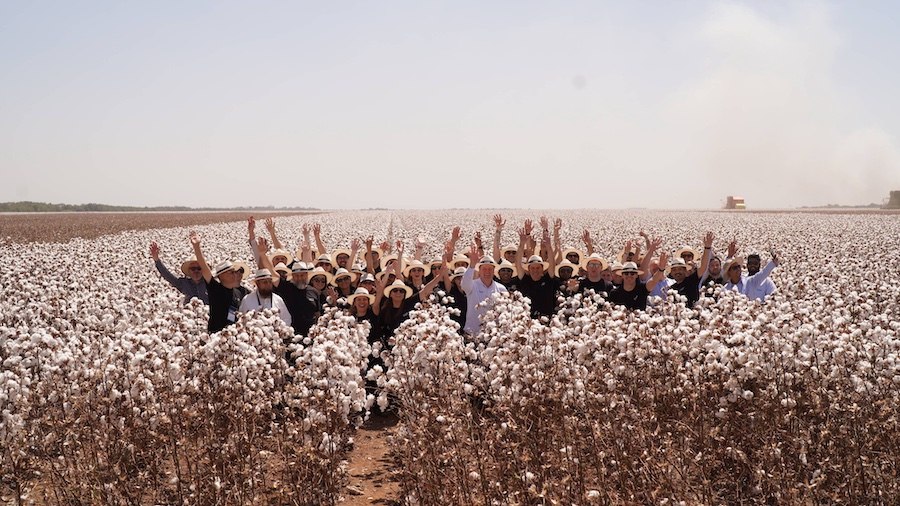
Textile Exchange has published the first in a series of seven Life Cycle Assessment (LCA) studies designed to improve the quality and robustness of environmental impact data for raw material production across the fashion, textile, and apparel industry. The first LCA study focuses on cotton and addresses critical data gaps and methodology variability through new high-quality data across key producing countries. The study includes organic, regenerative, recycled, and country averages for conventional cotton production systems, providing a clearer picture of the associated environmental impact.

#Sustainability

Experts publish APAC policy priorities

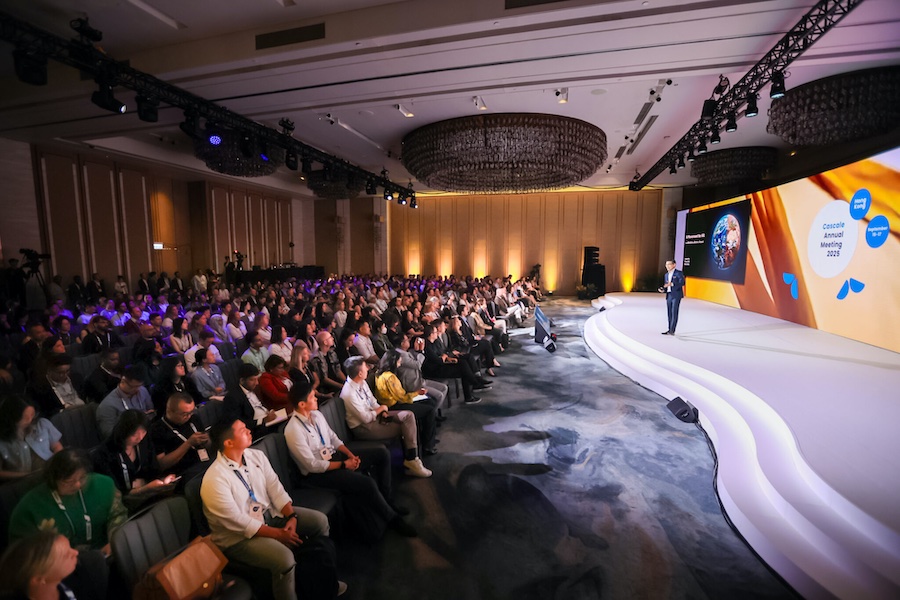
Cascale today announced the publication of its APAC Policy Priorities Paper, developed by the Asia-Pacific (APAC) Policy Member Expert Team (MET) to identify key regional sustainability challenges and provide practical, aligned recommendations for policymakers and industry stakeholders across Asia-Pacific.

Latest News

#Recycled Fibers

RE&UP partners with Madewell and ISKO on textile-to-textile denim capsule

RE&UP Recycling Technologies is accelerating the shift toward a closed-loop textile economy through a collaboration with American denim brand Madewell and global fabric manufacturer ISKO. By transforming approximately 20,000 pairs of post-consumer jeans into recycled feedstock for a textile-to-textile denim capsule, RE&UP demonstrates the commercial viability of circular systems in the denim sector.

#Techtextil 2026

Sedo Treepoint will exhibit smart technologies for technical textile production

As technical textile production becomes increasingly complex and sustainability requirements intensify, digital integration is evolving from an efficiency tool into a strategic task. At Techtextil 2026 (April 21–24, Frankfurt am Main), Sedo Treepoint will present smart digital systems designed to address the demanding production environments of technical textile manufacturing. The company’s focus will be on practical technologies that enhance process transparency, reproducibility, and efficient resource use. Visitors will meet Sedo Treepoint in Hall 12, Booth D05.

#Techtextil 2026

ITM presents cutting-edge textile research at Techtextil

From April 21 to 24, 2026, the Chair of Textile Machinery and High Performance Material Technology (ITM) at TUD Dresden University of Technology will be presenting its current research at Techtextil, the leading international trade fair for technical textiles and nonwovens. In Hall 12.0, Stand D41, the team will be demonstrating how it combines high-performance fibers, AI-supported digital development tools and innovative machine technologies to develop textile solutions for lightweight construction, construction, medical technology and sustainable production from atom to product.

#Techtextil 2026

CHT Group to showcase intelligent specialty chemical solutions at Techtextil 2026

At this year's Techtextil 2026 in Frankfurt am Main, the CHT Group will be presenting its comprehensive portfolio of tailor-made specialty chemicals and process solutions for technical textiles. As a reliable partner to the global textile industry, the company offers innovative products and in-depth technical expertise across all areas of the textile value chain – from pretreatment, dyeing, and printing to finishing, coating, and fiber auxiliaries.

TOP