[pageLogInLogOut]

#Sustainability

SABIC moves low-carbon-emitting technologies initiative to next level

SABIC has entered an agreement with the World Economic Forum and other global chemical sector companies targeted at formalizing the Low-Carbon Emitting Technologies (LCET) initiative into a stand-alone entity by 2023. In collaboration, LCET members will share early-stage risks and co-invest in developing and upscaling low-carbon-emitting technologies.

The project development company (PDC) will be designed and developed by an inclusive stakeholder primacy collaboration between SABIC, Air Liquide, BASF, Clariant, Covestro, Dow, Mitsubishi Chemical Corp., Royal DSM, SIBUR, Solvay and World Economic Forum, and is supported by The Mission Possible Partnership.

The joint undertaking represents the LCET initiative’s seminal transition from a knowledge sharing platform to the implementation vehicle as envisioned at its 2019 founding, and on course with its original mandate to accelerate greenhouse gas (GHG) reduction in the chemical production value chain. The Forum-hosted collaboration is designed to foster creative public/private partnerships, partnerships and to enable pre-competitive cooperation especially on common challenges to the industry to drive sustainable solutions and collectively solve challenges on the path to carbon neutrality.

© 2021 Sabic
© 2021 Sabic


“As the LCET initiative moves into the critical implementation stage, it will demonstrate the groundbreaking innovation that our industry can achieve through collaboration”, said Yousef Al-Benyan, Vice Chairman and CEO of SABIC, and LCET Co-Chair. “By working together to co-develop and upscale low carbon-emitting technologies, we will accelerate circular carbon economy journey to carbon neutrality.”

Chemicals are essential for more than 95% of the world’s manufactured goods and, consequently, the sector is currently responsible for around 5% of total GHG emissions. Worldwide product demand is expected to quadruple by 2050.

LCET technology teams have identified technical principles and specific measures that can convert traditional operating models into net-zero production methodologies. Through the PDC, these LCET pioneers will be embarking along two value chains that are the largest sources of chemical GHG emissions: olefin production via steam cracking, and ammonia production based on dedicated hydrogen generation from methane or water.

The first joint programs are on the way with an emerging R&D Hub for plastic waste processing, and a collaborative project between SABIC and BASF together with technology provider Linde on the world’s first electrically heated steam cracker furnace. Further efforts such as hydrogen generation in low carbon processes, the use of CO2 and biomass as feedstock, and the overall electrification of chemical operations will be addressed in the PDC pipeline.


“The transformation toward climate neutrality is a must. Therefore, we need to translate climate targets now into concrete measures. We collaborate in the LCET initiative to jointly accelerate breakthrough technologies. We join forces to tackle critical technology challenges that cannot be tackled by a single company alone,” said Dr. Martin Brudermüller, BASF Chairman of the Board of Executive Directors and LCET Chair. “Sharing technology and business risks in innovative ways is key to mastering this challenge successfully.”

Though technological challenges common to the sector can be addressed in intra-industry collaboration, deploying these new technologies on a commercial scale bears significant economic risk. Chemical companies continue advancing individual efforts; however, in order to transform the entire sector, it will require massive capital investment, regulatory support, and further coordination between financial partners, innovators, academic institutions, governments, and civil society.

The LCET initiative aims to foster alliances, potentially structured as joint ventures or start-up companies, to prioritize and innovate to share knowledge and reduce investment risks. For example, co-investment into large projects that couldn’t be financed by one party; joint IP schemes and complementary engagement with policy makers, regulators, and financial players; and co-marketing opportunities and demand creation for low-carbon products all can work together to encourage infrastructure development that enables low-carbon solutions in large systems such as electrical grids and pipelines.

This effort calls for new ways to finance net-zero solutions, creative sharing of expertise, and for more producers, technology providers and value chain partners to join the LCET initiative in meeting the Paris agreement and UN 2050 sustainability goals.

“LCET members are to embark together on the journey to net-zero emissions in the chemical industry by 2050,” said Roberto Bocca, Head of Shaping the Future of Energy and Materials; Head of Partner Engagement, Europe and North America; Member of the Executive Committee, World Economic Forum. “This will require extraordinary business transformation and unprecedented partnerships both within the private sector and with governments.”




More News from TEXDATA International

#ITM 2026

ITM 2026: The new geography of textile production

New production hubs are emerging across North Africa and Central Asia, while Türkiye is accelerating its transformation toward higher-value, technology-driven and more sustainable textile manufacturing.

#Research & Development

“Production is a product”

From technical textiles and AI-driven robotics to the limitations of textile circularity: Professor Dr Thomas Gries looks back on more than two decades of development at ITA Aachen. In the interview, he explains why production technology remains a decisive success factor, discusses international collaborations and innovation ecosystems, and shares his views on the transformation of production landscapes and the challenges facing an increasingly regulated industry.

#Knitting & Hosiery

“We need to move away from the price trap and return to a value-driven mindset.”

With its new Textile Innovation Center, KARL MAYER is sending a strong signal for innovation, collaboration, and the future of textile applications. In this interview, Karl Josef Mayer discusses new opportunities in warp knitting, the processing of staple fibres, recycling, the changing role of machinery manufacturers, and why the textile industry must once again focus more strongly on the value of textiles. by Oliver Schmidt

#Associations

“Innovation, resilience and international experience remain the great strengths of the Swiss textile machinery industry”

Geopolitical uncertainty, growing competitive pressure from China, new free trade agreements and the shift towards a circular economy are currently reshaping the global textile industry. In this interview, Cornelia Buchwalder discusses the current mood within the Swiss textile machinery sector, the industry’s distinctive innovative strength, new market opportunities in India and Asia, and the technological trends that could shape the upcoming trade fair cycle leading up to ITMA 2027.

More News on Sustainability

#Recycling / Circular Economy

The Or Foundation, adidas, BESTSELLER, H&M Group, and Inditex launch Apparel Recovery Coalition, responding to impacts of post-consumer textile exports

adidas, BESTSELLER, H&M Group, Inditex and The Or Foundation, with support from Circle Economy, unveiled the Apparel Recovery Coalition (ARC). The coalition will explore how producer responsibility systems can support circular pathways such as reuse, upcycling, recycling, and responsible waste management in countries that receive large volumes of exported secondhand apparel.

#Recycling / Circular Economy

NEUMÜHLE launches mono-material hoodie designed for textile recycling

With the Circular Mono Hoodie, Zurich-based label NEUMÜHLE introduces a new essential designed around a single-material principle. The textile construction is cotton throughout, right down to the sewing thread. Entirely free from elastane, the hoodie launches as a Limited Drop for CHF 139. Take-back, collection and existing recycling partnerships complement its circular design.

#Industry 4.0 / Digitalization

EIM evolves into a new Environmental Intelligence to measure the impact of textile production

¿Do we really know the environmental impact behind a garment? Answering this question remains one of the textile industry’s major challenges. Garment production involves multiple stages, from yarn and fabric to final finishing, carried out by different players across the supply chain. Accesing reliable data from each process, connecting it and establishing a common language are essential to understanding a product’s true impact.

#Associations

ITMF names three winners of the Sustainability & Innovation Award 2026

Three projects from the UK, Korea and China have been selected as winners of the ITMF Sustainability & Innovation Award 2026. The projects address textile-to-textile recycling, chemical recycling for automotive textiles and a regenerative approach combining silk production with ecological restoration.

Latest News

#Functional Fabrics

ROICA™ presents stretch textile innovations from nine partners at PERFORMANCE DAYS 2026

ROICA™ by Asahi Kasei will return to PERFORMANCE DAYS Munich on October 13–14, 2026, presenting textile developments from seven European partners and two Japanese specialists under its global brand message, “STRETCH YOUR FUTURE.” Visitors can discover the developments at Booth P10 in Hall A4.

#IGATEX 2026

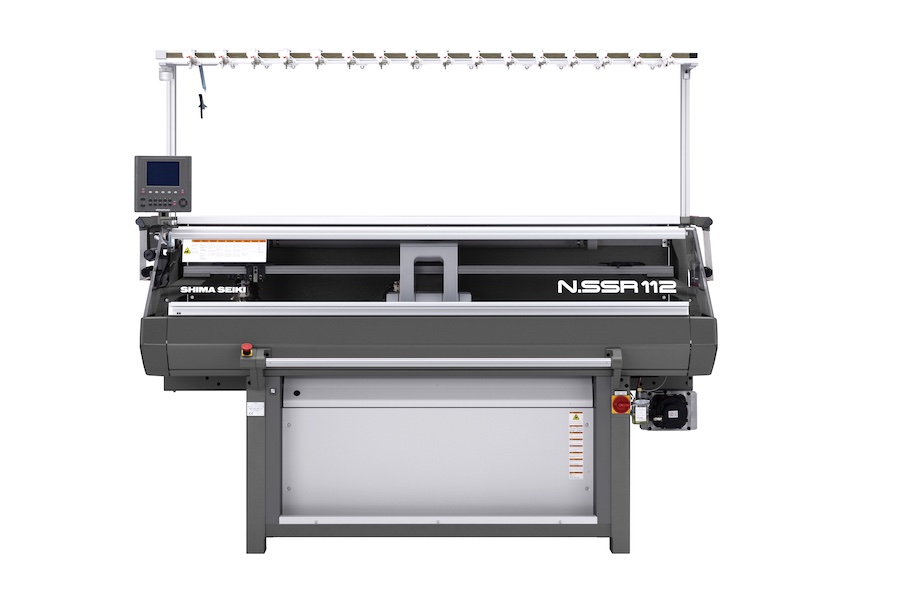
SHIMA SEIKI to showcase flat knitting and digital design solutions at IGATEX Pakistan 2026

Leading computerized flat knitting technology provider SHIMA SEIKI MFG., LTD. of Wakayama, Japan, together with its Pakistani representative ALMURTAZA MACHINERY CO., (PVT) Ltd., will exhibit at the upcoming International Exhibition for Garment, Textile Machinery and Accessories (IGATEX Pakistan 2026) in Lahore, Pakistan, from October 15–18. SHIMA SEIKI will introduce computerized flat knitting machines, 3D design software and various web platforms as proposals for sustainable production through innovative shaping technology and the latest digital solutions.

#Dyeing, Drying, Finishing

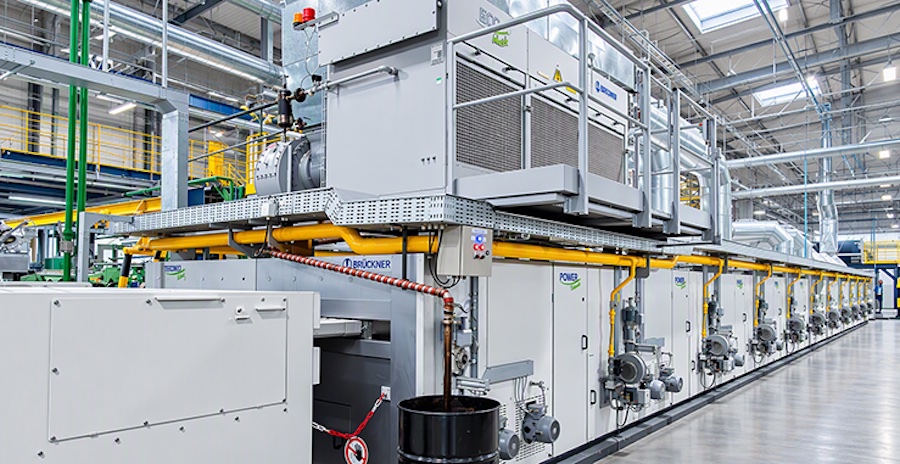
Brazilian market leader Cedro Têxtil focuses on greater efficiency, sustainability, and product quality with Brückner

After more than 150 years of company history, Cedro Têxtil is once again embracing the challenges of a changing industry. Widely recognized as the largest manufacturer of workwear fabrics in Latin America, the Brazilian textile company continues to invest in the modernization of its production facilities. A key milestone in this process was the decision to install a state-of-the-art Brückner stenter frame just over a year ago.

#Digital Printing

Growth at the speed of demand: Kornit Digital brings digital textile innovation to PERFORMANCE DAYS 2026

Kornit Digital Ltd. (NASDAQ: KRNT) (“Kornit”), a global pioneer in on-demand digital fashion and textile production, will showcase the possibilities of digital, on-demand production at PERFORMANCE DAYS 2026, October 13–14 at Messe München, Hall 6, Booth E08.

TOP