[pageLogInLogOut]

#Sustainability

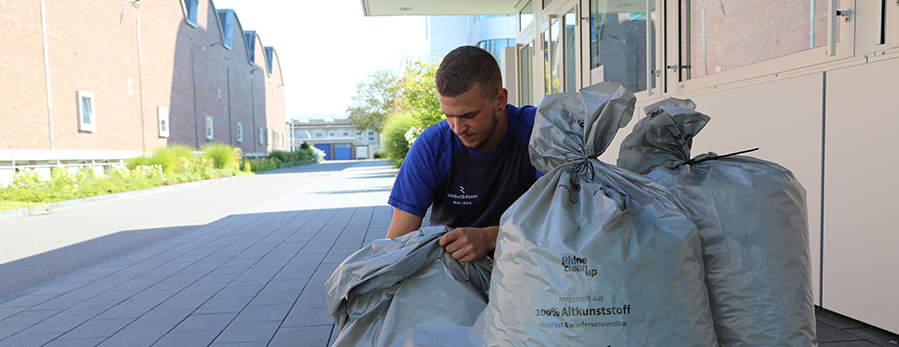
100,000 garbage bags made from recycled plastic for the RhineCleanUp Day on September 14
(c) 2019 Reifenhaeuser
For the second time in a row, volunteers in six countries will join together to collect garbage and waste along the River Rhine on September 14. To support this project, 100,000 sponsored garbage bags made from 100 percent recycled plastic waste will be sent now to key locations throughout Germany. From there, the bags will be distributed to the teams participating in the cleanup.

The project organizers sent out a call to clean up the shores of the Rhine to prevent the garbage from being swept down the river to the North Sea. Last year, about 10,000 people joined the cleanup campaign and collected 100 metric tons of garbage. This time, the team wants to go one better – they aim to break the 200-ton mark! Things look very promising. Since May, the initiative has already mobilized helpers in 100 districts on both sides of the Rhine. “This time we expect 20,000 helpers to join in the Rhine cleanup and do their bit to remove waste from the Rhine shores,” predicts Ingo Lentz from the RhineCleanUp Team.

100.000 bags from 100 percent recycled post-consumer waste

A project of this size depends heavily on sponsors and local garbage disposal companies, either to equip the helpers or transport the garbage to waste disposal centers. “So, it was great news for us when Reifenhäuser signaled they wanted to back our project,” says Lentz. The idea originated in 2018 during the Reifenhäuser Marine Litter project when Lentz first contacted Reifenhäuser employees with the request whether Reifenhäuser could donate sustainable garbage bags. The project soon took off thanks to Reifenhäuser’s extensive network and the right partners. Following the company’s initiative, the EREMA Group, Verpa Folie Weidhausen, and FVH Lobbe pledged their support. The result? 100,000 garbage bags made from 100 percent recycled post-consumer waste.


As a general rule, the use of virgin material is unavoidable in this type of application. Nonetheless, the four companies made good their pledges: FVH processed the recycling granulate from post consumer package waste on an EREMA line. Verpa extruded and printed the film on a Reifenhäuser Blown Film line and produced the bags. The action and good collaboration between the four companies made the RhineCleanUp even more sustainable than it already was as the helpers will collect waste in garbage bags which previously served their purpose for packaging.

“The hands-on mentality which the RhineCleanUp stirred up on behalf of the environment and the numbers of those mobilized is remarkable,” comments Ulrich Reifenhäuser, CSO of the Reifenhäuser Group. He adds: “We also tackle the issue of waste with responsibility. Recyclability is always a requirement when we develop new technologies. In the future, lines and machines that produce film and nonwoven will be capable of processing recycled plastic so that waste plastic is returned to the recycling economy - and does not end up in nature.”

More News from Reifenhaeuser GmbH & Co. Maschinenfabrik

#Industry 4.0 / Digitalization

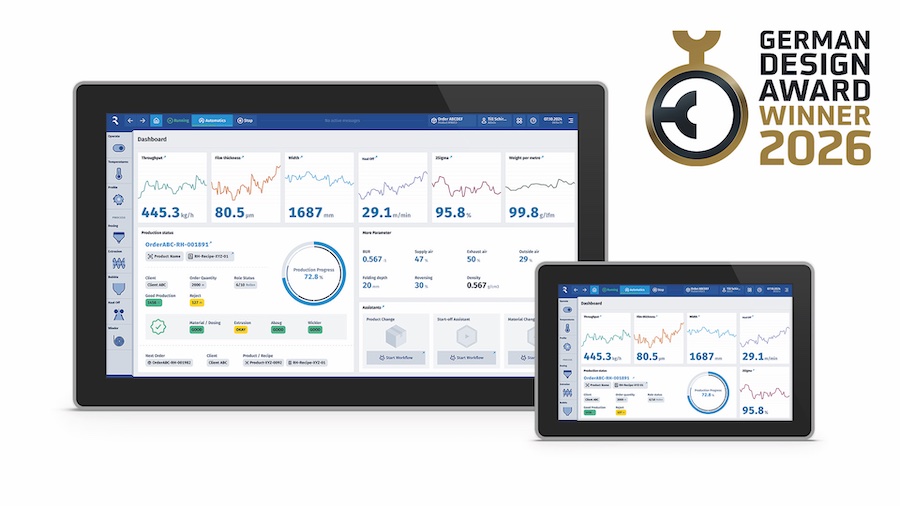
Reifenhäuser wins German Design Award for new user interface

At K 2025 in Düsseldorf, the Reifenhäuser Group unveiled its new company-wide machine user interface, which offers a uniform design language for blown film, flat film, and nonwoven lines – and stands out for its particularly simple operation. The overall concept impressed not only customers, but also the jury of the German Design Awards, who honored the system with the prestigious design prize during the trade fair.

#Industry 4.0 / Digitalization

Reifenhäuser NEXT: Tackling the skills shortage and achieving operational excellence with industrial AI

At K 2025, the Reifenhäuser Group will demonstrate Industrial AI's full potential for productivity in plastics processing. At the heart of the dedicated “Reifenhäuser NEXT” brand is a powerful AI chatbot that enables even inexperienced line operators to quickly solve complex tasks in their daily work, thereby maximizing availability, productivity, and quality.

#Spinning

Reifenhäuser opens new Head Office Asia-Pacific in Bangkok

Reifenhäuser, leading global supplier of plastics extrusion technology, has opened its new Head Office Asia-Pacific in Bangkok (Thailand). In future, all sales, service and after-market activities for the Southeast Asian region will be managed centrally from Bangkok.

#Spinning

Reifenhäuser strengthens field service operations in the Middle East and Africa

Reifenhäuser Group, a global leader in plastics extrusion technology, announces a significant expansion of its field service operations across the Middle East and Africa (MEA) region. Building on a longstanding presence in the region, which includes a sales office established in United Arab Emirates five years ago, Reifenhäuser is now taking a major step forward to enhance its local customer support and service capabilities.

More News on Sustainability

#Sustainability

Number of GOTS-certified facilities grow 15% globally as demand for credible sustainability standards continues to strengthen

Global Organic Textile Standard (GOTS) certification continued to grow in 2025, with nearly 18,000 certified facilities worldwide, despite ongoing geopolitical uncertainty and rapidly evolving regulatory requirements across global textile supply chains.

#Sustainability

bluesign technologies introduces bluepass

bluesign technologies ag (www.bluesign.com) today announces the launch of bluepass, a new certification mark and product labeling system created to deliver clear, substantiated, and verifiable sustainability claims at scale.

#Research & Development

Hohenstein publishes 2025 Sustainability Report

The testing and research service provider Hohenstein has published its latest sustainability report, outlining key progress and strategic initiatives. The report focuses on ambitious CO₂ reduction targets, the company’s new mission statement and the systematic expansion of sustainable services for customers worldwide.

#Natural Fibers

Global Standard gGmbH launches second public consultation for GRTS Draft 2 for the textile industry (1–30 April 2026)

Global Standard gGmbH is pleased to announce the release of Draft 2 of the Global Responsible Textile Standard (GRTS) for its second public consultation. The consultation will be open from 1 April 2026 to 30 April 2026, inviting stakeholders across the textile and apparel value chain to provide input and contribute to the further development of this new Standard.

Latest News

#Associations

BTMA backs global growth while investing in future UK leaders

As one of a number of new initiatives launched this year, the British Textile Machinery Association (BTMA) is launching the UK-India Textile Machinery Coalition. The UK-India Free Trade Agreement, signed in July 2025, has implications that extend across sourcing, competitiveness and long-term trade dynamics, believes BTMA CEO Jason Kent.

#Raw Materials

China projected to increase cotton production, yields, and imports in 2026/27

World cotton production in the 2026/27 season is projected at 25.9 million tonnes, exceeding global consumption of 25.2 million tonnes, according to the May 2026 issue of Cotton This Month. That means both production and consumption are expected to remain close to current season levels, while global cotton trade is projected to decline by 2.7% to approximately 9.6-9.7 million tonnes.

#Raw Materials

ICAC launches Carbon Credits Initiative to deliver new income streams to cotton farmers

The International Cotton Advisory Committee (ICAC) has announced a new initiative designed to unlock additional income streams for cotton farmers through participation in carbon credit markets, linking sustainable production practices directly to financial returns.

#Raw Materials

ECCO introduces first shoe featuring innovative protein-based fibre

ECCO, in partnership with Spinnova, announces the launch of the limited edition ECCO BIOM® 720, a first-of-its-kind shoe utilising an often overlooked leather by-product, transformed into a protein-based fibre. The fibres are produced using patented technology that advances material innovation while reducing waste and supporting full resource use across the leather and textile industry.

TOP