[pageLogInLogOut]

#Spinning

Fancy yarns on the advance

Barmag: DTY efficiency for the future of fancy yarns
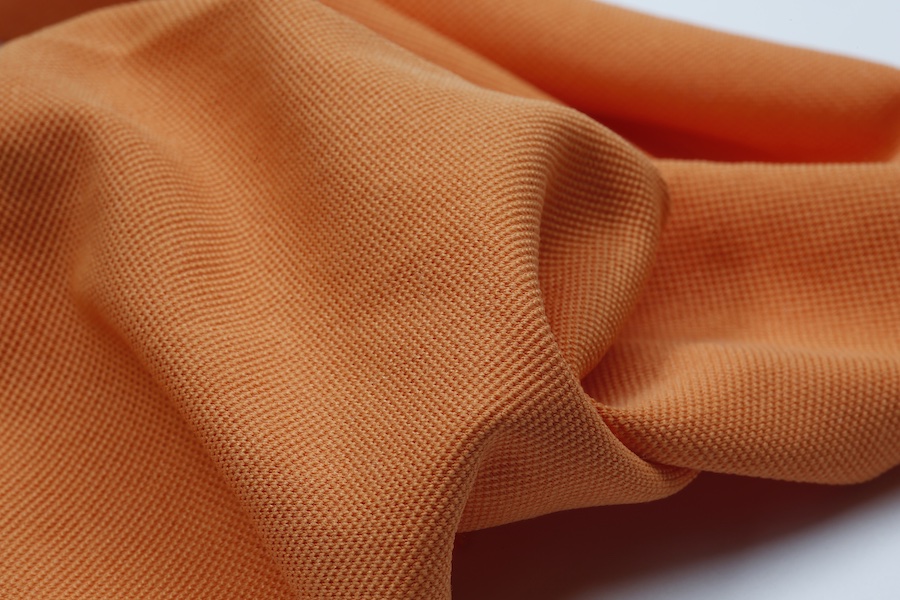
Fabric made from cotton-like fancy yarns with a soft, voluminous structure for textile surfaces with a natural, cotton-like appearance. © 2026 Barmag
Fancy yarns continue to gain importance in the textile market: Whether in fashion, home textiles or the automotive industry - the trend towards individuality is fueling the demand for textured, haptically differentiated and at the same time comfortable yarns.”


Manufacturers are faced with the task of producing complex effect structures in a precise, reproducible and energy-efficient manner. As a technology leader, Barmag offers texturing solutions that take the production of high-quality fancy yarns to the next level of performance.

Fancy yarn technology: More variety through customized process options

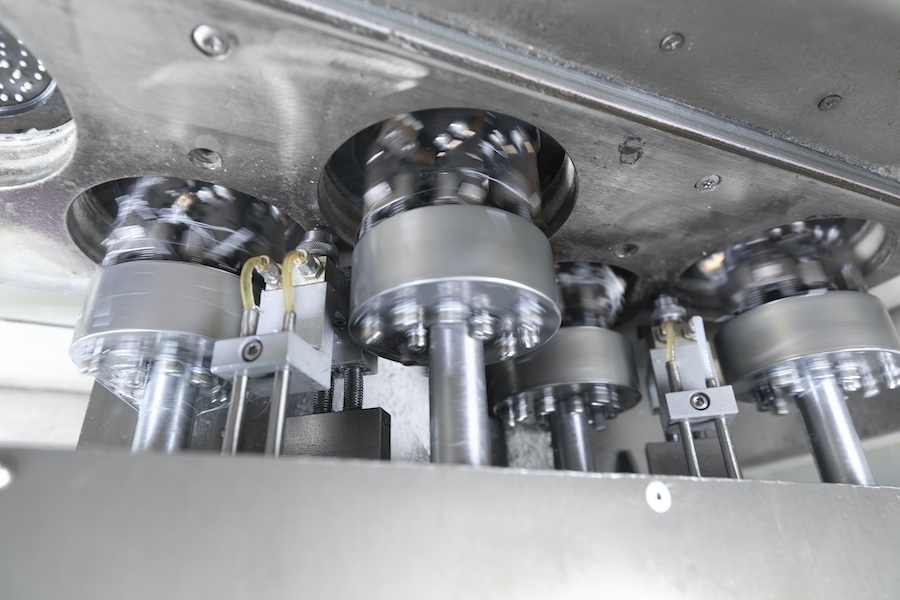
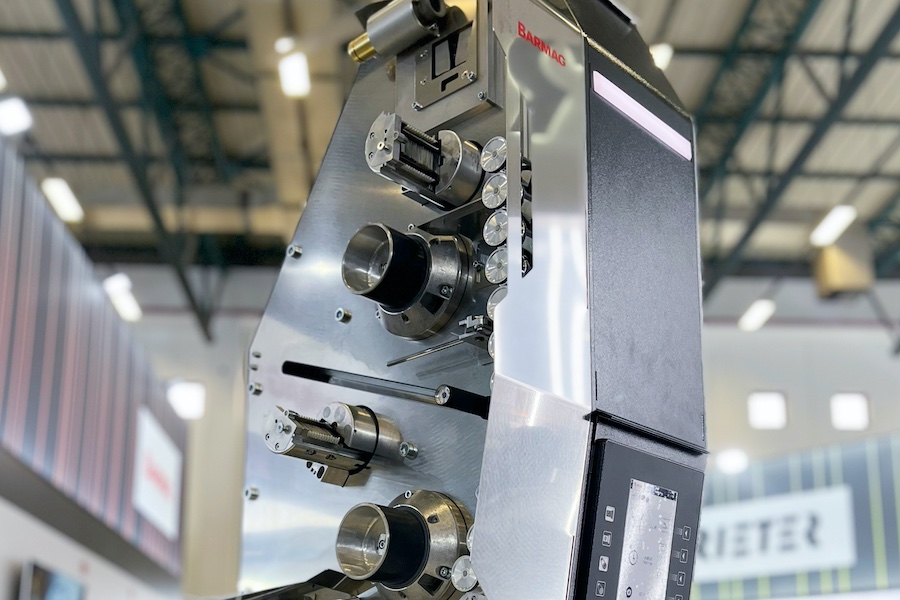
Varying yarn thickness, controlled effects, special surfaces and modified textures are essential for the production of fancy yarns. Barmag's texturing machines score points here with comprehensive modular options to produce yarn types such as "Cotton-like, Linen-like, Thick & Thin, Two-Tone, Different Shrinkage or Elastane-Covered. The combination of special fancy yarn devices - including hot pin, heater clip, pre-interlacing, bypass or special godets - enables producers to achieve precise, reproducible effect structures in downstream knitting and weaving applications. The product portfolio is complemented by atmos.io, Barmag's operating system for intelligent yarn production. atmos.io provides a data-based basis for decision-making: it digitizes the entire material flow, with each pack-age carrying its own data. This allows yarn manufacturers to intervene in production at any time.

Stable yarn quality for demanding fancy applications

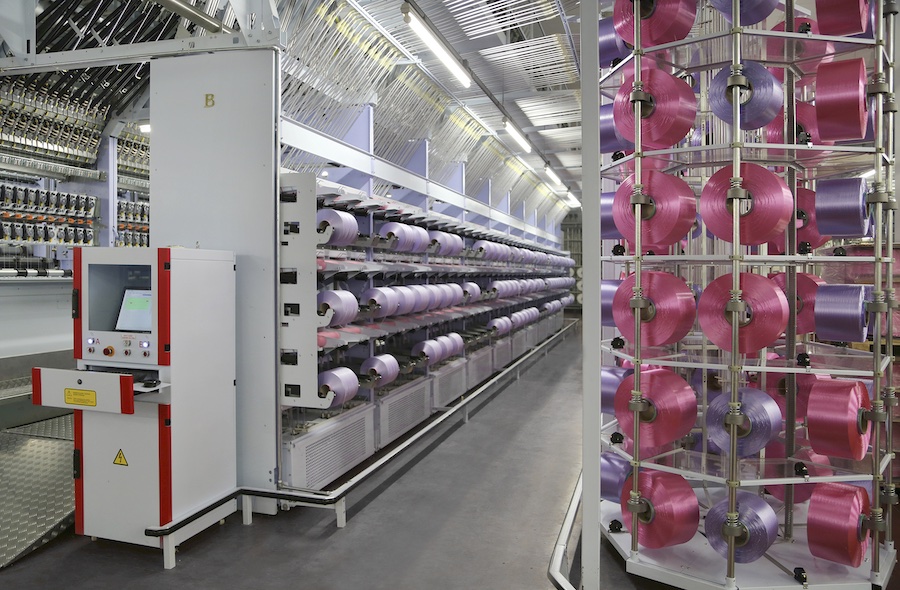
The texturing machines from Barmag are particularly impressive due to their ability to ensure con-sistently high yarn quality, even in complex fancy applications. The systems guarantee stable crimp characteristics, excellent uniformity and minimal effect variations. At the same time, they enable a reliable combination of POY, FDY and elastane. This performance is based on customer-focused R&D activities that specifically address current market trends - such as cotton-like and linen-like - and consistently incorporate them into the further development of technologies.

A clear advantage in the premium segment

Reproducible high-end yarn qualities are essential, especially in the fashion, home textiles and automotive sectors: creativity alone is not enough - process reliability, efficiency and consistency are just as crucial. This is where Barmag sets standards. Thanks to the close integration of quality, flexibility, efficiency, digitalization and safety, the DTY machines offer a premium solution for the economical production of modern fancy yarns.

More process stability, more added value, less risk

Manufacturers benefit from significantly more stable processes, higher added value and noticeably reduced quality and production risks - especially in sensitive premium segments. This makes the production of fancy yarns not only more creative and versatile, but also more measurable, plannable and economical
More News from Barmag, Zweigniederlassung der Barmag GmbH & Co. KG

#Spinning

Barmag Fuzhou Customer Day concludes successfully, boosting high-quality chemical fiber growth in Fujian & Guangdong

Barmag hosted its Customer Day themed “A New Era. Powered by Innovation.” in Fuzhou on June 28, welcoming nearly one hundred invited customers from Fujian and Guangdong provinces. Georg Stausberg, CEO of Barmag Group, attended along-side the sales and R&D expert China team to jointly present integrated solutions covering the entire man-made fiber value chain.

#Spinning

Object Carpet tests production of rPET BCF yarn on Neumag BCF line

In a joint project with Object Carpet GmbH, Denkendorf; the Institute for Textile Technology (ITA), Augsburg; and Next Generation Recyclingmaschinen GmbH (NGR), Feldkirchen, Austria, Barmag investigated the processing of recycled polyester for BCF yarn. The goal was to evaluate the fundamental suitability of 100% recycled carpet material for reuse in carpet yarn production to create a closed-loop system in carpet manufacturing. To date, commercial rPET BCF processes have been based solely on rPET from bottle pellets.

#Spinning

Barmag and Hitech Automation enter into partnership for an auto-doff system for texturing machines

Barmag (Suzhou) Technology Co., Ltd. and Hitech Automation Solutions PVT LTD. of Surat, India, have agreed to an exclusive partnership to jointly market Hitech’s Doffmatic automation solution for Barmag’s proven manual eFK texturing machines. In many texturing facilities, manual doffing processes remain heavily operator-dependent – resulting in issues such as increased scrap, inconsistent quality, and limited productivity.

#Spinning

Specialist in fine counts: New type 2777 ceramic oiler

With the new Type 2777 ceramic oiler, Barmag has added a solution for fine titers and microfilaments to its portfolio of original parts.

More News on Spinning

#Recycling / Circular Economy

Rieter and partners launch Recycling Powerhouse for industrial-scale textile recycling

Recycling Powerhouse Ltd. was established in July 2026 to industrialize, standardize and scale textile recycling. Based in Switzerland, the venture will operate a franchise-driven business model that enables the production of high-quality, certified recycled yarns. The project is supported by the following partners: Rieter Group, the world’s leading system supplier for natural and man-made fibers, Säntis Textiles, a Swiss textile engineering company, and Valvan, a Belgian sorting technology company. The first blueprint franchise operation is scheduled to launch early 2027 in partnership with Suhail Industrial Holding Group in Qatar.

#Spinning

Rieter sees Barmag integration on track as orders and sales rise

The first half of 2026 was shaped by the successful completion of the largest acquisition in Rieter’s history. The Man-Made Fiber Division enables entry into the growth segment of man-made fibers and sustainably strengthens Rieter’s market position in the Asia region. The expanded Group is now the world’s leading system supplier for the processing of natural and man-made fibers. In the first half of the year, initial cost savings in material costs and operating expenses have already been realized. The targeted synergies are expected to amount to at least CHF 20 million by the end of the 2028 financial year. Due to the completion of the acquisition on February 2, 2026, the first half of the year for the Man-Made Fiber Division only amounts to five months.

#Spinning

STEELTOP®: A new benchmark in flat tops for spinning preparation

Modern carding generations achieve higher production performance, placing significantly greater stress on flat tops. Higher cylinder speeds and increased fiber density, combined with tighter carding gaps, create more demanding operating conditions. At the same time, poorer raw material quality and the increased use of recycled materials further intensify these challenges. With STEELTOP®, Trützschler introduces a new full steel flat top series developed for these demanding modern carding processes.

#Spinning

Ibrahim Fibres and Trützschler: A strong partnership enters its next phase with the TC 30Si

For more than two decades, Ibrahim Fibres and Trützschler have grown side by side, driven by a shared ambition to continuously improve spinning performance, strengthen technology leadership and set new benchmarks in the textile industry. Today, Ibrahim Fibres is a leading yarn and polyester staple fiber manufacturer in Pakistan. The company operates the largest number of Trützschler cards in the country, with more than 200 machines running across its mills in Faisalabad, and plays an important role in one of Asia’s largest textile industries.

Latest News

#Digital Printing

Where every detail counts: Experiential applications of DTF and UV-DTF printing

Personalisation has moved far beyond the traditional logo on a t-shirt. Today, brands want to create complete experiences, where every detail – from clothing and accessories to décor and packaging – feels distinctive and reflective of their identity.

#Europe

The Digital Product Passport registry is now live

On 20 July, the European Commission launched the Digital Product Passport Registry together with a testing environment, marking an important milestone in making the Digital Product Passport (DPP) a practical reality for businesses placing products on the EU market.

#Europe

EU ban on destroying unsold clothing and footwear now in force

The European Union's ban on the destruction of unsold clothing, clothing accessories and footwear has entered into force. Since July 19, 2026, large companies across the EU have been prohibited from destroying unsold textile products, while medium-sized companies will be required to comply with the same rules from 2030.

#Recycled Fibers

Eastman Naia™ brings its inside-out denim vision to Kingpins New York

Following its debut at Kingpins Amsterdam, Eastman Naia™ brings the next chapter of its denim story to Kingpins New York, taking place July 22–23. At Booth Green 7, Naia™ presents its denim proposition built around three complementary design directions: Performance Denim, Fashion Denim and Authentic Denim.

TOP