[pageLogInLogOut]

#Spinning

Measure and control the fiber – optimize yarn quality

Uster shares insights to avoid claims, from the start of the process
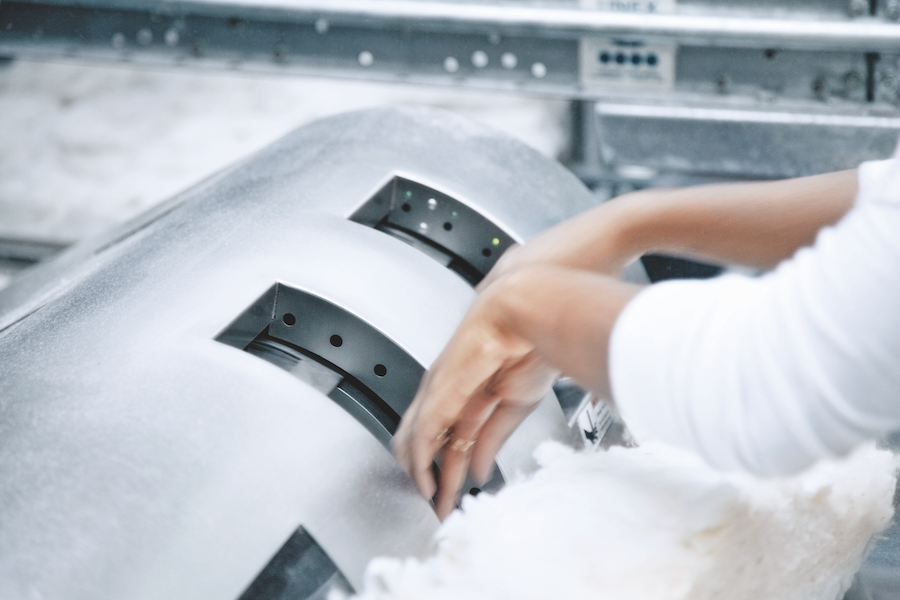
Measuring fiber quality parameters with Uster HVI © 2026 Uster Technologies
Producing consistent yarn quality is an everyday challenge – and a very difficult one. Detailed knowledge and understanding of the fiber raw material is absolutely critical to achieving the best possible quality in the yarn. To help spinners, Uster experts have put together guidelines for avoiding yarn irregularity claims, in a special edition of the Uster News Bulletin.


Uster can say with greater certainty that the reasons for claims received by spinners have remained quite similar, at least in the past 20 to 30 years. Although the severity and distribution of the reasons may vary depending on the final use of the yarn, the most common factors can be identified. Analyzing these factors and providing insights into the quest for operational excellence in spinning mills, the latest Uster News Bulletin No. 52 becomes a valuable tool to reduce yarn quality claims.

Laydown consistency – use data correctly 

One factor which greatly impacts on the spinnability of cotton fibers, as well as the yarn quality, is fiber fineness. Cotton has inherent natural variations, so fiber fineness (micronaire) is therefore the most important parameter to be controlled within required limits. 

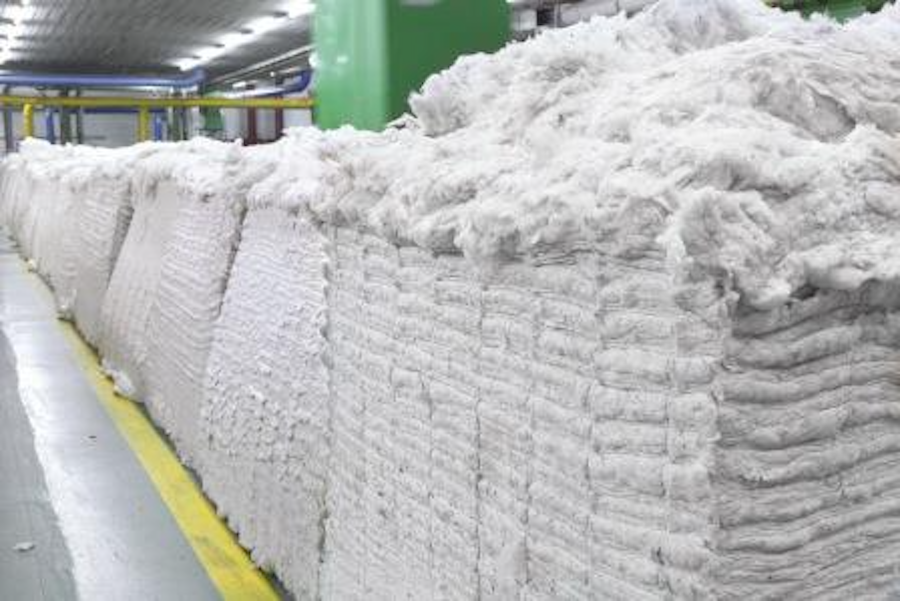
Optimal bale mixing aims at a consistently narrow micronaire range. Minimizing variation in micronaire values, both across and within laydowns, is critical. Fluctuating micronaire values can lead to barré or inconsistencies in yarn strength, causing quality claims. To reduce the risk, spinners use data from Uster HVI for laydown management. Taking it further, many mills have integrated automated solutions such as Uster FiberQ, with algorithms that control not only micronaire but also multiple other fiber characteristics. This reduces manual work, but more importantly improves long-term quality from fiber to yarn by refining raw material selection. 

Fiber process control – look closely at the blowroom

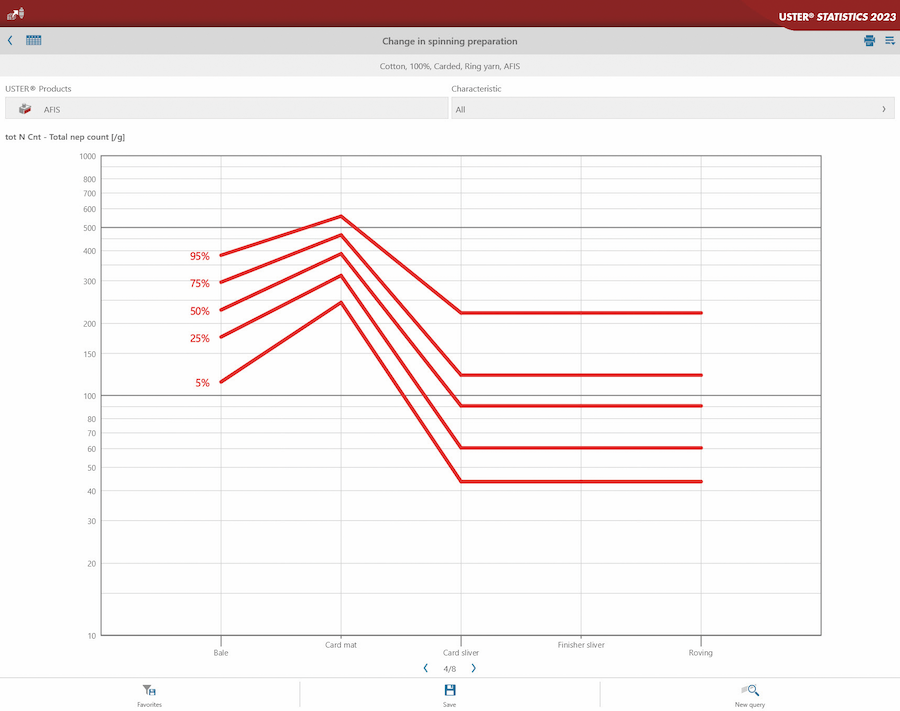
Uster’s experience shows that the reduction of neps is another of the most frequent challenges for spinning mills. Here, it’s better to avoid creating neps at the beginning of the process, instead of trying to reduce them in spinning. Many spinners take steps in the blowroom and carding processes to tackle this issue.

In the blowroom it’s about managing trash reduction, and preventing the increase of short fiber content and neps. During cotton processing, the material is opened into tufts, with several stages of opening and cleaning aimed at removing impurities. But a side effect of these processes can be an increase in neps and short fiber content, due to the mechanical stresses. Some spinning mills adjust card settings or try to remove broken fibers during combing, but a more effective and economical solution is thorough testing and blowroom optimization. 
Bale mixing – laydown © 2026 Uster Technologies


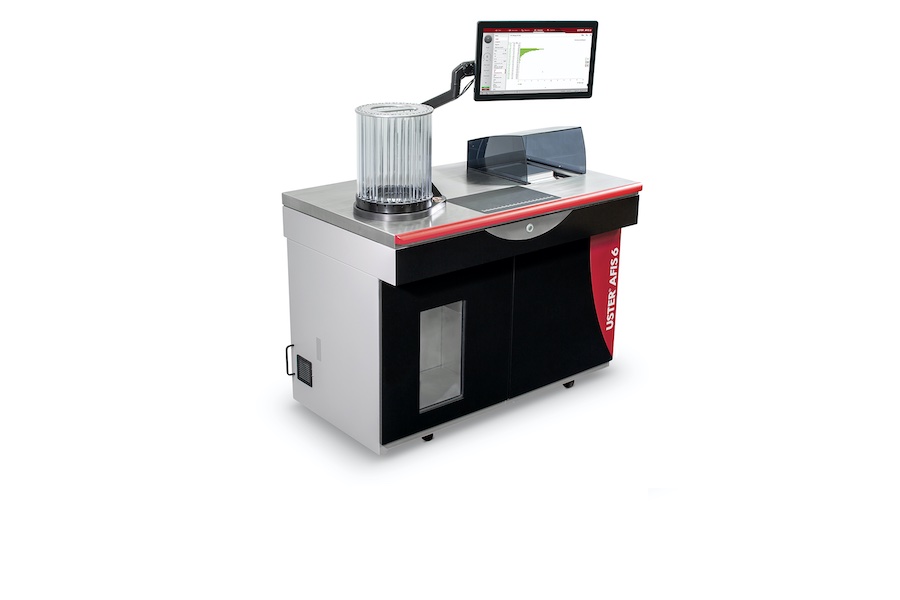
To control blowroom and carding performance, measurements with Uster AFIS are part of the routine test plan, as well as also being applied after machine maintenance or changes in cotton laydown recipes. These tests ensure optimal opening and cleaning at an appropriate waste level. Close monitoring of potential fiber damage is essential. 

Processing statistics – track fiber characteristics

The processing charts in Uster Statistics track the fiber quality characteristics. Key parameters for neps, short fibers, and impurities are plotted through each processing stage. The accompanying graphic shows the typical increase in neps in the blowroom from bale to card mat, followed by a decrease after carding as neps are removed. Spinning mills can compare their own levels against the global standard. This allows a quick assessment of the situation, identifying areas of overperformance or potential improvements. 
Fiber processing Uster Statistics – Total nep count (/g)  © 2026 Uster Technologies
Fiber processing Uster Statistics – Total nep count (/g) © 2026 Uster Technologies


Various raw materials – one common goal

Process control is also important, and even more so when processing mechanically recycled cotton. Depending on the source of the recycled material and its opening method, the short fiber content might already be at a naturally higher level when entering the blowroom. 

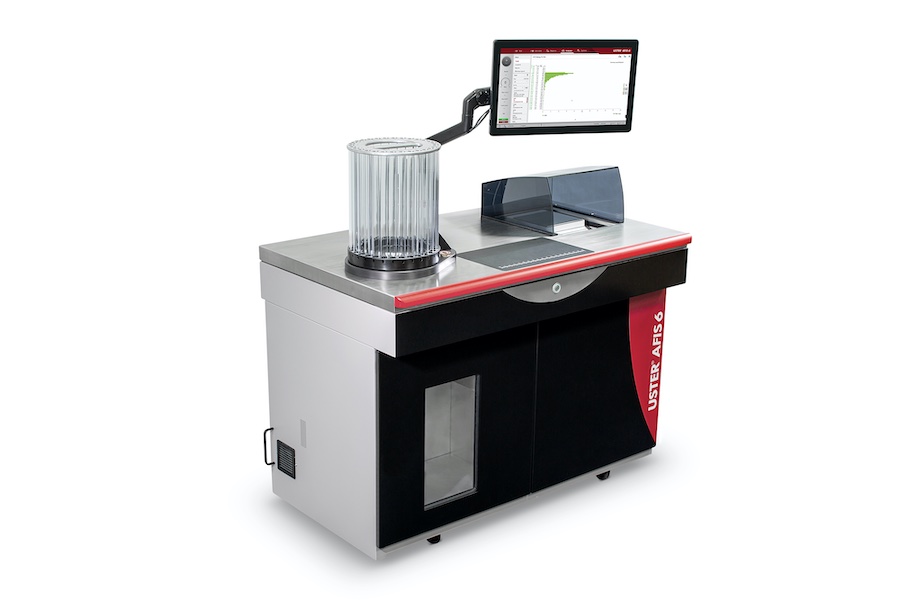
Similarly, fiber damage can apply to man-made fibers which initially have uniform cut lengths. Uster AFIS 6 is able to measure cotton as well as synthetic materials. With thorough quality management, spinners can identify fiber deterioration at source, before it results in yarn irregularity.

It’s clear that fiber characteristics significantly affect both spinnability and yarn quality consistency. Therefore, understanding fiber quality and how fibers are treated during the spinning process is essential right from the start. What is not measured, cannot be controlled! However, this is only one element to be managed to avoid quality claims. 

Uster has the technology, the experience and the knowledge to foster a new level of consistency in yarn production. The company’s know-how is freely shared in Uster News Bulletin No. 52, which includes more chapters offering ‘best practice’ advice – from spinners for spinners – on how to take control of quality claims. Also free of charge is a wide range of application literature on https://360q.uster.com as well as the new Uster Statistics.

More News from Uster Technologies AG

#ITMA Asia + CITME Singapore 2025

Uster presents novelties at ITMA Asia + CITME 2025

There’s news from Uster Technologies to be announced for the industry’s upcoming event in Singapore. The Uster 360Q universe is growing with new products, solutions and services. Innovation developments can also be recorded in the fields of man-made fiber testing and fabric inspection. Uster innovations address the industry’s trending topics as mill management and process control, optimization of delivered fabric quality and yield.

#Spinning

Uster Technologies marks 150 years of empowering quality excellence

Uster Technologies marks 150 years of excellence – a milestone that reflects continuous adaptation to customer needs and industry change. Over the decades, Uster has evolved from manufacturing quality testing instruments into a trusted partner shaping the future of textile production.

#Recycling / Circular Economy

Challenges of making yarn from recycled fibers

What does it take to spin quality yarn from recycled fibers? Uster Technologies brought textile industry leaders together to discuss the role of technology, data and automation – as well as the current challenges in using recycled raw material. Experts from Rieter, Säntis Textiles, Otto Yarns, and TVU commented on the current situation and looked into the future of spinning in a panel discussion organized at Uster headquarters.

#Spinning

Uster Technologies wins another infringement lawsuit

In a ‘victory for innovation in China’ Uster Technologies has secured a decisive judgment in a patent infringement lawsuit against a competitor. The final ruling by the Supreme People’s Court of PR China confirms that the competitor’s actions in copying the patented yarn feeder of the Uster Tester 6 constitute unlawful infringement.

More News on Spinning

#Spinning

Temco launches a new DTY all-in-one solution

Temco introduces the DTY All-in-One Solution – a fully harmonized set of components engineered to give customers a highly stable, low maintenance and reproducible process environment. The solution reduces interruptions, extends component lifetimes and supports consistent yarn quality across all machine positions. All-in-One Solution – a fully harmonized set of components engineered to provide maintenance and reproducible process environment.

#Techtextil 2026

DIENES at Techtextil 2026: Flexible pilot lines for bio-based fiber development

The growing relevance of bio-based materials in technical textiles is accompanied by increasing demands for reproducibility, high-quality data, and scalable process routes. Especially when working with cellulose and its derivatives, chitosan, lignin-based approaches, or bio-based PAN as a carbon-fiber precursor, R&D teams face variable feedstock quality, tighter process windows, and the need for reliable comparability across trials. This calls for flexible, data-driven experimental setups that can be reconfigured efficiently when recipes, solvents, and raw-material batches change.

#Techtextil 2026

RETECH showcases high-precision godets for high-performance fiber processing at Techtextil 2026

RETECH designs and manufactures godets and draw frames for heated, ambient and cooled processes, enabling precise heat treatment and consistently high yarn quality for a wide range of polymers and applications, with process temperatures of up to 400 °C for high-performance fibers. The company’s key competence lies in exact and stable temperature and speed control, individually adapted to the specific material and process requirements.

#Spinning

Barmag presents the next generation of POY production – energy-efficient and partial-automated

With POY 2.0, Barmag is introducing a completely redesigned spinning concept that takes the production of partially oriented yarn (POY) to a new level in terms of technology and economy. The solution, which was presented to a selected audience of experts for the first time at ITMA Asia + CITME 2025, was met with great enthusiasm: several yarn producers worldwide immediately expressed their interest in a pilot plant.

Latest News

#Techtextil 2026

Italian textile machinery innovation takes center stage in Frankfurt for Techtextil 2026

The Italian textile machinery industry is gearing up for a key event on the international trade fair calendar: Techtextil 2026, taking place from April 21–24 in Frankfurt, Germany. A prestigious representation of Italian companies will participate in the German exhibition—a global benchmark for technical and innovative textiles—to present cutting-edge technologies dedicated to an ever-expanding market.

#

Between innovation pressure and production readiness: Techtextil 2026 showcases market-ready defence textiles

EU defence spending reached a record level of around €381 billion in 2025. The importance of textile innovation in this context is underscored by the European Defence Fund’s 2026 Work Programme, which identifies “smart and multifunctional textiles” as a dedicated priority area. Techtextil translates this demand into industrial practice. From 21 to 24 April 2026, more than 10 per cent of over 1,500 exhibitors in Frankfurt am Main will present material innovations for protective textiles.

#Yarns

Yarn Expo Spring 2026 concludes, connecting buyers with innovative selection of sustainable yarns and fibres

Yarn Expo Spring 2026 wrapped up successfully on 13 March, as a record-high of over 600 exhibitors from 12 countries and regions welcomed more than 25,000 visitors from 113 countries and regions. Held across 27,000 sqm in Hall 8.2 of the National Exhibition and Convention Center (Shanghai), the fair highlighted the textile industry’s accelerating shift toward a lower-impact, more functional future. Exhibitors presented eco-friendly organic, regenerated and recycled yarns and fibres, alongside innovative options such as sweat-resistant and high-performance materials. A comprehensive fringe programme further enriched the event, offering practical market insights and new networking opportunities.

#Techtextil 2026

ANDRITZ at Techtextil 2026: Sustainability and advanced technologies

International technology Group ANDRITZ will be presenting its innovative nonwovens production and textile solutions at Techtextil in Frankfurt, Germany, from April 21 to 24, 2026 (Hall 12, B95). ANDRITZ will focus on technologies for durable and technical nonwovens, sustainable fiber processes, textile recycling, and life-cycle services.

TOP