[pageLogInLogOut]

#Spinning

Rieter advances strategic repositioning amid market volatility

Rieter Servocan © 2026 Rieter
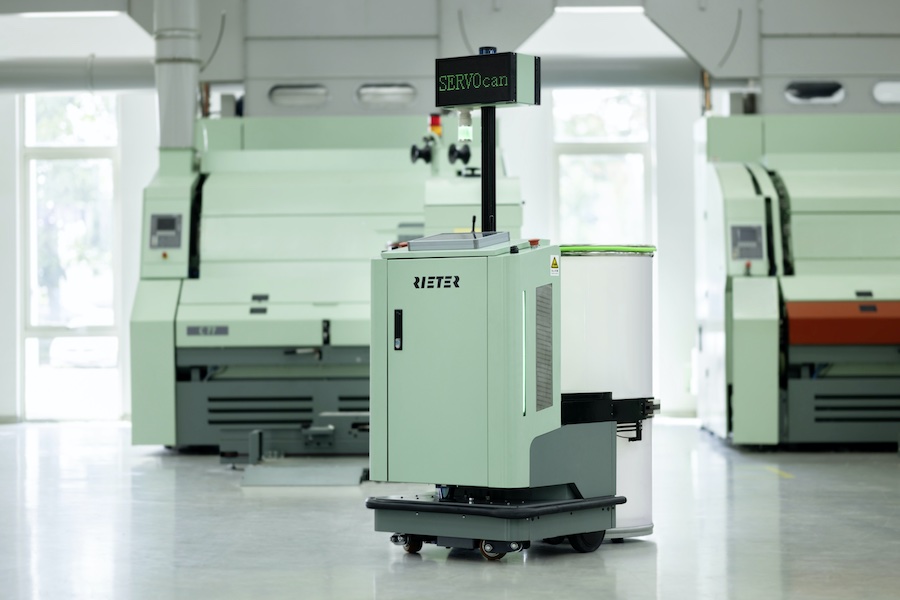
Rieter successfully completed the acquisition of Barmag on February 2, 2026, and reached an important milestone in the company’s repositioning. Barmag will be integrated into the Rieter Group as the “Man-Made Fiber” Division. With this strategically transformative acquisition, Rieter is expanding its core business beyond the short-staple fiber business in a targeted way. This positions Rieter as the global market leader along the entire value chain for natural and man-made fibers. In addition, as a complete systems supplier, Rieter is further strengthening its technological leadership in the areas of automation and digitization.


The transaction is a consistent step in implementing Rieter’s long-term growth strategy and builds on previous acquisitions that have systematically expanded the portfolio. Since acquiring the automatic winding machine in the 2021 financial year, Rieter has been the only system supplier covering the entire production process from fiber preparation to all four end-spinning technologies.

Through the acquisition of Barmag, Rieter is expanding its sales markets to include the structurally growing man-made fiber market. With this additional technological breadth, Rieter increases its resilience and reduces dependence on cyclical fluctuations in individual end markets. This paves the way for Rieter to capitalize on the expected recovery of the global textile machinery market. At the same time, the Man-Made Fiber Division strengthens Rieter’s market position in the long term in the strategically important Asia region.

Order intake

Order intake remained constant on a currency-adjusted basis. It amounted to CHF 703.4 million in 2025 (2024: CHF 725.5 million). The expected wider market recovery has been delayed due to the ongoing global trade conflict (particularly the punitive US tariffs) and geopolitical uncertainty.

The Machines & Systems Division posted an order intake of CHF 346.3 million (2024: CHF 364.2 million). While the Machines & Systems Division recorded an increase in demand, order completion was significantly impacted by uncertainty surrounding customs tariffs and the geopolitical and economic situation.

The Components Division generated an order intake of CHF 193.5 million (2024: CHF 206.6 million) and is suffering under lower demand for components for new machines, mainly due to the cautious investment activity in the market.

The After Sales Division recorded a pleasing 6% increase in its order intake to CHF 163.6 million (2024: CHF 154.7 million). This positive development confirms the strategic growth initiatives that have been launched. Incoming orders are benefiting from increased sales activities in the target markets, such as Central Asia and China, as well as from the ongoing expansion of the service and repair network.

Sales

The Rieter Group closed the 2025 financial year with sales of CHF 685.1 million (2024: CHF 859.1 million), thus remaining 20% below the previous year’s period.

The Machines & Systems Division posted sales of CHF 329.1 million, down 23% on the previous year (2024: CHF 424.9 million). Sales in the Components Division fell by 19% year on year to CHF 200.8 million (2024: CHF 247.6 million). The After Sales Division posted sales of CHF 155.2 million, down 17% over the previous year (2024: CHF 186.6 million).

Order backlog

At the end of 2025, the company had an order backlog of around CHF 510 million (December 31, 2024: CHF 530 million).

Operating EBIT, net profit, free cash flow

Despite the decline in sales, Rieter achieved a positive operating EBIT of CHF 2.5 million (before restructuring and transaction costs). This is primarily attributable to the consistent implementation of additional cost measures. Owing to extraordinary restructuring expenses and transaction costs in connection with the acquisition of Barmag in the amount of CHF 54.2 million, Rieter closed the 2025 financial year with a net loss of CHF 63.4 million (2024: net profit of CHF 10.4 million).

Free cash flow was CHF -40.6 million (2024: CHF 14.1 million). Owing to the capital increase already completed to finance the acquisition of Barmag, net liquidity amounted to CHF 184.3 million (2024: CHF -230.3 million).

The equity ratio increased to 53.3% as of December 31, 2025 (previous year: 33.7%), which was due in particular to the capital increase completed in October 2025 in connection with the Barmag acquisition. The acquisition was completed on February 2, 2026.

Dividends

The Board of Directors proposes to the shareholders that no dividend be distributed in view of the negative Group result. The company continues to adhere to its fundamental dividend policy of distributing at least 40% of net profit.

New medium-term targets

Rieter is pursuing a soft integration approach for Barmag. In this context, Rieter confirms a preliminary synergy assumption of at least CHF 20 million resulting from the acquisition. These synergies are reflected in the new medium-term targets. An update on the realization of synergies will be provided with the results for the first half of 2026.

Rieter sees strong potential for the combined company beyond 2026. To this end, it has defined three new market scenarios following the successful realization of synergies from the Barmag acquisition:

Low scenario

In a subdued market environment with slow recovery in terms of demand and ongoing price pressure, sales of around CHF 1.4 billion are expected, with an operating EBIT margin of 2 to 5%.

Medium scenario

In a normalized market environment with stable demand, sales of around CHF 1.8 billion are expected, with an operating EBIT margin of 5 to 8%.

High scenario

In a strong market environment with broad-based demand and high capacity utilization, sales could reach CHF 2.2 billion, with an operating EBIT margin of 8 to 11%.

Outlook for 2026

In 2026, a year of transition, Rieter expects sales in the range of CHF 1.3 to CHF 1.5 billion.

The outlook for 2026 reflects the integration of Barmag and the restructuring measures announced in 2025, which are yet to be fully implemented. As a result, a positive operating EBIT margin in the range of 0 to 3% is expected. Financing for the further development of the combined company is fully secured.

More News from Rieter Textile Systems

#Spinning

Rieter responds to higher raw material prices

Global political and economic developments have been leading to rising raw material and energy costs for some time. The textile machinery industry is also affected by this trend. Rieter machines and components consist to a large extent of steel, copper, aluminum and electronics. These materials in particular have seen higher demand and higher prices in recent months.

#Spinning

Rieter completes acquisition of Barmag

Rieter has successfully completed the acquisition of Barmag as of February 2, 2026. This strategically important acquisition makes Rieter the world’s leading system provider for natural and synthetic fibers.

#Spinning

Rieter adjusts group structure in preparation for Barmag integration

The planned acquisition of the “Barmag” Division of OC Oerlikon will create the leading system provider worldwide for natural and man-made fibers. Rieter is confident it will receive all regulatory approvals to complete the acquisition in the fourth quarter of 2025. The Rieter Group is therefore adjusting its Group structure as of January 1, 2026, to take this acquisition into account and to be able to provide an even more agile response to market challenges.

#Spinning

Rieter reports stable order backlog and strategic progress – outlook for 2025 adjusted

In its Investor Update 2025, Rieter announced an order intake of CHF 203.9 million in the third quarter and CHF 559.3 million after nine months, reflecting a continued cautious investment climate in the textile machinery sector. Sales totaled CHF 121.5 million in the third quarter and CHF 457.7 million for the first nine months of the year, while the order backlog stood at around CHF 590 million as of September 30, 2025.

More News on Spinning

#Techtextil 2026

DIENES at Techtextil 2026: Flexible pilot lines for bio-based fiber development

The growing relevance of bio-based materials in technical textiles is accompanied by increasing demands for reproducibility, high-quality data, and scalable process routes. Especially when working with cellulose and its derivatives, chitosan, lignin-based approaches, or bio-based PAN as a carbon-fiber precursor, R&D teams face variable feedstock quality, tighter process windows, and the need for reliable comparability across trials. This calls for flexible, data-driven experimental setups that can be reconfigured efficiently when recipes, solvents, and raw-material batches change.

#Techtextil 2026

RETECH showcases high-precision godets for high-performance fiber processing at Techtextil 2026

RETECH designs and manufactures godets and draw frames for heated, ambient and cooled processes, enabling precise heat treatment and consistently high yarn quality for a wide range of polymers and applications, with process temperatures of up to 400 °C for high-performance fibers. The company’s key competence lies in exact and stable temperature and speed control, individually adapted to the specific material and process requirements.

#Spinning

Barmag presents the next generation of POY production – energy-efficient and partial-automated

With POY 2.0, Barmag is introducing a completely redesigned spinning concept that takes the production of partially oriented yarn (POY) to a new level in terms of technology and economy. The solution, which was presented to a selected audience of experts for the first time at ITMA Asia + CITME 2025, was met with great enthusiasm: several yarn producers worldwide immediately expressed their interest in a pilot plant.

#Spinning

Development of bio-based polyethylene fibers for textile applications – BB Engineering partici-pates in the bioPEtex research project

In the German research project bioPEtex, BB Engineering (BBE) is working with other partners to develop textiles made from 100% bio-based polyethylene (PE). The aim is to make use of this poly-mer, which has hardly been used in the chemical fiber industry to date. BBE is contributing its spinning and texturizing expertise and developing the texturing process on an industrial scale. The first promising results are already available – opening up new opportu-nities for sustainable and economically attractive applications in the textile industry.

Latest News

#Texprocess 2026

Gunold showcases embroidery product range and services at Texprocess

At Texprocess 2026, GUNOLD will present numerous hands-on examples related to embroidery in Hall 8, Booth E20. The focus is on creative embroidery designs as well as the extensive product range of threads, nonwovens, and accessories for embroidery and embellishment. “Trade visitors can once again look forward to many new and creative embroidery designs. Of course, we will also showcase the matching products required to bring these ideas to life,” announces Marketing Manager Stephan Gunold.

#Nonwovens

EDANA and more than 70 industry organisations call for consistent exemptions in EU packaging regulation

EDANA, together with more than 70 industry associations and organisations, has issued a joint statement commenting on the European Commission’s Delegated Act under Article 29 of the Packaging and Packaging Waste Regulation (PPWR).

#Raw Materials

A Powerful Opening: Global thought leaders launch the International Cotton Conference Bremen

The International Cotton Conference Bremen will open on 25 March 2026 in the Parliament building of the Free Hanseatic City of Bremen with a keynote session of exceptional calibre. Distinguished international experts will set the stage for the conference by offering incisive perspectives on the most pressing challenges and the defining trends shaping the future of the global cotton trade. Their insights will span a broad spectrum — from geopolitically driven disruptions affecting global supply chains to the opportunities emerging from innovation-led agriculture capable of supporting a growing world population. Together, these opening keynotes will frame the dialogue of the conference, highlighting both the complexity of today’s market environment and the pathways toward a resilient and forward-looking cotton sector.

#Techtextil 2026

Where performance becomes product strategy: Techtextil 2026 puts functional apparel in the spotlight

The demand for high-performance textile solutions for the apparel industry increases – and with it the sector’s innovative strength. Techtextil 2026 addresses these developments: The Performance Apparel Textiles area (Hall 9.0) presents around 130 exhibitors from 13 countries showcasing innovative materials for workwear, protective clothing, smart fashion, outdoor and sports. Global key players such as Concordia Textiles, Getzner, Kermel, Klopman International and YKK Europe are among the participants. The live show “Performance Apparels on Stage” brings forward-looking wearables on stage and demonstrates textile innovations where they matter most: in action.

TOP