[pageLogInLogOut]

#Spinning

Mesdan cotton stickiness testing method recognition

If “sticky cotton” is not detected in time and properly handled, it can generate excessive maintenance costs in spinning, affect the production and compromise yarn quality. There are several testing techniques for determining cotton stickiness: chemical, mechanical and thermo-mechanical methods.

In the latest findings of the ITMF International Committee on Cotton Testing Methods, in cooperation with CIRAD, Fiber Institute Bremen and ICA Bremen, one important conclusion has been outlined:

due to its highest correlation with processing behaviour and yarn quality, only thermo-mechanical methods are recommended (in both production and trade).

In fact, the high variation in stickiness within a sample, as well as within a bale and within a lot, makes the thermo-mechanical method suitably designed for daily massive testing, in a trading context as well as in the spinning mill, thus overcoming the constraints of other methods (chemical and physical).

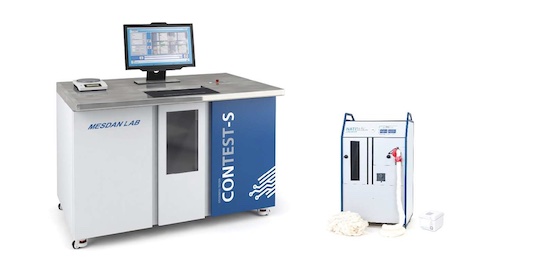
Among different thermo-mechanical equipment used in the ITMF-ICCTM proficiency testing, the CONTEST-S results were proven to provide the lowest inter laboratory CV% variations.


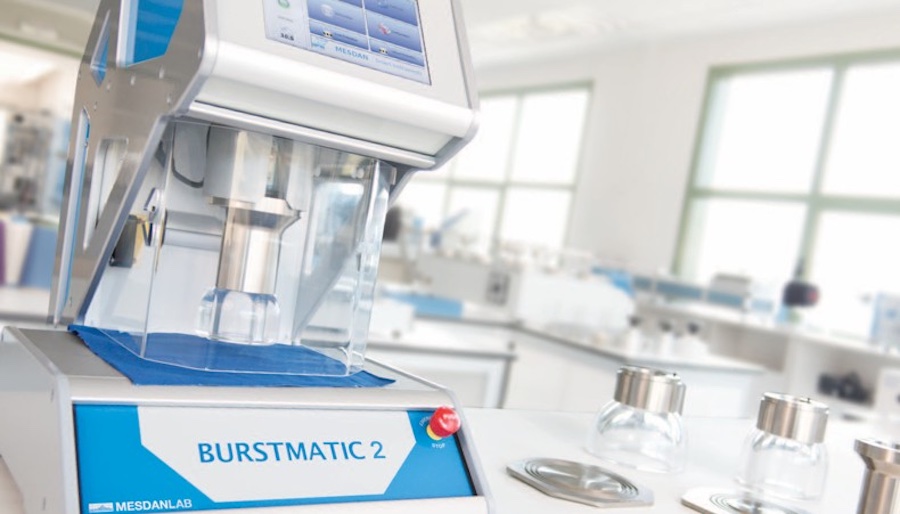
In order to supply a solution to overcome the troublesome effects of cotton stickiness (honeydew/sugar content), Mesdan developed a specific testing method as an integral part of its CONTEST-S and CONTEST-F equipment.


The STICKINESS module is distinguished by:

  • fully automatic high-volume testing equipment designed to detect, measure and classify cotton stickiness,
  • its unique feature of simulating the carding process like in real spinning conditions provides a reliable evaluation of the effective stickiness (cotton fibres tendency to stick to cotton-processing surfaces),
  • stickiness grade and cotton stickiness risk probability assessment enables spinners to anticipate proper actions (how to process & blend different cotton bales),
  • fast testing (30 sec/sample) designed for massive stickiness classification of bales and lots (>500 tests/shift),
  • testing method for stickiness grading recognised by ITMF - ICCTM.
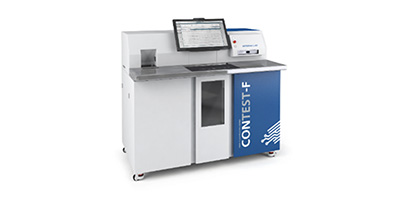


CONTEST-F © 2020 Mesdan


Mesdan is proud to announce that its Stickiness testing method has recently received an official and full recognition by the ITMF International Committee on Cotton Testing Methods (ICCTM) in April 2020. The ITMF-ICCTM committee members recognised its usefulness and its benefits for the complete cotton supply chain: it assists spinners to achieve consistent yarn quality standards, it sustains traders and cotton suppliers to monitor season crop, it provides grading for research laboratories and classification institutes.

The complete document with all inter-laboratory evaluation details is available at the ITMF web site and can be downloaded at the following link:

https://www.itmf.org/images/dl/icctm/recognition/Recognition_MESDAN_20200429.pdf

The recognised testing method complies with the international standard EN 14278.


More News from Mesdan S.p.A.

More News on Spinning

#Spinning

First PA66 spinning plant with EvoQuench successfully commissioned

With the successful commissioning of a multi-digit PA66 spinning line for microfiber yarns, Chinese textile company Shandong Nanshan Fashion Technology Co., Ltd. has added yarn production to its textile value chain.

#Spinning

Saurer Technologies Twisting Solutions at ICFE 2026

Saurer Technologies Twisting Solutions, a global leader in textile machinery innovation, will be present at the International Carpet and Flooring Expo ICFE 2026. Join us January 6–9 at the Istanbul Expo Center, Türkiye, as industry leaders, manufacturers, and innovators gather to explore the latest breakthroughs in carpet and flooring technology. Let’s meet at the new established global Center of the Carpet Sector in hall 3, booth 300!

#Spinning

Details matter: How Trützschler cylinder wires boost efficiency in Pakistan’s spinning sector

Pakistan’s textile industry, especially its spinning sector, is the backbone of the national economy and a vibrant hub of innovation. Today’s spinning mills face growing demands for efficiency, quality, and sustainability. From the serene northern valleys to the vibrant port city of Karachi in the south, mills like Suraj Cotton Mills, Liberty, and Nishat Chunian are turning to advanced solutions.

#Exhibitions & Events

Groz-Beckert showcases textile innovation at ShanghaiTex 2025

From December 16 to 19, 2025, the global textile industry will gather at ShanghaiTex at the Shanghai New International Expo Center (SNIEC), where Groz-Beckert will present its latest highlights and innovations across its five product areas – Knitting, Weaving, Nonwovens, Sewing, and Spinning – at Hall N3, Booth A05.

Latest News

#People

Happy Holidays!

Dear reader, the year 2025 is drawing to a close. We are entering what we hope will be a peaceful holiday season, spending time with our families and taking a moment to pause and reflect. We hope we have been able to support you once again this year with relevant news and articles, and we look forward to surprising you with many innovations in the coming year. Enjoy the festive season, stay healthy, and we wish you a happy and joyful holiday season.

#Weaving

Lindauer Dornier announces leadership transition in weaving machine business

After more than ten successful years at Lindauer DORNIER GmbH, Mr Wolfgang Schöffl will leave the family-owned company at the end of the year to enter well-deserved retirement.

#Heimtextil 2026

Texpertise Focus AI: Messe Frankfurt puts Artificial Intelligence centre stage at its international textile and apparel trade fairs

Under the banner 'Texpertise Focus AI, Messe Frankfurt will place a strong emphasis on Artificial Intelligence (AI) across its international textile and apparel trade fairs from 2026 onwards, setting a future-shaping signal for the industry. The initiative highlights the responsible use of AI along the entire textile value chain, from fibre production to the point of sale. The programme will launch at Heimtextil in Frankfurt in January 2026.

#Technical Textiles

Autoneum and Polestar set new benchmarks for passenger experience and sustainability

As the global market leader in sustainable acoustic and thermal management, Autoneum is a key supplier of interior and exterior components for the highly anticipated Polestar 5 model. The successful collaboration between Autoneum and Polestar marks a significant milestone in sustainable automotive engineering: the electric grand tourer sports car features several innovations in lightweight, fully recyclable polyester-based components that ensure a superior driving experience. Polestar 5 was revealed at the IAA Mobility 2025 in Munich and is available in 24 markets.

TOP