[pageLogInLogOut]

#Spinning

Mini-Spinning, new lab-scale shredding machine & recycling in textiles

Given the announced community directives that will soon impose in many countries the reuse of resources and the reduction of waste, the circular economy and recycling are topics of very high interest nowadays, with increasingly widespread applications in all industries, but above all in the world of textiles.

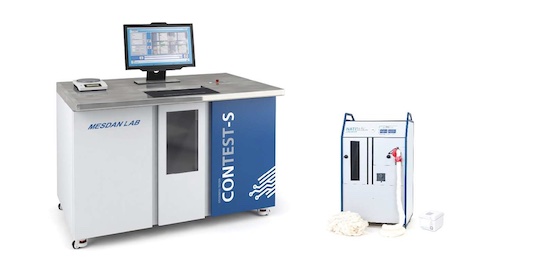
The Mesdan Mini-spinning line, in addition to its main function (teaching, R&D, sampling), is increasingly contemplated as an integral part of recycling projects: apparel manufacturers and famous brands, R&D laboratories and new startups are showing great interest in the Mesdan lines for either laboratory or small production purposes, for the recycling of old cloths, fabrics and yarn waste as well as the recovery of valuable waste fibers.

In recent years, various research institutes around the world have included the Mesdan Mini-spinning line in their textile recycling projects. The required equipment for this kind of assessment includes the card with the attached sliver web condenser, the drawing frame with the flyer for better resistance and uniformity of the roving and the ring spinning machine. Some have completed the line with the addition of machines for the production of twisted yarns (assembly winder, twisting machine) or a knitting machine, all in lab scale.


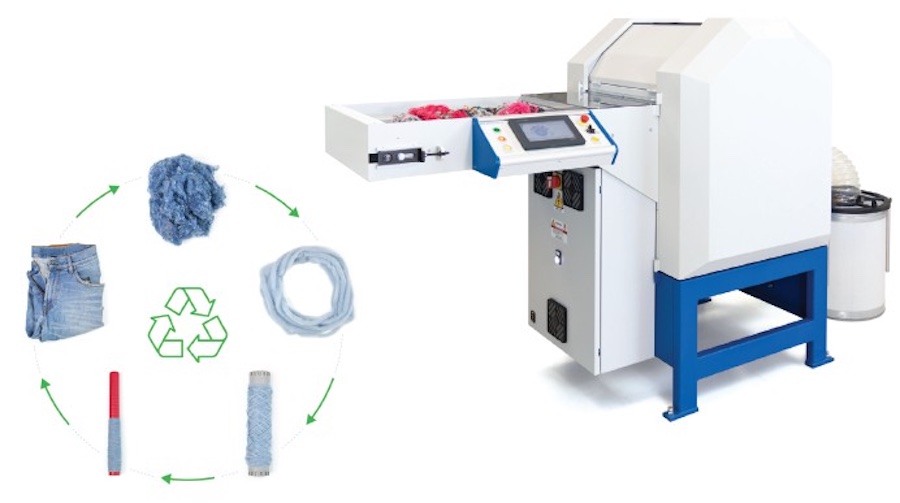
The novelty that Mesdan presented at the ITMA 2023 in Milan is the laboratory scale Shredding machine.

The machine is characterized by versatility, flexibility high performance, thanks to the possibility of customizing and saving the different settings, modifying the machine's working parameters (work cylinder rotation speed, product feeding speed and suction of the finished product).

A "standard" mechanical recycling process can be simplified as follows:

- selection and sanitization of the textile to be recycled,

- removal of non-textile parts (metal or plastic parts, such as buttons, zippers, etc),

- cutting of incoming material and Shredding,

- fiber mixing (with the possible addition of other non-recycled fibres) and carding,

- drawing plus spinning to obtain the final product (yarn with desired % composition, count and tpm)

With a production capacity of approximately 1kg/min (60kg/h), the laboratory Shredding machine is also contemplated with interest as a stand-alone recycling tool, by medium-small sized companies, for applications not necessarily aimed for reuse in spinning mills, but for different technical applications, such as non-woven, thermal/acoustic insulation materials, padding, etc.
More News from Mesdan S.p.A.

More News on Spinning

#Spinning

Rieter adjusts group structure in preparation for Barmag integration

The planned acquisition of the “Barmag” Division of OC Oerlikon will create the leading system provider worldwide for natural and man-made fibers. Rieter is confident it will receive all regulatory approvals to complete the acquisition in the fourth quarter of 2025. The Rieter Group is therefore adjusting its Group structure as of January 1, 2026, to take this acquisition into account and to be able to provide an even more agile response to market challenges.

#Spinning

Demand for high-performance yarns on the rise

Barmag, a subsidiary of the Swiss Oerlikon Group, will commission three HMLS yarn systems with a total of 30 stations at renowned technical yarn manufacturers in China over the next three months.

#Spinning

FET prepares for final exhibition of 2025

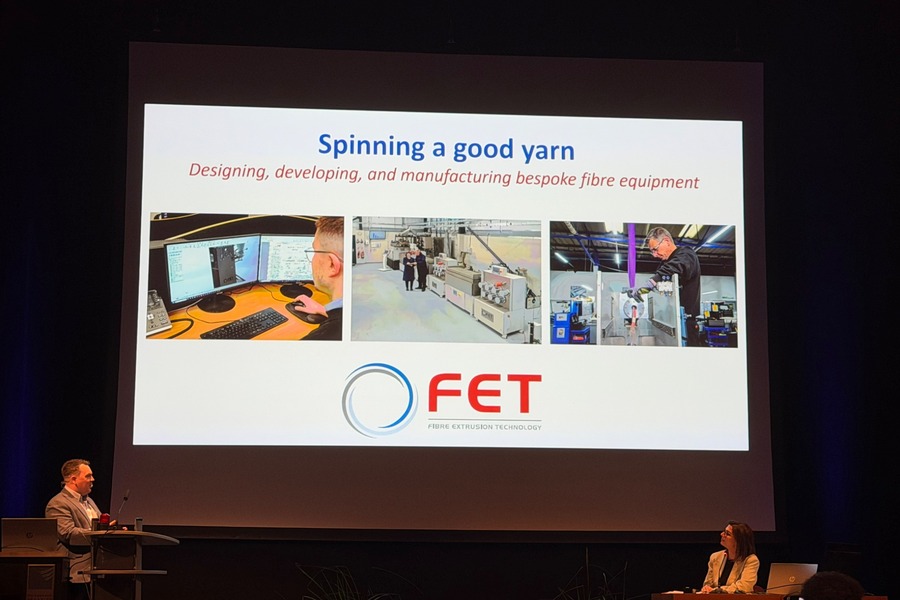
Fibre Extrusion Technology Ltd (FET) of Leeds, UK has completed its second major exhibition of 2025 at ITMA ASIA in Singapore, which is aimed at the textile and garment industry in South and Southeast Asia and the Middle East. Once again, this trade show proved to be a successful one for FET, with considerable interest from several countries surrounding China.

#ITMA Asia + CITME Singapore 2025

T-CAN – Revolutionizing can transport

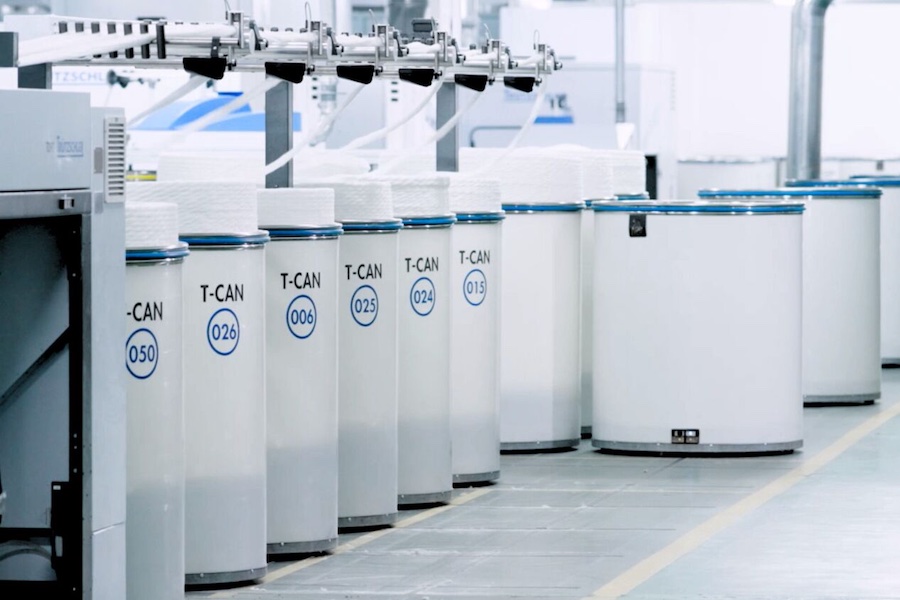
In virtually all spinning mills, transporting sliver cans is still done manually. Rising labor costs, lack of operators and increasing quality requirements make this a growing challenge. With T-CAN, Trützschler introduces a practical solution: a fully automated can transport system that will be presented live at ITMA ASIA 2025 in Singapore.

Latest News

#Recycling / Circular Economy

Advanced Recycling Conference 2025 fuels innovation across key waste streams

The Advanced Recycling Conference (ARC) 2025 brought together nearly 220 experts from 28 countries to spotlight pioneering advancements and foster industry collaboration in recycling across diverse waste streams including plastics, textiles, automotive and other materials.

#Dyeing, Drying, Finishing

Navis TubeTex announces U.S. partnership with Icomatex

Navis TubeTex, a global leader in advanced dyeing and finishing machinery solutions, is pleased to announce a new partnership with Icomatex (www.icomatex.com), a respected European manufacturer of high-quality stenters and textile finishing equipment. Under this agreement, Navis TubeTex will exclusively represent the Icomatex stenter line in the United States.

#Recycling / Circular Economy

ADVANSA launches ADVA®tex: A new step toward textile-to-textile recycling

ADVANSA has introduced ADVA®tex, a new filling fibre made entirely from recycled pre-consumer textile waste, positioning the material as a significant step forward in textile-to-textile (T2T) recycling. The fibre is designed for use in duvets, pillows, mattresses, and furniture applications and is available in three versions.

#Knitting & Hosiery

KARL MAYER celebrates 35 years of EL pattern drive

KARL MAYER is celebrating an anniversary this year: on 30 November 1990, the first warp knitting machine with electronic guide bar control, the KS 4 EL, was delivered – another milestone for patterning. As early as 1980, the SU gearbox with the MRS42SU had initiated the transition from mechanical chains to digital data.

TOP