[pageLogInLogOut]

#Smart Textiles

European Masterclass: Innovating in smart textiles
© 2022 Tex­tile ETP
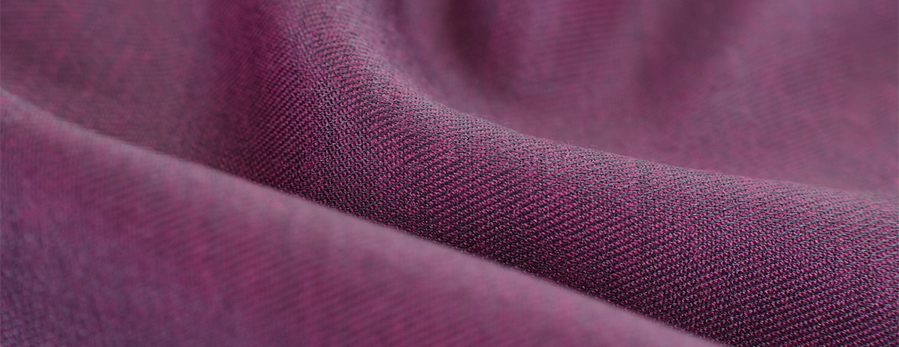
Next week, on 11 May, Tex­tile ETP will host its last Smart Tex­tiles Mas­ter­class ded­i­cat­ed to Prod­uct-Mar­ket Fit and Busi­ness Mod­els. It take this occa­sion to look back on the results and the sol­id net­work it have built and invite you to join its Final Con­fer­ence in Milan on 31 May & 1 June 2022.

Smart tex­tiles and wear­ables are the inno­va­tion fron­tier for the tex­tile, cloth­ing, and elec­tron­ics indus­tries expect­ed to open up niche mar­kets in sports, per­son­al pro­tec­tion, health­care, smart inte­ri­ors, fash­ion, enter­tain­ment, and gam­ing. How­ev­er, the knowl­edge about key tech­nolo­gies and lead­ing play­ers is frag­ment­ed. There­fore, this mas­ter­class com­bined insights and the lat­est devel­op­ments from lead­ing tech­nol­o­gy devel­op­ers, indus­try inno­va­tors, and end-mar­ket experts across all dis­ci­plines of the Euro­pean smart tex­tiles ecosystem.

https://cdn2.assets-servd.host/deranged-cormorant/production/Final-Smart-Textiles-Masterclass-Conference_2022-05-09-083809_ayty.pdf


Hand in hand with its tech­ni­cal expert Daniela Zavec from Tit­era, Tex­tile ETP curat­ed a 15-month pro­gramme of 7 mod­ules ded­i­cat­ed to the Smart Tex­tiles inno­va­tion with a 360 degrees approach. In total, 1000 atten­dees, includ­ing 270 reg­is­tered experts and inno­va­tion lead­ers in Smart tex­tiles across Europe, affil­i­at­ed with 52 organ­i­sa­tions, could par­tic­i­pate in live ses­sions and connect. 


Join us in Milan for the Final Smart Textiles Masterclass

To conclude this 15-month learning journey of the European Masterclass in Smart Textiles Innovation, Tex­tile ETP invites you to a unique networking and co-creation event that will bring together 100 leading industry innovators and tech developers from all over Europe.

The event will feature keynote speeches from Smart Textiles Innovation Leaders, co-creation sessions around 3 concrete Smart Textiles market challenges, extensive networking, and a small-scale exhibition. It will be a launchpad for the permanent Smart Textiles Innovation Community that will open for subscriptions in July 2022.

A few places are available for non-Masterclass subscribers on a first-come, first-serve basis. Ensure your spot quickly by sending an email to judith.bosch@textile-platform.eu.

Booking Link:

https://www.hilton.com/en/attend-my-event/final-conference-smart-textiles/



More News from TEXDATA International

#ITM 2026

ITM 2026: The new geography of textile production

New production hubs are emerging across North Africa and Central Asia, while Türkiye is accelerating its transformation toward higher-value, technology-driven and more sustainable textile manufacturing.

#Research & Development

“Production is a product”

From technical textiles and AI-driven robotics to the limitations of textile circularity: Professor Dr Thomas Gries looks back on more than two decades of development at ITA Aachen. In the interview, he explains why production technology remains a decisive success factor, discusses international collaborations and innovation ecosystems, and shares his views on the transformation of production landscapes and the challenges facing an increasingly regulated industry.

#Knitting & Hosiery

“We need to move away from the price trap and return to a value-driven mindset.”

With its new Textile Innovation Center, KARL MAYER is sending a strong signal for innovation, collaboration, and the future of textile applications. In this interview, Karl Josef Mayer discusses new opportunities in warp knitting, the processing of staple fibres, recycling, the changing role of machinery manufacturers, and why the textile industry must once again focus more strongly on the value of textiles. by Oliver Schmidt

#Associations

“Innovation, resilience and international experience remain the great strengths of the Swiss textile machinery industry”

Geopolitical uncertainty, growing competitive pressure from China, new free trade agreements and the shift towards a circular economy are currently reshaping the global textile industry. In this interview, Cornelia Buchwalder discusses the current mood within the Swiss textile machinery sector, the industry’s distinctive innovative strength, new market opportunities in India and Asia, and the technological trends that could shape the upcoming trade fair cycle leading up to ITMA 2027.

More News on Smart Textiles

#Research & Development

ITA has developed a washable digital smart jacket with real-time feedback and an AI-powered app for rehabilitation

As part of the PhysioTaix research project, the Institut für Textiltechnik (ITA) of RWTH Aachen University is developing a digital smart jacket with integrated sensors. The jacket is washable and reusable; it tracks movements during rehabilitation exercises in real time and transmits the data to an app.

#Smart Textiles

Covestro, FILK Freiberg, and OUT e.V. develop flexible, conductive polymer smart textile system

As the smart textiles market continues to grow across healthcare, personal protection, sportswear, and automotive applications, developers are seeking new ways to integrate electronic functionality directly into textiles, without the rigidity and complexity of conventional wiring. To address this challenge, FILK Freiberg Institute, an independent research institution with expertise in polymer coatings for textile applications, collaborated with Optotransmitter-Umweltschutz-Technologie (OUT) e.V. The joint project, funded under the German Industrielle Gemeinschaftsforschung (IGF) program of the Bundesministerium für Wirtschaft und Energie (BMWE), focused on developing flexible, conductive polymer surfaces for next-generation smart textiles.

#Research & Development

Catching heart disease early with AI-based sensor system

It slips on like a normal vest: Fraunhofer IZM has created a smart sensor system in cooperation with the Charité and the Technical University of Berlin. The vest records a vast array of cardiovascular parameters, which an AI-based system uses to support medical diagnostics and spot potentially dangerous developments.

#Research & Development

Soft interfaces: Textile-integrated light switches, made possible by printable Liquid Metal Ink

A gentle tap on the knitted lampshade is enough to switch on the light. The lamp developed by Fraunhofer IZM in cooperation with WINT Design Lab works with a revolutionary conductive ink. Visitors can find out more and try the lamp themselves at the Berlin Science Week on November 1st and 2nd.

Latest News

#Industry 4.0 / Digitalization

Coats Digital launches AI-powered GSD RealMotion for motion analysis

Coats Digital has launched GSD RealMotion, an AI-powered solution designed to provide apparel manufacturers with greater visibility into factory-floor operations. By analysing shop-floor video and applying Coats Digital’s GSD methodology, the solution turns video recordings into structured, motion-by-motion method studies.

#Textile chemistry

Archroma and Lameirinho partner in pioneering deployment of InOneGO single-step dyeing

Archroma, a global leader in specialty chemicals, and Lameirinho, a leading home textiles manufacturer based in Portugal, are collaborating to bring InOneGO by Archroma, a new single-step dyeing process, into commercial production. Lameirinho’s first InOneGo bedlinens collection is now available worldwide.

#Knitting & Hosiery

KARL MAYER launches extra-wide HKS 3-M EL for increased productivity

KARL MAYER has launched a new extra-wide version of its HKS 3-M EL tricot machine, designed to increase productivity particularly in the manufacture of textiles for sports, activewear and athleisure applications.

#Research & Development

Reducing development times for technical textiles by accelerated thermo-oxidative aging in a high-pressure autoclave

Synthetic polymers used in technical textiles can be effectively protected against degradation caused by heat, oxygen, and water through the use of stabilizer systems. This enables service lives of several decades, extending to more than 50 years. As the use of durable technical textiles continues to grow, so does the demand for reliable methods to predict their service life within economically feasible testing periods. For the first time the German Institutes of Textile and Fiber Research Denkendorf (DITF) developed methods for robust service life prediction for textiles in an IGF research project.

TOP