[pageLogInLogOut]

#Research & Development

Smart textiles reversibly change shape in an energy-efficient manner in response to ambient temperature
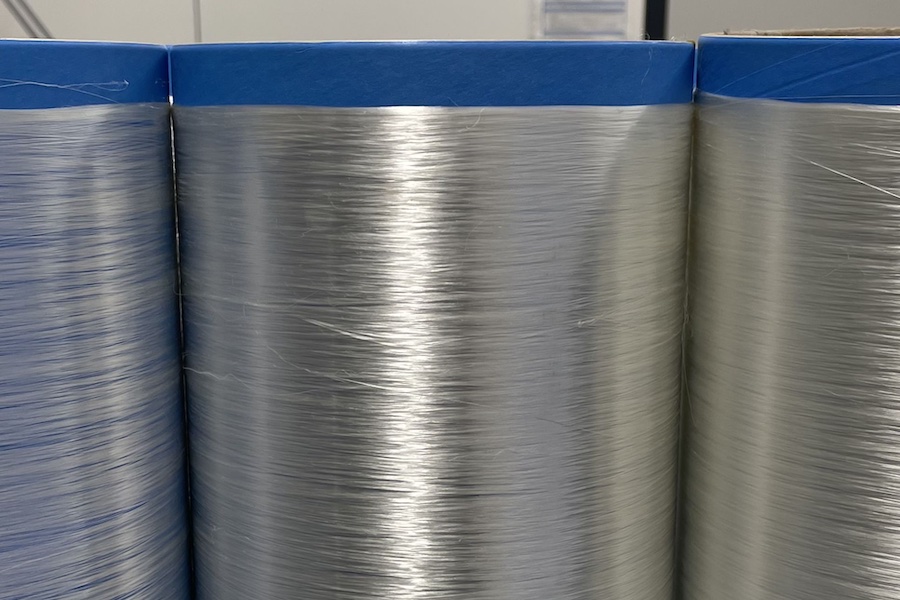
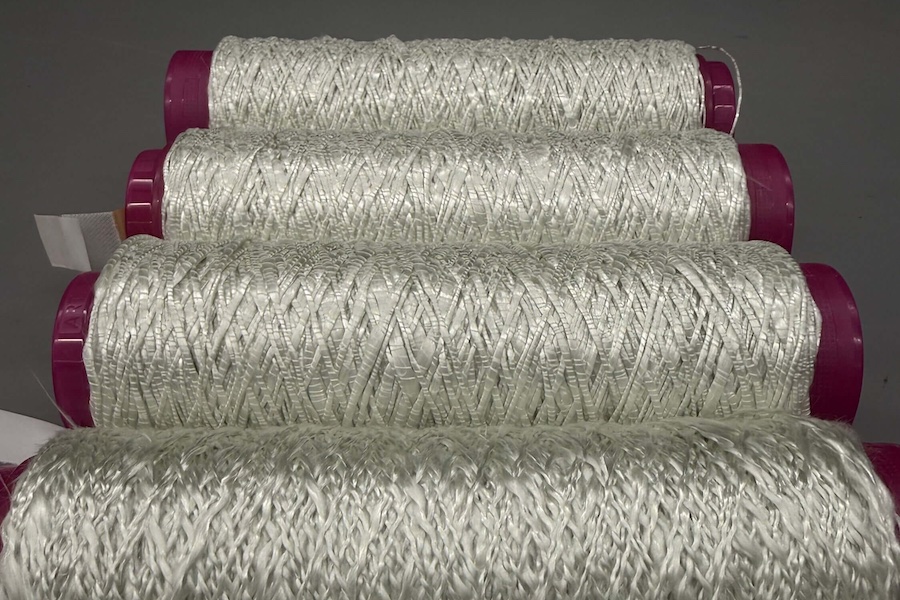
Multifilament yarns made from two-way shape-memory polymers. Photo: DITF © 2026
Self-actuating textile structures are used in a wide range of applications, such as medical technology, automation, architecture, agriculture, and the apparel industry. An example is the use of shading nets in greenhouses, which can be deployed and retracted depending on the sunlight intensity. The German Institutes of Textile and Fiber Research Denkendorf (DITF) are developing textiles based on shape-memory polymers with reversibly controllable geometry.

Changes in the shape of conventional textiles are often controlled by external mechanical components, such as motors. This increases the total weight, energy consumption, and thus also the costs.

Shape-memory polymers can respond to changes in their environment with a preprogrammed deformation. So-called 2-way shape-memory polymers (2W-SMP) even allow reversible shape changes. Textiles made from these materials open up new possibilities for developing energy-efficient textile actuators.

In a joint research project, the DITF, in collaboration with the Fraunhofer Institute for Applied Polymer Research (IAP), are developing multifilament yarns made from thermoplastic 2-way shape-memory polymers. These yarns exhibit a reversible and reproducible change in length that is controlled solely by temperature changes. When the temperature rises, the yarns shorten; when they are cooled, their length increases. Unlike one-way shape-memory polymers, no external deformation is required to achieve reversible shape change (actuation).

To enable the textiles to be used at room temperature, spinnable 2W-SMP fibers with transition temperatures of approximately 30 °C and 60 °C were first synthesized. Subsequently, suitable spinning parameters - such as spinning temperature, spinneret diameter, and take-up speed - were determined to enable the production of multifilament yarns, first using a Spin Line rheometer and then on a pilot plant.
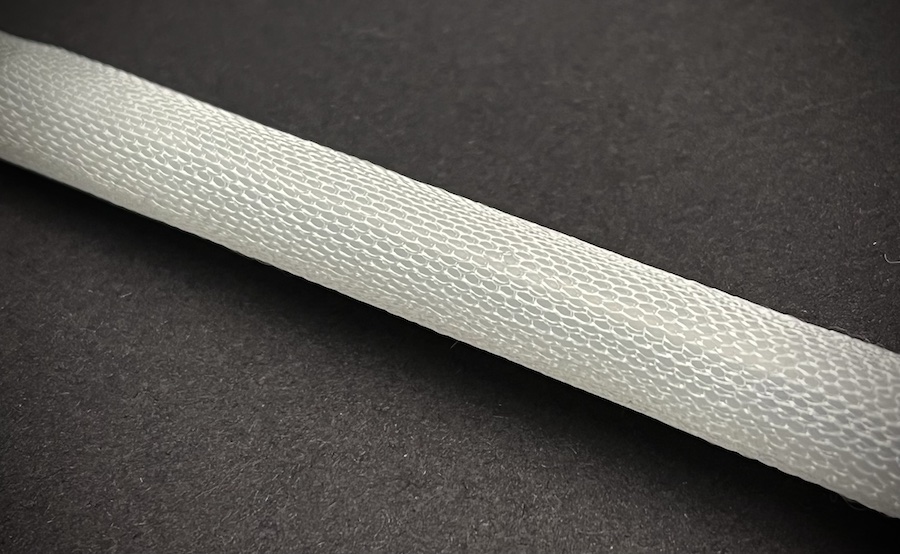
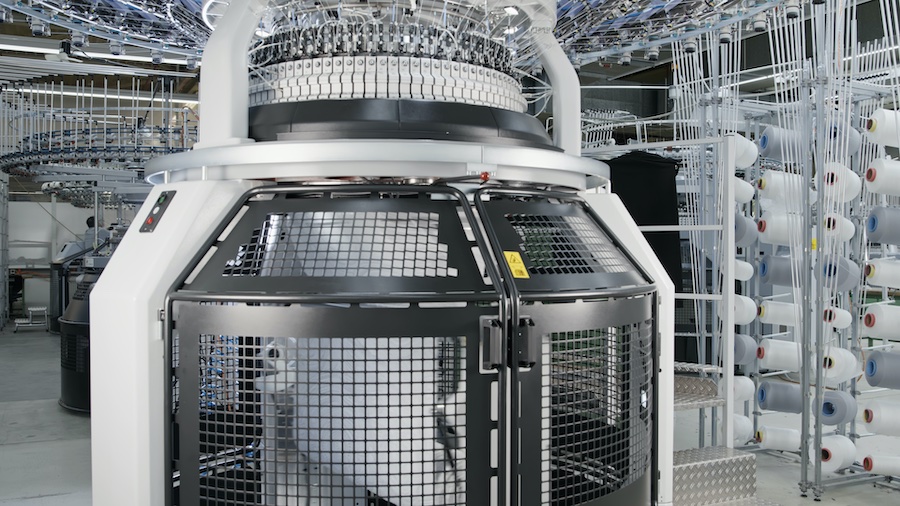
Circular-knit fabric made from multifilament yarns based on two-way shape-memory polymers. Photo: DITF © 2026


Finally, the influence of the spinning parameters on the thermal actuation of the produced yarns was investigated. Therefore, their dimensional stability was determined. If the dimensional stability is 100%, the yarn returns to the same length every time the corresponding temperature is reached. Thermal actuation was also determined by the reversible change in elongation of the yarns during temperature changes. Multifilament yarns were produced with a dimensional stability of over 99% at 60°C and a reversible change in elongation of 16% at a winding speed of 1,500 m/min. This shows that these materials can be produced cost-effectively.

As next steps in the project, researchers will investigate how the yarns can be processed into textiles and how they can be thermomechanically recycled at the end of their service life. Based on these studies, it is possible to assess the extent to which the new material is suitable for industrial production and which applications are feasible. For example, in the future, an agricultural textile made of shape-memory polymers could be produced that automatically adjusts its air and light permeability to changing weather conditions, thereby creating an ideal environment for plant growth.

IGF Project 01IF23512 N was funded by the Federal Ministry for Economic Affairs and Energy as part of the Program for the Promotion of Joint Industrial Research (IGF), based on a resolution of the German Bundestag.
More News from Deutsche Institute für Textil- und Faserforschung Denkendorf

#Research & Development

ALADIN paves the way for circular and demand-driven textile production in Europe

Textile production can be organized sustainably by utilizing short supply chains and preventing overproduction. This can already be achieved today by intelligently connecting and efficiently utilizing existing infrastructure. At the same time, production becomes circular when innovative technologies and materials are used that enable high-quality recycling. The ALADIN research project, launched in May 2026 and co-funded with five million euros under the EU Horizon Europe program, is creating the conditions for this.

#Research & Development

Textile climate control system in workwear – exhibition at the 2026 SME Innovation Day!

Conventional protective workwear often reaches its limits during strenuous physical activity. In particular, the transport of sweat and excess body heat poses a problem. The German Institutes of Textile and Fiber Research (DITF) conducted research on flow-optimized, air-conducting textile structures that enable targeted climate control directly on the body. These structures can be integrated straight into protective work garments. The textile climate control system supports the body’s natural thermoregulation. This contributes to improved workplace safety and comfort.

#Techtextil 2026

Stylish design made from sustainable materials – two DITF research projects receive Techtextil Innovation Awards

Materials made from domestic, renewable raw materials reduce CO₂ emissions, prevent microplastics from entering the environment, and close the material cycle. The German Institutes for Textile and Fiber Research Denkendorf (DITF) are developing nature-based alternatives to synthetically produced and predominantly petroleum-based materials. Two research projects have received a prestigious Techtextil Innovation Award. NUO Flexholz and the lignin-coated material FormLig demonstrate that sustainable concepts can meet high standards of functionality and design. Both projects were carried out in close collaboration with industry.

#Research & Development

Textile cascade filter for removing microplastics from wastewater

Microplastics are now found almost everywhere, even in remote regions of Antarctica. They enter the human body through the food chain. Studies indicate that microplastics may have negative effects on the human health.

More News on Research & Development

#Associations

Meadow Grove Research joins ITMF as Corporate Member

Meadow Grove Research is a commodity research firm specializing in supply, demand, and trade analysis in cotton and other soft commodities. Providing clarity to the complex nature of the global fiber supply chain is one of its most formidable services. The firm thrives on customer engagement and providing the best framework for critical decisions.

#Research & Development

TERIS reaches milestone: Fraunhofer consortium develops new standards for tire analysis

In the “TERIS” project, the Fraunhofer institutes ICT, IGD, and IWM—led by the Fraunhofer Institute for Structural Durability and System Reliability LBF—have reached a decisive milestone. For the first time, the teams aim to generate, analyse, and predict tire wear in the laboratory in a standardized and practical manner. As part of this milestone, results are now available on reference abrasion, particle analysis, tribological models, AI-based surface analysis, a test bench concept, and methods for accelerated aging and VOC detection. The tire industry, testing services, and environmental agencies will in future benefit from reliable, rapid laboratory procedures for emissions assessment.

#Research & Development

Geotextiles made from recycled materials: GREEN leads the way into the industry

For the industry, recycled materials are creating new opportunities in geotextile production. In the GREEN project, the Fraunhofer Cluster of Excellence Circular Plastics Economy CCPE demonstrates that recycled polypro-pylene (PP), polyethylene terephthalate (PET), and high-density polyeth-ylene (HDPE) can be processed into nonwovens, fibers, and membranes that meet industrial requirements. This creates opportunities for use in existing production lines and new value chains in the geotextile market.

#Research & Development

2026 general meeting of the Friends and Supporters of RWTH Aachen at ITA

The Friends and Supporters of RWTH Aachen e. V. (proRWTH) looked back on a successful year of support at their 2026 general meeting. The meeting took place at Institut für Textiltechnik (ITA) of RWTH Aachen and was combined with a joint session of the Executive Board and the Administrative Board. Before the general meeting began, participants were given a guided tour of ITA, providing them with fascinating insights into current research and development topics in textile engineering.

Latest News

#Knitting & Hosiery

The new RDJ 7/3 defines the design footprint of modern athletic shoes

Stylish, functional, and efficient to produce – spacer fabrics are the all-arounders among textile materials. These versatile fabrics are particularly in demand in the sports and casual footwear sector, as they combine comfort, breathability, and design freedom. At the same time, this industry is trend-driven, dynamic, and price-sensitive like few others. Innovations are therefore a decisive factor for success. With the RDJ 7/3, KARL MAYER offers a solution specifically tailored to these requirements. The particular strength of the new double raschel machine: its exceptional flexibility, thanks to its three jacquard bars.

#Spinning

Barmag expands its portfolio for PA6/PA6.6 applications — also available as a retrofit solution

With the new type 6020 ceramic oiler, Barmag is introducing a powerful addition to its product portfolio for processing PA6 and PA6.6 yarns. The solution is specifically designed for low-titer applications in the range of 5 to 100 denier.

#Spinning

Pre-Cleaner CL-X: Proven in cotton cleaning – creating value beyond the spinning mill

Since its market launch, the CL-X has firmly established itself in blowroom lines worldwide. Hundreds of installations confirm its ability to deliver superior cleaning efficiency, lower waste, higher productivity and significant energy savings. Now, new customer applications show that the CL-X not only continues to excel in spinning preparation – it is also entering a completely new field of application: ginning.

#Natural Fibers

2026 ICAC report projects World cotton trade to reach 10.3 million tonnes by 2028/29

The International Cotton Advisory Committee has released the 2026 World Cotton Trade Report, which provides analysis of global cotton trade patterns, key trading relationships, import and export trends, and the geopolitical and policy developments shaping cotton trade flows.

TOP