[pageLogInLogOut]

#Research & Development

GenuTrace client advisory: Is your cotton supply chain UFLPA ready?

U.S. Customs and Border Protection has released updated operational guidance (CBP Publication No. 5560-0526) expanding its forced labor enforcement framework. The guidance supersedes the original 2022 UFLPA Operational Guidance and now covers all forced labor enforcement authorities — UFLPA, CAATSA, and WROs/Findings — in a single unified document. For cotton importers, the enforcement posture has not softened. It has become more structured, more documented, and more demanding. Learn more about UFLPA.

Cotton is a named high-priority sector

Cotton and cotton products are explicitly identified as a high-priority sector for UFLPA enforcement. CBP expects documentation tracing every stage of the supply chain — from bale-level fiber origin through ginning, spinning, fabric production, dyeing and finishing, garment assembly, and export. A single undocumented supplier tier is sufficient grounds to deny entry. Can you prove the origin of your cotton?

Isotopic testing: Now an expected tool

The updated guidance dedicates an entire appendix to isotopic testing and references it explicitly as a tool CBP supports for origin determination and due diligence.

For cotton, isotopic testing identifies the geographic fingerprint of the fiber based on growing environment, providing an independent, science-based verification layer that document trails alone cannot replicate. Isotope testing vs DNA tagging: what brands should know.

CBP does not endorse any specific testing provider. Importers are free to select the lab that best meets their needs. However, CBP is explicit: testing should be integrated early in a compliance program, not deployed reactively after a detention notice arrives.

What Importers Must Have Ready

  • Bale-level cotton origin documentation
  • Full supply chain map from fiber to finished product
  • Transaction records at every tier: purchase orders, invoices, proof of payment, bills of lading
  • Identification of every entity involved, including sub-suppliers
  • Isotopic testing results where applicable
  • A documented due diligence system with supplier code of conduct, audits, and remediation protocols


For a deeper look at how physical and digital verification work together in a defensible compliance package, see Genuine Cotton Traceability: Proving Cotton Origin with Physical & Digital Verification.

The 30-day clock is unforgiving

When a shipment is detained under UFLPA, importers have 30 days to respond with a maximum of two extensions not to exceed 90 days total. The response must include comprehensive supply chain tracing documentation. Affidavits alone are not accepted. All foreign-language documents must be translated. The burden of proof is clear and convincing evidence.

The risk of inaction

Goods detained under UFLPA cannot enter U.S. commerce until the importer demonstrates admissibility. Goods excluded must be exported or destroyed within 180 days. Storage costs throughout the review period are the importer's responsibility. A shipment that clears today on the same supply chain documentation may not clear tomorrow.


More News from Cotton Council International

#Natural Fibers

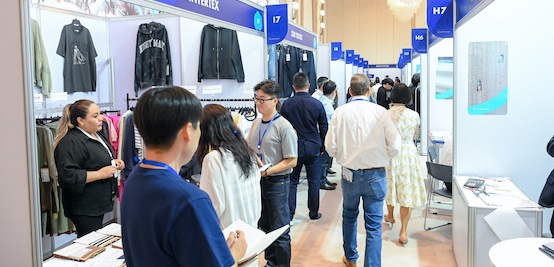
COTTON USA™ leads global shift toward sustainable sourcing at Bangkok Sourcing Fair

COTTON USA™ strengthened its position as a global connector in sustainable U.S. cotton textile sourcing at its recent Sourcing Fair in Bangkok, Thailand, drawing over 300 top brand, retailer, manufacturer, and mill representatives from 13 countries.

#Natural Fibers

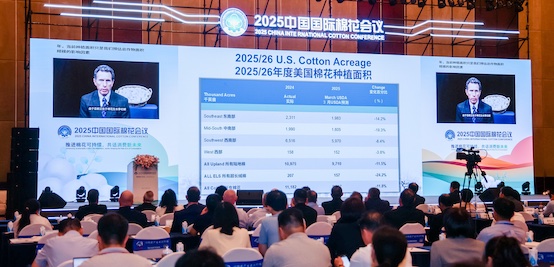
Global cotton industry converges in Guangzhou as Cotton Council International (Cci) champions U.S. Cotton’s sustainability

Cotton Council International (CCI) joined nearly 400 industry leaders at the 2025 China International Cotton Conference in Guangzhou to engage in critical discussions on the future of cotton.

#Natural Fibers

Indian textile leaders explore U.S. cotton’s advantages at Cotton Usa™ seminars

Cotton Council International (CCI) hosted its inaugural COTTON USA™ seminars in Ahmedabad and Hyderabad, highlighting the competitive advantages of U.S. cotton to nearly 100 representatives from Indian textile mills. The events are part of the growing collaboration between the U.S. cotton industry and India’s textile sector.

#Natural Fibers

Innovative sustainable fashion leader Liz Hershfield named Cotton Council International (CCI) Executive Director

Fashion industry veteran and sustainability expert Liz Hershfield will lead Cotton Council International (CCI), the export promotion arm of the National Cotton Council of America (NCC), as its new Executive Director. Hershfield succeeds Bruce Atherley, who retired at the end of March.

More News on Research & Development

#Research & Development

TERIS reaches milestone: Fraunhofer consortium develops new standards for tire analysis

In the “TERIS” project, the Fraunhofer institutes ICT, IGD, and IWM—led by the Fraunhofer Institute for Structural Durability and System Reliability LBF—have reached a decisive milestone. For the first time, the teams aim to generate, analyse, and predict tire wear in the laboratory in a standardized and practical manner. As part of this milestone, results are now available on reference abrasion, particle analysis, tribological models, AI-based surface analysis, a test bench concept, and methods for accelerated aging and VOC detection. The tire industry, testing services, and environmental agencies will in future benefit from reliable, rapid laboratory procedures for emissions assessment.

#Research & Development

Geotextiles made from recycled materials: GREEN leads the way into the industry

For the industry, recycled materials are creating new opportunities in geotextile production. In the GREEN project, the Fraunhofer Cluster of Excellence Circular Plastics Economy CCPE demonstrates that recycled polypro-pylene (PP), polyethylene terephthalate (PET), and high-density polyeth-ylene (HDPE) can be processed into nonwovens, fibers, and membranes that meet industrial requirements. This creates opportunities for use in existing production lines and new value chains in the geotextile market.

#Research & Development

2026 general meeting of the Friends and Supporters of RWTH Aachen at ITA

The Friends and Supporters of RWTH Aachen e. V. (proRWTH) looked back on a successful year of support at their 2026 general meeting. The meeting took place at Institut für Textiltechnik (ITA) of RWTH Aachen and was combined with a joint session of the Executive Board and the Administrative Board. Before the general meeting began, participants were given a guided tour of ITA, providing them with fascinating insights into current research and development topics in textile engineering.

#Research & Development

TERNAfil wins first place at PitchMiUp Night 2026 in Minden

The RWTH spin-off TERNAfil has developed MAXCarbon, a new high-performance hybrid fibre that combines the mechanical performance of carbon with the temperature and corrosion resistance of ceramic materials. For this development, TERNAfil was awarded first prize at the PitchMiUp Night in Minden on 21 May 2026.

Latest News

#Recycling / Circular Economy

Ence and ShareTex begin initial testing of the ATENEA innovation project to promote textile recycling in Spain

Ence and ShareTex are making progress on the Atenea R&D project, which aims to develop a complete value chain for textile recycling in Spain. Specifically, the goal of the ATENEA project—which is funded by the Center for Technological Development and Innovation (CDTI)—is to connect all the necessary stages for the recovery of textile waste, from collection and management, through recycling and transformation into new raw materials, to their incorporation into new textile products.

#Recycling / Circular Economy

DePoly Inaugurates its Showcase Plant in Monthey Switzerland

What if used plastic bottles, PET packaging material and polyester textiles could become raw materials just as high performing as virgin resources? That is the ambition of DePoly, a circular materials company based in Sion, Switzerland which inaugurated its Showcase Plant in Monthey on July 6th & 7th. The first depolymerization facility of its kind and scale in Switzerland, this industrial Showcase Plant represents a major milestone in the company's growth and its journey toward commercialization.

#Recycling / Circular Economy

Commission clarifies rules on plastic bottles recycling

The European Commission today adopted new rules on recycling of single-use plastic beverage bottles made primarily of polyethylene terephthalate (PET bottles). These rules establish, for the first time, a methodology to calculate, verify and report chemically recycled content. This is part of the Commission’s December 2025 plastics package.

#Sustainability

Global Standards establishes new non-profit foundation to strengthen governance

Global Standards gGmbH, the nonprofit organisation behind the globally recognised Global Organic Textile Standard (GOTS), announced a new governance structure designed to support its long-term mission and reinforce organisational autonomy of its Voluntary Sustainability Standards and programmes.

TOP