[pageLogInLogOut]

#Natural Fibers

Indian textile leaders explore U.S. cotton’s advantages at Cotton Usa™ seminars

Cotton Council International (CCI) hosted its inaugural COTTON USA™ seminars in Ahmedabad and Hyderabad, highlighting the competitive advantages of U.S. cotton to nearly 100 representatives from Indian textile mills. The events are part of the growing collaboration between the U.S. cotton industry and India’s textile sector.
© 2025  Cotton Council International (CCI)
© 2025 Cotton Council International (CCI)


“Our COTTON USA™ events in India showcased The COTTON USA™ Difference—how high-quality U.S. cotton, combined with our industry-leading services, data and intelligence, can elevate mills’ performance,” CCI Representative Peush Narang said. “Through COTTON USA SOLUTIONS®, five business-building services that can help mills achieve peak performance with U.S. cotton, and access to the U.S. Cotton Trust Protocol®, the industry’s sustainability and transparency solution, we can help mills using U.S. cotton enhance productivity while ensuring supply chain transparency.”

Participants represented approximately 50 Indian textile mills—including 15 current members of the U.S. Cotton Trust Protocol®—with a combined annual cotton consumption of around 5 million bales. For more than half of the attendees, this event marked their first introduction to COTTON USA™, providing a prime opportunity to initiate new business relationships and explore future collaboration.

The seminars addressed the critical role of fiber selection for mills and how sourcing U.S. cotton can improve efficiency and profitability. Presentations also introduced the COTTON USA Mill Performance Index®, a live benchmarking dashboard for mill optimization, and explored the rising influence of the Trust Protocol, which has grown from 1,200 global members in 2023 to over 2,500 in 2024.

“Premium U.S. cotton is just the starting point,” Narang added. “Events like these are central to how we support our partners throughout the global cotton supply chain.

The COTTON USA™ Difference is built on trusted partnerships, high-impact networking and ongoing education—and we’re excited to forge new U.S. cotton connections within India’s textile industry.”

More News from Cotton Council International

#Research & Development

GenuTrace client advisory: Is your cotton supply chain UFLPA ready?

U.S. Customs and Border Protection has released updated operational guidance (CBP Publication No. 5560-0526) expanding its forced labor enforcement framework. The guidance supersedes the original 2022 UFLPA Operational Guidance and now covers all forced labor enforcement authorities — UFLPA, CAATSA, and WROs/Findings — in a single unified document. For cotton importers, the enforcement posture has not softened. It has become more structured, more documented, and more demanding. Learn more about UFLPA.

#Natural Fibers

COTTON USA™ leads global shift toward sustainable sourcing at Bangkok Sourcing Fair

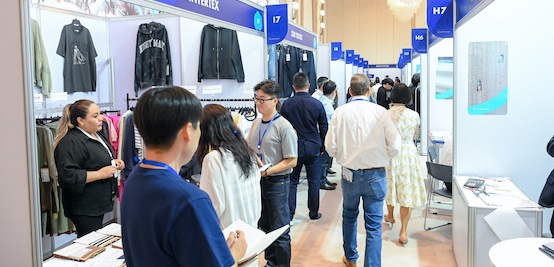
COTTON USA™ strengthened its position as a global connector in sustainable U.S. cotton textile sourcing at its recent Sourcing Fair in Bangkok, Thailand, drawing over 300 top brand, retailer, manufacturer, and mill representatives from 13 countries.

#Natural Fibers

Global cotton industry converges in Guangzhou as Cotton Council International (Cci) champions U.S. Cotton’s sustainability

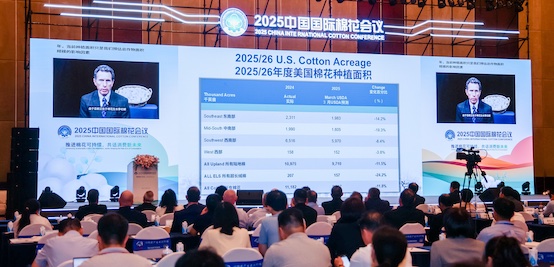
Cotton Council International (CCI) joined nearly 400 industry leaders at the 2025 China International Cotton Conference in Guangzhou to engage in critical discussions on the future of cotton.

#Natural Fibers

Innovative sustainable fashion leader Liz Hershfield named Cotton Council International (CCI) Executive Director

Fashion industry veteran and sustainability expert Liz Hershfield will lead Cotton Council International (CCI), the export promotion arm of the National Cotton Council of America (NCC), as its new Executive Director. Hershfield succeeds Bruce Atherley, who retired at the end of March.

More News on Natural Fibers

Latest News

#Spinning

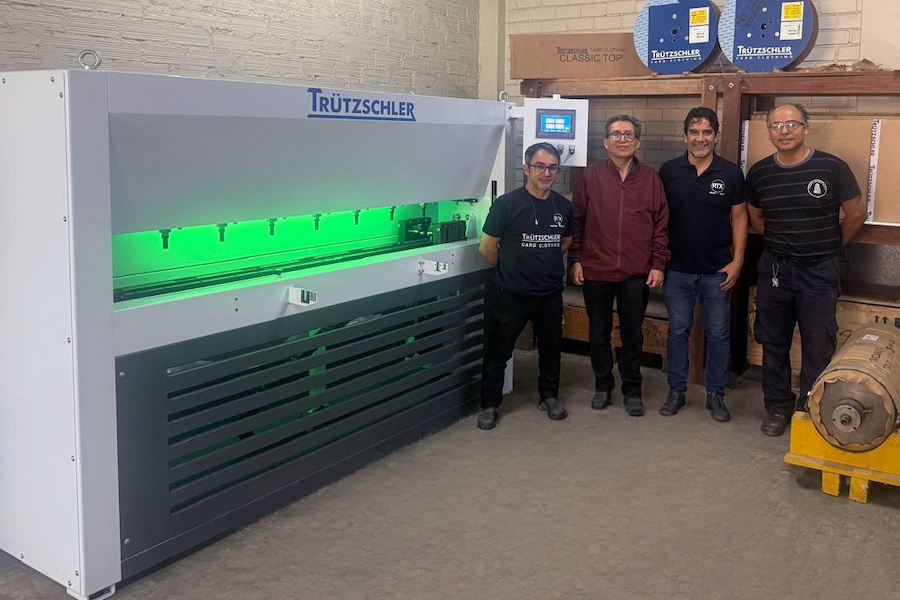
Ibrahim Fibres and Trützschler: A strong partnership enters its next phase with the TC 30Si

For more than two decades, Ibrahim Fibres and Trützschler have grown side by side, driven by a shared ambition to continuously improve spinning performance, strengthen technology leadership and set new benchmarks in the textile industry. Today, Ibrahim Fibres is a leading yarn and polyester staple fiber manufacturer in Pakistan. The company operates the largest number of Trützschler cards in the country, with more than 200 machines running across its mills in Faisalabad, and plays an important role in one of Asia’s largest textile industries.

#Digital Printing

USColorworks expands digital platform with Kornit Atlas MATRIX and Atlas MAX PLUS solutions

Kornit Digital Ltd. (NASDAQ: KRNT), a global pioneer in sustainable, on-demand digital fashion and textile production, today announced that USColorworks, a North Carolina-based apparel decoration and fulfillment company specializing in custom and on-demand printing for retail and promotional markets, has expanded its Kornit digital production platform with the addition of Atlas MATRIX and Atlas MAX PLUS systems to deliver high-quality, on-demand apparel across cotton, blended fabrics and polyester.

#Functional Fabrics

CovationBio introduces two new bio-based innovations at Functional Fabric Fair New York

Covation Biomaterials LLC (“CovationBio®”) is showcasing its two new bio-based innovations, Xatryx® and Sorona® elasterell-p fiber, at this year’s Functional Fabric Fair in New York City, July 7–9, 2026. Attendees can visit CovationBio at Booth #404 to explore this next generation of bio-based performance materials.

#Research & Development

Geotextiles made from recycled materials: GREEN leads the way into the industry

For the industry, recycled materials are creating new opportunities in geotextile production. In the GREEN project, the Fraunhofer Cluster of Excellence Circular Plastics Economy CCPE demonstrates that recycled polypro-pylene (PP), polyethylene terephthalate (PET), and high-density polyeth-ylene (HDPE) can be processed into nonwovens, fibers, and membranes that meet industrial requirements. This creates opportunities for use in existing production lines and new value chains in the geotextile market.

TOP