#Recycling / Circular Economy
Arvind Limited and PurFi Global partner to combat massive textile waste problem in a giant leap in textile circularity
PurFi’s proprietary technology creates a traceable 360-degree circular solution that rejuvenates textile waste into virgin quality fibers utilizing 96% less water and 90% less energy than virgin textiles
Significant transformations across the fashion industry have led to a dramatic rise in “fast fashion.” The textile industry generates more than 64 billion pounds of post-industrial textile waste and 284 billion pounds of post-consumer waste annually. Yet only 12 percent of textiles globally are recycled, and about one percent are upcycled. As the fashion industry has embraced calls for more circular and sustainable supply chains, PurFi’s proprietary technology – supported by more than 30 patents and 400-plus registered trade secrets – has emerged as a proven and complete solution for rejuvenating textiles back into virgin-like fibers.
“Sustainability and innovation are key pillars of our strategic growth. We have always centered our approach on innovative ideas and sustainable initiatives” highlighted Mr. Punit Lalbhai, Executive Director, Arvind Limited. We share the common value system and excellent working relationship with PurFi Global, and this partnership will not only provide an innovative solution to deal with issue of textile waste but will also strengthen our motto of being Fundamentally Right. We look forward to working with these technologies to fuel the next set of growth in textile manufacturing and at exceptionally less environmental impact.”
“Partnering with PurFi will enable Arvind to expand on our decades-long commitment to extending sustainable practices into every aspect of our business,” affirmed Mr. Ashish Kumar, President & Chief Executive Officer, Arvind Limited. “For more than 25 years, PurFi has been developing and investing in state-of-the-art technology to rejuvenate industrial textile waste. Unlike the traditional ‘one-and-done’ recycling approach, PurFi’s technology can rejuvenate waste materials into virgin-like fibers 17 times, and it can be done at scale. Working together, we believe we can lead the textile and fashion industries into a new era of sustainable practices, transforming textile manufacturing into a truly closed loop cycle.”
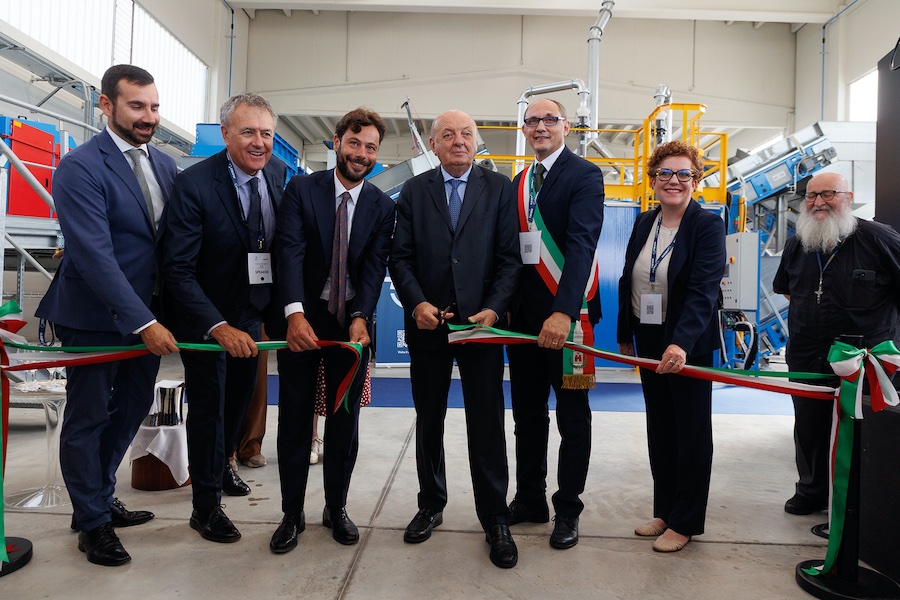
PurFi and Arvind will locate the first in a series of planned fiber rejuvenation facilities near one of Arvind’s manufacturing facilities in India. This facility will process textile wastes – white cotton, colored cotton, denim and synthetics – into virgin-like fibers for reuse from two lines, where each line will have a 5,500-ton capacity per year with plans to expand over the next five years. The investment for these two lines is envisaged at USD $25 to $30 million. Expansion plans include an additional production line that removes elastomers from fabrics utilizing another of PurFi’s proprietary technologies. Currently, 85% of the world’s apparel contains elastomers, which make it very difficult to recycle or rejuvenate. PurFi’s technology is the first commercially viable technology proven to safely remove elastomers without the use of toxic chemicals and preserve the host fiber while having the ability to recycle the elastomers that were removed. The joint venture is slated to start construction in the fourth quarter of 2022 with full production expected to commence in the fourth quarter of 2023.
“We are thrilled to partner with Arvind as they share our values and have a rich history of innovation, superior textile manufacturing capabilities and commitment to sustainability,” said Mrs. Joy Nunn, Founder and Chief Executive Officer of PurFi Global LLC. “Arvind immediately understood the value and promise of our technology and will increase efficiencies in their production with rejuvenated fabric. In addition, our unique tracers that are specific to PurFi rejuvenated fibers provide customers with a clear line of sight to the origin of the fibers they source. This authentic product identifier is of great value to manufacturers like Arvind, who are committed to providing transparency into their sustainability practices and understand that rejuvenated materials have moved from ‘nice to have’ to ‘must have’ in their product offerings. We look forward to partnering with Arvind as we continue to innovate to create a more sustainable planet and contribute to the circular economy.”
The circular economy is being embraced by those who are conscious of their carbon footprint, especially younger generations who want to associate with brands that share their values. The textile industry seeks to combat the environmental concerns created by “fast fashion” and the take-make-waste model with a goal of creating a system where clothing and textiles are reused and not thrown into landfills. To fulfill their commitments to 100% recycled or sustainably sourced materials within the next decade, many in the textile and fashion industries, including global stalwart brands, are looking for alternative materials and efficient processes.
PurFi’s technology requires significantly fewer resources than the production of virgin textiles. When compared with manufacturing virgin polyester, nylon or cotton, PurFi fiber manufacturing uses up to 96 percent less water and 90 percent less energy. The process also generates 85 to 90 percent fewer greenhouse gas emissions.
PurFi’s Proprietary Technology
PurFi fiber maintains the original quality and integrity of the input fabric and can integrate additional properties to make it even better. PurFi teases apart the fabric back into the original yarn, and from the yarn back to the original fiber. This process ensures the length is maintained and any resulting short fibers are filtered out. Source materials never touch unfiltered air or human hands once entering a rejuvenation line and are then penetrated by PurFi’s patented and trade secret technology to achieve a reverse spinning technique. The fibers have the option to be treated with a purification technology prior to being baled into fiber. This technology can embed the rejuvenated fibers with additional characteristics, including hydrophobic, hydrophilic, odor control, fire retardant and others. Additionally, PurFi can blend fibers together to make customized fabric compositions. All of this is done at the fiber level instead of at the yarn or fabric level, which withstands washings and wear-and-tear much longer. PurFi fibers can be used in meta-aramid and para-aramid textiles as well. Importantly, textiles can be produced with 100 percent PurFi fibers whereas recycled fibers must be blended with virgin fibers.