[pageLogInLogOut]

#Recycling / Circular Economy

Recover™ recognized in Fast Company’s 2021 Innovation by Design Awards for its mission to achieve circular fashion for all

Recover™, a leading material sciences company and global producer of low-impact, high-quality recycled cotton fiber and cotton fiber blends, has received Honorable Mentions in two categories in Fast Company’s Innovation by Design Awards for 2021. The company was recognized for its innovations in the Sustainability and Materials categories.

Celebrating 10 years of Innovation by Design, the 2021 honorees include nearly 600 projects, products, and services from Nike, Verizon, Microsoft, and others.

The 10th anniversary of the awards, which can be found in the October 2021 issue of Fast Company, recognize people, teams, and companies that transform businesses, organizations, and society through design. One of the most sought-after design awards in the industry, Innovation by Design is the only competition to honor creative work at the intersection of design, business, and innovation, recognizing the people, companies, and trends that have steadily advanced design to the forefront of the business conversation.

Recover is an innovative textile producer that has been pioneering sustainable materials and recycling since 1947. The company recycles post-industrial and post-consumer cotton waste, replacing the need to cultivate cotton, dramatically reducing water waste, limiting the use of dyes through its RColorBlend system, and reducing textile landfill waste. Recover is working with key industry stakeholders to drive change and establish a new circular supply chain that will allow it to dedicate one-third of its production capacity to post consumer recycling by 2025.

“My family has been innovating for generations to perfect the Recover process, which is primed to be an exciting resource for the fashion industry as it strives to meet sustainability goals,” said Alfredo Ferre, CEO of Recover. “We are grateful to receive an honorable mention in Fast Company’s Innovation by Design Awards, which is so affirming as we pursue our vision of making sustainability more fashionable.”

“Design is not just a beauty contest,” said Stephanie Mehta, editor-in-chief of Fast Company. “It’s something that can change the world and create solutions in a time when we face pressing global issues such as systemic racism, climate change, and a global pandemic. Many of these entries showcase these challenges while providing hope for the future through their steadfast commitment to elevate design.”

Honorees for the 2021 awards were selected in the following categories: Apps and Games; Cities; Data Design; Design Company of the Year; Experimental; Fashion and Beauty; Finance; General Excellence; Graphic Design; Health; Home; Learning; Mobility; Packaging; Products; Retail Innovation; Social Good; Spaces and Places; Sports and Recreation; Students; Sustainability; User Experience; Wellness; Workplace; Best Design Asia-Pacific; Best Design Europe, Best Design Middle East, and Best Design Africa; Best Design Latin America; and Best Design North America. New categories included Advertising, Branding, Impact, Materials, Pandemic Response, Real Estate, and Years in Business.


The judges include renowned designers from a variety of disciplines, business leaders from some of the most innovative companies in the world, and Fast Company’s own writers and editors. Entries are judged on the key ingredients of innovation: functionality, originality, beauty, sustainability, user insight, cultural impact, and business impact.
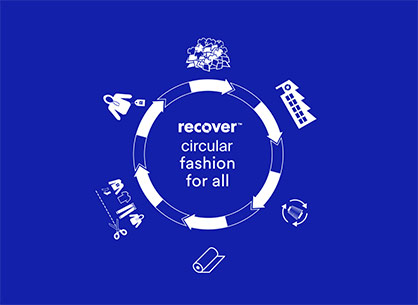
(Graphic: Business Wire)


Winners, finalists, and honorable mentions are featured online and in the October issue of Fast Company magazine, on newsstands September 28, 2021.


To see the complete list, go to:

https://www.fastcompany.com/innovation-by-design/2021


More News from TEXDATA International

#ITM 2026

ITM 2026: The new geography of textile production

New production hubs are emerging across North Africa and Central Asia, while Türkiye is accelerating its transformation toward higher-value, technology-driven and more sustainable textile manufacturing.

#Research & Development

“Production is a product”

From technical textiles and AI-driven robotics to the limitations of textile circularity: Professor Dr Thomas Gries looks back on more than two decades of development at ITA Aachen. In the interview, he explains why production technology remains a decisive success factor, discusses international collaborations and innovation ecosystems, and shares his views on the transformation of production landscapes and the challenges facing an increasingly regulated industry.

#Knitting & Hosiery

“We need to move away from the price trap and return to a value-driven mindset.”

With its new Textile Innovation Center, KARL MAYER is sending a strong signal for innovation, collaboration, and the future of textile applications. In this interview, Karl Josef Mayer discusses new opportunities in warp knitting, the processing of staple fibres, recycling, the changing role of machinery manufacturers, and why the textile industry must once again focus more strongly on the value of textiles. by Oliver Schmidt

#Associations

“Innovation, resilience and international experience remain the great strengths of the Swiss textile machinery industry”

Geopolitical uncertainty, growing competitive pressure from China, new free trade agreements and the shift towards a circular economy are currently reshaping the global textile industry. In this interview, Cornelia Buchwalder discusses the current mood within the Swiss textile machinery sector, the industry’s distinctive innovative strength, new market opportunities in India and Asia, and the technological trends that could shape the upcoming trade fair cycle leading up to ITMA 2027.

More News on Recycling / Circular Economy

#Recycled Fibers

Driving circularity with Uster Recycled Fiber Matrix

The textile industry’s commitment to circularity continues to accelerate, and mechanical recycling is viewed as a targeted approach to cutting textile waste and its environmental impact. At the forefront of this drive, Uster has developed the Recycled Fiber Matrix, a two-dimensional assessment of mechanically recycled fibers to guide optimum processing and end-uses.

#Research & Development

Novel flame-retardant and recyclable fiber-reinforced composite

Airplanes and passenger trains must meet strict safety requirements, including fire safety standards. This calls for materials that are flame-retardant, lightweight, robust, and scalable. Empa researchers, in collaboration with their industry partner Elantas, have now succeeded for the first time in making such a material – a composite – fully recyclable.

#Recycling / Circular Economy

Indorama Ventures advances circular fashion through RECO Collective 2026

Indorama Ventures Public Company Limited (IVL), a global sustainable chemical company, is taking RECO Collective into its 12th year under the theme “The Next Original,” reinforcing its mission to promote recycling and upcycling knowledge while encouraging SMEs in the fashion industry to embrace recycled materials. The program focuses particularly on recycled polyester (rPET) yarns and fabrics made from post-consumer PET bottles, using these materials to create value-added products that combine distinctive design with consumer needs and market opportunities.

#Recycled Fibers

Circ expands global recycled polyester production with BHF offtake agreement

Circ®, a global leader in textile-to-textile recycling, today announced a new offtake agreement with BHF, a leading specialty polyester fiber innovator. This agreement significantly expands the company’s ability to bring recycled polyester into mainstream fiber production.

Latest News

#

RE&UP’s Next-Gen Cotton fibers power Zalando private label t-shirt collection crafted from innovative recycled textiles

RE&UP Recycling Technologies’ Next-Gen Cotton powers a new collection from Zalando’s private labels, marking a step forward in bringing textile-to-textile recycled fibers into commercial fashion production. Launching on Zalando in August, the collection comprises five t-shirts across YOURTURN by Zalando and Even&Odd by Zalando, made from a circular-knit fabric blending 80% organic cotton with 20% RE&UP Next-Gen Cotton — textile-to-textile recycled fiber produced from textile waste. This is the first time RE&UP's recycled fibers feature in Zalando's private label assortment.

#Heimtextil 2027

Heimtextil Trends 27/28: ‘Home-Maxxing’ between performance and respite

Sleep better, recover faster, live more efficiently: the desire for optimisation has long since reached our homes. Under the title ‘Home-Maxxing – The Performance of Everyday Living’, Heimtextil Trends 27/28 show how our relationship with efficiency-driven thinking and technology is influencing the design of spaces and textiles. The more sleep, wellness, routines, materials and spaces are optimised, the stronger the desire for a home that does not demand even more of us.

#Digital Printing

Mimaki advances DTF productivity and stability with new TxF330-800

Mimaki Europe, a leading manufacturer of industrial inkjet printers and cutting plotters, announces the TxF330-800, its new direct-to-film (DTF) printer. Designed to support stable, high-quality garment decoration in demanding print environments, the system combines automated maintenance, expanded white ink capacity and advanced production capabilities to streamline workflow.

#Home Textiles

Intertextile Shanghai Home Textiles – Autumn Edition 2026 concludes as Asia’s premier hub for trend-led innovation

Intertextile Shanghai Home Textiles – Autumn Edition 2026 wrapped up on 20 August having brought the global home textiles community together in Shanghai. Over 900 exhibitors from 19 countries and regions attracted nearly 36,000 visitors from 113 represented markets to the National Exhibition and Convention Center (Shanghai). This edition further strengthened the fair’s status as a strategic gateway to the wider Asian buyer market, with strongly represented regions including Greater China, Southeast Asia, and increasingly Central Asia.

TOP