[pageLogInLogOut]

#Raw Materials

International Women’s Day: Cotton made in Africa strengthens equality for women through targeted investments
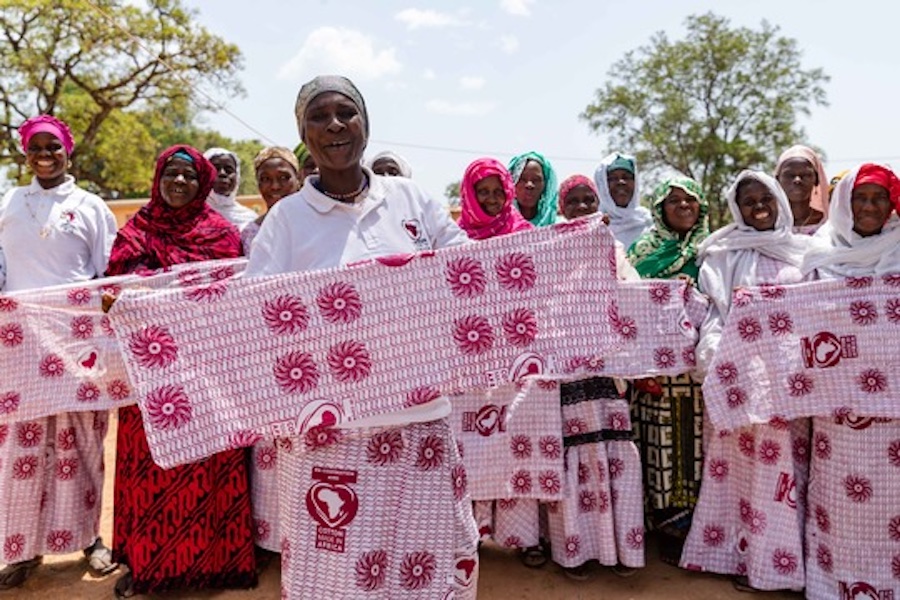
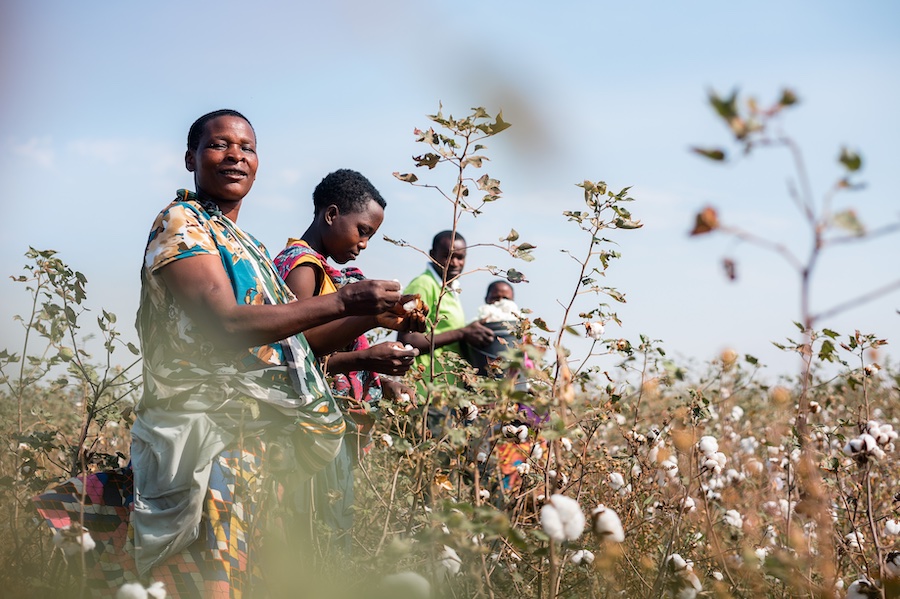
Women farmers from Côte d'Ivoire in custom-made dresses, crafted from CmiA-designed Kitenge fabrics, celebrating International Women's Day; Credit_Miléquêm Diarassouba for AbTF
On the occasion of International Women’s Day—which will be observed on 8 March under the motto “Rights. Justice. Action. For ALL Women and Girls”—the Aid by Trade Foundation (AbTF), which is responsible for Cotton made in Africa® (CmiA), underlines its long-standing and ongoing commitment to the equality of women in African cotton production areas.

The UN Food and Agriculture Organization (FAO) estimates that development programmes focussed on empowering women in rural areas could increase the incomes of 58 million more people and build up the resilience of 235 million people. Women’s structural disadvantage is a major cause of social and economic injustice and of missed opportunities for development worldwide. This manifests itself in unequal wages, limited access to resources, and the under-representation of women in decision-making processes.

The Hamburg-based Aid by Trade Foundation has made it a cornerstone of its work to provide women and girls with support in rectifying these disadvantages. For instance, criteria for equality between women and men are firmly anchored in its Cotton made in Africa Standard; these include equal access to training, resources, and decision-making processes. In addition, targeted projects for cotton farmers at Cotton made in Africa create long-term opportunities and ensure independence for women. Conducted together with partners through the CmiA Community Cooperation Programme (CCCP), these projects extend beyond cotton cultivation. In one example, smaller start-ups launched by women’s groups receive targeted funding as well as tailored business training in order to tap into sources of income that complement cotton cultivation. In another example, village communities learn about important topics, including women’s health, through innovative methods such as creative plays; this approach creates awareness and breaks taboos. Over 100 women’s clubs and other women-specific projects have already been funded through the CmiA Community Cooperation Programme.

“Commitment to fundamentally improving women’s economic and social position is part of Cotton made in Africa’s mission statement,” says Alexandra Perschau, the head of Standards & Outreach at the Aid by Trade Foundation, adding, “Securing the future of cotton cultivation requires equal income, equal access to resources and means of production, the creation of supplementary sources of income specifically for women, and women’s active participation in CmiA initiatives and training. This is the only way to achieve resilient agriculture.”
More News from Cotton made in Africa (CmiA)

#Natural Fibers

Human Rights Day: Cotton made in Africa reinforces its commitment to ensuring respect for human rights in cotton production

The sustainable cotton standard Cotton made in Africa (CmiA) has always focussed on respect for human rights, including by prohibiting child labour and discrimination. With the new version of the CmiA standard coming into force, AbTF raises requirements for due diligence in the areas of human rights and risk management.

#Natural Fibers

Cotton made in Africa launches public consultation for standard revision

The Aid by Trade Foundation (AbTF) is opening public consultation on its Cotton made in Africa standard today. Interested parties will have 60 days to provide feedback, helping shape the future of one of the world’s largest standards for sustainable cotton. The latest update to the standard, Version 5.0, focusses on increasing Cotton made in Africa’s effectiveness and adapting its criteria and indicators to external factors, which currently include biodiversity loss and a growing set of reporting requirements for companies.

#Raw Materials

EUR 2.8 million project for climate-resilient agriculture in Africa

Healthy soils, responsible water use, and biodiversity conservation are central to the efforts of the Aid by Trade Foundation (AbTF) to make African cotton production more resilient to climate change. AbTF has opened new doors for small-scale farming families in Africa through a EUR 2.8 million project for climate-resilient cotton cultivation. Over the last three years, more than 100,000 farmers in Africa were involved in testing various soil improvement measures, with encouraging results: yields on demonstration sites increased significantly, despite the effects of climate change.

#Raw Materials

Cotton farmers in Benin benefit from organic cotton cultivation

Launched three years ago with EUR 1 million in total volume, a project called “Growing Benin’s Organic Cotton Sector” aimed to support small-scale farmers in transitioning to organic cotton cultivation in accordance with the Cotton made in Africa Organic standard, to avoid the use of synthetic pesticides, and to further develop the organic cotton sector, thereby securing the future of farming communities. The project has proved a success as participating cotton farmers are benefiting from higher incomes.

More News on Raw Materials

#Raw Materials

Textile Exchange publishes cotton Life Cycle Assessment study to strengthen impact data

Textile Exchange has published the first in a series of seven Life Cycle Assessment (LCA) studies designed to improve the quality and robustness of environmental impact data for raw material production across the fashion, textile, and apparel industry. The first LCA study focuses on cotton and addresses critical data gaps and methodology variability through new high-quality data across key producing countries. The study includes organic, regenerative, recycled, and country averages for conventional cotton production systems, providing a clearer picture of the associated environmental impact.

#Raw Materials

Fashion for Good mobilises industry to adopt mass balance attribution and accelerate decarbonisation

Fashion for Good launches today the Mass Balance Demonstrator project, a collaborative industry initiative to implement and scale the mass balance attribution (MBA) chain-of-custody model for biomass-attributed PET in textile applications. The project represents a concrete step toward accelerating brand-driven decarbonisation across the apparel value chain.

#Raw Materials

The 83rd Plenary Meeting: Reports from the ICAC Secretariat

Every year, one of the most anticipated sessions at the International Cotton Advisory Committee's (ICAC) Plenary Meeting is the Reports from the Secretariat — and the 83rd edition in Bremen, Germany, did not disappoint.

#Raw Materials

A Powerful Opening: Global thought leaders launch the International Cotton Conference Bremen

The International Cotton Conference Bremen will open on 25 March 2026 in the Parliament building of the Free Hanseatic City of Bremen with a keynote session of exceptional calibre. Distinguished international experts will set the stage for the conference by offering incisive perspectives on the most pressing challenges and the defining trends shaping the future of the global cotton trade. Their insights will span a broad spectrum — from geopolitically driven disruptions affecting global supply chains to the opportunities emerging from innovation-led agriculture capable of supporting a growing world population. Together, these opening keynotes will frame the dialogue of the conference, highlighting both the complexity of today’s market environment and the pathways toward a resilient and forward-looking cotton sector.

Latest News

#Techtextil 2026

Modernizing Needling – DiloGroup at Techtextil & INDEX 2026

With the theme “Modernizing Needling”, the DiloGroup presents a comprehensively enhanced portfolio for needling technology. The objective is to further increase the performance and application range of needlefelt production lines in terms of productivity, flexibility, and the development of new products, thereby meeting the growing demands of modern technical textiles.

#Advertorial

New Gravimax MMX-R X-ray sensor platform opens up new application fields

The demands placed on quality control in web-based production processes are increasing: materials are becoming more complex, basis weights are varying more widely, and at the same time, pressure is growing to make processes more efficient and transparent. Precise measurement data across the entire web width has therefore become a key factor in ensuring stable production processes. With its new Gravimax MMX-R sensor platform, Mahlo introduces a radiometric measurement solution designed to set new standards in determining basis weight and material composition. The platform combines advanced X-ray technology with newly developed signal processing, enabling measurement tasks that previously often required multiple sensor technologies.

#Recycling / Circular Economy

Carbios confirms Longlaville plant in France following financing progress

Carbios has reaffirmed its plans to build its Longlaville plant in France within a project financing framework, targeting the start of production in the first half of 2028. The company also reports a solid cash position of around €60 million at the end of 2025 and has appointed Benoît Grenot as Deputy Chief Executive Officer to support the execution of its strategic projects.

#Composites

KARL MAYER strengthens partnerships in the composites industry at JEC World 2026

KARL MAYER further strengthened its role as a reliable and competent partner to the composites industry at JEC World 2026. The global market leader in textile machinery manufacturing used the trade show to meet key customers, establish numerous new contacts, and engage in in-depth technical discussions.

TOP