[pageLogInLogOut]

#Raw Materials

Laly Lichtenfeld joins AbTF Board of Trustees

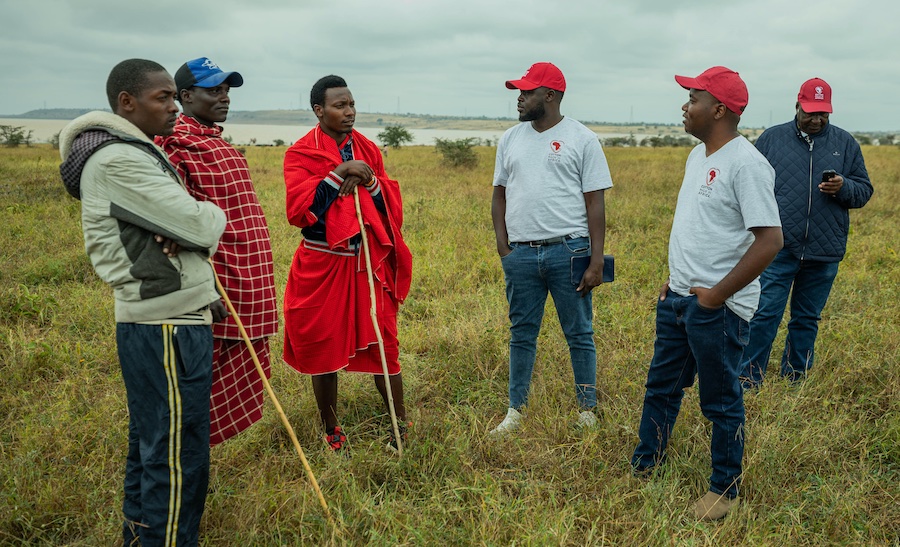
The Aid by Trade Foundation is pleased to welcome Laly Lichtenfeld, an internationally renowned leader in community-driven nature conservation, to its board of trustees. After years of researching community-driven conservation, including as a Fulbright Scholar in 1996, she co-founded African People & Wildlife in 2005 with the aim of promoting peaceful coexistence between rural communities and wildlife such as lions and elephants.

As an experienced National Geographic Explorer and a multiple award–winning speaker, she brings more than two decades of experience building partnerships that protect biodiversity and support rural communities across Tanzania and beyond.


Laly Lichtenfeld, New AbTF Board of Trustee Member; Credit: Felipe Rodriguez/APW

A scientist by training and visionary by practice, Dr. Laly Lichtenfeld specialises in a holistic approach to conservation that accounts for regional differences and prioritises the intensive involvement of the people living in landscapes shared with wildlife. Having lived in Tanzania since 2000, she founded African People & Wildlife (APW) together with her husband in 2005. APW supports rural communities in protecting wildlife, conserving natural resources, and benefiting from conservation measures.

“As a committed and prominent conservationist, Dr. Lichtenfeld will be a great asset to our board of trustees,” says Tina Stridde, the managing director of the Aid by Trade Foundation (AbTF), adding, “Reconciling the protection of nature and wildlife with the interests of the people living in the same area is a key concern for our foundation as well. Through her deep knowledge and great dedication, Dr. Lichtenfeld will enrich the work of the board of trustees.” “In Tanzania, we’ve built a conservation model that works because it puts local people first. The Aid by Trade Foundation shares that commitment, and I’m excited to help strengthen the link between livelihoods and sustainability,” emphasises Laly Lichtenfeld.

Dr. Lichtenfeld holds a PhD in social and wildlife ecology from Yale University. She received the Lowell Thomas Award for Open Space Conservation from the historic Explorers Club in 2016, and she was awarded a WINGS Women of Discovery Award for her contributions to conservation in 2019. Most recently, she was nominated for the prestigious Indianapolis Prize, considered the Nobel Prize of Animal Conservation.

Having now worked with 80 communities across Tanzania to preserve over three million acres of critical habitat, APW has made measurable contributions to the peaceful coexistence of humans and wildlife, particularly in landscapes home to endangered big cats and elephants. The organisation is particularly committed to empowering women to take on leadership roles in efforts for nature conservation and social change in rural areas. Young people are another priority, with thousands having already received an opportunity to participate in environmental education programmes, which aim to spur them to action and inspire the next generation to protect wildlife.

The Aid by Trade Foundation’s board of trustees is populated by an international group of leading figures from the public, private, and voluntary sectors. Chaired by the entrepreneur Prof. Dr Michael Otto, who founded the Aid by Trade Foundation in 2005, the board of trustees contributes to the long-term implementation of AbTF’s overarching goals: accelerating nature restoration and social justice for farming and herding communities by activating market forces.

More News from Aid by Trade Foundation (AbTF)

#Raw Materials

Aid by Trade Foundation presents annual report for 2025: Market position and impact of sustainably verified natural fibres strengthened

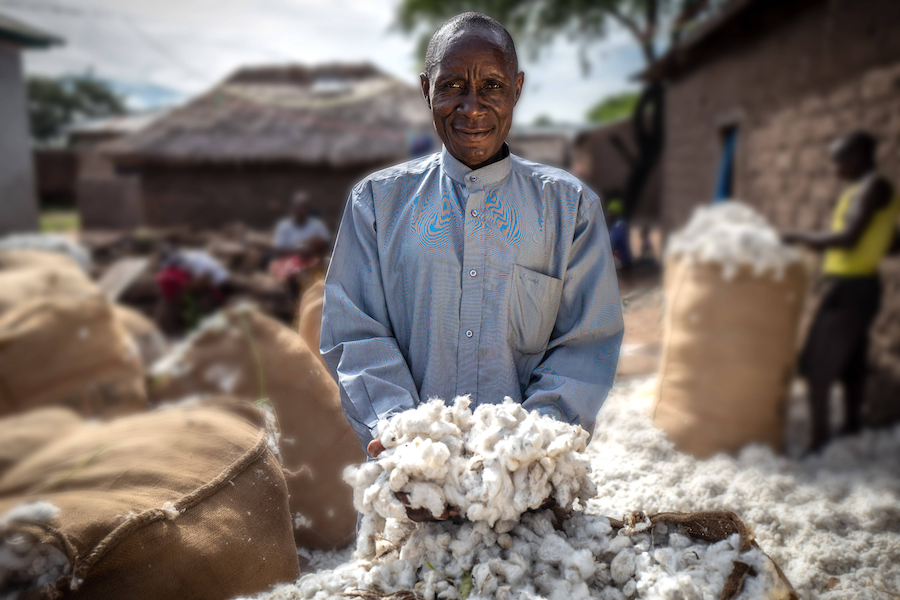
Despite global supply chain challenges, the Aid by Trade Foundation (AbTF) was able to further expand its international role in promoting sustainably verified natural fibres in 2025. In doing so, the foundation remains true to its fundamental approach of leveraging market forces. Last year, it generated total revenues of EUR 7.8 million; this included EUR 6.7 million collected through the successful marketing of four standards: Cotton made in Africa (CmiA), CmiA Organic, The Good Cashmere Standard (GCS), and the Regenerative Cotton Standard (RCS). AbTF invested the resulting income in projects aiming to protect biodiversity, support women, increase transparency in the textile supply chain, and implement its verification system.

#Natural Fibers

Cashmere specialist joins AbTF Board of Trustees

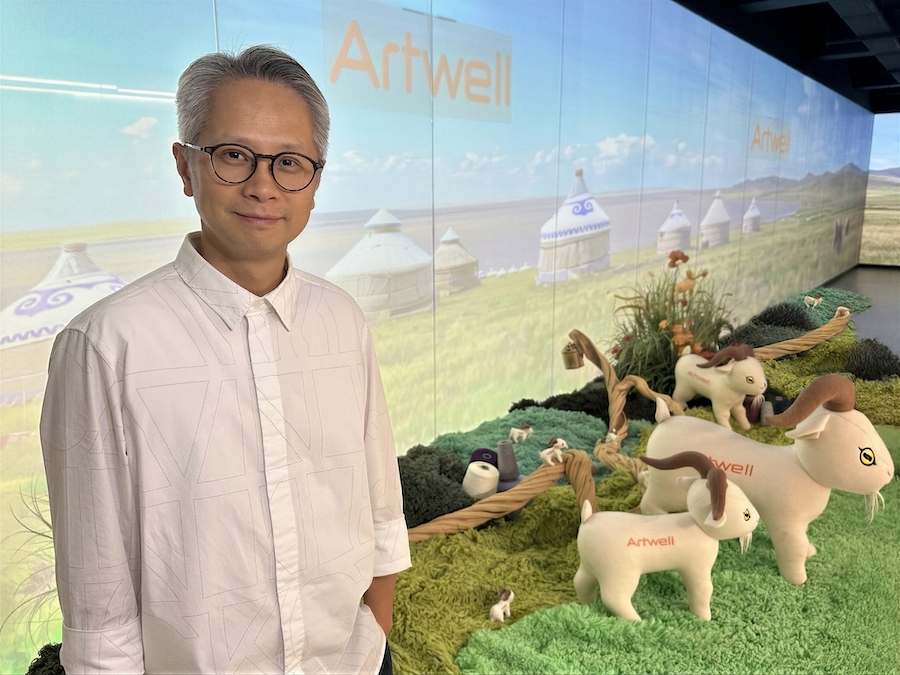
The Aid by Trade Foundation (AbTF) is pleased to welcome Brian Yu, the chief executive officer of the Artwell Group, to its board of trustees. As CEO, Brian Yu developed Artwell into the world’s largest supplier of responsibly produced cashmere knitwear.

#Natural Fibers

The Good Cashmere Standard expands Animal Welfare Assessment on audited farms

With the Animal-related Animal Welfare Assessment (ARAWA), the Aid by Trade Foundation (AbTF) conducts a pioneering project for the second consecutive year in 2025, parallel to the independent verifications of The Good Cashmere Standard® (GCS). ARAWA assessments provide a comprehensive overview of the health status of a herd on an audited farm, going beyond standard verification procedures. They are inherently complex, which still makes them a rarity in the standard sector, but offer support in identifying non-conformities and provide a holistic overview of the herd's well-being. Therefore, the Aid by Trade Foundation will continue this crucial project and even further expand it by 2027.

#Raw Materials

Aid by Trade Foundation reaches new milestones in supply chain transparency

The Aid by Trade Foundation (AbTF) is reaching new milestones as it leads the way towards greater physical traceability for Cotton made in Africa® (CmiA) cotton. With around 700 suppliers and producers in a total of 25 countries, the Aid by Trade Foundation has reached a new record number of partners who can trace CmiA cotton from the product back to its origin. This is more than double the previous year’s figure.

More News on Raw Materials

#Raw Materials

Redesigned World Cotton Day website offers tools, ideas and inspiration

With World Cotton Day just one month away, the International Cotton Advisory Committee (ICAC) has launched a completely redesigned www.WorldCottonDay.com, creating a new global home for everyone who wants to learn about, celebrate, and support cotton.

#Raw Materials

ICAC’s 84th Plenary Meeting to be held March 24-26, 2027, in Alexandria, Egypt

Registration will soon be open for the International Cotton Advisory Committee’s 84th Plenary Meeting, to be held March 24-26, 2027, in Alexandria, Egypt. The local Organizing Committee in Egypt has chosen “Building a Resilient and Competitive Future for Cotton and Textiles” as the theme for the event, which will be held at the Rixos Montaza Alexandria Resort.

#Raw Materials

Cotton Brazil Dialogues 2026 concludes with 50 international participants immersed in Brazilian cotton production

The Cotton Brazil Dialogues concludes its 2026 edition after a series of technical visits to farms, cotton gins and reference centers, as well as workshops focused on Brazilian cotton production. A total of 50 participants from 14 countries took part in the field trips. The initiative is led by the Brazilian Association of Cotton Growers (Abrapa) and the National Association of Cotton Exporters (Anea), with support from the Brazilian Trade and Investment Promotion Agency (ApexBrasil).

#Raw Materials

Global cotton production projected to outpace consumption, but risks remain

Global cotton production is projected to reach 26.2 million tonnes in the 2026/27 season, marginally outpacing estimated consumption of 25.9 million tonnes. However, early-season production risks — including weather volatility and pest pressures — could narrow that buffer as the crop progresses, according to the September 2026 issue of Cotton This Month, published by the International Cotton Advisory Committee (ICAC).

Latest News

#Spinning

Heberlein reinforces its commitment to the Chinese market

Heberlein, globally recognised as a leading provider of air interlacing and air texturing jets for synthetic filament yarns, is consolidating its success in the Chinese market with its APh- and APe-series for DTY applications. Particularly in the field of Air Covering, Heberlein technologies combine excellent quality with significant savings in compressed-air consumption. A new service hub in Shengze City underlines the company’s long-term commitment in the Chinese market.

#Recycled Fibers

RE&UP’s Next-Gen Cotton fibers power Zalando private label t-shirt collection crafted from innovative recycled textiles

RE&UP Recycling Technologies’ Next-Gen Cotton powers a new collection from Zalando’s private labels, marking a step forward in bringing textile-to-textile recycled fibers into commercial fashion production. Launching on Zalando in August, the collection comprises five t-shirts across YOURTURN by Zalando and Even&Odd by Zalando, made from a circular-knit fabric blending 80% organic cotton with 20% RE&UP Next-Gen Cotton — textile-to-textile recycled fiber produced from textile waste. This is the first time RE&UP's recycled fibers feature in Zalando's private label assortment.

#Heimtextil 2027

Heimtextil Trends 27/28: ‘Home-Maxxing’ between performance and respite

Sleep better, recover faster, live more efficiently: the desire for optimisation has long since reached our homes. Under the title ‘Home-Maxxing – The Performance of Everyday Living’, Heimtextil Trends 27/28 show how our relationship with efficiency-driven thinking and technology is influencing the design of spaces and textiles. The more sleep, wellness, routines, materials and spaces are optimised, the stronger the desire for a home that does not demand even more of us.

#Recycled Fibers

Driving circularity with Uster Recycled Fiber Matrix

The textile industry’s commitment to circularity continues to accelerate, and mechanical recycling is viewed as a targeted approach to cutting textile waste and its environmental impact. At the forefront of this drive, Uster has developed the Recycled Fiber Matrix, a two-dimensional assessment of mechanically recycled fibers to guide optimum processing and end-uses.

TOP