[pageLogInLogOut]

#Raw Materials

Aid by Trade Foundation announces new transparency standard
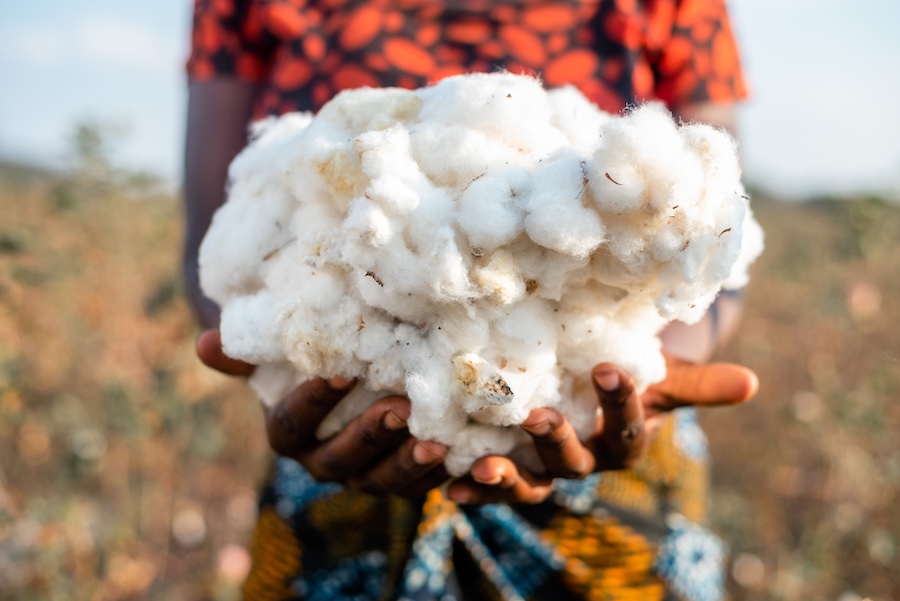
The Aid by Trade Foundation (AbTF) will be introducing a new transparency standard. Regulating the use and traceability of sustainable cotton verified under Cotton made in Africa® (CmiA) or the Regenerative Cotton Standard® (RCS), the AbTF Transparency Standard will ensure its transparency, safety, and reliability around the world and throughout the textile supply chain, from the cotton field to the finished product. Through this independently verified standard, AbTF will reinforce its existing tracking systems for tracing sustainable cotton in the supply chain. The AbTF Transparency Standard is set to be introduced in the first quarter of 2025.
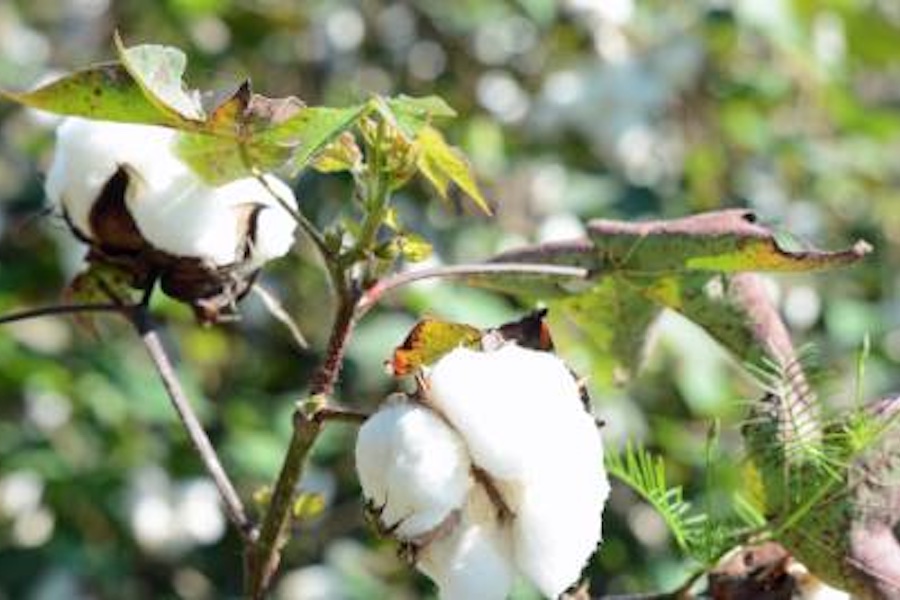
Harvested CmiA organic cotton, Credit: Malicky Stanley Boaz for CmiA


“The AbTF Transparency Standard sets a new benchmark for reliability and traceability in the textile industry,” says Gerlind Bäz, a senior project manager at the Aid by Foundation who is responsible for integrating CmiA- and RCS-verified cotton into global supply chains. She adds, “While brands and retailers can already rely on our current tracking system, which was established in 2018 and monitors whether yarns, fabrics, and textiles were produced using exclusively cotton verified under Cotton made in Africa® or the Regenerative Cotton Standard®, we are now going one step further. In future, independent auditors will regularly check whether the transparency requirements of the new standard are reliably adhered to in the supply chain.”

Prof. Dr Tobias Wollermann, Vice President Corporate Responsibility of the Otto Group, underlines that this step comes at exactly the right time, saying, “Our global trading operations will benefit from the increased safety and reliability the new standard offers in the use and promotion of cotton verified under Cotton made in Africa; it represents a major building block for due diligence in our supply chains.”

The new AbTF Transparency Standard will be available for products that have been proven to contain cotton verified under Cotton made in Africa® or the Regenerative Cotton Standard®. An essential aspect of the new standard is the implementation of risk-based desktop audits by independent auditors, which will review both tracking-system data for all production stages and associated documents, such as production reports and delivery notes. In this way, they will ensure compliance with the requirements of the standards while generating additional confidence in the integrity of the system and the transparency of CmiA- and RCS-labelled products.

Another central element of the new standard are digital transaction documents (DTDs). Created digitally and validated regularly by independent auditors, DTDs can be used to trace CmiA and RCS cotton back through the supply chain, making it much easier to prove that CmiA- or RCS-verified cotton was used. Since a single missed step, such as one missing data input in the supply chain, means that the DTD can no longer be created and that this proof of the cotton’s origin is not present, DTDs represent an additional level of assurance in the system.

Regular self-assessment questionnaires for all stages of the supply chain are also included in the standard, as are on-site onboarding audits for spinning mills, conducted by independent audit companies. “The AbTF Transparency Standard strengthens the position of Cotton made in Africa® and of the Regenerative Cotton Standard® as internationally sought-after and reliable standards whose sustainability requirements in cotton production have always been independently verified. Being able to prove where a product’s raw materials come from—and being able to trace them throughout the textile production process, back to the cotton field—is essential for companies and brands today,” summarises Tina Stridde, the managing director of the Aid by Trade Foundation, adding, “The Aid by Trade Foundation’s new transparency standard provides solutions to this challenge, which textile companies and brands have no choice but to face due to increased political and social pressure at the international level.”



More News from Aid by Trade Foundation (AbTF)

#Natural Fibers

Aid by Trade Foundation publishes 2024 annual report: Growing impact for environment and people

The Aid by Trade Foundation (AbTF) is on a growth track. Despite a challenging global economy, AbTF increased its income by six percent from 2023 to 2024, reaching a total of EUR 8.6 million. This revenue has been invested in comprehensive measures for the sustainable production of cotton and cashmere as well as for expanded measures to ensure transparency in global value chains. In addition to gaining new partners in 2024—including big names like Mango, Nordstrom, and CWS Workwear—AbTF was able to expand its global stakeholder network active in the production of raw materials or textiles.

#Raw Materials

Aid by Trade Foundation receives Honorary Award of the German Africa Foundation 2025

On the evening of 25 June, the Hamburg-based Aid by Trade Foundation (AbTF) received the Honorary Award of the German Africa Foundation 2025. Prof. Dr Michael Otto, the foundation’s founder and a prominent entrepreneur, accepted the award at a ceremony held at the German Bundestag. The Parliamentary State Secretary to the Federal Minister for Economic Cooperation and Development (BMZ), Dr Bärbel Kofler, presented the award in the presence of guests from politics, business and civil society as well as representatives of African embassies.

#Sustainability

Aid by Trade Foundation turns 20, invests half a million Euros in new biodiversity fund

To effectively promote nature conservation and biodiversity, the Aid by Trade Foundation (AbTF) announced at the second Hamburg Sustainability Conference (HSC) that it would be investing 500,000 euros in the ‘AbTF Biodiversity Fund’ to mark the foundation's 20th anniversary. Since it was established in 2005 by the entrepreneur Prof. Dr Michael Otto, AbTF has been committed to transforming the textile and fashion industries.

#Raw Materials

Laly Lichtenfeld joins AbTF Board of Trustees

The Aid by Trade Foundation is pleased to welcome Laly Lichtenfeld, an internationally renowned leader in community-driven nature conservation, to its board of trustees. After years of researching community-driven conservation, including as a Fulbright Scholar in 1996, she co-founded African People & Wildlife in 2005 with the aim of promoting peaceful coexistence between rural communities and wildlife such as lions and elephants.

More News on Raw Materials

#Natural Fibers

38th International Cotton Conference Bremen launches registration and unveils key topics

Participants can now register online for the 38th International Cotton Conference Bremen, which will be held on 25-27 March 2026 at the Haus der Bürgerschaft parliament building on market square. All visitors can look forward to a high-calibre conference programme, numerous additional meetings and a valuable exchange of knowledge and information. The comprehensive range of topics covering the entire value chain will provide practical expertise, address current developments, answer key industry questions, and provide new impetus for the future.

#Natural Fibers

ICAC to collaborate with Uzbekistan and Bizpando on regenerative agriculture

The Government of Uzbekistan has allocated 55,000 hectares of land to implement a regenerative agriculture program for cotton as part of a collaborative project with the International Cotton Advisory Committee (ICAC) and Bizpando, a company with a a blockchain-based internet platform designed to ensure supply chain compliance.

#Natural Fibers

World Cotton Trade declined 4.1% in 2024/25, according to ICAC's 2025 World Cotton Trade Report

Washington, DC — The International Cotton Advisory Committee (ICAC) has released the 2025 World Cotton Trade Report, which covers trade developments in raw cotton since 1980. An annual publication, it provides analysis of world trade by region; import/export projections by country; matrices of trade flows; and seasonal estimates of export commitments to date.

#Natural Fibers

BCI warns against ‘dangerous dilution’ of EU corporate directives

The approval of the European Commission’s Omnibus I proposal by the European Parliament’s Committee on Legal Affairs, accepting controversial changes to key sustainability directives is of great concern. These changes, namely to the Corporate Sustainability Reporting Directive (CSRD) and the Corporate Sustainability Due Diligence Directive (CSDDD), threaten to significantly dilute business reporting and due diligence obligations.

Latest News

#Recycling / Circular Economy

Advanced Recycling Conference 2025 fuels innovation across key waste streams

The Advanced Recycling Conference (ARC) 2025 brought together nearly 220 experts from 28 countries to spotlight pioneering advancements and foster industry collaboration in recycling across diverse waste streams including plastics, textiles, automotive and other materials.

#Dyeing, Drying, Finishing

Navis TubeTex announces U.S. partnership with Icomatex

Navis TubeTex, a global leader in advanced dyeing and finishing machinery solutions, is pleased to announce a new partnership with Icomatex (www.icomatex.com), a respected European manufacturer of high-quality stenters and textile finishing equipment. Under this agreement, Navis TubeTex will exclusively represent the Icomatex stenter line in the United States.

#Recycling / Circular Economy

ADVANSA launches ADVA®tex: A new step toward textile-to-textile recycling

ADVANSA has introduced ADVA®tex, a new filling fibre made entirely from recycled pre-consumer textile waste, positioning the material as a significant step forward in textile-to-textile (T2T) recycling. The fibre is designed for use in duvets, pillows, mattresses, and furniture applications and is available in three versions.

#Knitting & Hosiery

KARL MAYER celebrates 35 years of EL pattern drive

KARL MAYER is celebrating an anniversary this year: on 30 November 1990, the first warp knitting machine with electronic guide bar control, the KS 4 EL, was delivered – another milestone for patterning. As early as 1980, the SU gearbox with the MRS42SU had initiated the transition from mechanical chains to digital data.

TOP