[pageLogInLogOut]

#Nonwovens / Technical Textiles

Decarbonising the fashion industry: melt-spinning trials at NIRI and their potential for the wider nonwoven industry

© 2021 NIRI
The Renewable Carbon Textiles Project, launched by Fashion for Good, brings together key innovators including Leeds-based Nonwovens Innovation and Research Institute (NIRI) to investigate, test and validate the potential for PHA polymers to disrupt the fashion supply chain and decarbonise the sector. While the potential benefits for fashion are evident, the trials at NIRI and the broader research may well have significant impact on a wide range of industries.

As a bio-based, marine and soil compostable alternative to fossil-fuel derived polyester fibres, PHA polymers may become a game-changer for the fashion industry, given their performance characteristics – many of which will be investigated and developed over the course of the project. Brian Levy, Open Innovation, W. L. Gore & Associates, members of the consortium, notes:

“PHA is a promising class of polymers, which have significant potential for use in textiles. This project provides an opportunity to contribute to the technical development of the fibre and is also a platform to explore possible future applications”.

Members of the consortium will, over the coming months, ship their PHA formulations to NIRI for melt-spinning trials, a challenging but critical stage of the project. As commercial melt-spinning trials have not been extensively undertaken with these PHA polymer formulations previously, the manufacturing and technical assessments to compare and evaluate polymer formulations is vital. Validating the technical feasibility of the output will be crucial in determining how to bring the technologies to scale and NIRI’s expertise, commercial focus and ongoing investment in new technology, makes them the ideal partners for this critical stage of the project – transferring technology from research to commercial feasibility.

The trials will be conducted primarily using NIRI’s state of the art filament extruder. This has the capability of delivering high specification technical filaments for functional textile materials, as well as high performance composites and medical devices, which can extrude thermoplastic polymers with melting points of up to 400°C. In addition to processing sustainable resins, such as PHA and PLA, NIRI has the capabilities to extrude a range of polymers including resorbable, performance and engineered polymers, e.g. PHBH, PBS, PBAT, PEF, Bio-PE and Bio-PP. These polymers are being developed for various applications including medical, hygiene, food and beverage, filtration, automotive and wipes. The extrusion facilities at NIRI are designed specifically for detailed investigation into extruded textile materials, ideal for R&D and fundamental to the successful outcome of the Renewable Carbon Textiles Project.


Once the project has reached completion in late 2022, Fashion for Good will publish their report, which could potentially reveal valuable insights for many other sectors, including automotive, filtration, medical and food and beverage. Commenting on NIRI’s pivotal role in the project, Dr Matthew Tipper, CEO at NIRI, said:

“This project is an extension of our current research into sustainability. Developing sustainable and circular processes and materials is a key aspect of our core values at NIRI. The potential for carbon emission reduction through biosynthetics, produced from renewable sources, alongside assessing the end-of-life circularity, is at the heart of the project. However, technical performance will be vital to demonstrating the value and viability of PHA in fashion and wider sectors. Through our combined expertise of over 300 years in textile science, our technical team are ideally placed to undertake a detailed investigation into this area of sustainability. We are confident our vast experience in the rapid development of innovative and commercially viable products and novel IP for our customers, will prove invaluable to the project’s outcomes. As the findings are released to the fashion sector, we expect them to be of great interest to other industries, especially where net zero is already having a major impact.”




More News from TEXDATA International

#ITM 2026

ITM 2026: The new geography of textile production

New production hubs are emerging across North Africa and Central Asia, while Türkiye is accelerating its transformation toward higher-value, technology-driven and more sustainable textile manufacturing.

#Research & Development

“Production is a product”

From technical textiles and AI-driven robotics to the limitations of textile circularity: Professor Dr Thomas Gries looks back on more than two decades of development at ITA Aachen. In the interview, he explains why production technology remains a decisive success factor, discusses international collaborations and innovation ecosystems, and shares his views on the transformation of production landscapes and the challenges facing an increasingly regulated industry.

#Knitting & Hosiery

“We need to move away from the price trap and return to a value-driven mindset.”

With its new Textile Innovation Center, KARL MAYER is sending a strong signal for innovation, collaboration, and the future of textile applications. In this interview, Karl Josef Mayer discusses new opportunities in warp knitting, the processing of staple fibres, recycling, the changing role of machinery manufacturers, and why the textile industry must once again focus more strongly on the value of textiles. by Oliver Schmidt

#Associations

“Innovation, resilience and international experience remain the great strengths of the Swiss textile machinery industry”

Geopolitical uncertainty, growing competitive pressure from China, new free trade agreements and the shift towards a circular economy are currently reshaping the global textile industry. In this interview, Cornelia Buchwalder discusses the current mood within the Swiss textile machinery sector, the industry’s distinctive innovative strength, new market opportunities in India and Asia, and the technological trends that could shape the upcoming trade fair cycle leading up to ITMA 2027.

More News on Nonwovens / Technical Textiles

#ITMA Asia + CITME Singapore 2025

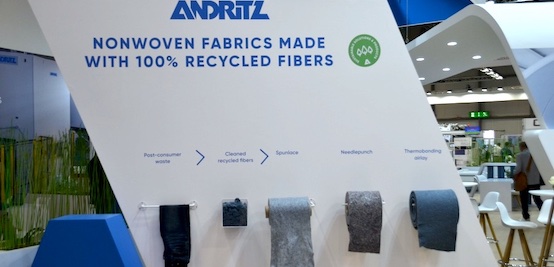
ANDRITZ sets focus on textile recycling and durable nonwoven production technologies at ITMA Asia 2025

International technology Group ANDRITZ will be presenting its innovative nonwovens production and textile solutions at ITMA ASIA + CITME 2025 in Singapore, from October 28 to 31, 2025 (Hall 2, D106). ANDRITZ will showcase its MMCF production plants, textile sorting and recycling, bast fiber processing, needlepunch, airlay, and life-cycle service technologies, with a focus on sustainable solutions. Discover how these innovations can grow your business opportunities and support a greener future.

#ITMA Asia + CITME Singapore 2025

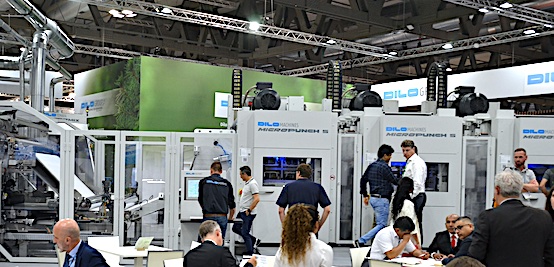
Dilo Group at ITMA ASIA Singapore 2025

At ITMA ASIA Singapore, the Dilo Group will exhibit at Booth No. H2 – D202. Together with Kansan Materials, Izmir, the company will present its latest developments and looks forward to welcoming visitors to exchange ideas and explore innovations in needling technology.

#Nonwovens

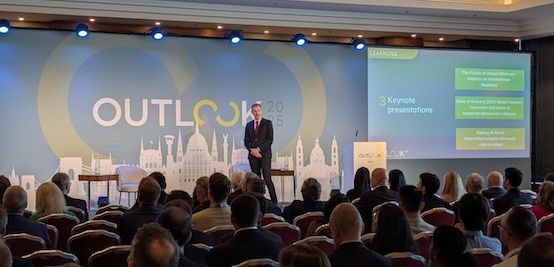
OUTLOOK™ 2025: Charting a sustainable and innovative future for the Nonwovens Industry

EDANA concluded its flagship event, OUTLOOK™ 2025, last week, marking it as a major success and addressing the biggest questions facing the industry. The three-day conference highlighted the urgent need for a unified approach to sustainability, regulation, and innovation in the absorbent hygiene and wipes sectors.

#Nonwovens

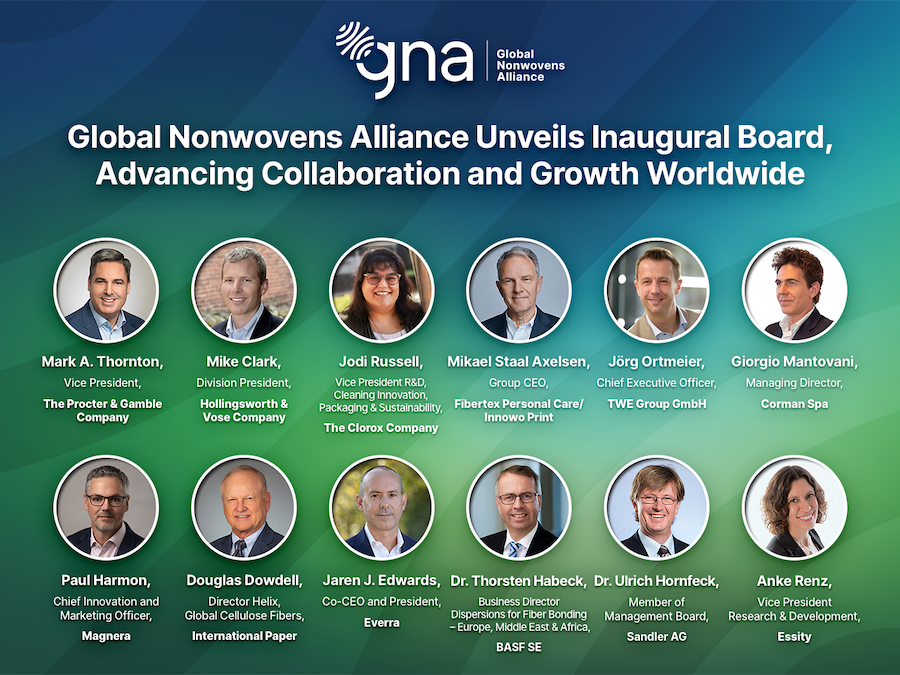
Global Nonwovens Alliance unveils Inaugural Board, advancing collaboration and growth worldwide

The Global Nonwovens Alliance (GNA), a tax-exempt federation jointly founded by INDA, the Association of the Nonwoven Fabrics Industry, and EDANA, the Voice of Nonwovens, announces the appointment of its founding Board of Directors. This group of leaders represents some of the most influential executives across the nonwovens value chain and reflects GNA’s mission to foster global collaboration, innovation, and growth in the industry.

Latest News

#Spinning

Barmag and Hitech Automation enter into partnership for an auto-doff system for texturing machines

Barmag (Suzhou) Technology Co., Ltd. and Hitech Automation Solutions PVT LTD. of Surat, India, have agreed to an exclusive partnership to jointly market Hitech’s Doffmatic automation solution for Barmag’s proven manual eFK texturing machines. In many texturing facilities, manual doffing processes remain heavily operator-dependent – resulting in issues such as increased scrap, inconsistent quality, and limited productivity.

#ITM 2026

Uster’s new Recycling Opening Index guides spinners to the perfect blend

Uster AFIS 6 now offers the key data for better decisions when blending recycled fibers. Process control is decisive in determining the quality and economic outcome. The new R Recycling Module of AFIS 6 introduces the Recycling Opening Index (ROI), so spinners can optimize their circularity credentials. It was officially launched at ITM 2026 in Istanbul, Türkiye.

#HIGHTEX 2026

The heart of the technical textiles and nonwovens world will beat in Istanbul

Only 1 day remains until HIGHTEX 2026 International Technical Textiles and Nonwovens Exhibition opens its doors. Bringing together manufacturers, technology developers, investors, and industry professionals from around the world, HIGHTEX 2026 is preparing to showcase the innovations shaping the future of the industry. As the countdown to this major event continues, Istanbul is once again getting ready to become the meeting point of the global technical textiles industry.

#Man-Made Fibers

Grasim Industries announces fresh investment of ₹3094 Crore to expand Lyocell capacity

Grasim Industries Limited, the flagship company of the Aditya Birla Group and a global leader in cellulosic fibres, today announced an investment of ₹3,094 crore, for Phase II Lyocell capacity of 110K TPA at Harihar, Karnataka. This expansion will consist of 2 lines of 55K TPA (150 Tons per day) each. The first line is expected to be commissioned by 2028, and the second line is expected to be commissioned by 2030.

TOP