#Man-Made Fibers
Lenzing reports improved half-year results and advances strategic transformation
“The results for the first half of 2026 demonstrate that our sales initiatives and disciplined cost management are delivering results. At the same time, they confirm both the necessity and the potential of our strategic realignment. With ‘Grow Nonwovens, Reset Textiles’, we are laying the foundation for a structurally more profitable and resilient Lenzing Group,” said Mathias Breuer, CFO of the Lenzing Group.
The decline in revenue compared with the first half of 2025 was primarily attributable to the deliberate reduction of low-margin fiber volumes and the resulting lower fiber production, as well as lower revenues from the external pulp business. Compared with the first quarter of 2026, revenue increased from EUR 615.7 million to EUR 651.7 million in the second quarter, supported by targeted sales initiatives and pricing measures.
EBITDA declined from EUR 268.6 million in the first half of 2025 to EUR 239.2 million, while increasing from EUR 116.3 million in the first quarter of 2026 to EUR 123 million in the second quarter. EBIT amounted to EUR 83.7 million, compared with EUR 109 million a year earlier. Earnings before tax rose to EUR 42.6 million from EUR 22.1 million, while the net result benefited mainly from positive foreign currency valuation effects.
Cash flow from operating activities increased to EUR 160.4 million, supported by working capital management and inventory reductions. Free cash flow improved to EUR 45.8 million, while capital expenditure remained broadly stable at EUR 62.3 million.
Focus on nonwovens and premium fibers
Lenzing is continuing the implementation of its new "Grow Nonwovens, Reset Textiles" strategy, which focuses on profitable growth, greater resilience and a stronger concentration on selected market segments. The company intends to expand its nonwovens business, sharpen the positioning of its textiles business in premium market segments and strategic customer partnerships, and further strengthen its pulp and biorefinery activities.
Following the decision announced in late July to consolidate its fiber production footprint, Lenzing is accelerating the transformation of its manufacturing network. The company plans to transfer premium fiber production to its core manufacturing sites while streamlining its production structure to improve long-term competitiveness.
Lenzing is also continuing its performance program with additional efficiency measures following substantial cost reductions achieved in 2025.
The company remains focused on specialty fibers marketed under the TENCEL™, LENZING™ ECOVERO™ and VEOCEL™ brands, with innovation, sustainability, transparency and strong customer partnerships identified as key differentiating factors.
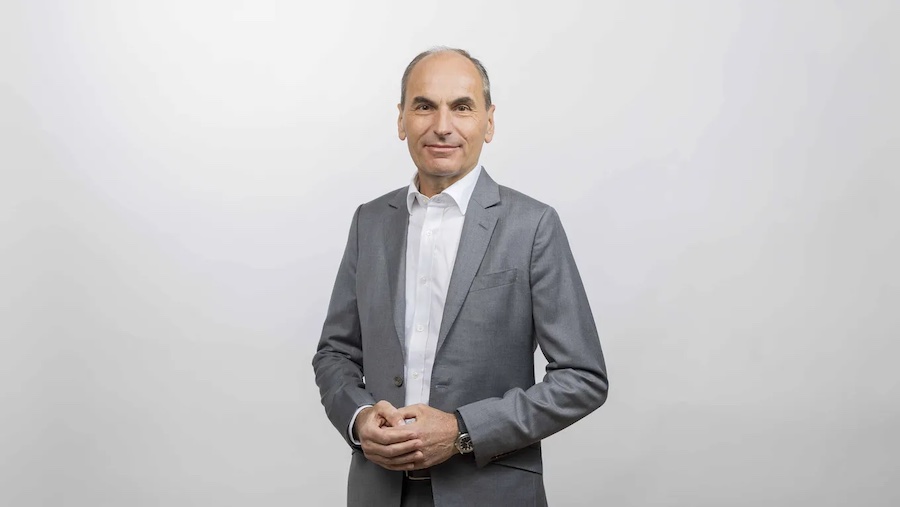
Effective June 1, 2026, Georg Kasperkovitz assumed the role of Chief Executive Officer of Lenzing AG. Together with CFO Mathias Breuer and CPO/CTO Christian Skilich, he is leading the implementation of the company's strategic transformation.
Outlook
Lenzing will continue to implement its "Grow Nonwovens, Reset Textiles" strategy by further expanding its nonwovens business, broadening its portfolio for hygiene and other high-value applications, and developing next-generation fiber technologies. In the textiles business, the company will continue to focus on premium specialty fibers and strategic customer partnerships while gradually reducing its exposure to lower-margin standard textile fibers.
As part of the transformation, Lenzing is consolidating its global fiber production footprint alongside the ongoing sale process for its Indonesian viscose site, PT South Pacific Viscose. The company plans to phase out fiber production at its Heiligenkreuz, Austria, site by the end of 2026 and at its Grimsby, UK, facility by the end of 2027. Production of premium fibers is expected to be transferred to Lenzing's core manufacturing sites to ensure reliable customer supply.
The consolidation is expected to result in non-cash impairment losses on non-current assets of up to EUR 150 million in 2026. These impairment charges are expected to affect EBIT and net income but will have no impact on EBITDA. In addition, restructuring provisions related to workforce reductions of up to EUR 40 million are expected to impact EBITDA in 2026.
Lenzing said its strategic ambition is to return to profitable growth, targeting an EBITDA improvement of around EUR 150 million. In the medium term, the company aims to achieve an EBITDA margin of 20–25% while reducing leverage to below 2.5x.
To support the transformation, Lenzing is preparing a comprehensive refinancing package aimed at strengthening its financial structure. The company expects to provide further details following the extraordinary general meeting scheduled for late August.