[pageLogInLogOut]

#Industry 4.0 / Digitalization

Vandewiele Sweden pioneers new e-commerce platform

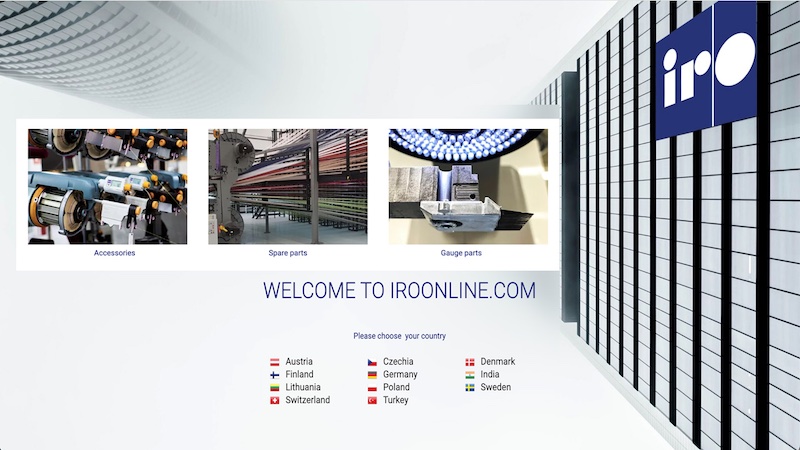
Vandewiele Sweden is spearheading a transformation in B2B operations for the industry, with a first-of-its-kind new e-commerce platform developed in Sweden. The company, a member of TMAS, the Swedish Textile Machinery Association, has taken on the task of developing the digital solution that will successfully meet the future demands for Vandewiele Group customers worldwide.

Coherent dialogue

“One of the primary challenges faced with B2B sites, is in building a coherent online narrative for products that have traditionally relied on in-person dialogue,” explains Henrik Kruse, Vandewiele Sweden’s Area Sales Manager, who led the development team. “Another challenge, of course, is that every customer should have a positive experience regardless of where they are in the world and via whatever internet connection they are operating with.”

Addressing this, the Vandewiele Sweden team has developed a user-friendly interface that exploits the latest "exploding view" diagrams to ensure customers can easily identify and order the components they need, all within a 1:1 digital representation. The next stage in 3D technology is set up and ready, although it awaits implementation and market readiness to fully integrate and utilize its features.

“The trend today is to bring our behaviour from home to the workplace, which is especially true for the younger generation,” says Kruse. “This means that the B2B textile sector needs to rethink its offer. While the pandemic catalyzed digital transformations across industries, Vandewiele has been at the forefront in recognising the need for accessibility and added value for customers, despite the industry’s traditional nature.”

Focus on core products and clientele

Adopting a phased approach, the company is initially introducing its IRO-branded accessories, spare parts and gauge parts, targeting textile mills, weavers and distributors. The platform has been carefully crafted to cater to the varying needs of its diverse clientele, offering streamlined direct sales and a transparent commission structure for agents and distributors.

“With this project we need to walk before we can run,” Kruse explains. “The foundation is an advanced, user-friendly webbshop for the customer that prioritises function and simplicity. The initial focus has been on products where there are few variables and thus no possibility of making the wrong selection. However, in the not too distant future we will test with machines that can fit this digital format.”

With an ambitious logistics promise of 48-hour dispatch, Vandewiele is set to revolutionise service standards. Leveraging third-party payment service providers like Nets, the company assures speed and reliability, fostering trust and efficiency in every transaction.

”This initiative underscores our commitment to not only meeting but exceeding the evolving demands of our global customers, ensuring that we stay at the forefront of technological advancement.", Henrik concludes.

Launch in April 2024

Scheduled for launch in April, Vandewiele stands ready to introduce its new e-commerce solution to key markets, including Scandinavia, the Baltics, parts of Europe, Turkey, and India.

“We are anticipating a significant shift towards online sales in the coming years, enabled by AI, automation and generative tools that will play a significant role in shaping the future of textile machinery sales,” says TMAS Secretary General Therese Premler-Andersson. “Through such forward looking initiatives our industry is dedicated to exceeding the needs of customers across the globe.”

The new platform, iroonline.com, is now live for preview. Vandewiele extends an invitation to all potential clients to register and experience the future of textile machinery commerce.

Vandewiele Sweden is exhibiting at the Techtextil technical textiles exhibition in Frankfurt, Germany, from April 23-26, at stand D20 in Hall 12.
© 2024   TMAS / Vandewiele
© 2024 TMAS / Vandewiele


More News from Textile Machinery Association of Sweden

More News on Industry 4.0 / Digitalization

#ITM 2026

Driving digitalization, efficiency, and Smart Manufacturing across textiles and carpets

At this year’s ITM, BMSvision proudly showcases its next leap forward in digital manufacturing excellence. As a long-standing global pioneer in Manufacturing Execution Systems (MES) for the textile and plastics industries, BMSvision continues to accelerate digital transformation by delivering powerful, data-driven solutions that boost productivity, enhance quality and support sustainable growth. Visit BMSvision at the Vandewiele booth in Hall 7, Booth 710, to experience the future of textiles manufacturing.

#Industry 4.0 / Digitalization

Textile ETP launches digital transformation strategy, calling for urgent collective action across the value chain

Textile ETP’s DigitX Innovation Hub published its strategic roadmap for the digital transformation of Europe's textile and apparel industry.

#Research & Development

Textilfabrik 7.0 launched: Mönchengladbach becomes a real-world lab for sustainable textile production

With the official kick-off event of the Textilfabrik 7.0 (T7), a major transformation project for the German textile and apparel industry has been launched in the Monforts Quarter in Mönchengladbach. At the “Textile Roundtable,” an event format organized by the Zukunftsagentur Rheinisches Revier, representatives from industry, research, politics, and the regional economy came together to jointly lay the foundation for CO₂-neutral, circular, and economically viable textile production in Germany.

#Man-Made Fibers

OnceMore® from Södra brings end-to-end traceability for circular Man-made Cellulosic Fibers (MMCF) using TextileGenesis

OnceMore® from Södra, the world’s first large-scale process for recycling blended fabrics into high‐quality dissolving pulp, will begin using TextileGenesis, a Lectra company, to strengthen traceability from raw material to retail across the value chain. OnceMore® produces dissolving pulp made from blended textile waste and wood sourced from responsibly managed Swedish forests. By integrating TextileGenesis, OnceMore® supports the growing need for verified data and secure, transparent tracking throughout increasingly complex supply chain.

Latest News

#ITM 2026

ITM 2026: The new geography of textile production

New production hubs are emerging across North Africa and Central Asia, while Türkiye is accelerating its transformation toward higher-value, technology-driven and more sustainable textile manufacturing.

#Knitting & Hosiery

TM WEFT, 270" – More width, more design freedom for the fashion world

KARL MAYER is expanding its successful TM WEFT series with an innovative model that opens up new possibilities, particularly in the fashion & apparel sectors. With a working width of 270", this new machine with weft-insertion not only offers significantly higher output than its narrower counterparts but is also specifically tailored to the demands of dynamic clothing market – particularly in China and Türkiye. A well-thought-out upgrade also ensures even greater design versatility.

#Research & Development

“Production is a product”

From technical textiles and AI-driven robotics to the limitations of textile circularity: Professor Dr Thomas Gries looks back on more than two decades of development at ITA Aachen. In the interview, he explains why production technology remains a decisive success factor, discusses international collaborations and innovation ecosystems, and shares his views on the transformation of production landscapes and the challenges facing an increasingly regulated industry.

#Knitting & Hosiery

“We need to move away from the price trap and return to a value-driven mindset.”

With its new Textile Innovation Center, KARL MAYER is sending a strong signal for innovation, collaboration, and the future of textile applications. In this interview, Karl Josef Mayer discusses new opportunities in warp knitting, the processing of staple fibres, recycling, the changing role of machinery manufacturers, and why the textile industry must once again focus more strongly on the value of textiles. by Oliver Schmidt

TOP