[pageLogInLogOut]
USTER Think Quality

#Yarn & Fiber

Dutch PPE Solutions reduces climate impact of meltblown fibres production by using Borealis Bornewables™
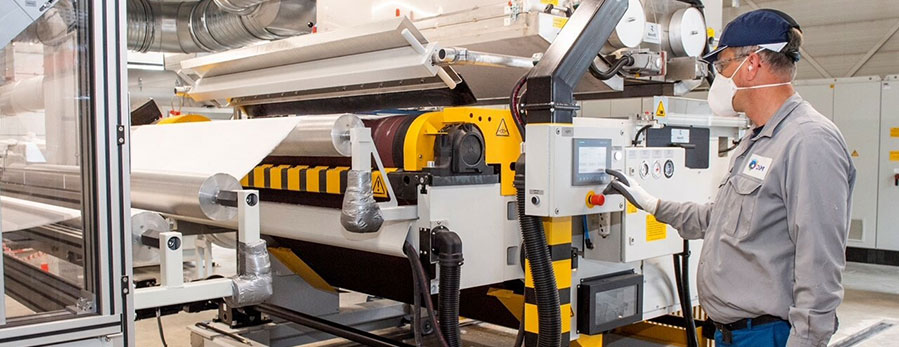
Photo: Dutch PPE Solutions are now producing meltblown filter material in the Netherlands using Borealis Bornewables™ polypropylene (PP). Photo: © DSM
Borealis is providing Dutch PPE Solutions with renewable PP from its , supporting them in reducing the climate impact of meltblown production.
  • Filter material made using Borealis Bornewables™ polypropylene (PP) meltblown fibres
  • Dutch PPE Solutions, a joint venture of VDL Groep and Royal DSM, has been able to produce carbon neutral meltblown fabric
  • Bornewables PP is made from bio-based feedstock derived entirely from waste and residue streams and has ISCC PLUS certification


Dutch PPE Solutions, a joint venture of VDL Groep and Royal DSM, produces high-quality medical face masks and filter material, entirely made in the Netherlands. Making its filter materials with Bornewables and green electricity enables Dutch PPE Solutions to significantly lower its carbon foot print. As Borealis is a leader in meltblown PP materials and in renewable polyolefins, Dutch PPE Solutions partnered with Borealis, which enables delivery of high-quality filter materials, while minimizing climate impact.

“In the Netherlands, we produce high-quality medical face masks and meltblown filter material with priority to serve healthcare workers and the local industry. With Borealis as a partner, we significantly lower our carbon footprint at the same time,” says Mark Bakermans, managing director Dutch PPE Solutions.


In line with its to accelerate action on circularity, Borealis’ Bornewables are made from second-generation raw materials such as waste and residues from vegetable oil refining and used cooking oils. Borealis’ Bornewables products are certified in accordance with mass balance requirements, confirming the authenticity as renewable materials and traceability from raw materials to finished product.
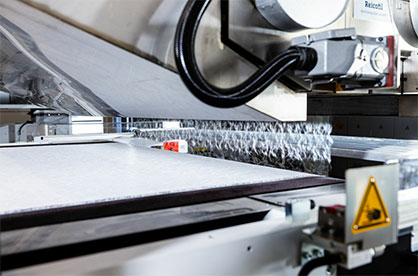
Photo: Dutch PPE Solutions, a joint venture of VDL Groep and Royal DSM, has been able to produce carbon neutral meltblown fabric. Photo: © DSM<br />
Photo: Dutch PPE Solutions, a joint venture of VDL Groep and Royal DSM, has been able to produce carbon neutral meltblown fabric. Photo: © DSM


“We are delighted that together with Dutch PPE Solutions, we are able to provide a solution that contributes towards safety and a better climate outcome,” says Trevor Davis, Head of Marketing Consumer Products at Borealis. “Thanks to our Bornewables range, we are able to help customers meet their sustainability goals while maintaining the existing quality standards of their products, which is in the true spirit of EverMinds.” 

More News from TEXDATA International

#Digital Printing

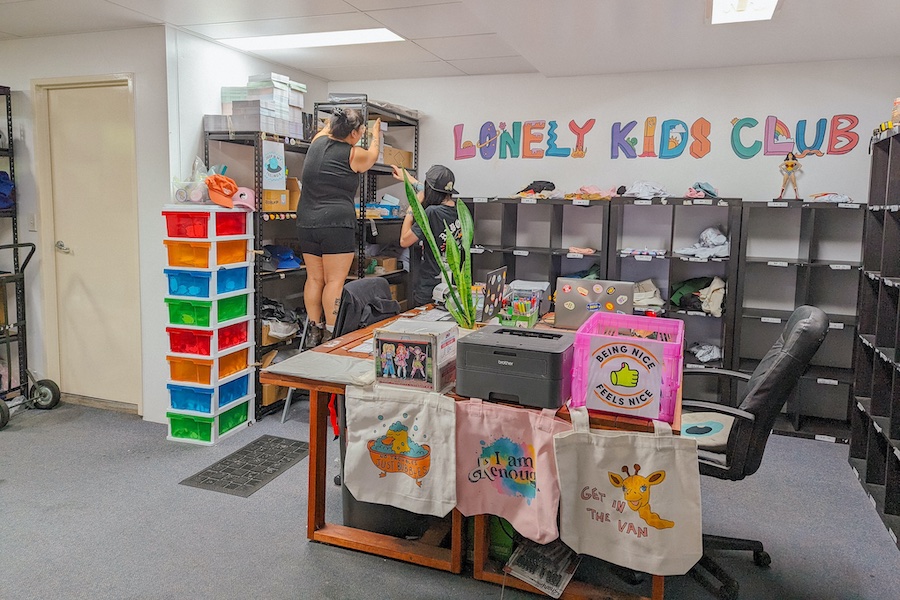
From a bedroom startup to 3,000 designs: How Lonely Kids Club built its business with DTG printing

Founded in Sydney in 2011, independent clothing label Lonely Kids Club has grown from a bedroom startup into a business offering around 3,000 graphic T-shirt designs. With its own production studio, direct-to-garment printing and a demand-driven manufacturing model, the company demonstrates how smaller apparel brands can combine creative independence with flexible production – while navigating the everyday challenges of quality control, workflow efficiency and sustainability.

#India ITME 2026

India’s textile industry: Current position, growth targets and industrial development

With ambitious export targets, major investments in manufacturing infrastructure and new international trade agreements, India is pursuing a comprehensive development strategy for its textile and apparel industry. An overview of the industry’s current position, government initiatives, progress achieved and challenges ahead.

#Weaving

“A complex design is only useful if the machine can reproduce it consistently”

Andreas Schnabel, Head of R&D for Technical Weaving Systems at Stäubli, discusses how 3D weaving can create textile reinforcements tailored to the loads within a composite component, where near-net-shape weaving can reduce processing steps and material waste, and what it takes to produce complex structures reliably and economically. He also explains how manufacturers can adapt Stäubli’s modular TF weaving platforms to new applications and how the company’s centre of excellence in Bayreuth supports the transition from research to industrial production.

#India ITME 2026

India ITME 2026: Textile technology meets India's investment ambitions

With ambitious growth targets, government incentive programmes and industrial development initiatives already underway, India is preparing for the next stage of its textile transformation. Against this backdrop, the 12th India ITME, taking place in Greater Noida from 4 to 9 December 2026, arrives at a particularly important moment for machinery manufacturers and textile producers alike.

More News on Yarn & Fiber

#India ITME 2026

Uster to present novel solutions at India ITME 2026

Tackling contamination is a critical quality target in yarn production – and Uster now enables spinners to make the right choices for optimized profitability, with top technology, precise data and integrated analysis across the entire process. The new Uster Contamination Control solution and latest Uster Vision Shield 3i put spinners in command of contaminant removal, ensuring yarn quality, minimizing waste and protecting profits. These exciting developments – and even more news – will be featured at India ITME 2026.

#Man-Made Fibers

Lenzing improves profitability as strategic transformation gains momentum

The Lenzing Group reported improved operating profitability in the first nine months of 2026 despite declining revenue and a challenging market environment. Revenue decreased by 2.3 percent to EUR 1.93 billion, while adjusted EBITDA remained stable at EUR 353 million. The adjusted EBITDA margin increased from 17.9 percent to 18.3 percent, reflecting progress in the company's strategic transformation under its “Grow Nonwovens. Reset Textiles.” strategy.

#Recycled Fibers

C&A and Zalando join Altag® Fiber Club to accelerate adoption of agricultural waste-based fibres

Fashion for Good and AltMat announced today that C&A and Zalando have joined the Altag® Fiber Club as its first brand signatories, marking a critical commercial milestone in the journey to mainstream adoption of next-generation fibres derived from agricultural waste.

#Man-Made Fibers

Kraig Biocraft Laboratories launches performance yarn development program based on spider silk

Kraig Biocraft Laboratories has launched a development program for high-performance yarns based on its recombinant spider silk technology. The initiative follows the company's first commercial shipment of a custom spider silk yarn to a performance apparel customer and includes the delivery of spider silk samples to a textile technology company with experience in aerospace-related material development.

Latest News

#Textile processing

Jeanologia combines digitalisation, laser and ozone technology to strengthen China’s textile competitiveness

At ITMA Asia + CITME 2026 in Shanghai, Jeanologia showcased how the combination of digitalisation, laser technology and G2 Ozone can help China’s textile industry improve productivity, speed, quality and efficiency. With its Compact Super Flash laser system and integrated production concepts, the Spanish technology specialist demonstrated how connecting product development and industrial production can enable faster, more automated and sustainable manufacturing processes.

#Textile chemistry

Flame protection and OEKO-TEX® certification: Gulec Chemicals clears an important hurdle

Three halogen-free flame retardants from German specialist Gulec Chemicals have been included in the OEKO-TEX® list of accepted Active Chemical Products (ACP). The listing opens up additional opportunities for textile finishers, coaters and manufacturers of technical textiles seeking to combine demanding fire protection requirements with certification according to OEKO-TEX® STANDARD 100.

#Dyeing, Drying, Finishing

PLEVA improves dyeing consistency with inline microwave measurement of liquor pick-up

Consistent shades are essential in continuous textile dyeing. Yet variations in fabric absorbency or uneven padder pressure can go unnoticed until the end of the line. By then, hundreds of metres of fabric may already be affected and may become second-choice or rejected.

#Recycling / Circular Economy

DITF establishes CYCLOTEXUM recycling center to advance mechanical and solvent-based textile recycling

As part of the CYCLOTEXUM research project, the German Institutes of Textile and Fiber Research Denkendorf (DITF) established the CYCLOTEXUM recycling center. There, in collaboration with industry partners, the center develops application-oriented solutions for mechanical and solvent-based recycling processes. The technologies developed make a significant contribution along the textile value chain toward the efficient use of textile resources in the future and the transition of production in the German textile sector to a circular economy. The project was funded by the Ministry for the Environment, Climate and Energy Sector of the State of Baden-Württemberg.

TOP