[pageLogInLogOut]

#Textiles & Apparel / Garment

300 years of Delius - one of the 25 oldest family-owned companies in Germany
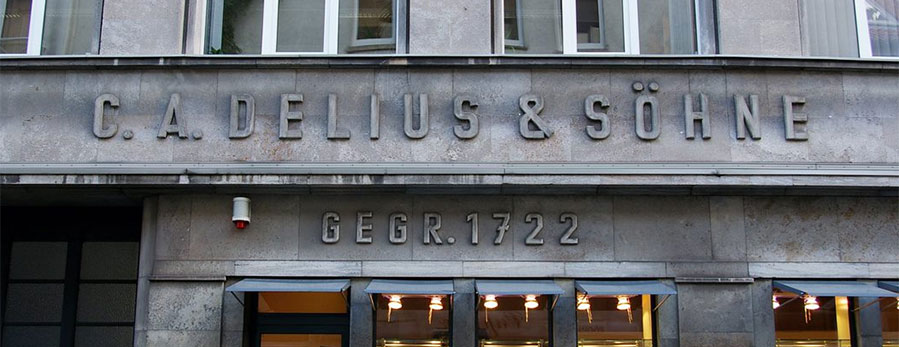
Exterior view of business premises of C. A. Delius & Söhne, Goldstraße in Bielefeld © 2022 Delius
The acquisition of the trading licence by Johann Caspar Delius on September 11, 1722 laid the foundation for the success story of DELIUS. Thanks to the continuous determination to offer innovative and high-quality products to its customers, today DELIUS can look back on a 300-year history in which the company has been able to develop steadily.

An overview of 300 years of company history

The company began as a linen trader and grew from 1722 to 1836 to become the third largest linen trading company in Bielefeld. In 1837, the company introduced contract manufacturing and was thus able to offer its customers tailor-made linen. The former E.A. Delius & Söhne was thus the first linen trading company in Bielefeld to use industrial production in a workroom system. In 1838 the workshop already employed 200 weavers. This system began to fail in 1839 when quality problems increased and competition was intensified by the advancing industrialisation in England and the cheap and machine-made linen that came with it. To countervail Hermann Delius founded the "Ravensberger Spinnerei" in collaboration with other local entrepreneurs and thus introduced the machine production of flax fibres in Westphalia. That way it became possible to overcome the challenges of industrialisation.
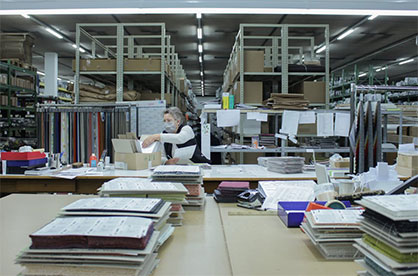
Sample department 2022 © 2022 Delius


In 1845 Gottfried Delius started silk production. In 1852 E.A. Delius & Söhne founded the first health insurance company in Bielefeld. From 1864 on, the sale of linen accounted for only 20% of the total revenue. In 1886, production was expanded to include plush. As it became too extensive, the company was split into two on July 1, 1887. C.A. Delius & Söhne (Carl Albrecht Delius and his sons Paul and Erich) focused on silk production and Delius & Sohn (Hermann Delius and his son Otto) continued linen and plush production.
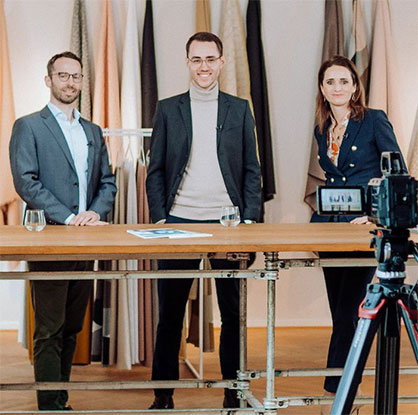
10. Generation der Familie Delius: Julian Mahlert (Enkel von Reinhard Delius), Maximilian Delius (Sohn von Friedrich Wilhelm Delius) und Verena Pausder (Tochter von Rudolf Delius) © 2022 Delius


Today's DELIUS goes back to Carl Albrecht. From 1897 on, the international markets, especially England and the USA, were among the most important sales markets for Delius fabrics. By 1925 four factories were built. At the time of World War I and in the post-war period, C. A. Delius & Söhne experienced ups and downs but was able to withstand through strategic adjustments. In the 1930s, the company added home textiles to its range of products. The replacement of pure silk with rayon led to an immense increase in sales. Moreover, this new raw material facilitated the development of new products. In 1939, the company's capacity reached its peak and C.A. Delius & Söhne employed 2689 workers.

Rudolf Delius and Friedrich Wilhelm Delius represent the 9th generation of the Delius family of entrepreneurs © 2022 Delius


During World War II, the company mainly produced parachute silk. In May 1945, civilian production was resumed with only 300 employees producing mainly clothing fabrics, blouses and linings. The first automatic looms were introduced in 1952. From then on, the focus was on constant expansion and modernisation. From the mid-1960s, also synthetic fibres were used to produce high-quality fabrics. The 1990s were marked by globalisation and an economic downturn. The trend from standardised products to specialised technologies led to a reduction in capacities and personnel.

In 1997, the company was passed down to the 9th generation, Rudolf and Friedrich Wilhelm Delius.


As of 2002, DELCOTEX has been manufacturing technical textiles in-house and has an accredited testing laboratory. DELIUS develops and sells contract textiles with high functionality and aesthetic appeal.
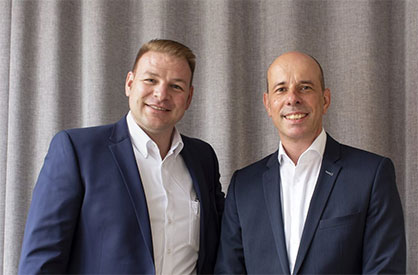
Managing Directors Dr. Marc Schmidt and Kai Hofmeister © 2022 Delius


Since the beginning of 2020, the company has been by the managing directors Dr. Marc Schmidt (Delius Holding, Delius GmbH & Co. KG and DELCOTEX) and Kai Hofmeister (Delius GmbH & Co. KG). The Delius family remains engaged as an advisory board.

With the combination of German and international production, sustainable corporate and employee management as well as the further development of sophisticated, innovative collections, DELIUS and DELCOTEX have been facing the challenges of the future - for three centuries and every day anew.
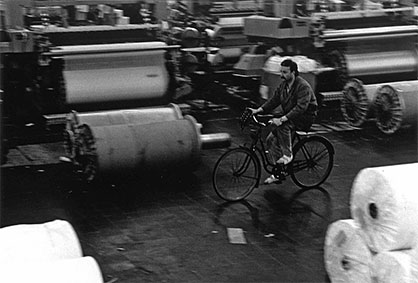
Everyday work in the weaving mill © 2022 Delius


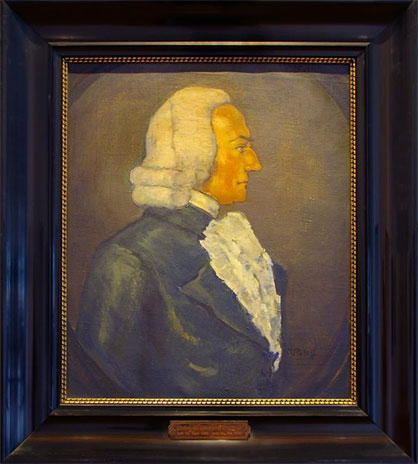
Company founder Johann Caspar Delius 1693 - 1756 © 2022 Delius


More News from TEXDATA International

#ITM 2026

ITM 2026: The new geography of textile production

New production hubs are emerging across North Africa and Central Asia, while Türkiye is accelerating its transformation toward higher-value, technology-driven and more sustainable textile manufacturing.

#Research & Development

“Production is a product”

From technical textiles and AI-driven robotics to the limitations of textile circularity: Professor Dr Thomas Gries looks back on more than two decades of development at ITA Aachen. In the interview, he explains why production technology remains a decisive success factor, discusses international collaborations and innovation ecosystems, and shares his views on the transformation of production landscapes and the challenges facing an increasingly regulated industry.

#Knitting & Hosiery

“We need to move away from the price trap and return to a value-driven mindset.”

With its new Textile Innovation Center, KARL MAYER is sending a strong signal for innovation, collaboration, and the future of textile applications. In this interview, Karl Josef Mayer discusses new opportunities in warp knitting, the processing of staple fibres, recycling, the changing role of machinery manufacturers, and why the textile industry must once again focus more strongly on the value of textiles. by Oliver Schmidt

#Associations

“Innovation, resilience and international experience remain the great strengths of the Swiss textile machinery industry”

Geopolitical uncertainty, growing competitive pressure from China, new free trade agreements and the shift towards a circular economy are currently reshaping the global textile industry. In this interview, Cornelia Buchwalder discusses the current mood within the Swiss textile machinery sector, the industry’s distinctive innovative strength, new market opportunities in India and Asia, and the technological trends that could shape the upcoming trade fair cycle leading up to ITMA 2027.

More News on Textiles & Apparel / Garment

#Associations

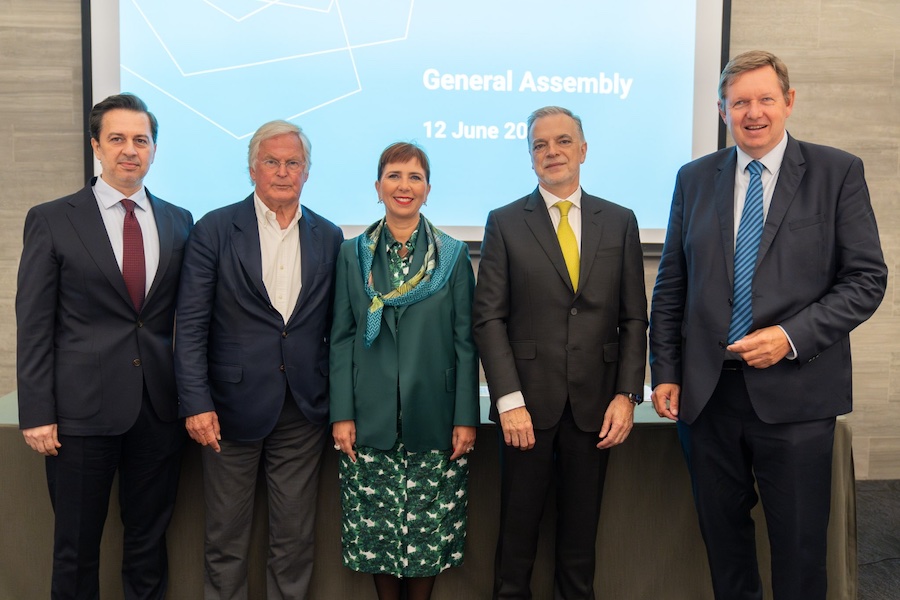
Mario Jorge Machado re-elected President of EURATEX

The EURATEX General Assembly has re-elected Mario Jorge Machado as President of EURATEX, renewing its confidence in his leadership at a crucial moment for the European textile and clothing industry. The sector is facing rising costs, global competitive pressure and an increasingly challenging transition towards sustainability and digitalisation.

#Textiles & Apparel / Garment

Autopsy, the new trend book by Texworld Apparel Sourcing Paris, deciphers the fractures of our time through 12 creative signals

Presented during Texworld Apparel Sourcing Paris, from August 31 to September 2, 2026, at the Paris-Le Bourget Exhibition Center, Autopsy offers a reinterpretation of the contours of fashion in a world undergoing profound transformation, balancing radical introspection and sensitive renewal.

#Yarn & Fiber

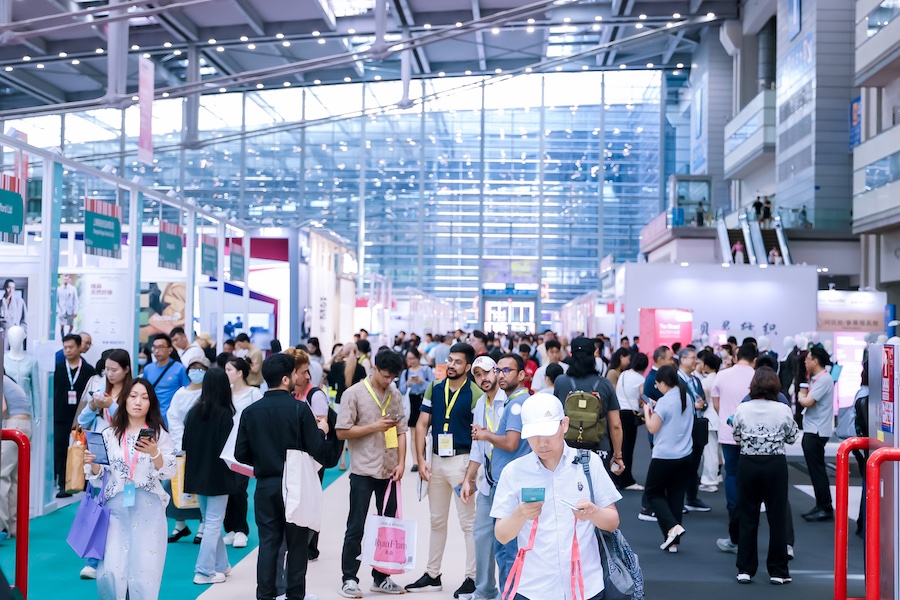
Next week’s focus: Intertextile Shenzhen & Yarn Expo Shenzhen fuse textile tradition with sustainable, digital trends

Fashion will not be left behind in one of the world’s undisputed tech and manufacturing capitals. Which is why next week, at Intertextile Shenzhen Apparel Fabrics and Yarn Expo Shenzhen 2026, the organisers have made special efforts to integrate textile topics such as materials innovation, holistic sustainability, digitalisation and AI. Yet, from 9 – 11 June at the Shenzhen Convention and Exhibition Center, the platform also includes timeless tradition and heritage-inspired evolution in equal measure. Across both shows, over 600 exhibitors from 11 countries and regions are set to showcase everything from Peruvian alpaca wool fabrics to tea-derived fibres, while their fringe programmes will explore diverse solutions along the entire value chain.

#Textiles & Apparel / Garment

Global size study for brands and retailers to optimize fit and market coverage

Hohenstein Apparel Fit Solutions, a global leader in apparel fit, sizing, and product development, today announces the launch of its Global Size Study, a new initiative designed to equip brands to better understand and serve their target consumers through more accurate, market-relevant sizing.

Latest News

#ITM 2026

ITM 2026 makes happy participants with its international and qualified visitor profile

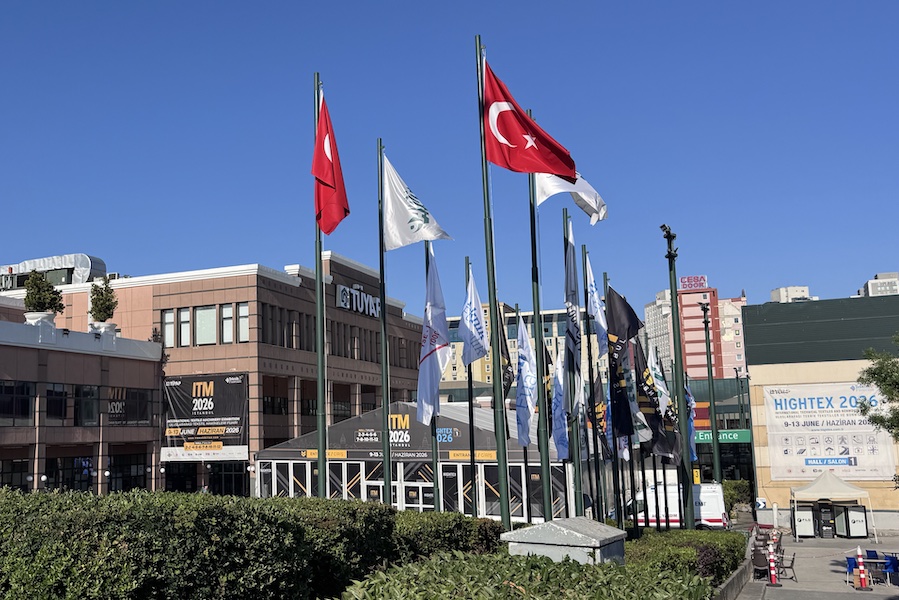
ITM 2026 International Textile Machinery Exhibition, one of the most prestigious meeting points of the textile machinery sector, attracted attention in its first three days, particularly with its diverse international visitor numbers. Industry professionals from all over the world had the opportunity to closely examine the latest technology machines and solutions displayed in operation. Thousands of visitors from approximately 100 countries, primarily Egypt, Pakistan, India, Uzbekistan, Syria, Turkmenistan, Tajikistan, Morocco, Algeria, and Tunisia, met at the Tüyap Fair and Congress Center for new investment and cooperation opportunities.

#ITM 2026

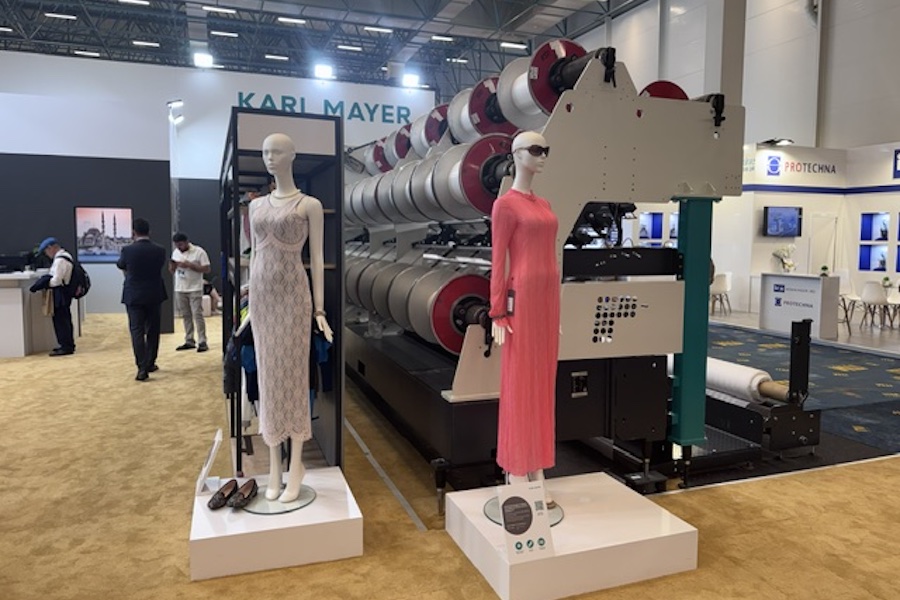
KARL MAYER presents a textile TEXTRONIC® innovation at ITM 2026

With highly efficient machines and continuous textile innovations, KARL MAYER underscores its role as a reliable partner for discerning top-tier customers. Just in time for ITM 2026 in Istanbul, the industry leader is introducing a true innovation: an eyelash lace with its characteristic fringed look – combined with a previously unattainable 4-way stretch. While the established fabric could until now only be produced as rigid version or with one-dimensional stretch, the new elasticity in both dimensions expands the possibilities for cross-band panel fabrics.

#Raw Materials

Better Cotton Initiative welcomes new and returning Council members

The Better Cotton Initiative (BCI) has confirmed a series of appointments and reappointments to its Council, the multistakeholder board responsible for BCI’s strategic direction.

#Man-Made Fibers

DYNEEMA® and NP Aerospace advance personal protection for military servicewomen

Dyneema®, owned by Avient Corporation, an innovator of materials solutions, is supplying its high-performance unidirectional (UD) materials to world-leading armor manufacturer NP Aerospace, enabling the production of armor systems designed specifically to fit the female body. With 2,000 new armor systems, including 4,000 plates, made in the United Kingdom (UK) and delivered in June 2026, this collaboration addresses a long-standing lack of high-quality personal protection specially built for female defense and security personnel.

TOP